
Hello everyone, it’s your host Oliver from DULAXI, and today I’m delighted to be joined by Germany-based composer and pianist Magdi Aboul-Kheir.
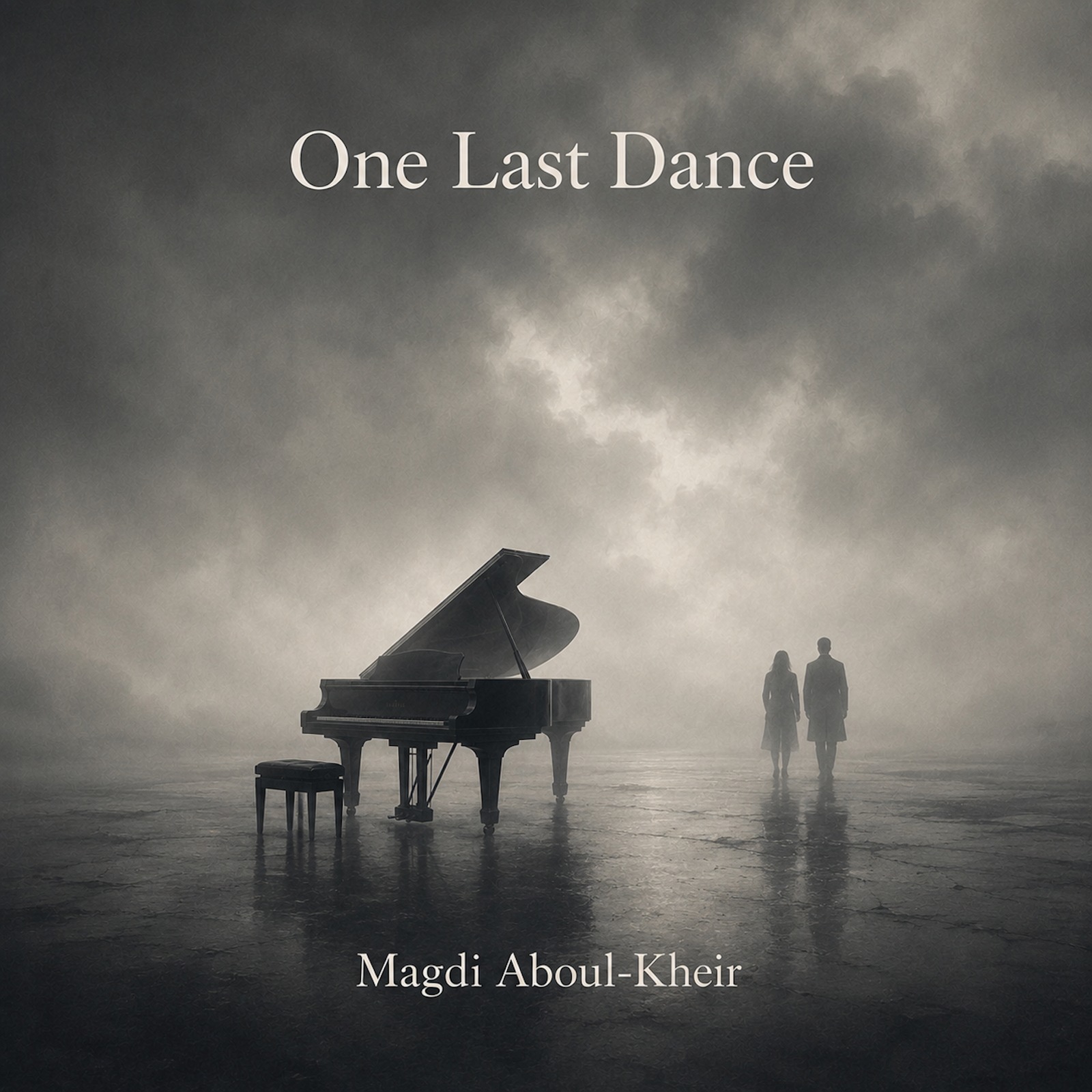
Known for his emotionally expressive approach to contemporary classical and instrumental music, Magdi continues to build a body of work that values melody, sincerity, and human connection above all else. His latest album, One Last Dance, released on June 26, 2026, invites listeners into a deeply reflective musical experience where emotion unfolds through the intimate voices of felt pianos and concert grand piano.
Before we begin our conversation with Magdi Aboul-Kheir, here’s what you need to know about today’s featured project.
ABOUT MAGDI ABOUL-KHEIR
Few composers move between musical worlds as naturally as Magdi Aboul-Kheir. Based in Ulm, Germany, the classically trained pianist has developed an artistic identity that refuses to be confined by genre. His catalogue stretches comfortably across contemporary classical music, chamber and orchestral compositions, ambient soundscapes, retro electronic music, jazz and pop-inspired instrumentals, and minimalist piano works. Despite this remarkable diversity, one defining characteristic consistently unites his music: an unwavering belief in the expressive power of melody.
For Magdi, composition is guided as much by emotion as by technical craft. Rather than pursuing complexity for its own sake, he seeks the musical language that best serves an idea, whether that requires the intimacy of a solo piano, the richness of an orchestra, the spaciousness of ambient textures, or the nostalgic energy of synthesizers. This openness has allowed him to cultivate a distinctive artistic voice that remains recognisable even as each new project explores different sonic landscapes.
The years leading up to One Last Dance have been especially productive. Throughout 2025, Magdi released a series of projects that showcased different dimensions of his creativity. Nubes Sonorae (Ambient Cloudscapes) offered listeners a peaceful ambient journey inspired by the skies, while The Mirror of Truth explored minimalist writing for multiple pianos. Slow Heat ventured into electroacoustic ambient music, examining themes of passion and intimacy through atmospheric textures, and The Garden of Make Believe embraced the warmth and elegance of romantic orchestral composition. More recently, The Piano Has Been Dreaming returned to the delicate sound of felt pianos and concert grand piano, establishing a musical palette that would later serve as the foundation for his newest release.
Rather than revisiting familiar territory, however, One Last Dance expands upon that foundation with greater confidence, warmth, and emotional openness. Across ten original compositions, the album reflects on the many emotional states that shape the human experience. Moments of quiet nostalgia sit comfortably beside hope, joy gently follows sadness, and love quietly weaves itself through every chapter of the record. The album’s central image of life’s ballroom serves as a unifying metaphor, inviting listeners to reflect on the different rhythms with which people move through life while embracing both its lighter and heavier moments.
Although the music remains rooted in the expressive colours of felt pianos and concert grand piano, the emotional ambition of the album reaches well beyond its modest instrumentation. Every composition demonstrates Magdi’s commitment to allowing melody, silence, and subtle dynamics to communicate with honesty rather than excess. The result is a collection that encourages personal interpretation, giving each listener the freedom to discover their own memories, emotions, and experiences within the music instead of prescribing a single narrative.
For Magdi, instrumental music is not about providing definitive answers but creating space for reflection. His compositions invite listeners to slow down, observe, remember, and simply feel. That philosophy continues to shape not only One Last Dance but also his broader artistic journey, which shows no signs of standing still. With another project inspired by retro synthesizers already on the horizon alongside new chamber and ambient works, his creative path continues to evolve while remaining grounded in emotional authenticity and melodic storytelling.

Having this brief introduction to today’s featured project, I’m sure both new listeners and longtime fans are excited to hear directly from Magdi. So, without further ado, let’s begin today’s interview.
INTERVIEW SESSION
Oliver:
You’ve described yourself as someone who loves music across an incredibly wide spectrum, from Baroque and chamber music to pop, retro synthesizers, jazz, and ambient soundscapes. Looking back on your musical journey, what were some of the earliest experiences that taught you to appreciate such a broad musical world, and how have those influences shaped the composer you’ve become today?
Magdi Aboul-Kheir:
My parents loved music. At home, there were violin concertos, belly dance music, French chansons, and easy listening playing. We sang together, drummed on the table, and it was simply understood that children would learn to play an instrument. I certainly didn’t enjoy every kind of music, but I probably realized quite early on that music, in all its diversity, enriches everyday life and brings joy.
As a teenager, I took piano lessons, practicing Mendelssohn, Beethoven, and Bach. But I also loved figuring out pop songs by ear, and eventually I worked up the courage to start improvising.
As a listener, I’ve been inspired and deeply moved by music from all kinds of genres: progressive rock and new wave, electronic music and heavy metal, pop, classical music, and film scores. I’ve never seen those influences as contradictory. If you listen to music with blinkers on and limit yourself to a narrow stylistic range, you’re only depriving yourself of amazing discoveries. Music is such a vast, beautiful, and diverse world, why would anyone want to draw artificial boundaries?
I also learned that music should be listened to without prejudice or value judgments. Why should a Haydn symphony be considered superior to the brilliance of a song by the Beatles or ABBA? I studied musicology for two years before dropping out because I was afraid it would take the joy out of music for me.
And I believe everything I’ve listened to throughout my life has shaped me. It’s like a treasure trove that I can draw from whenever I create music today.
Oliver:
As a classically trained pianist, you’ve built your career around technical discipline, yet your music is consistently guided by emotion and human connection. How have you learned to balance craftsmanship with vulnerability, and why has that balance become so central to your creative philosophy?
Magdi Aboul-Kheir:
To be honest, I’m not a particularly accomplished pianist. But I believe that expression, what emotions and feelings come across in the music, isn’t determined by technical ability alone. It’s also about your mindset, your openness, and, as you put it, perhaps even a certain vulnerability. That feels especially true when I try to express something through just a few notes, by stripping things back to their essence and letting simplicity speak for itself.
Oliver:
Throughout your catalogue, you’ve explored orchestral works, minimal music, ambient compositions, electronic textures, and intimate piano pieces without allowing genre to define you. What has inspired you to embrace such musical freedom, and how has moving between different styles helped you grow as both a composer and storyteller?
Magdi Aboul-Kheir:
I enjoy finding the right musical form for an idea, a theme, or an emotion, the genre that fits, the right sonic palette, the arrangement that feels true to it. And just as I love so many different kinds of music as a listener, I also enjoy expressing myself in different ways as a composer. In the end, though, it’s all one and the same language: music.
Oliver:
No matter how diverse your compositions become, one idea seems to remain constant: your belief in melody. What is it about a memorable melody that continues to inspire you, and why do you think it remains one of the most powerful ways to communicate emotion without words?
Magdi Aboul-Kheir:
To me, a good melody contains the very essence of what I want to express in a piece. I love it when a melody feels as though it has always existed, as if I hadn’t written it at all, but simply discovered it.
Oliver:
One Last Dance invites listeners into what feels like a ballroom of life itself, where joy, nostalgia, hope, and love quietly coexist. What first inspired that central image, and why did it become the perfect foundation for this collection of compositions?
Magdi Aboul-Kheir:
We all move through life at different paces, sometimes faster, sometimes slower; sometimes carrying heavier burdens, sometimes feeling lighter; sometimes alone, sometimes with a partner, sometimes as part of a group; sometimes confined, sometimes free. That’s what this image can convey.
And of course, dance is inseparable from music, movement, rhythm, and emotion. All of that made it feel like a fitting image, and the perfect thread to tie everything together.
Oliver:
Across the album, emotions never seem isolated. Sadness gently gives way to hope, nostalgia gradually transforms into optimism, and love quietly connects every chapter of the journey. When shaping the emotional flow of the record, how intentional were you about allowing one feeling to naturally evolve into another?
Magdi Aboul-Kheir:
Wow, what a difficult question. Of course, I put a lot of thought into an album like this, its concept, structure, and overall dramatic arc. But at the same time, I try to let myself get into a state of flow and trust the process. In the end, my hope is that it all comes together as a coherent emotional and musical journey.
Oliver:
The title One Last Dance immediately evokes different meanings depending on the listener’s own experiences. What does that final dance represent to you personally, and how do you hope listeners interpret its symbolism within the album?
Magdi Aboul-Kheir:
That one last dance isn’t meant to be melancholy or deeply sad. After all, none of us knows when we’ll dance our last dance. It’s really about living consciously, embracing life, feeling it, savoring it while we can. At its heart, it’s a life-affirming perspective, even though life inevitably brings heartbreak, sorrow, pain, and farewell. But it also brings joy, laughter, moments of happiness, and a deep sense of fulfillment.
Oliver:
Unlike music that tells a specific story through lyrics, your compositions rely entirely on melody, harmony, rhythm, and dynamics to express emotion. When writing instrumental music, how do you know that a piece is communicating exactly what you hoped it would without a single spoken word?
Magdi Aboul-Kheir:
I don’t really know, I simply hope so. Music is an universal language, and I truly believe that almost anyone can understand it. At the same time, it’s not important to me that people hear exactly what I felt or what I may have had in mind while writing it. Everyone should be free to discover their own connection to the music, to hear and feel whatever resonates with them, wherever it speaks to them. Every listener brings their own sensitivity and life story to the experience, and therefore has a deeply personal relationship with music.
Oliver:
Many listeners will likely discover their own personal memories while listening to One Last Dance. As you were composing these pieces, were there particular emotions or moments from your own life that quietly found their way into the music, even if only you recognize them?
Magdi Aboul-Kheir:
Of course, these pieces were inspired by encounters I had, things I lives through and observed, and by my own thoughts and emotions. But as I said, I want every listener to take their own journey through the music.
Oliver:
This album continues your exploration of felt pianos and concert grand piano, yet it also feels brighter, more confident, and emotionally expansive than your earlier work. What inspired you to build upon that sonic foundation rather than simply repeating what had come before?
Magdi Aboul-Kheir:
I compose music in a variety of genres, and I enjoy moving back and forth between them. But I find this kind of piano music especially compelling. Although it’s limited to a single sonic palette, there are still endless nuances to discover within it. I love that challenge: how much can you express through such a reduced, focused approach?
Oliver:
Piano music often finds its power in subtle details rather than dramatic gestures. During the recording and production of One Last Dance, what aspects of touch, tone, dynamics, or atmosphere demanded the greatest amount of care in order to achieve the emotional intimacy you envisioned?
Magdi Aboul-Kheir:
It’s about the question of space: where do I place the sound of each instrument? The question of dynamics: how do I create intensity, even when the music never becomes loud? And the question of reduction: can I strip away even more notes without the music becoming simplistic or losing its depth?
Oliver:
Over the past few years, you’ve released projects ranging from ambient cloudscapes and electroacoustic works to orchestral collections and minimalist piano compositions. Looking back across those releases, what creative lessons or discoveries naturally led you toward the artistic direction heard on One Last Dance?
Magdi Aboul-Kheir:
That sometimes less really is more. That complex emotions don’t necessarily require complex music. And that, at times, silence can say more than a multitude of notes.
Oliver:
Every new album represents another chapter in a composer’s evolution. As you compare One Last Dance with your earlier works, where do you feel you’ve grown the most, not only musically but also in the way you understand and express human emotion?
Magdi Aboul-Kheir:
That’s not really for me to judge. I simply hope that my music continues to become more open, more honest, more direct, and, because of that, more emotionally resonant.
Oliver:
Instrumental music often creates a deeply personal relationship between the listener and the composer because every interpretation is unique. What kind of emotional space were you hoping to create for people as they spend time with this album, and what do you hope they discover within themselves while listening?
Magdi Aboul-Kheir:
I would love it if everyone stepped onto their own dance floor of life, and, in doing so, discovered the richness of their own emotional world.
Oliver:
Your music lends itself equally well to quiet reflection, meditation, focused study, and moments of emotional contemplation. How important is it to you that your compositions become part of people’s everyday lives, accompanying moments that may never be seen by anyone else?
Magdi Aboul-Kheir:
I don’t really think about it in those terms. Every listener feels like a gift to me. I’m grateful for everyone who finds a personal connection to the music and allows it to take them on an emotional journey.
Oliver:
Your recent releases have demonstrated remarkable creative diversity while maintaining a recognizable emotional voice. As you continue exploring new musical landscapes, what artistic ideas or creative challenges are calling to you next, and where do you see your musical journey heading in the years ahead?
Magdi Aboul-Kheir:
I want to keep writing music that is diverse and constantly evolving, while still creating a body of work that feels coherent, as the voice of one composer.
A pulsating retro synth album called Yesterday’s Future will be released soon, with tracks that are meant to feel like infectious 1980s earworms. Right now, I’m working on chamber music, where I can fully embrace my romantic side; and on ambient music that also incorporates orchestral elements.
Oliver:
When listeners eventually look back across your entire body of work, what do you hope they remember most about Magdi Aboul-Kheir, not simply as a pianist or composer, but as an artist who has spent his career translating human emotion into music?
Magdi Aboul-Kheir:
I don’t really like thinking about legacy 😊. I’d simply be happy if people experienced my music as something deeply emotional, if it moved and entertained them, and if a melody or two stayed with them long after the music had ended.
“Magdi Aboul-Kheir’s music reminds us that some of the most powerful artistic statements do not arrive through grand gestures, but through moments of honesty, patience, and emotional clarity. With One Last Dance, he creates a space where listeners can pause, reflect, and discover their own memories within the music.”
~ Oliver (DULAXI Team)
MY EDITORIAL PERSPECTIVE
One Last Dance captures the beauty of simplicity through carefully shaped melodies, expressive piano arrangements, and a deep understanding of emotional space. Magdi Aboul-Kheir’s approach highlights how restraint, silence, and thoughtful composition can create powerful connections between music and listener. The album reflects a composer who values sincerity above excess, allowing each note to carry purpose while leaving room for personal interpretation.
~ Oliver (DULAXI Team)
CLOSING
Magdi Aboul-Kheir, thank you for taking the time to share your thoughts, experiences, and creative perspective with DULAXI. This conversation offered a deeper look into the ideas, emotions, and artistic choices that shaped One Last Dance, while allowing listeners to better understand the person behind the compositions.
For everyone discovering Magdi’s music for the first time, we encourage you to spend time with One Last Dance and experience the emotions, reflections, and personal interpretations that unfold throughout the album. Whether listened to during quiet moments of reflection, creative work, or simply as an opportunity to reconnect with yourself, the music invites every listener to find their own meaning within its melodies.
Thank you for joining us for another DULAXI interview. We appreciate you spending this time with us, and we look forward to bringing you more conversations with talented artists from around the world.
Until the next interview, keep discovering new music.