
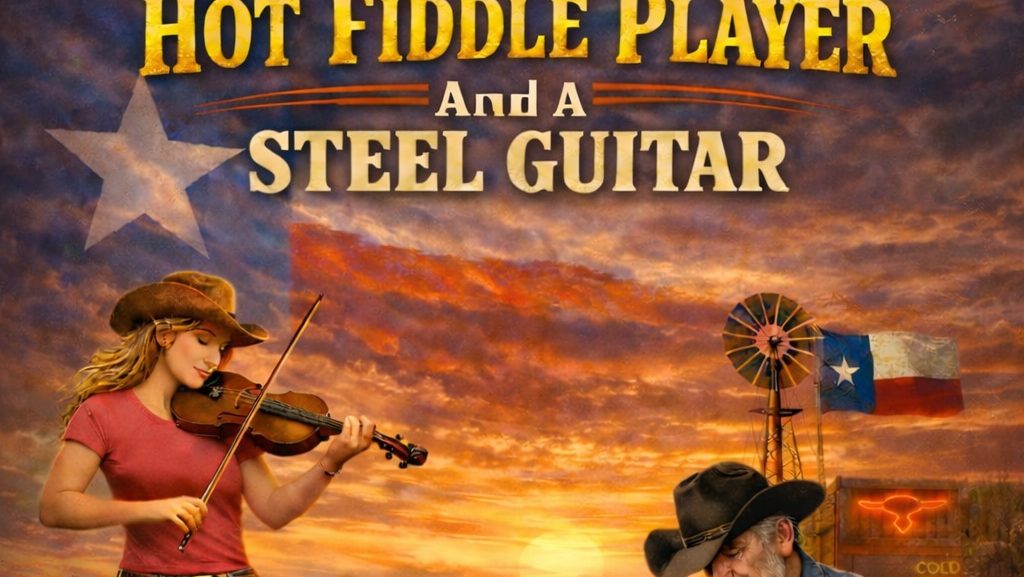
Hi everyone, it’s your host Faithfulness, and today I have with me Eric Osterhout from Waller, Texas, United States. Eric Osterhout is here to share more light about his musical journey while diving into his latest original single, “Hot Fiddle Player (And A Steel Guitar),” released on May 1 2026. Built around that unmistakable Saturday night dancehall spirit, the track opens with a warm nod to classic Texas swing before shifting into a high energy groove led by fiddle and pedal steel. It raises the question of how tradition and modern country energy can meet on one floor where boots move fast and stories move even faster.
Welcome, Eric Osterhout. Before we go further, here is what you need to know about this Texas songwriter. Eric Osterhout is an independent artist rooted in Americana storytelling, blending traditional country influences with a modern roots driven edge. Based in Waller, Texas, his sound draws deeply from lived experience, wide open skies, shifting weather, and the quiet reflections of rural life, shaping songs that feel grounded, melodic, and rich in vivid imagery. His growing international reach includes radio traction in Europe and continued recognition across Texas country circuits.
In “Hot Fiddle Player (And A Steel Guitar),” Eric Osterhout leans fully into that authentic Texas dancehall energy, crafting a sound built for movement, memory, and celebration. The track highlights his signature blend of classic western swing influence and contemporary country production, where fiddle and pedal steel carry both rhythm and emotion. Following previous releases that gained cross continental attention, this single continues to expand his presence while staying firmly rooted in the traditions that define his songwriting identity and the everyday stories that inspire his music.
Having this brief Introduction, I’m sure new and current fans must be excited about our Interview today.
INTERVIEW
Faithfulness: Growing up in Texas, what were the earliest sounds, places, or experiences that made you feel emotionally connected to country and Americana music?
Eric Osterhout: A lot of it was just growing up around it without even realizing how much it was shaping me at the time. Texas country music was always there, coming through truck speakers, dancehalls, little bars, backyard gatherings, long drives on back roads. It felt connected to real life in a way other music didn’t. The songs talked about work, weather, heartbreak, small towns, freedom, and the people around you. I think that’s what pulled me in emotionally early on. It felt relatable and honest.
Faithfulness: Your songwriting feels deeply tied to landscape, weather, and everyday life. What is it about ordinary moments that inspires you creatively more than larger dramatic stories?
Eric Osterhout: I often think about if I had focused more at an earlier age on my songwriting as an avocation rather than building a business career, but then I look back at some of my early songs and realize that by living life and waiting until the last few years to put the focus back on my music, it probably made me a better songwriter. Ordinary moments usually hold more truth and inspiration. A storm rolling in across a pasture, somebody sitting alone at a bar, headlights on a dirt road at night, those moments stick with people because they feel lived in. Real life usually isn’t giant dramatic scenes every day. It’s smaller things that quietly stay with you, and that’s where a lot of my songwriting comes from.
Faithfulness: You blend traditional country storytelling with a modern independent spirit. How do you personally balance honoring classic influences while still sounding like today’s Eric Osterhout?
Eric Osterhout: I’ve never wanted to imitate the past, but I definitely respect it. I grew up loving artists who told the truth in songs, and I still believe honesty matters more than polish. At the same time, I’m writing from my own life and experiences now, not somebody else’s version of Texas or country music. I think if you stay rooted in what’s real to you, your own voice naturally comes through.
Faithfulness: Waller, Texas seems woven into the identity of your music. In what ways has living close to the land shaped your perspective both as a songwriter and as a person?
Eric Osterhout: Living out here changes the pace of how you see things. You notice weather, silence, seasons, animals, people gathering at small places where music still matters. There’s space to think out here. That affects both the songwriting and the person. It keeps me grounded and reminds me that life doesn’t have to be complicated to mean something.
Faithfulness: As an independent artist gaining traction internationally while staying rooted in authentic Texas culture, have you ever felt pressure to compromise your sound for wider appeal, or has authenticity always remained non-negotiable for you?
Eric Osterhout: I’ve honestly never chased trends very well. I think people can tell when something’s forced, especially in country music. I’d rather build slower with songs that actually mean something to me than try to shape everything around what’s popular for six months. Having lived a lot of life before focusing more seriously on my music, authenticity has always mattered more than trying to fit into a lane somebody else created.
Faithfulness: “Hot Fiddle Player (And A Steel Guitar)” instantly creates the feeling of a packed Texas dancehall. What specific atmosphere or memory were you chasing when you first started writing this track?
Eric Osterhout: The original spark came while I was opening for a band at The Rustic in Dallas during a Net 2 Source event. I was watching their soundcheck and they had a hot fiddle player and a great pedal steel player. I remember thinking, man, if you’ve got that, that’s what country music is all about. That moment stayed with me and became the heart of the song.
Faithfulness: The song opens with a strong western swing influence before exploding into a more energetic groove. Why was it important for you to build that bridge between classic Texas tradition and modern movement?
Eric Osterhout: I loved the idea of tipping the hat to classic Texas swing with that opening riff and then letting the song take off into something more energetic. Texas music has always evolved while still respecting where it came from. I didn’t want it to sound trapped in the past. I wanted it to feel alive.
Faithfulness: Fiddle and pedal steel almost feel like characters inside the song rather than background instruments. What role did those textures play in shaping the personality of the track?
Eric Osterhout: They really are characters in the song. The fiddle brings the energy and movement, while the steel guitar carries a lot of the emotion underneath it. Once my producer Austin Biel brought in Jody Cameron, a Texas Steel Guitar Hall of Famer, and we started jamming on it in the studio, those instruments became part of the storytelling instead of just decoration.
Faithfulness: There’s a physical energy to this release that feels designed for movement, boots on hardwood floors, crowded dancehalls, and live reactions. Did you imagine a live audience while creating it?
Eric Osterhout: Absolutely. I could picture boots hitting a wooden floor and people moving the second we got into the groove of it. Some songs are more reflective, but this one was meant to move people a little. Even if somebody just finds themselves tapping their toes to it, I’ll take that.
Faithfulness: Texas country often carries a sense of pride and identity. Do you feel this song represents a particular side of Texas culture that you wanted listeners outside the state, especially international audiences, to experience authentically?
Eric Osterhout: Yeah, I do. Texas dancehall culture is a real thing. The fiddle, the steel guitar, the movement, the atmosphere, it’s part of the identity here. I think international audiences connect with it because it feels genuine. It’s not manufactured. It comes from real places and real people.
Faithfulness: Your recent releases have gained traction across European radio alongside Texas stations. What has surprised you most about how international audiences connect with distinctly Texas-rooted music?
Eric Osterhout: I think I’ve been surprised by how deeply people overseas seem to understand the feeling behind it. Even though the settings are very Texas, the emotions are universal. Loneliness, freedom, nostalgia, heartbreak, joy in a crowded room, those things translate no matter where somebody lives.
Faithfulness: Even though the track is high-energy, there’s still a strong sense of craftsmanship underneath it. How intentional were you about balancing fun dancehall energy with detailed songwriting and arrangement choices?
Eric Osterhout: Very intentional. I wanted the song to feel loose and fun, but there was a lot of thought put into the arrangement and pacing underneath it. The musicianship mattered. The energy matters more when there’s structure underneath it holding everything together.
Eric Osterhout: And honestly, at this point in my life, I think music still needs to be fun. It is a business, sure, but coming back around later in life and focusing more seriously on my songwriting has probably given me a healthier perspective on that. I want people to feel something, but I also want them to enjoy themselves for a few minutes and forget the world a little.
Faithfulness: “Hot Fiddle Player (And A Steel Guitar)” feels unapologetically rooted in real country traditions at a time when the genre keeps evolving commercially. What does “real country” personally mean to you today?
Eric Osterhout: To me, real country music still comes down to honesty. It doesn’t have to sound old-fashioned, but it should sound lived in. Real instruments, real emotion, real stories, music that actually says something about people and life instead of just chasing trends.
Faithfulness: Looking ahead, do you feel your music is moving deeper into traditional Texas sounds, or are there unexplored directions you still want to experiment with creatively?
Eric Osterhout: I think both can happen at the same time. I’ll probably always stay rooted in Texas songwriting and Americana because that’s naturally who I am as a writer, but I also like following where songs want to go. I don’t want to repeat the exact same song over and over, and I think if you follow me this year, I have some interesting releases coming out that will demonstrate that.
Faithfulness: When listeners finish hearing “Hot Fiddle Player (And A Steel Guitar),” what feeling or image do you hope stays with them long after the song ends?
Eric Osterhout: I hope they picture a real Texas dancehall somewhere late at night, lights glowing, boots moving across the floor, fiddle and steel guitar ringing out, people forgetting life for a little while and just living in the moment. If the song leaves somebody feeling that, then it did its job.
CHECK OUT THE RELEASE OF ‘Hot Fiddle Player (And A Steel Guitar)’
HAVING LISTENED TO ‘Hot Fiddle Player (And A Steel Guitar)’, HERE ARE MY HONEST THOUGHTS
“Hot Fiddle Player And A Steel Guitar” by Eric Osterhout is a vibrant tribute to Texas dancehall culture that blends tradition with forward moving energy. From its opening western swing nod the track settles into a lively groove that evokes crowded floors and night. The fiddle and pedal steel serve as the emotional core weaving in dialogue rather than competition while the rhythm section maintains a steady pulse that drives the song forward. Osterhout’s vocal delivery is grounded and expressive carrying subtle grit that reflects lived experience and honky tonk authenticity. Lyrically the song captures vivid Americana imagery with simple powerful lines that emphasize emotion over complexity. The production respects traditional country instrumentation while keeping it accessible and modern. Overall the track reinforces Eric Osterhout’s identity as Texas songwriter committed to preserving country roots while expanding contemporary reach
~ Faithfulness (Dulaxi Team)
Finally to our audience, I urge to listen to “Hot Fiddle Player (And A Steel Guitar)“, add it to your playlist and be Inspired by it and on behalf of Dulaxi I like to appreciate you all by saying thank you everyone, See you on our next interview.
For more information about Eric Osterhout, click on the icons below.