
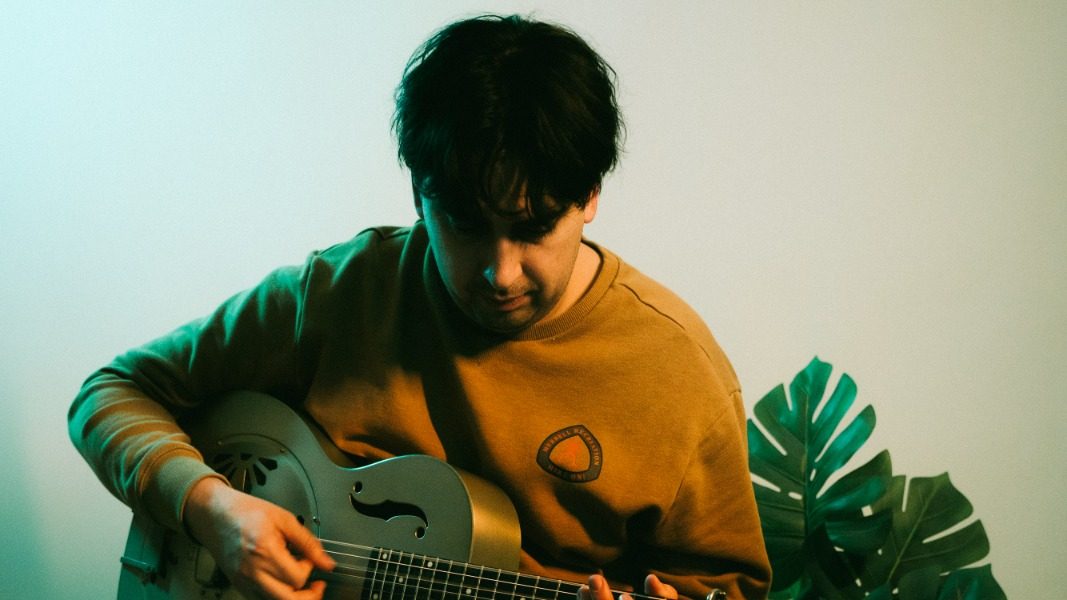
Hi everyone, it’s your host Faithfulness, and today I have with me Valley Taylor from El Cerrito, California, United States. Valley Taylor is here to share more light about his musical journey while diving into his latest original album, “Doppelgänger”, released on 28th April 2025. The project stands as a deeply intentional body of work, exploring fractured identity, self-reflection, and the uneasy coexistence of multiple internal selves. Built around atmosphere, restraint, and emotional honesty, the album leans into minimalism and texture, allowing silence and repetition to shape its emotional weight. Rather than offering resolution, it lingers in uncertainty, inviting listeners into a reflective, immersive space where meaning shifts with perception.
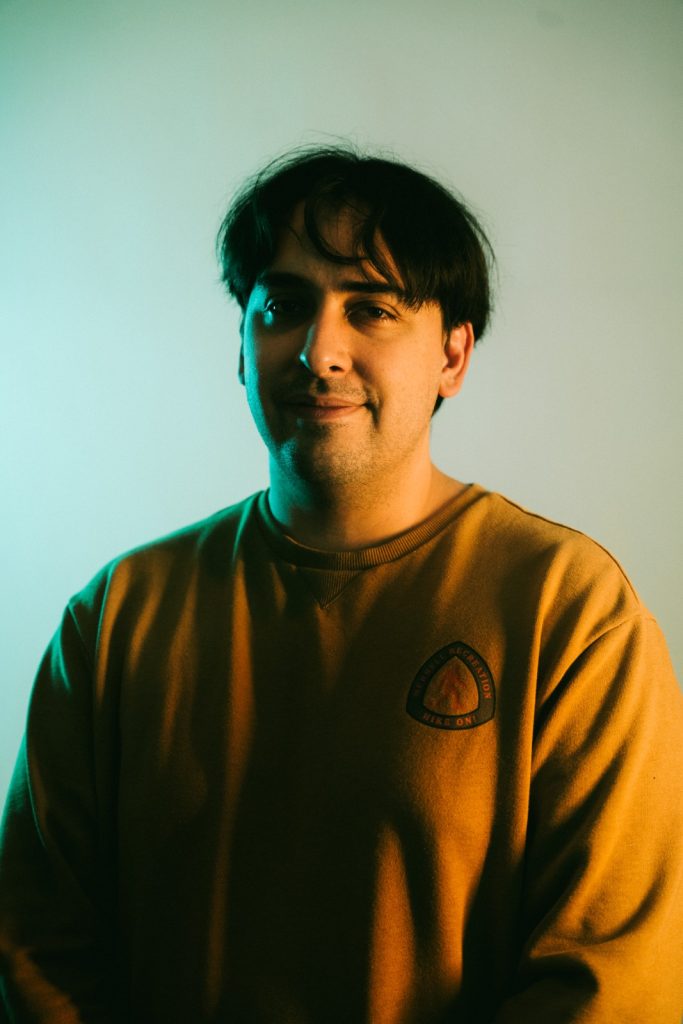
Welcome, Valley Taylor. Before we begin, here is what you need to know about this visionary artist. Valley Taylor is a Bay Area based musician and producer known for crafting emotionally driven indie music rooted in atmosphere, subtle detail, and introspective songwriting. His work blends ambient leaning indie and experimental lo fi influences, creating immersive soundscapes where texture and mood carry as much weight as melody. Across his projects, he continues to explore themes of identity, memory, and emotional contrast, often embracing imperfection and space as core expressive tools.
On “Doppelgänger”, Valley Taylor shapes a sonic world built from fragmented recording environments, including his home studio, remote sessions, and unconventional spaces that naturally feed into the record’s sense of distance and duality. Standout moments like “End of the World for Me” and “Lightyear” reflect the album’s emotional spectrum, moving between quiet internal collapse and expansive reflection. The result is a cohesive yet unsettled listening experience, one that captures not a fixed identity, but the ongoing conversation between multiple versions of the self.
Having this brief Introduction, I’m sure new and current fans must be excited about our Interview today.
INTERVIEW
Faithfulness: Growing up within the Bay Area music environment, what initially drew you toward creating music that feels emotionally immersive rather than traditionally performance-driven?
Valley Taylor: I didn’t exactly grow up around the Bay Area scene but I was close enough that it showed me both sides of music really early. There was obviously the energy and spectacle of live performance, but the moments that stayed with me the longest were always quieter and more internal. I became obsessed with music that felt like a place you disappeared into rather than something simply being presented to you. A lot of the artists I connected with emotionally created pocket dimensions more than performances. I wanted to make something that felt immersive enough that someone could sit alone with headphones on and almost lose their sense of physical space for a while.
Faithfulness: Your work often balances intimacy with emotional distance in a really striking way. When did you first realize atmosphere and texture would become just as important to your identity as songwriting itself?
Valley Taylor: I think it happened gradually while recording demos over the years. I realized I cared just as much about how a room sounded, how distant a vocal felt, or how certain textures emotionally interacted with each other as I did the actual chord progression underneath it. Sometimes a washed out synth or the sound of the acoustic guitar bleeding into a microphone carried more emotional truth than the lyrics themselves. At a certain point I stopped viewing atmosphere as decoration and started treating it like part of the songwriting language.
Faithfulness: Before “Doppelgänger,” you spent years playing in bands and collaborative spaces. How did stepping into a more personal and self-directed creative process reshape the way you understood yourself as an artist?
Valley Taylor: Playing in bands taught me so much about collaboration, energy, and performance, but stepping into something more personal forced me to confront myself in a different way. There was nobody else to hide behind creatively anymore. Every choice reflected my instincts directly. I think it made me more honest with myself, both musically and emotionally. It also gave me permission to slow down and create things that maybe would not make sense in a traditional band environment where momentum and immediacy matter more.
Faithfulness: Your music embraces imperfection and restraint instead of chasing polish. What experiences taught you that emotional honesty can sometimes live more powerfully inside subtle or unfinished spaces?
Valley Taylor: I think life eventually teaches you that people rarely experience emotions in polished or cinematic ways. Most meaningful emotions exist in fragments, hesitation, silence, or things left unresolved. Some of the recordings that affected me the most emotionally sounded fragile or imperfect, almost like they could fall apart at any second. That vulnerability made them feel human. I started realizing that chasing perfection often removed the exact thing that made a piece emotionally believable in the first place.
Faithfulness: The contrast between performing with acts like Underoath at larger venues and playing intimate spaces like Stay Gold deli feels fascinating. How do those radically different environments reveal different emotional sides of your music?
Valley Taylor: Playing larger venues with louder acts creates this overwhelming physical experience where the music becomes almost confrontational in a beautiful way. There is adrenaline and impact to it. Smaller spaces like Stay Gold feel completely different. They expose the intimacy and vulnerability inside the songs much more directly because there is nowhere for either the audience or myself to emotionally hide. I love both environments because they reveal different emotional dimensions of the same material.
Faithfulness: “Doppelgänger” feels deeply connected to fractured identity and the coexistence of multiple internal selves. Was there a specific personal moment or realization that made those themes impossible to ignore creatively?
Valley Taylor: I think there was not one singular moment but more a growing realization that I was constantly navigating contradictory versions of myself depending on where I was emotionally, socially, or creatively. Sometimes those versions felt so disconnected from each other they almost seemed like entirely separate people sharing the same body. “Doppelgänger” became a way to explore that tension without trying to simplify it into a clean answer.
Faithfulness: The album constantly leaves room for silence, repetition, and emotional suspension rather than obvious resolution. What made you trust restraint enough to let absence carry so much emotional weight throughout the record?
Valley Taylor: I became really interested in the emotional power of suspension. In real life, closure is actually pretty rare. Most feelings linger unresolved long after moments end. I wanted the album to reflect that honestly. Silence, repetition, and restraint started feeling emotionally louder to me than dramatic resolutions because they leave space for the listener to sit inside uncertainty rather than escape it.
Faithfulness: You mentioned influences ranging from Orchid Mantis and Bon Iver to even the Minecraft soundtrack, which is such an unexpected emotional reference point. What did those very different worlds unlock in your approach to mood and minimalism?
Valley Taylor: What connects those influences for me is their ability to create emotional space through simplicity. Orchid Mantis showed me how intimacy and texture could coexist without feeling overly produced. Bon Iver’s work made me think differently about fragmentation and atmosphere. Even the Minecraft soundtrack has this strange lonely beauty to it where minimalism creates emotional scale instead of reducing it. All of those influences taught me that absence can sometimes feel bigger than excess.
Faithfulness: There’s something beautifully disorienting about how vocals, textures, and instrumentation blur together across the album. Were you intentionally trying to make listeners feel emotionally ungrounded or caught between realities?
Valley Taylor: Definitely. I wanted the album to feel slightly unstable emotionally, almost like memories overlapping or identities bleeding into each other. I was interested in creating something where the listener could not always tell where one sound ended and another began. That blurring felt connected to the themes of the record itself. I wanted people to feel suspended between emotional states instead of grounded inside one clear reality.
Faithfulness: Tracks like “End of the World for Me” and “Lightyear” feel like emotional opposites that still belong to the same psychological landscape. How do you personally interpret the relationship between those two songs?
Valley Taylor: To me, “End of the World” feels like emotional collapse while “Lightyear” feels more like emotional dissociation or distance. One is very immediate and internal while the other almost drifts outside of itself. But they still belong together because both songs are dealing with isolation in different forms. One sinks inward while the other floats away from itself entirely.
Faithfulness: Recording across home studios, remote sessions, temporary spaces, and even a dog-sitting house gave the album a fragmented physical history. How much did the unpredictability of those environments shape the emotional DNA of the record itself?
Valley Taylor: I think the constantly shifting environments became part of the album subconsciously. Recording in temporary spaces gave everything this unsettled quality that matched the themes perfectly. Different rooms, different emotional states, different periods of my life all ended up embedded into the recordings. Instead of fighting that fragmentation I started embracing it because it made the album feel more honest and lived in.
Faithfulness: The use of the Fender Bass VI and your layered production choices created this blurred line between foreground and background throughout the album. Were you chasing a specific emotional sensation while building those sonic textures?
Valley Taylor: I was chasing the feeling of memory becoming unstable. The Fender Bass VI was perfect for that because it occupies this strange emotional space between bass and guitar, foreground and background. A lot of the production choices were about making sounds feel partially obscured or emotionally distant without losing warmth entirely. I wanted the textures to feel immersive but slightly disorienting at the same time.
Faithfulness: “Doppelgänger” never seems interested in giving listeners definitive answers. Do you think uncertainty has become an important emotional language for you creatively?
Valley Taylor: Absolutely. I think uncertainty has become one of the most emotionally truthful languages available to me creatively. The older I get, the less interested I become in presenting definitive emotional conclusions. Most meaningful experiences are complicated, contradictory, and unresolved. I want the music to leave room for that complexity instead of pretending everything can be neatly understood.
Faithfulness: You once described the project as “documenting the conversation between all versions of yourself,” which feels incredibly revealing. After completing this album, do you feel closer to understanding those different selves or even more aware of their complexity?
Valley Taylor: Finishing the album probably made me more aware of the complexity honestly. I do not think the goal was ever to fully understand every version of myself. It was more about acknowledging their coexistence without trying to force them into a single clean identity. Making the record felt less like solving something and more like documenting an ongoing internal conversation in real time.
Faithfulness: As Valley Taylor continues evolving, what part of yourself do you hope future listeners will still recognize no matter how much the sound expands or transforms over time?
Valley Taylor: I hope people always recognize emotional sincerity in the work no matter how much the sound changes. Even if the production becomes larger or the songwriting evolves, I never want the music to lose that sense of genuine emotional vulnerability and reflection. I think that thread of honesty is probably the most consistent part of who I am creatively.
CHECK OUT THE RELEASE OF ‘Doppelgänger’
HAVING LISTENED TO ‘Doppelgänger’, HERE ARE MY HONEST THOUGHTS
“Doppelgänger” is a restrained exploration of fractured identity within atmospheric indie music, emphasizing space, texture, and emotional ambiguity over traditional structure. Built through ambient layers, minimal motifs, and gradual tonal shifts, the album evokes a suspended, introspective atmosphere influenced by ambient and indie experimental traditions. Recorded across home and remote environments with subtle contributions from collaborators, it preserves imperfections that reinforce its themes of fragmentation and distance. Its sonic palette blends reverb-heavy guitars, soft synth textures, and understated rhythm, creating a listening experience that feels both intimate and disorienting. Rather than resolving its emotional tension, the record lingers in open-ended reflection, inviting listeners into shifting states of memory and self perception. The result is a cohesive ambient indie statement that favors restraint, space, and psychological depth throughout across its entire unfolding structure overall tone.
~ Faithfulness (Dulaxi Team)
Finally to our audience, I urge to listen to “Doppelgänger“, add it to your playlist and be Inspired by it and on behalf of Dulaxi I like to appreciate you all by saying thank you everyone, See you on our next interview.
For more information about Valley Taylor, click on the icons below.