
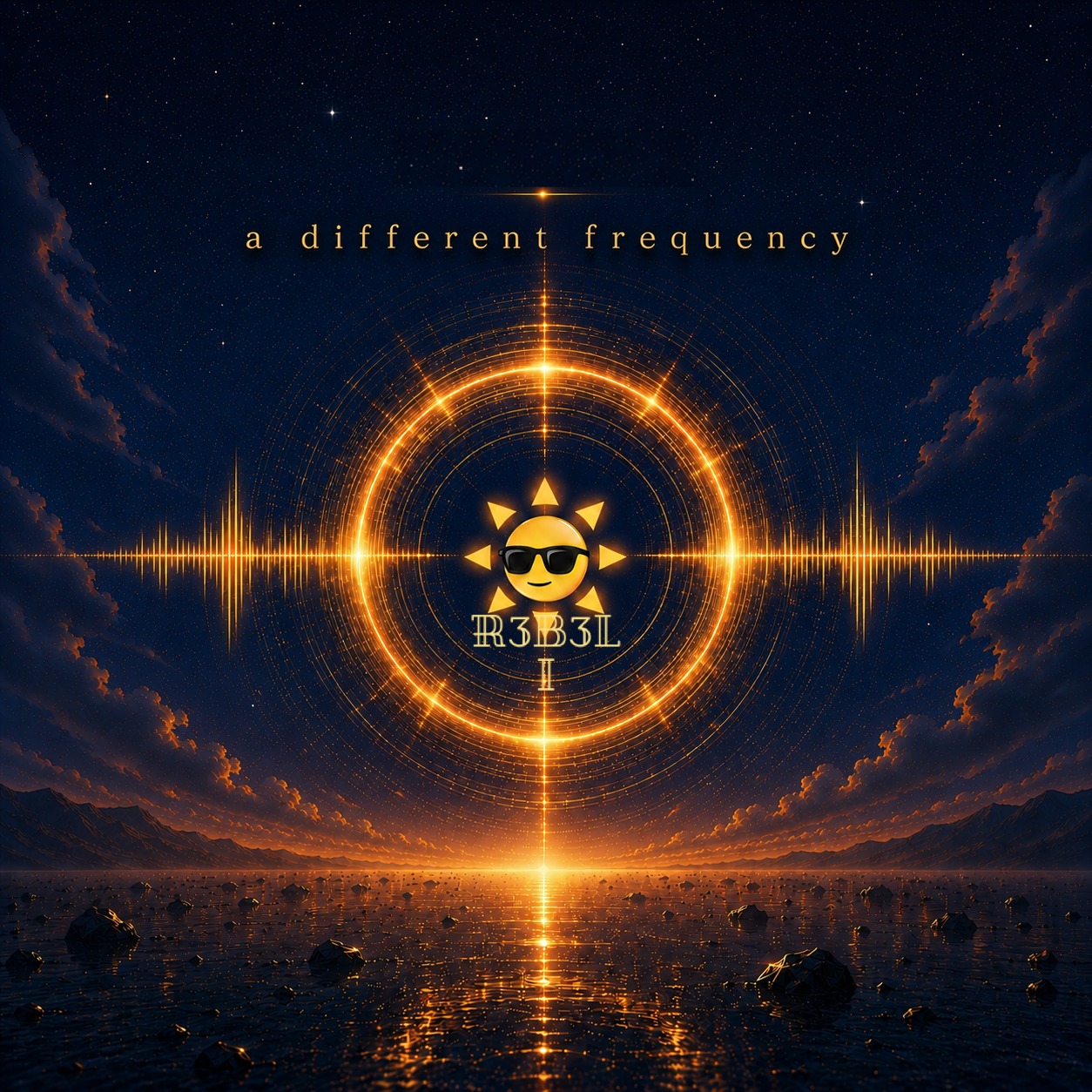
Hello everyone, it’s your host Oliver from DULAXI, and today I’m delighted to be joined by producer R3b3l I, the creative force behind the London-based instrumental project blending jazz, lo-fi, soul and contemporary instrumental influences. His debut album, A Different Frequency, released on May 23rd, 2026, is a twelve-track exploration of growth, self-discovery and purpose told entirely through sound.
Before we begin our conversation with R3b3l I, here’s what you need to know about today’s featured project.
ABOUT R3B3L I
R3b3l I is a London-based producer whose work is built around the belief that music can communicate beyond words. Through layered melodies, atmospheric production and carefully crafted arrangements, he creates instrumental compositions that allow listeners to discover their own meanings within each piece.
A Different Frequency marks his debut instrumental album and represents his most personal project to date. Across twelve interconnected chapters, the project explores themes of growth, identity, resilience and purpose, creating an emotional journey without relying on lyrics to guide the listener. Instead, R3b3l I uses melody, rhythm and texture as storytelling tools, allowing each listener to connect with the music through their own experiences, memories and interpretations.
Drawing from lo-fi, jazz, soul and contemporary instrumental influences, the album moves between moments of uplifting energy, deep reflection and spiritual awareness while maintaining a unified sense of progression. Tracks such as Elevate and Level Up introduce moments of movement and optimism, while compositions like Heartbeat create space for more intimate reflection. The album concludes with Ancestors, a spiritually reflective closing chapter that honours the unseen influences and connections that continue shaping our journeys.
The creation of A Different Frequency was driven by emotional honesty rather than simply technical experimentation. For R3b3l I, every production choice serves a purpose, from the textures and harmonies to the arrangement and use of space. The album was shaped as a complete experience, with each composition functioning as a chapter within a larger story rather than existing as an isolated track.
Through this project, R3b3l I invites listeners to slow down, reflect and reconnect with themselves in a world often filled with constant distraction. Rather than providing a fixed interpretation, A Different Frequency leaves room for personal discovery, allowing every listener to experience the music in a way that feels uniquely their own.
Having this brief introduction to today’s featured project, I’m sure both new listeners and longtime fans are excited to hear directly from R3b3l I. So, without further ado, let’s begin today’s interview.
INTERVIEW SESSION
Oliver:
Before R3b3l I became your creative identity, there was a producer learning how to translate emotion into sound. When you first started experimenting with music, what pulled you in more, the technical side of building sounds or the emotional side of expressing feelings, and how did that early balance shape the way you work today?
R3b3l I:
It was always the emotional side first. The technical side became the language I learned so I could express what I was already hearing internally. I’ve experienced music almost constantly for as long as I can remember, so production was never just about making beats. It was about translating feelings and ideas into something other people could experience. Even today, I never start by asking what sounds impressive. I ask what feels true.
Oliver:
One of the most fascinating parts of instrumental music is that there are no lyrics to rely on, only sound design, arrangement, and atmosphere. When you are starting a track, what usually comes first for you, a melody, a rhythm idea, or a feeling, and how do you turn that first spark into a full composition?
R3b3l I:
It’s almost always a feeling. Sometimes that feeling arrives as a melody, sometimes it’s a chord progression, and occasionally it’s simply an atmosphere I can’t explain. Once I discover that emotional centre, everything else grows around it naturally. Every instrument has to support that original feeling rather than compete with it.
Oliver:
Your sound blends lo-fi, jazz, soul, and ambient textures, but it never feels like a simple genre mix. On a practical level in the studio, how do you decide whether a track leans more into jazz harmony, lo-fi texture, or soulful warmth without losing the identity of R3b3l I?
R3b3l I:
I never consciously decide the genre. I follow the emotion first. If a piece asks for richer harmony, jazz naturally becomes more present. If it needs intimacy, lo-fi textures take over. If it needs warmth, soul becomes the strongest influence. The identity comes from the intention behind the music rather than the genre itself.
Oliver:
A Different Frequency is structured as twelve connected chapters rather than separate standalone tracks. From a production standpoint, how did you approach maintaining sonic continuity across the entire album while still making each track feel distinct in its arrangement and energy?
R3b3l I:
The continuity came from emotion rather than repetition. Every track has its own personality, but they’re all speaking the same language. Similar production philosophies, recurring textures and careful sequencing helped create one continuous experience while allowing each chapter to stand on its own.
Oliver:
When you’re building an instrumental piece, silence and space become just as important as the notes themselves. How intentional are you with negative space in your production, and can you share how you decide when to strip elements back versus when to build a richer, layered sound?
R3b3l I:
Space is one of the most expressive instruments I have. Early on I probably added too much because I thought more meant better. Over time I realised that removing something often creates more impact than adding another layer. If an instrument isn’t helping tell the story, it doesn’t need to be there.
Oliver:
You’ve described this project as a journey through growth, identity, and purpose. From a creative workflow perspective, how did you organize that journey during production, did you map out the emotional arc of the album first, or did it naturally evolve as you completed each track?
R3b3l I:
The emotional arc revealed itself over time. Many of the tracks already existed before I realised they belonged together. Once I stepped back, I could see they were all describing different stages of the same journey. That’s when the sequencing became just as important as the music itself.
Oliver:
Some tracks like Elevate and Level Up carry more energy, while others like Heartbeat feel slower and more reflective. When you switch between those emotional states in production, what changes in your technical approach?
R3b3l I:
Everything changes, but always in service of the emotion. Uplifting tracks tend to use brighter harmonies, stronger rhythmic movement and wider arrangements. Reflective tracks become more spacious, with simpler melodies and fewer elements. The technical decisions always follow the emotional intention.
Oliver:
Without vocals guiding the listener, your instrumentation has to carry both rhythm and storytelling at the same time. How do you approach melody writing so it feels expressive enough to communicate emotion, but still simple enough to remain open to interpretation?
R3b3l I:
I think simplicity is incredibly powerful. If a melody says too much, it leaves no room for the listener. I want melodies to feel familiar enough that people can attach their own memories and experiences to them. The listener completes the story.
Oliver:
The production on this project feels very textured and atmospheric. What tools or techniques do you rely on most when shaping that atmosphere, and how do you avoid overproducing a track while still keeping it emotionally rich?
R3b3l I:
Atmosphere comes from lots of small decisions rather than one big effect. Gentle reverbs, subtle delays, layered textures and careful dynamics all contribute. The challenge is knowing when to stop. I regularly mute parts while producing, and if I don’t miss them, they stay muted.
Oliver:
There’s often a tension in instrumental music between structure and freedom. How do you know when a composition is “finished”?
R3b3l I:
Usually when adding something makes it worse instead of better. Every track reaches a point where it feels complete emotionally. That’s the moment I stop chasing perfection and let the music breathe.
Oliver:
Tracks like Ancestors introduce a more spiritual and reflective tone. From a sound design perspective, what choices helped you create that shift?
R3b3l I:
I wanted Ancestors to feel grounded rather than dramatic. Softer textures, more open arrangements and slower movement create space for reflection. It doesn’t announce itself as the ending. It gently invites the listener to pause and look back on the journey they’ve just taken.
Oliver:
When you look at your workflow as a whole, do you build tracks quickly based on instinct, or spend more time refining details?
R3b3l I:
The initial ideas usually arrive quite quickly because they’re instinctive. Refinement takes much longer. That’s where I focus on balance, atmosphere and making sure every sound serves the emotional purpose of the piece.

Oliver:
One of the challenges in instrumental storytelling is keeping the listener engaged without lyrical variation. How do you use arrangement techniques like progression, layering, or repetition to maintain attention while still keeping the music emotionally grounded?
R3b3l I:
I try to think of each track as a conversation rather than a performance. Repetition creates familiarity and gives the listener something to hold onto, while subtle changes in harmony, instrumentation or dynamics keep the music moving forward. I don’t believe every section needs to introduce something new. Sometimes the smallest change carries the biggest emotional impact. My aim is to let the music evolve naturally so it feels like a journey instead of constantly demanding attention.
Oliver:
As a producer working within lo-fi and jazz-inspired soundscapes, how do you balance raw, imperfect textures with clean production quality so the music feels both human and polished at the same time?
R3b3l I:
For me, perfection isn’t the goal. Some of the most memorable music has imperfections that make it feel alive. I want listeners to hear the humanity in the music, but I also want the production to be clear enough that nothing distracts from the emotion. It’s a balance between preserving character and making sure every element has its place. If the production becomes too polished, it can lose its warmth. If it’s too rough, the message can get lost.
Oliver:
This album feels like a very deliberate creative statement rather than a collection of ideas. What was the most technically demanding part of bringing A Different Frequency together, and what moment in the process felt like everything finally clicked into place?
R3b3l I:
The biggest challenge wasn’t producing the individual tracks. It was recognising that they all belonged to the same story. Many of them were written independently over time, so bringing them together into a cohesive narrative required a lot of listening, reflection and refinement. The moment it finally clicked was when I settled on the track order. Suddenly it stopped feeling like twelve separate compositions and started feeling like one complete journey told across twelve chapters.
Oliver:
After completing a project as structured and intentional as this, how has it changed your production mindset going forward, especially when it comes to starting new ideas from scratch?
R3b3l I:
It’s taught me to trust my instincts much more. Earlier in my journey I probably spent too much time questioning ideas or trying to make everything technically impressive. This album reminded me that emotion will always matter more than complexity. Going forward, I want to spend less time chasing perfection and more time creating music that feels honest. If a piece connects emotionally, that’s what people remember.
Oliver:
Looking ahead, as you continue developing the world of R3b3l I, what aspects of your production process or sound design are you most interested in evolving next, and what new challenges are you hoping to explore creatively?
R3b3l I:
I want to continue pushing instrumental storytelling even further. I’m interested in exploring richer arrangements, more organic instrumentation and finding new ways to create atmosphere without losing the simplicity that defines my sound. More than anything, I want every project to represent genuine growth. I never want to repeat myself just because something worked before. My goal is to keep evolving while staying true to the identity and message behind R3b3l I.
“R3b3l I’s A Different Frequency demonstrates how instrumental music can become a deeply personal conversation between artist and listener. Through careful production, emotional intention and a clear understanding of atmosphere, the album creates a space where every listener can discover their own story within the sound.”
~ Oliver (DULAXI Team)
MY EDITORIAL PERSPECTIVE
A Different Frequency stands as a thoughtful exploration of instrumental storytelling, where every production choice contributes to a wider emotional journey. R3b3l I’s approach to melody, arrangement and atmosphere highlights the power of restraint, allowing each composition to breathe while maintaining a strong sense of direction. Through his creative process, it becomes clear that the album is built not only through technical skill but through a deeper understanding of emotion, connection and personal interpretation.
~ Oliver (DULAXI Team)
CLOSING
R3b3l I, thank you for taking the time to share the creative process, inspiration and ideas behind A Different Frequency with DULAXI. This conversation offered a deeper look into the thoughts and decisions that shaped an album built around emotion, atmosphere and instrumental storytelling.
For listeners discovering R3b3l I for the first time, A Different Frequency is an invitation to experience music without limitations, allowing each person to find their own meaning within its melodies, textures and moments of reflection.
Thank you to everyone who spent time with us for this DULAXI interview. Continue following R3b3l I’s journey as he develops his sound and explores new ways of communicating through music.
Stay connected with DULAXI for more conversations with artists from around the world, sharing the stories, creativity and ideas behind the music.