
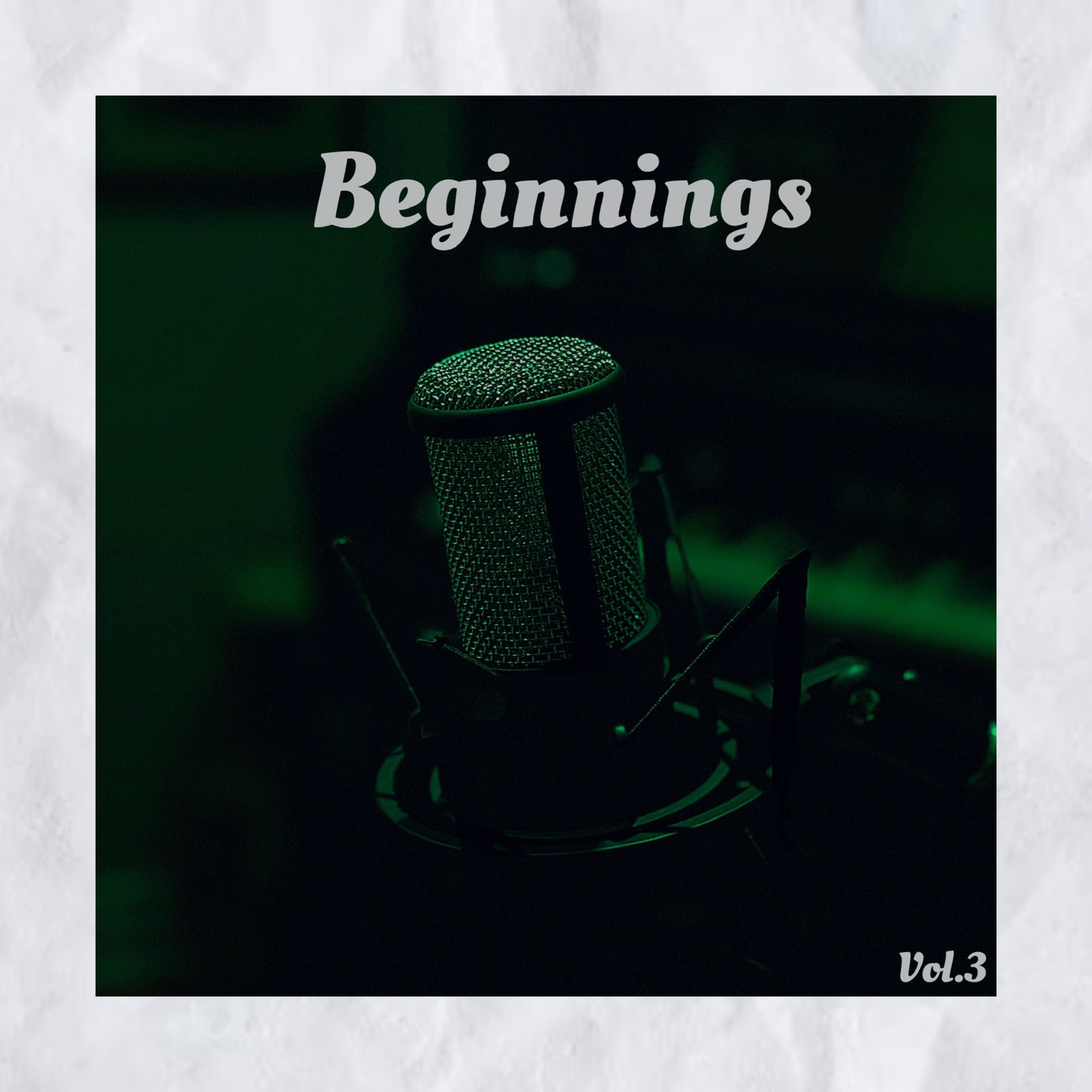
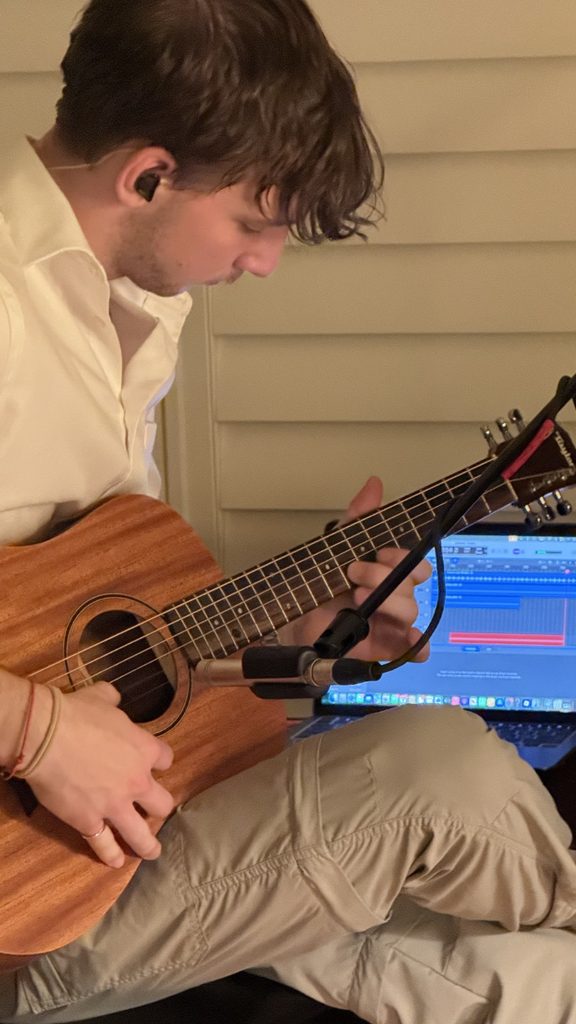
Connor Riesen’s “Beginnings Vol.3,” released on August 22, 2026, closes out the third chapter in his ongoing series of three-track EPs, and it finds him working with noticeably more of his own hands than before. Across “Sparks,” “Songs Of Storms,” and “I Know It,” the Orlando-based producer sings lead vocals on two of the three songs, plays both acoustic and electric guitar (an instrument he taught himself by ear specifically for this project), and handles the entire production himself. The result is an EP that leans further into intimacy and restraint than the jazz-inflected work that shaped his last few releases, favoring quiet piano-and-guitar arrangements that leave room for reflection instead of spectacle.
That shift in method carries through the writing as well. Riesen has spent recent years shifting between styles, from the twelve-track jazz turn of “Stories” to the hymn arrangements of “Sabbath in C,” and “Beginnings Vol.3” reads as a return to something smaller and more personal after those larger projects. Teaching himself an instrument specifically to record with it is a modest but telling decision: it points to a writer choosing to work inside his own hands rather than reaching outward, and that choice shapes the EP’s character throughout. Each of the three songs shares a similar palette of piano, acoustic guitar, and understated rhythm, but the tracks put that palette toward different ends, shifting from quiet perseverance to atmospheric unease to open acceptance.

Sparks
“Sparks” opens with piano rather than voice, the instrument setting a patient, curious tone before Riesen’s vocal enters. His voice carries a warm, airy quality here, close and conversational, and he leans into a storytelling delivery that stays controlled through the verses before opening up in the final chorus, where the song’s clearest vocal peak arrives. Riesen avoids unnecessary drama, keeping the performance tender and reflective, letting the lyrics’ focus on self-discovery, resilience, and quiet hope carry the song instead of the vocal itself. That restraint is the track’s defining choice: nothing about the delivery oversells the material, which is what makes the moment the vocal does lift feel earned rather than expected.
The arrangement mirrors that patience. Acoustic guitar and bass stay minimal and spacious beneath the piano, the guitar work gentle and melodic, while the bass remains warm and subtle instead of driving the arrangement. Drums appear sparingly and stay controlled, adding lift only where the song calls for it instead of establishing a steady pulse throughout. Ambient texture fills the remaining space, giving the mix an organic, unhurried quality that keeps the focus on piano and voice. By the final chorus, the patience built into the arrangement pays off: the same instruments that opened the song quietly return with more presence, not because anything has been added, but because the space around them has let a single melodic idea accumulate weight gradually instead of all at once. What lingers afterward is closer to quiet inspiration than resolution.
Songs Of Storms
“Songs Of Storms” opens the same way, piano and guitar arriving before the vocal, but the mood turns more unsettled. Where “Sparks” builds toward hope, this track works through tension, its arc running from unease toward release rather than struggle toward growth. Riesen’s vocal keeps the same warm, airy tone but takes on a more searching, intimate character here, staying controlled and reflective even as the writing turns toward identity, acceptance, and self-worth. The storytelling delivery remains constant across the EP, but the phrasing on this track feels more inward, closer to a thought being worked out than a line being performed.
Production-wise, “Songs Of Storms” is the most atmospheric of the three songs. The same minimal, organic instrumentation, piano, acoustic guitar, subtle bass, restrained drums, is arranged with more space around each part, and ambient texture is used more deliberately to fill the gaps between phrases. That space is what gives the track its unsettled quality: instead of relying on volume or density to build tension, Riesen creates it by leaving room for silence, letting single notes and held chords carry more weight than they would inside a fuller mix. The final chorus resolves that tension without erasing it, landing on reflection rather than triumph, which suits a song more interested in sitting with difficulty than resolving it neatly.

I Know It
“I Know It” reverses the EP’s opening pattern in one small but telling way: it’s the vocal, not the instrumentation, that draws the ear first. Piano and guitar are still present from the start, but Riesen’s voice, warm, smooth, and unusually full-bodied on this track, sits further forward in the mix, and the song’s attention lands on melody and mood rather than arrangement. Lyrically, it continues the EP’s throughline of identity, healing, and self-worth, but resolves differently than the other two: instead of building toward hope or working through tension, “I Know It” settles from reflection into acceptance, closing the EP on its calmest note.
That calm carries into the production as well. The instrumentation, again piano, acoustic guitar, bass, and light percussion, is the most understated of the three tracks, with drums kept minimal and controlled and the keys used mainly to fill space rather than build momentum. The mix stays intimate rather than reaching for scale, which suits a song built around quiet certainty instead of tension resolved through contrast. By keeping the arrangement this restrained, Riesen lets the vocal carry the song’s final statement directly, closing “Beginnings Vol.3” with acceptance instead of ending with a bigger emotional swing.
Riesen’s foundation makes that kind of restraint feel earned, not accidental. He taught himself piano after a year of childhood lessons, then picked up French horn in his school band, work that gave him an early, practical grounding in harmony and composition before he ever touched a computer. That background has carried him through a debut album, a run of jazz-leaning projects made alongside collaborators including Lisandra Yero and Sergio da Silva, and a set of hymn arrangements on “Sabbath in C.” “Beginnings Vol.3” sits apart from that catalogue by being smaller in scope and, by Riesen’s own account, more personal: three songs built mostly by his own hands, with the guitar work in particular marking new territory for an artist who has spent most of his career at the piano.
“Beginnings Vol.3 Finds Connor Riesen Trading Scale For Intimacy, Turning Self-Taught Guitar And Quiet Piano Into The Most Personal Chapter Of His Beginnings Series.”
~ Daniel (DULAXI Team).
What holds “Beginnings Vol.3” together isn’t a single mood but a shared method: three songs built from the same small set of instruments, arranged with enough space to let a lyric or a single piano line carry as much presence as a full band would elsewhere. Riesen’s decision to learn guitar specifically for this project, and to handle both the singing and the production himself, gives the EP a hands-on quality that fits its subject matter, songs about identity, resilience, and acceptance written by someone working through those ideas in the room rather than around them. It’s a modest release by design, and that modesty is exactly what makes it land.