
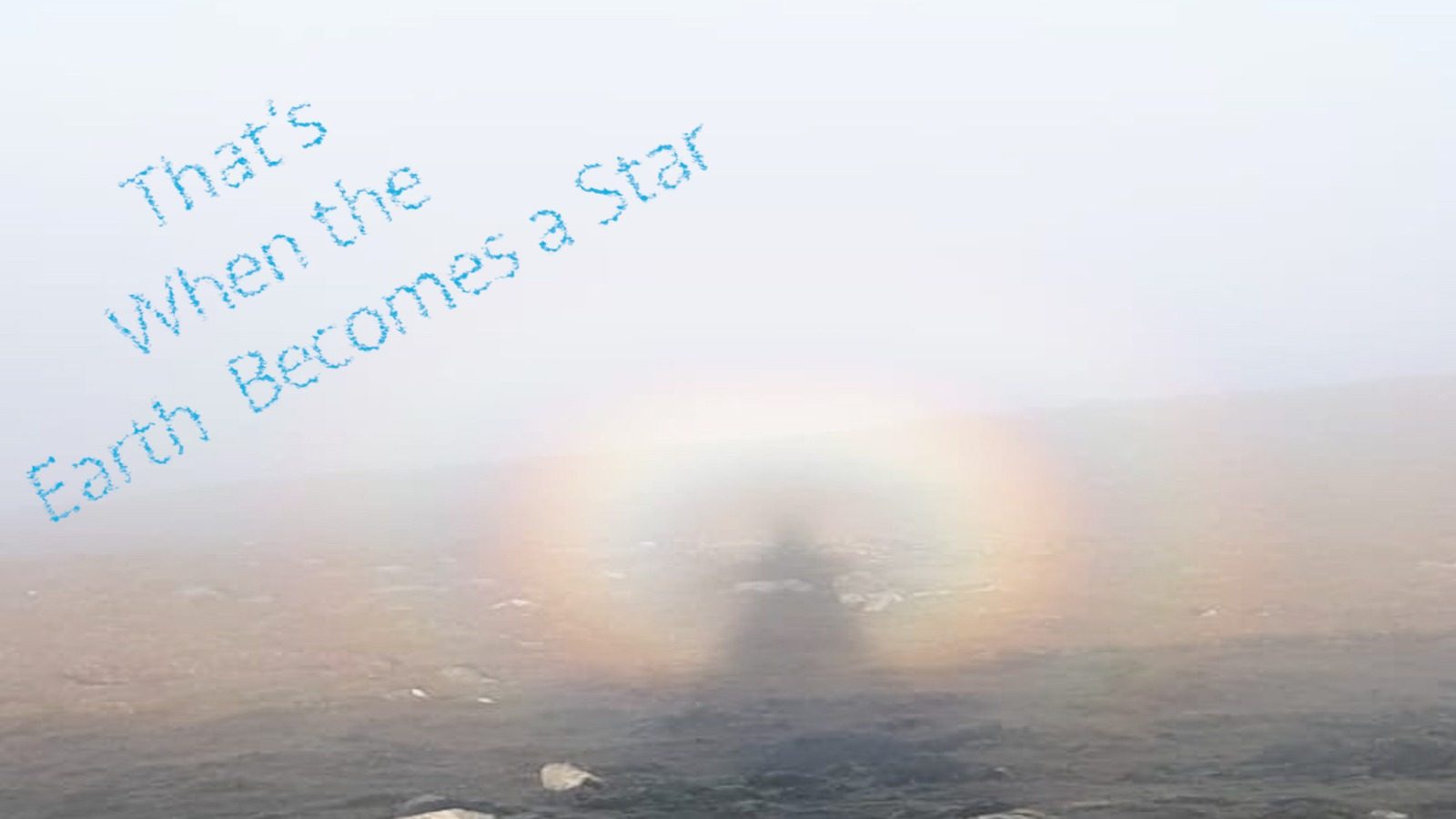
Hi everyone, it’s your host Faithfulness, and today I have with me Sean MacLeod from Scarriff, Ireland. Sean is here to share more insight into his remarkable musical journey while diving into his latest single, “Light Up the Sun,” released on 25th April 2026. Arriving as a bright and uplifting pop anthem, the track serves as a celebration of hope and the arrival of summer, while also acting as a special standalone release connected to his forthcoming album, “That’s When the Earth Becomes a Star,” which premiered on 5th May 2026. With its optimistic title and radiant energy, “Light Up the Sun” invites listeners to embrace warmth, renewal, and the simple beauty of new beginnings. What inspired Sean to create this vibrant piece, and how does it connect to the broader vision of his latest body of work? Let’s find out.
Welcome, Sean MacLeod. Before we begin our interview, here is what you need to know about this accomplished artist. Sean MacLeod is a prolific Irish songwriter whose career spans decades of creative exploration. A founding member of the Dublin-based band Cisco, Sean worked with U2’s former producer Paul Barrett, helping the band achieve critical acclaim in Ireland while attracting significant international attention with their album “No 1.” Following the band’s split, Sean embarked on a successful solo career, releasing numerous original singles and albums that showcase his distinctive ability to blend timeless pop craftsmanship with thoughtful, introspective songwriting. In 2026 alone, he has continued this creative momentum with multiple releases, including “That’s When the Earth Becomes a Star,” alongside the experimental project “We Don’t See That We Don’t See,” with yet another album, “Magic,” already set for release later in the year.
Sean MacLeod’s music draws inspiration from the rich sounds of the sixties, taking influence from legendary acts like The Beatles, The Beach Boys, and the Motown movement, while seamlessly weaving together elements of folk, classical music, and even the avant-garde. Although his compositions are built around memorable melodies and sophisticated harmonic structures, his lyrics often reach toward deeper philosophical and spiritual themes, offering listeners music that resonates long after the final note. Through “Light Up the Sun” and his ever-expanding catalogue, Sean continues to prove himself as an artist dedicated to creating meaningful, enduring music that bridges generations.
Having this brief Introduction, I’m sure new and current fans must be excited about our Interview today.
INTERVIEW
Faithfulness: From your early days with Cisco to your extensive solo catalogue today, what do you think has remained the emotional constant in your songwriting no matter how much your sound has evolved?
Sean MacLeod: The emotional constant, I think, would be the need to express something honest as well as musical in the song
Faithfulness: Your music draws from the Beatles, Motown, folk, classical music, and even avant-garde influences, yet it never feels fragmented. When did you first realize you could merge all of those worlds into one artistic language of your own?
Sean MacLeod: I am not sure that I do merge them to be honest. I just feel lucky to get an idea to be able to work on. I mean lucky to get the inspiration to create a piece of music and I guess the music you listen to exerts its influence somewhere in the song or the production or the delivery
Faithfulness: There’s often a philosophical and spiritual undercurrent beneath the melodic warmth of your songs. Do you feel songwriting has become a way for you to process questions that ordinary conversation cannot fully express?
Sean MacLeod: Yes, I think so and also I tend to like to write about things that are happening in my life or the world or what I am engaged in at the time I am working on the song.
Faithfulness: Having experienced both the collaborative environment of a band and the independence of solo artistry, what parts of your creativity became stronger once you began releasing music under your own name?
Sean MacLeod: Well what’s hard is coming up with all the ideas what becomes stronger is the ease with which it comes after having to do everything yourself. Having said that I often feel like I am winging it while going through the process. Its only afterwords, possibly a year later when you accidentally play one of your own songs and think ‘Oh that sounds good. Who is that?” and your impressed that it’s actually one of your own songs.
Faithfulness: You’ve become remarkably prolific, with multiple albums and singles arriving within such a concentrated period. Has creating music become more instinctive for you over time, or does each release still feel like entering completely unknown territory?
Sean MacLeod: I actually go through phases were I consciously try not to write songs but then an idea comes and then another and before you realise it an album is there. Usually, I try to explore different ideas and approaches that I think might make the song more interesting and that often means quite a struggle exploring and grasping some new musical style or concept.
Faithfulness: “Light Up the Sun” immediately carries the feeling of openness, warmth, and renewal. What emotional atmosphere were you trying to capture when you first began writing the song?
Sean MacLeod: Well I always try and write songs that move between the positive and the negative because life is light and shadow but with the hope that the light overcomes the dark. I think it’s important for me and for the listener. This particular song was a response to a person I knew very well who was going through a rather difficult time in their life at that point and it was something that I felt might help them. I think, even thinking about a person or situation and consciously trying to offer up something positive , whether or not they know it it has a positive effect on them or the situation as we are all inter-connected.
Faithfulness: Even though “Light Up the Sun” is a standalone single, it still exists alongside That’s When the Earth Becomes a Star. In what ways does the song reflect the emotional or philosophical spirit of that album without directly belonging to it?
Sean MacLeod: The song was written sometime ago and not as part of the group of songs that became ‘That’s When the Earth becomes a Star’ so I didn’t include it in the album. In that regard, the song is different in style and in how it was produced but yet it still embraces the pop structures that I try to work within even if I am being more experimental. Similar themes such as the sun and the light and stars are shared , as is the case with most of my songs because the songs are trying to point to the idea that we are beings that live in the cosmos and not just on the earth and that the light and the sun is an essential and necessary part of our humanity- which I think we are not always so aware of.
Faithfulness: The song feels deeply rooted in classic pop songwriting traditions, especially the melodic richness associated with sixties music. Were there specific records, sounds, or emotional memories that shaped the sonic direction of “Light Up the Sun”?
Sean MacLeod: I can not think specifically of any songs or styles that influenced it directly. The song just kind of arrived fully formed within the space of an hour or so. The chorus has the classic pop progression actually I think more of a 50s Doo Wop feel.
Faithfulness: There’s a brightness to the song that feels almost restorative rather than simply cheerful. Did you approach “Light Up the Sun” as an escape from heavier emotions, or as a response to them?
Sean MacLeod: I think, it’s more of a response to heavier emotions rather than an escape. I prefer to enter into the situation and turn it around if possible, even though it can be very difficult, rather than escaping it because no transformation takes place if the situation is not confronted. Also, I think difficulties, though , yes are often overwhelming, are often heavier when not faced.
Faithfulness: Your work often balances accessible melodies with deeper lyrical ideas. With “Light Up the Sun,” did the lyrics arrive naturally through the melody, or did the song’s emotional message already exist before the music took shape?
Sean MacLeod: The song came all at once from my memory because the situation it was dealing with was rather difficult.
Faithfulness: Releasing “Light Up the Sun” ahead of several major projects gives the single a unique role within this creative period of your life. Did the song feel like the clearest doorway into everything you’re exploring artistically right now?
Sean MacLeod: Since it was written and recorded separately to the new album it’s not really a reflection of the album. I just felt it was a song to enter the summer with.
Faithfulness: Compared to the more experimental direction hinted at in We Don’t See That We Don’t See, “Light Up the Sun” feels more immediate and radiant. Did creating the song offer a different kind of emotional satisfaction than your more abstract material?
Sean MacLeod: It was more the experimental side offered more satisfaction as songs like ‘Light Up the Sun’ feel like that approach had come to its peak and so I was ready for a new direction.
Faithfulness: There’s a timelessness to “Light Up the Sun” that makes it feel both nostalgic and contemporary at once. How do you personally define timeless songwriting when creating music today?
Sean MacLeod: I think this song expresses the pop song formulae in a way that I don’t really think I could improve on. Its as if my songwriting in this form had reached its pinnacle. While the new album doesn’t abandon classic songwriting craft it does experiment a lot particularly with alternative tunings and production ideas. ‘We Don’t See That We Don’t See’ does move further away from traditional songwriting but it might not be as accessible for that reason.
Faithfulness: Because the song arrives during such an active and creatively expansive chapter of your career, do you see “Light Up the Sun” as a celebration of where you currently are artistically, or as a glimpse of where you’re heading next?
Sean MacLeod: No. I thinks, it’s the opposite. I think it is a representative of what I was doing and now need to move on , more or less, into something new.
Faithfulness: When listeners hear “Light Up the Sun” for the first time this summer, what feeling or realization do you hope lingers with them long after the song ends?
Sean MacLeod: That they feel uplifted.
CHECK OUT THE RELEASE OF ‘Light Up the Sun’
HAVING LISTENED TO ‘Light Up the Sun’, HERE ARE MY HONEST THOUGHTS
“Light Up the Sun” is an uplifting synth-pop anthem that balances emotional vulnerability with an unwavering sense of hope. From its opening moments, the track creates an atmosphere of renewal, acknowledging life’s struggles while encouraging listeners to look beyond them. Polished production, driven by crisp percussion and shimmering synth layers, gives the song a radiant quality that perfectly complements its optimistic message. The arrangement feels contemporary yet timeless, allowing its melodic strength to shine naturally. MacLeod’s vocal performance is sincere and expressive, moving effortlessly between reflective verses and soaring choruses. His delivery adds authenticity to lyrics centered on perseverance, inner strength, and emotional resilience. The recurring metaphor of “lighting up the sun” hidden behind the shadows of the mind becomes the song’s emotional centerpiece, transforming hardship into possibility. With its memorable hook, thoughtful lyricism, and inspiring atmosphere, “Light Up the Sun” stands as a heartfelt pop release that celebrates hope, endurance, and personal transformation.
~ Faithfulness (Dulaxi Team)
Finally to our audience, I urge to listen to “Light Up the Sun”, add it to your playlist and be Inspired by it and on behalf of Dulaxi I like to appreciate you all by saying thank you everyone, See you on our next interview.
For more information about Sean MacLeod, click on the icons below.