
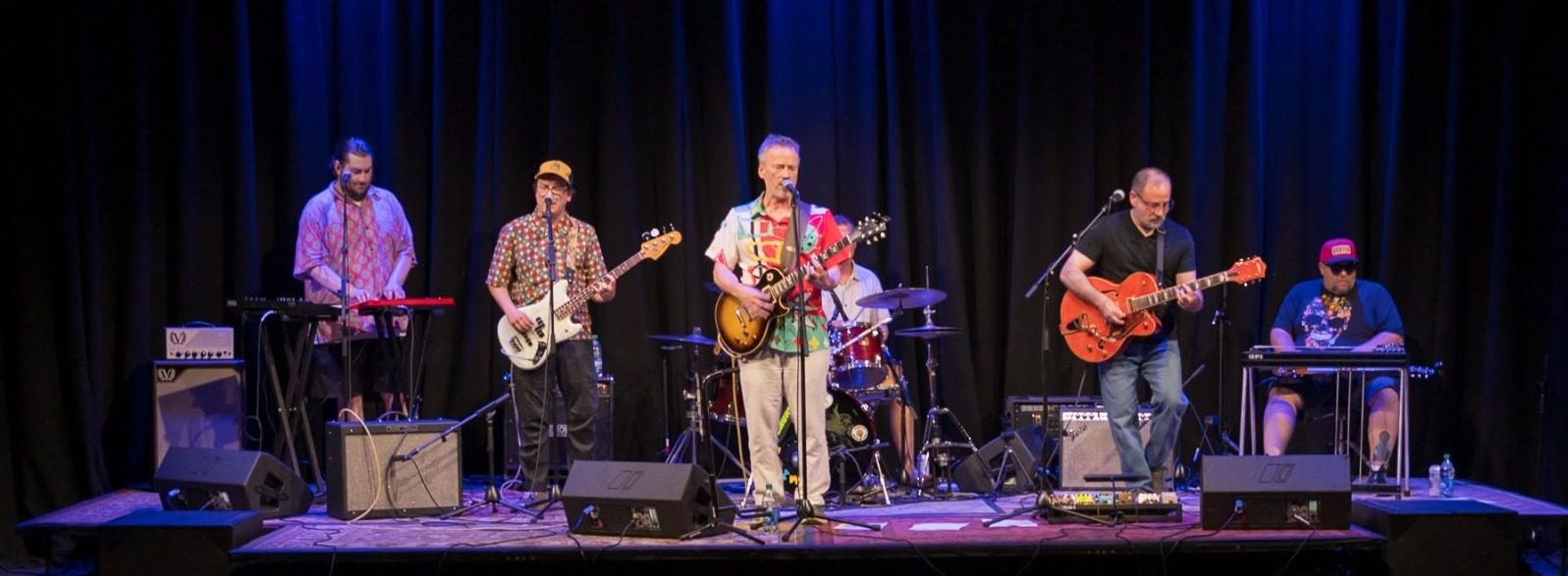
Released on 1st November 2025, Chameleous’ “Wicked Din” is a richly textured debut album that presents the Tennessee six-piece as a band deeply committed to craftsmanship, adventurous songwriting, authentic musicianship, and the experience of an album as a complete artistic statement. Chameleous combines modern classic rock with Southern psychedelia, alternative country, blues, roots, Americana, jam-band energy, swing, twang, and contemporary synth-driven rock, creating a sound that remains diverse while maintaining a strong identity. The album moves naturally between expansive rock arrangements and intimate, reflective passages, giving its material a compelling sense of movement and contrast. Electric and lead guitars, lap and pedal steel, bass, drums, keyboards, organ, synthesizers, and layered vocal harmonies work together to create considerable sonic depth, while Seva’s production at Sequoyah Studios in Knoxville preserves the warmth, energy, and emotional character of the performances.
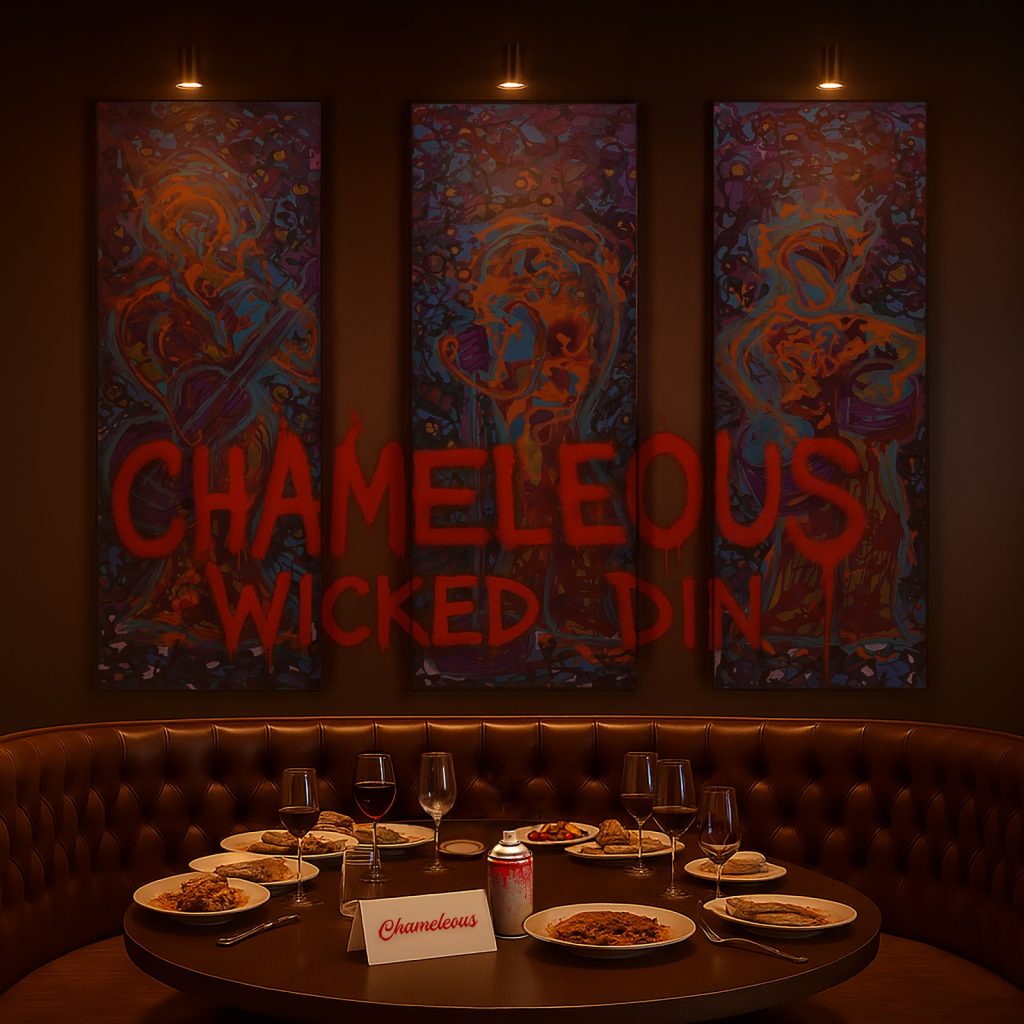
The album also carries the weight of decades of songwriting experience. Frontman and principal songwriter Mac Bartine drew from compositions originally written between the late 1990s and 2006, updating and reimagining them with a seasoned band whose members brought decades of musical experience to the recording. That process gives “Wicked Din” a mature foundation while allowing the arrangements to feel fresh, expansive, and fully developed. Its songwriting explores fear, power, isolation, desire, resilience, uncertainty, and the search for meaning with emotional honesty and imagination. Chameleous avoids chasing contemporary trends, instead prioritizing detailed arrangements, expressive performances, and organic production. The result is a cohesive and adventurous debut that respects classic rock traditions while extending them through psychedelic textures, roots influences, layered instrumentation, and distinctive songwriting, giving “Wicked Din” a strong sense of character and purpose.
I Knew:
Chameleous’ “I Knew” delivers a powerful vocal performance built around contrast, emotional movement and sheer intensity. The lead vocalist moves from intimate, restrained verses into gritty, soulful belts that give the choruses their full arena-rock force. That transition captures the song’s central emotional journey, moving from vulnerability and uncertainty toward courage and release. The vocal tone carries the raw character of 1970s rock and Southern blues, while the layered harmonies from the six-piece band add weight and dimension around the lead. Those harmonies become especially effective as the arrangement grows, creating a fuller vocal presence that mirrors the protagonist’s increasing confidence. The performance never loses its melodic focus, even when the delivery becomes forceful, allowing the emotional message to remain clear throughout. Thematically, “I Knew” is an anthem of resilience, courage and spiritual perseverance. The song confronts fear directly rather than avoiding it, using darkness and light as recurring images for psychological struggle and eventual freedom.
“Nothing here to fear, nothing here that we can’t handle” establishes its strongest statement of reassurance, while “So crack the sacred night, from the moon, we’ll take our candle” transforms darkness into something that can be entered, challenged and illuminated. The line “And this could be our way” provides the song’s emotional resolution, presenting hope as an active decision to keep moving forward. The message is ultimately about discovering strength during difficult circumstances and refusing to allow fear to determine the outcome. Musically, Chameleous combine 1970s arena rock, Southern swing, blues and psychedelic jam-band elements. A moody, driving bassline establishes the foundation while textured percussion maintains the song’s restless momentum. Dual electric guitars deliver gritty Southern-tinged riffs and blistering lead work, while warm classic-rock piano chords add harmonic depth beneath the heavier instrumentation. The production balances raw live-band energy with expansive clarity, giving the six-piece arrangement room to breathe. The song gradually develops from an eerie, suspenseful atmosphere into an explosive full-band climax. That progression perfectly reflects its message: tension becomes release, fear becomes courage, and darkness ultimately gives way to a triumphant sense of liberation.
Kiss Hello:
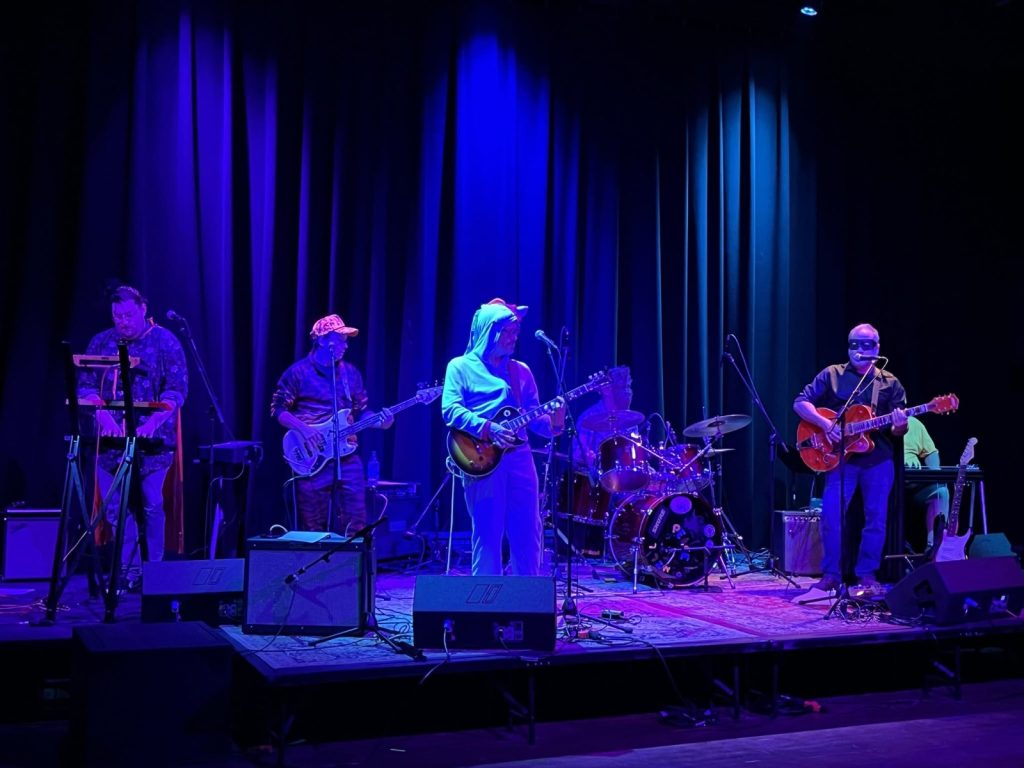
“Kiss Hello” is an expansive psych-rock performance that uses its extended structure to create constant movement between intimacy, tension and explosive release. The lead vocalist begins with a smooth, conversational delivery that places the storytelling directly in front of the listener before gradually increasing the vocal force as the arrangement expands. The performance maintains melodic authority even when the guitars and psychedelic textures become increasingly dense. Backing harmonies strengthen the larger sections, while the lead remains emotionally prominent throughout the song’s extended progression. This dynamic vocal approach gives the eight-minute composition a strong human center, ensuring that its elaborate instrumental passages never overpower its narrative purpose. Thematically, “Kiss Hello” confronts social disillusionment, political manipulation, fractured communication and existential uncertainty. Chameleous create a world where power struggles and ruthless competition have replaced genuine human connection, captured vividly in the line, “These gray days of mad power plays through rooms of knife-sharp elbows.” The lyric presents modern life as emotionally exhausting and morally unstable, culminating in the haunting question, “And no one knows if there’s still something to save.”
That uncertainty gives the song its deepest emotional weight. Yet the title provides a contrasting response to the surrounding hostility. “Kiss Hello” represents connection, affection and human interaction in opposition to a world dominated by division. The song therefore becomes both a critique of societal dysfunction and a plea to preserve humanity within it. Musically, Chameleous combine 1970s arena rock, psychedelic rock, progressive Americana and jam-band sensibilities. Twangy electric guitars establish the melodic framework while smooth bass and steady drums create a controlled rhythmic foundation. Echo-laden effects and layered guitar textures produce a spacious soundscape that expands as the song progresses. The arrangement grows from a restrained, melodic groove into a massive wall of sound, with extended instrumental sections giving the guitars room to explore. The production maintains impressive clarity across these layers, allowing the vocals, rhythm section, guitars and atmospheric effects to remain distinct. The result is cinematic and immersive, combining nostalgic rock grandeur with psychedelic experimentation and transforming the song’s social anxiety into an expansive musical journey.
Wicked Din:
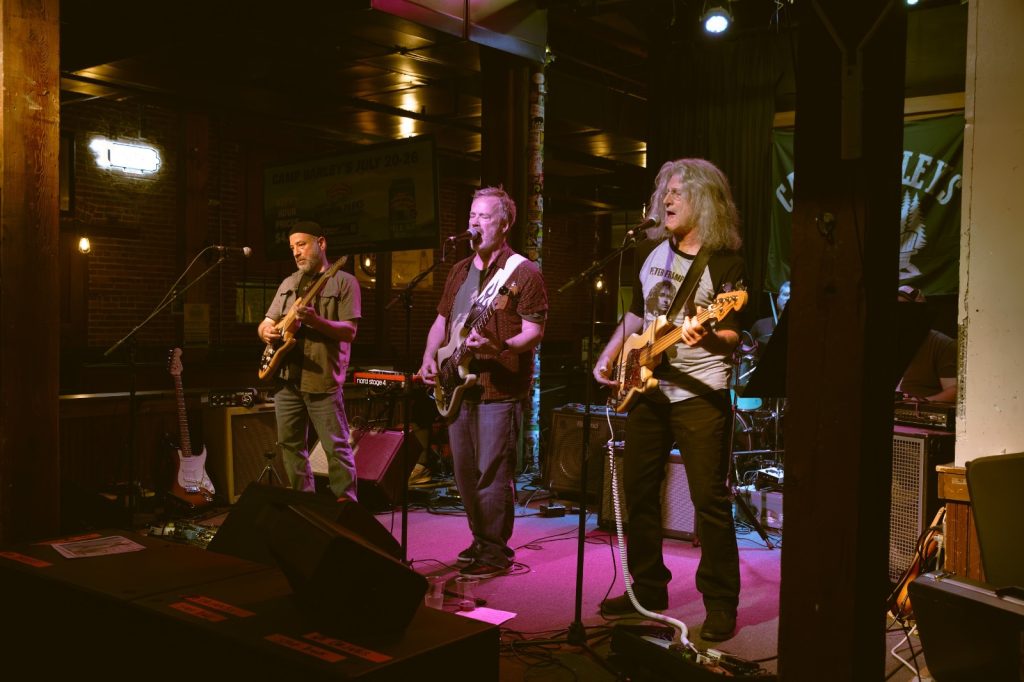
“Wicked Din” establishes its identity through a gritty, soulful vocal performance that balances restraint with theatrical intensity. The lead vocalist shifts between controlled, almost spoken rhythmic phrasing and powerful blues-infused rock delivery, creating a constant sense of tension. The quieter passages establish an eerie atmosphere, while the stronger vocal sections bring an unmistakable sense of urgency and dramatic force. The vocal remains clearly defined against the dense instrumental arrangement, allowing the storytelling to remain central even as guitars, bass and synthesizers build around it. This movement between controlled cadence and unrestrained vocal power gives the track its theatrical personality and reinforces the feeling that something dangerous and unpredictable is unfolding beneath the surface. Thematically, “Wicked Din” explores temptation, spiritual conflict, moral decay and the struggle to preserve inner stability within a chaotic environment. Chameleous immediately establish this darkness through the lyric, “I heard the mission bells .. Tolling to keep out Hell.” The religious imagery introduces a battle between protection and corruption, while later references to sin, red light, desire and nocturnal freedom create tension between moral restraint and temptation. The “wicked din” becomes a representation of overwhelming external noise and internal conflict.
Rather than simply portraying darkness as destructive, Chameleous explore its seductive qualities, creating a song where danger and beauty exist together. Its deeper message centers on maintaining personal direction and inner rhythm when surrounded by confusion, temptation and disorder. Musically, Chameleous fuse 1970s arena rock with psychedelia, jam-band grooves and Americana textures. A driving bassline and syncopated drum pattern establish a strong rhythmic pocket, while sharp electric guitars provide classic hard-rock force. The weeping lap steel introduces a roots-oriented, atmospheric quality that contrasts with the heavier guitar tones, while digital synthesizers add futuristic and spacey dimensions. The production combines organic live-band energy with spacious reverb and carefully controlled separation, allowing every layer to contribute without becoming indistinct. Jules’ unusual synthesizer textures, Rich Adlin’s experimental guitar sounds and Brian Wooten’s haunting lap steel create an especially distinctive sonic palette. The finished arrangement feels theatrical, hypnotic and slightly unsettling, perfectly matching a song about navigating beauty, temptation and chaos within a single “Wicked Din.”
Lonely Lady:
“Lonely Lady” is driven by a deeply vulnerable vocal performance that transforms isolation and longing into something immediate and physical. The lead vocalist balances fragility with gritty, soulful intensity, moving from quiet, inward delivery into aching emotional pleas. That progression mirrors the character’s growing desperation, making the voice feel less like a conventional melodic instrument and more like a direct expression of emotional pain. The performance gains additional strength from its restraint; instead of remaining powerful throughout, the vocalist allows quieter moments to expose vulnerability before increasing the intensity. This creates a dramatic emotional arc in which every rise in vocal force carries greater significance. The result is a raw performance that makes loneliness feel intimate, overwhelming and impossible to ignore. Thematically, “Lonely Lady” examines emotional isolation, grief, dependence and the desperate need for human connection. The song focuses on someone seeking protection and emotional safety through another person, revealing how loneliness can create an overwhelming desire to surrender control. Its emotional center lies in the tension between wanting intimacy and being deeply vulnerable to it.
The narrator does not approach connection casually; it becomes a means of escaping an internal state that has become unbearable. That gives the song its strongest message: human beings can become profoundly dependent on another person when emotional isolation reaches its deepest point. The song captures that vulnerability without disguising its desperation, presenting intimacy as both a source of comfort and an act of complete emotional exposure. Chameleous construct “Lonely Lady” around a rich six-piece arrangement combining roots rock, classic rock and spacious psychedelia. Three distinct guitar textures intertwine throughout the track, moving between clean melodic rhythm parts and gritty overdriven leads that create a broad wall of sound. The warm bass and steady drums provide grounding beneath the guitars, while atmospheric retro keys introduce additional space and psychedelic color. The production preserves the raw energy of a live band while maintaining a spacious, polished mix that gives every instrument room to breathe. The guitars create emotional tension, the keys deepen the atmosphere, and the rhythm section keeps the song moving beneath its heavy subject matter. This balance between density and space makes “Lonely Lady” a powerful expression of grief, isolation and the desperate search for emotional shelter.
Wicked Din Confronts Fear, Isolation, Temptation, Uncertainty, And Societal Chaos While Embracing Resilience, Connection, Courage, And The Search For Meaning Through Music.
~ Daniel (Dulaxi Team).
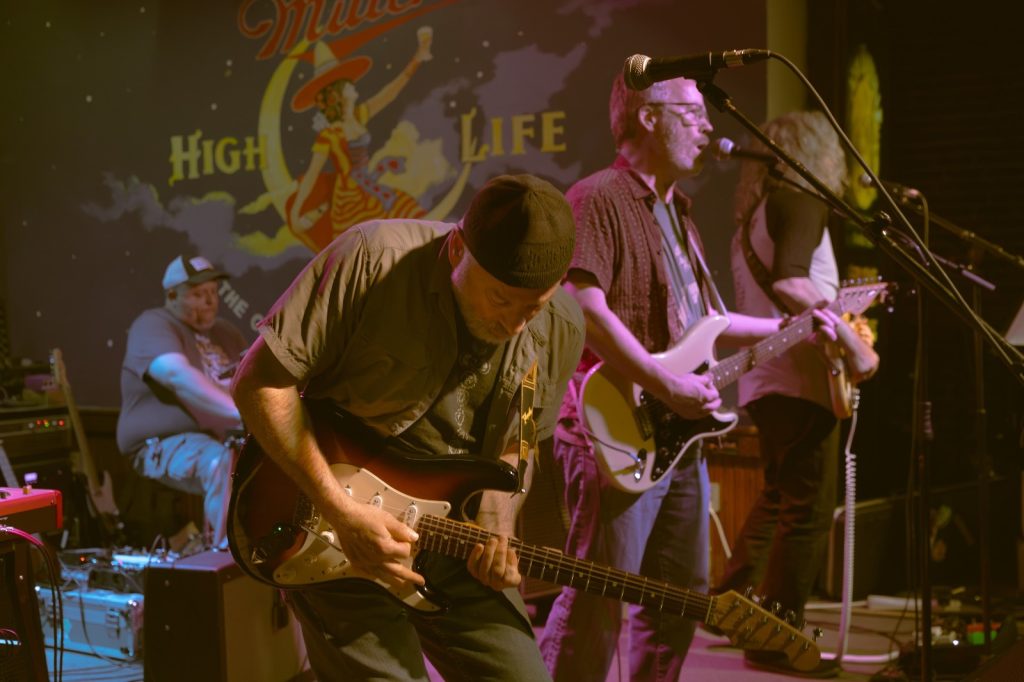
Chameleous is a six-piece original rock band from Tennessee whose identity is built around musical experience, thoughtful songwriting, and a willingness to move freely across genres. Featuring Brian Wooten on pedal and lap steel, Heath Nicholls on bass and harmony vocals, J Miller on drums, Jules Bryce on keyboards, Mac Bartine on lead vocals and rhythm guitar, and Rich Adlin on lead guitar and harmony vocals, the band brings decades of individual musicianship into a unified sound. Their approach combines modern classic rock, Southern swing, psychedelia, roots rock, and jam-band influences, allowing their music to shift naturally between textures, moods, and perspectives. Although “Wicked Din” is their first release, it carries the confidence and cohesion of musicians who have spent years developing their craft. The album establishes ChameleouS as a band with a strong artistic foundation, while their ongoing songwriting and live performances point toward an exciting future. “Wicked Din” is ultimately more than an introduction; it is a confident statement of what ChameleouS stands for as a band. For listeners who appreciate expressive musicianship, genre-blending rock, rich arrangements, and albums designed to be experienced as complete works, “Wicked Din” is an album worth making time for. Step into Chameleous’ world, give the album your full attention, and experience the depth, character, and adventurous spirit that make this debut stand out.