
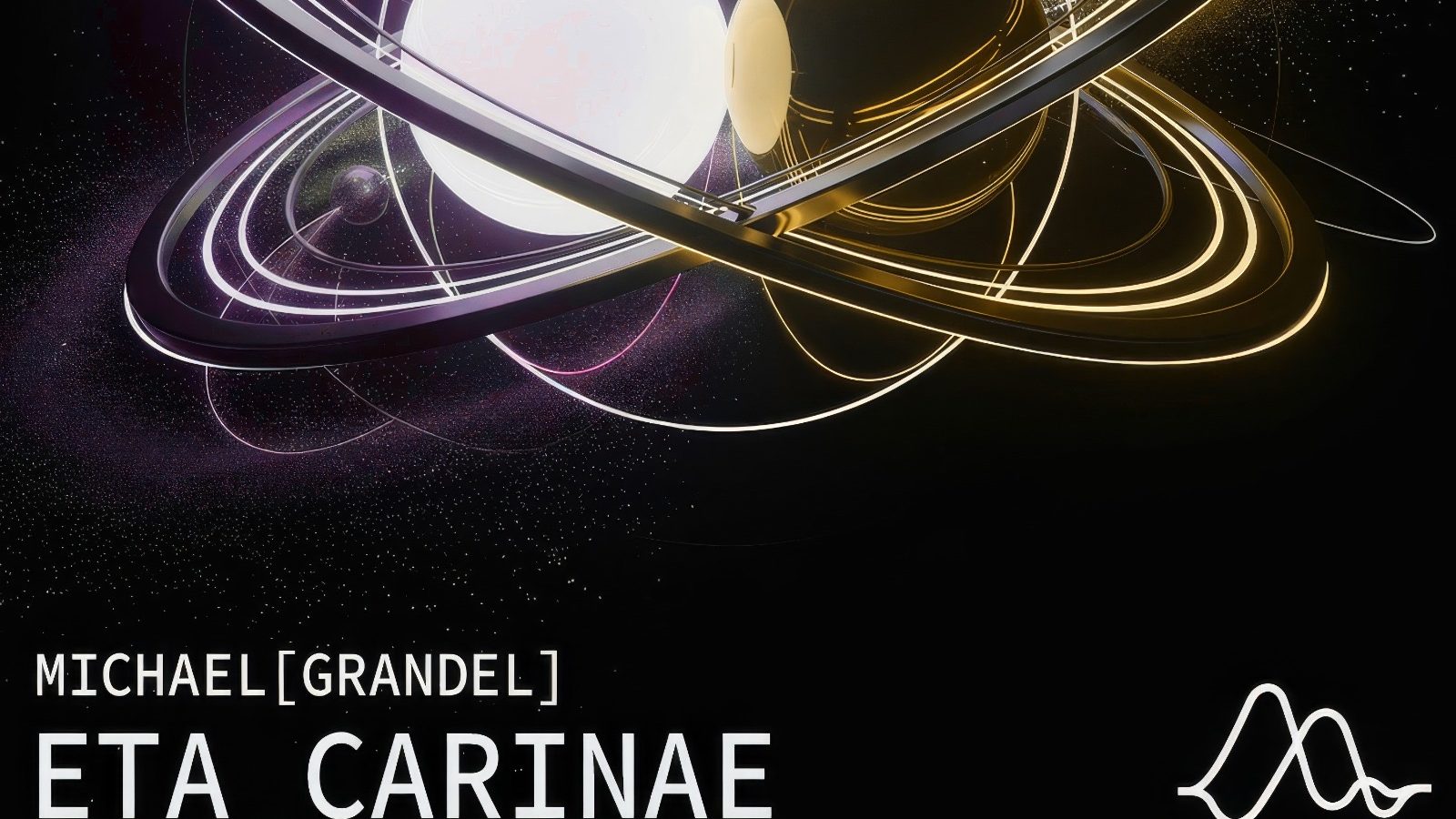
Hello everyone, it’s your host Tehillah from DULAXI, and today I’m delighted to be joined by electronic music producer and DJ Michael Grandel, a Miami-based, NYC-born artist whose sound explores the connection between house, techno, rave-inspired energy, and emotionally driven songwriting.
Based in the United States, Michael Grandel brings his latest original single, “Eta Carinae,” a powerful electronic release that blends peak-time club energy with a deeply personal emotional message. Released on 24 July 2026, the track draws from house, tech house, techno, trance, and vocal dance influences, combining driving drums, expansive synth textures, and an original vocal topline to create a record built for both dancefloors and personal moments of reflection.
Before we begin our conversation with Michael Grandel, here’s what you need to know about today’s featured project.
About Michael Grandel
Michael Grandel is a Miami-based, NYC-born producer and DJ whose music exists at the intersection of underground club energy, cinematic songwriting, and technical exploration. Drawing inspiration from house, techno, and rave culture, his artistic identity reflects a fascination with movement, structure, physics, and the relationship between precision and emotion.
With a background in software engineering and science, Michael approaches music through both creative instinct and analytical curiosity. His production process combines detailed sound design, experimentation, and emotional storytelling, allowing him to create electronic music that feels both technically refined and deeply human.
His latest single, “Eta Carinae,” takes inspiration from the volatile and hyper-luminous star system of the same name. The track explores the idea of radiance under pressure, transforming moments of uncertainty, emotional intensity, and personal reflection into movement, release, and self-reclamation.
Produced, mixed, and mastered entirely by Michael Grandel, “Eta Carinae” represents his ability to merge the warmth of classic 1990s house vocal influences with the power and scale of modern electronic production. Built around a deep long-tailed kick, thick driving drums, wide synth elements, and an original vocal/topline, the record balances physical dancefloor energy with a strong emotional core.
The creative foundation of the track came from Michael’s desire to transform difficult emotions into something uplifting and empowering. Rather than remaining within feelings of uncertainty or longing, “Eta Carinae” channels those experiences into a celebration of identity, resilience, and the decision to embrace one’s own intensity.
Throughout his artistic journey, Michael has explored the relationship between sound, technology, and human experience. His engineering background has influenced the way he approaches sound design and problem-solving, while his experiences outside music continue to shape the emotional worlds he creates.
Beyond individual releases, Michael continues developing his sound by exploring different approaches to rhythm, arrangement, and electronic music storytelling. He is also building Quanta, a creative engineering project designed to bring together his technical and musical worlds by exploring new ways technology can support the artistic process without replacing human creativity.
With “Eta Carinae,” Michael Grandel presents a record that reflects both his current evolution as an artist and his broader vision for electronic music: music that moves the body, engages the mind, and creates space for emotional connection.
Having this brief introduction to today’s featured project, I’m sure both new listeners and longtime fans are excited to hear directly from Michael. So, without further ado, let’s begin today’s interview.

INTERVIEW SESSION
Tehillah:
Growing up in New York City and now creating music from Miami, while also having a background in software engineering and science, how have those different environments and disciplines shaped the way you understand creativity, movement, and sound?
Michael Grandel:
Honestly, I have lived in several major cities across the U.S., and because they are all still within the same country, I do not think the cultural differences between them are the main force shaping my creativity. What matters more is how vibrant my life feels outside of music, and each city enabled a different way of life.
New York will always be home because it is where I am from. It gave me perseverance and an engine—the part of me that has kept pushing through years of obstacles in production. Miami has been the best balance for me so far: great weather, access to travel, wellness, competitive volleyball, and room for intellectual curiosity. Engineering developed a curious and detailed way of thinking that helps me through the music production process.
We like to divide a person into clean categories—engineer, scientist, athlete, artist, New Yorker – but I do not experience myself that way. Engineering and science, where I live, volleyball, and music all coexist and inform one another. I could probably write an essay about every connection between them, but the simplest answer is that all of it gives me more to bring back into the studio, and I could not be the artist I want to be without them.
Tehillah:
Your artistic identity exists at the intersection of underground club energy, cinematic songwriting, and a fascination with concepts like movement and physics. How do you translate those ideas into music, and what does that balance between precision and emotion mean to you as an artist?
Michael Grandel:
I have been developing my artistry for almost six years, and it is still an ongoing journey. The most consistent part of it is that I keep trying to push myself into discomfort and learn something new.
My natural instinct does gravitate toward what you described: cinematic club energy, chord-like progressions, and sounds that feel grand. Lately, though, I have been deliberately teaching myself to make more stripped-back music, like modern tech house, because there are elements of it I really enjoy and because it does not come automatically to me. If I stop thinking critically, I fall back into cinematic chords. Growth sometimes feels a lot like debugging: What pattern am I repeating? What am I avoiding? What happens if I remove the chords and force the rhythm to carry the whole idea?
Precision is another part of that. I can get deep into an oscilloscope, explore dynamic phase control, and spend a ridiculous amount of time optimizing how two sounds interact. But I also experience ear fatigue quickly. If I tinker for too long, the loop stops feeling like music and starts feeling like a specimen. At that point, I sometimes have to make an emotional decision to let it go and move forward while the original feeling is still alive.
So, for me, the balance is not really precision versus emotion. It is learning when precision is helping the emotion and when it is starting to kill it.
Tehillah:
Before stepping into the world of house, techno, and rave-inspired production, what experiences or moments first made you realize that music could become a powerful way to express emotions that words alone could not capture?
Michael Grandel:
Sadly, I do not remember one clear childhood moment when I consciously realized that. There were probably many: competitive Latin dancing, or growing up in a family that loved going clubbing—and yes, sometimes brought their kid along.
Most of my life before young adulthood was spent trying to figure out my identity in a world where I did not feel like I fit. Once I became more grounded in myself, I was finally able to open my ears to music in a more emotionally resonant way. A lot of that came through club music itself: the lights, the energy, and the kicks and bass of house music.
But since the question is about what came before that, the earliest thing I remember loving was percussion. I loved parades where you could feel a stampede of drums approaching before you could even see it—just drums and shakers, especially in the style of Brazilian Carnaval. Anytime I heard drums that felt primal and communal, I got goosebumps.
Words never gave me goosebumps.
Tehillah:
Your work often explores the relationship between physical energy and emotional release. How do you approach creating music that can move someone both literally on a dancefloor and emotionally within their own personal experience?
Michael Grandel:
I have developed—and am still developing—a process around what I call the dance-loop. It is the engine of the track: the section that, if it were playing in a club for a while, I would still be dancing to. I spend a lot of time there because it guarantees that whatever emotional story grows around the track, it will keep us moving.
More recently, I have realized that the loop itself may already be good enough, and that its energy can come from the contrast created by the surrounding arrangement. That has led me to experiment with beginning from tension and then transitioning into the groove, rather than expecting the loop to produce the entire journey on its own.
Once the physical engine works, I ask whether the track still feels like it is missing a soul. My default impulse is simple: I want to dance, have fun, and feel festive, like I did when I heard those Brazilian Carnaval drums. But sometimes that is not emotionally resonant enough. Then I become introspective. What has been the theme of the past few weeks? What experiences, struggles, joys, or relationships keep resurfacing? I may journal until I find one small piece of an experience that keeps returning.
Then I sit with it and try to re-experience what I felt—which, fun fact, neurologically means I am also rewriting the memory a little every time I recall it, so it’s less reliable. I do not have a strict method after that. I dig and ruminate until an idea appears.
“Eta Carinae” came from that process. The core rhythm was already in place, but the vocal came from me literally thinking, I wish some goddess would send me the message I need to hear while I am going through this difficult week.
Tehillah:
“Eta Carinae” draws its name from a volatile and hyper-luminous star system, creating a powerful connection between cosmic intensity and human emotion. What inspired you to use this imagery, and how does the idea of radiance under pressure reflect the message behind this track?
Michael Grandel:
While I was digging for the emotional core, I kept returning to a pattern in my social and romantic connections. When a connection starts to deepen, I often feel like I become part of the other person’s healing journey. I provide warmth, light, positivity, perspective—whatever they need in that moment. And honestly, that lights me up. I love helping people move through their emotional experiences.
What has been difficult is that I rarely feel the same depth reciprocated. When the conversation turns toward my life, my experiences, or the philosophies through which I understand them, it can feel as though the other person no longer knows how to help drive it. They may understand what I am saying and respond, “Wow, I never thought of it that way,” but I am still the one leading us there.
That is where the Sun entered the metaphor. It felt as though people could understand and absorb the warmth and radiance of the Sun, but when I moved beyond what that familiar Sun represented, they did not know how to follow me. While I was imagining this message from a goddess of the Sun, another thought appeared: What if I am not actually a child of this solar system? What if I come from something more radiant?
That question led me to Eta Carinae. Having the message arrive from outside our solar system felt even more healing. It gave me another way to understand why I so rarely feel fully met: maybe I had been measuring myself against the wrong system.
The point was not that everyone else is lesser. It was that I had been treating incompatibility as evidence that something was wrong with me and that I needed to shrink. The metaphor allowed me to reverse that. Maybe I am not “too much.” Maybe I am simply a very particular combination of emotional intensity, curiosity, and expansiveness that will not fit everywhere. There may be people and communities capable of meeting that—even if I have not found them in abundance yet.
It turned the thought, ‘Something is wrong with me; I need to change so I can fit here,’ into, ‘Actually, I am great as I am. I do not fit just anywhere, not because I am needlessly complicated, but because expansiveness is one of my defining qualities. I intentionally try to move beyond containers and limits, and my people are probably the ones who choose to do the same.’
That is what radiance under pressure means to me in the track. The pressure is choosing to morph so one can feel met, like the gravity attempting to collapse a star. The radiance is refusing to dim yourself and explode because of it.
Tehillah:
The track transforms feelings of uncertainty, longing, and emotional intensity into movement and self-reclamation. Can you share the personal or creative idea behind turning those heavier emotions into a record that feels uplifting, powerful, and full of life?
Michael Grandel:
Some of the personal story is in the previous answer, but the creative decision was actually pretty simple: I did not want to make a record that stayed inside the rumination. I had already spent enough time doing that in my head.
The dance-loop gave the feeling somewhere physical to go. Then I wrote the vocal as the exact message I needed to hear: wake up, remember who you are, and stop allowing one uncertain connection to eclipse everything else in your life.
As I kept looping the track during production, it did an annoyingly good job of becoming the remedy. I finished it in two days because I could feel myself beginning to recover and losing access to the exact emotional frequency that had opened the song. I needed to finish it while I could still feel both sides of the transformation.
I was not pretending the uncertainty did not hurt. I was turning it into something I could dance through until it stopped controlling the entire frame. The fact that the record felt uplifting was proof that the feeling had already started to move.
Tehillah:
“Eta Carinae” blends the spirit of 1990s house vocals with modern rave pressure through deep kicks, driving drums, and wide triumphant synths. How did you approach combining those classic influences with your own contemporary production style to create a sound that feels both nostalgic and fresh?
Michael Grandel:
The track began with the dance-loop you hear near the beginning, right when the vocal enters. I was thinking about samba and Carnaval drums—those massive drums where the initial hit can feel relatively soft, but the tail is long and deep. That led me toward a long-tailed kick. Because it occupied so much of the sub range, I did not have room for a complicated bass, so I made a simple pattern that fit around it.
Then I layered a synth over the groove. I did not have much of a direction; I was just playing with oscillators until my instinct said it sounded right. That instinct tends to lead me toward chord-stab-like sounds, probably because part of my developmental influence was the club music my parents played in the 1990s and 2000s. Those tones are somewhere in my ear whether I intentionally call upon them or not.
Once I found the emotional center, I wrote the vocal to deliver the message I needed. The nostalgic quality was not a conscious brief. If I reverse-engineer why people hear the 1990s in it, I think the vocal feels nurturing and almost motherly. It is a goddess speaking to one of her children and lifting their spirit. That also resembles the preacher-style vocals that were common in house music at the time.
The contemporary side comes from the way I produced it: the low-end control, the warping and rhythmic edits in the vocal, the width of the lead, and the pressure of the drums. I was not trying to recreate an older record. The older influence surfaced naturally inside the way I produce now.
What is interesting to me is that uplifting, preacher-like vocals now register as nostalgic. Why did modern dance music move away from them? Did the culture change? Did younger clubbers stop connecting to that kind of spiritual uplift, or did the industry simply stop offering it as often? I do not know. But I think the record feels fresh precisely because I was not trying to answer those questions or imitate an era. It just came out of me that way.
Tehillah:
The original vocal and topline give the track a human center against its massive electronic production. What role did the vocal element play in shaping the emotional identity of the song, and how did you ensure that the human story remained present within such a powerful club-focused arrangement?
Michael Grandel:
I began with the dance engine, which came from modern production instincts. The vocal arrived later, once I understood what I was trying to heal and what message I needed the track to deliver.
I often like to tell stories through rhythm and sound alone, but for this record I did not want that much ambiguity. Without the vocal, the track might still feel grand, warm, or triumphant, but it would not communicate the exact thing I needed it to say.
I treated the vocal in a way inspired by modern tech house: I placed a relatively long spoken topline directly over the beat, then warped, cut, repeated, and repositioned phrases until the speech felt rhythmically embedded in the groove. The voice is not simply floating above the production. It becomes part of the percussion while still carrying the story.
That is also how the human center remained present. No matter how large the drums and synths became, the arrangement still had to make space for the words: remember who you are, and do not shrink because somebody else cannot meet you.
Tehillah:
As the producer, mixer, and mastering engineer behind “Eta Carinae,” you had complete control over every stage of the track’s creation. How did that level of involvement influence the final sound, and what details were most important for you to get right during the production process?
Michael Grandel:
Owning the track E2E—end to end, as we say in engineering—means I get to explore the full range of my creative process without handing it off at an arbitrary boundary. During production, I am expressing movement, artistry, and emotion. During mixing and mastering, the scientist in me comes back into the room.
I have learned production, mixing, and mastering concepts from videos almost every day for the past six years. I do not remember every technique, and I do not have some enormous template containing every clever trick I have ever learned. Honestly, I probably should keep a written manual so I stop forgetting things. But most of my first five years were spent going very deep technically. Right now, I am trying to finish faster and complete more repetitions because there are other skills I need to build. I do not want every track to become another technical dissertation.
One process that is consistent is how I inspect the frequency spectrum. I isolate the sub and low end first and ask whether it already feels coherent. It is almost like hearing the track while standing outside the club. Then I gradually reveal more of the spectrum and listen for whether each new region feels full, empty, muddy, or unnecessarily busy. I also do the reverse, beginning with the highs and gradually revealing the lower frequencies.
I often do this early, while I am still designing the dance-loop. When I hear only one part of the spectrum, I form an expectation of what the rest of the harmonics should sound like. If the actual sound begins to derail the motif as I reveal it, that tells me I need to change the source, the balance, or perhaps the loop itself—not just put a cosmetic EQ fix over it later.
For “Eta Carinae,” the kick and bass were especially important. I wanted the long, deep low end to feel clean and powerful rather than distorted. The vocal had to stay intelligible, and the wide lead had to feel enormous without becoming harsh. In mastering, I focused on achieving enough clarity and loudness without making the limiter clamp down on every kick—generally around one to two decibels of gain reduction. I prefer clean, tuned subs and basses over heavily distorted ones. I want them to feel almost like a perfectly tuned Brazilian drum.
Tehillah:
The song carries both underground club weight and a festival-scale sense of elevation. When building the arrangement, how did you decide where to create moments of tension, release, and emotional impact so that listeners could experience the full journey of the track?
Michael Grandel:
I struggle with arrangement, and I am not going to pretend otherwise. It is something I am actively practicing and finding new techniques for.
Once I had the dance-loop and the vocal idea, I got stuck translating them into a complete track. What finally unblocked me was starting from the tension: the breakdown, or the lowest point of the record. I placed the vocals there and began building around them. I entered a flow state and added the pieces that felt missing without overthinking them. Because most of the core elements already existed, I could create textures that belonged to the same world by processing and reshaping those sounds rather than introducing entirely unrelated ones.
One thing I initially wanted to practice was entering the drop without using or foreshadowing the main synth pattern in the breakdown. I am interested in how a track can conceal its drop elements and still feel cohesive when they arrive. But this record was already exercising several new muscles at once. When I added that challenge too, I started getting stuck and frustrated.
So I gave myself some grace: a track does not need to teach me one hundred new things. A few will do. The new skills in “Eta Carinae” were making something genuinely emotionally resonant and using a vocal to tell a story beyond a simple three- or four-word phrase. I needed to finish while that resonance was still accessible to me.
When I encountered more arrangement blocks, I used a reference track to help lay out the structure. I think of it like studying for an exam. I could spend hours refusing to move until I solve a problem entirely on my own, or I can work on it for twenty minutes, take a hint, understand the principle, and continue. In this case, I took the hint because I needed to move faster. The reference gave me structural information; it did not make the creative decisions for me.
This track meant something to me. It was not supposed to become another endless experimental session like so much of my unfinished work.
Tehillah:
Your music reflects a connection between technical structure and emotional expression. How does your background in software engineering and science influence the way you approach composition, sound design, and problem-solving during the creative process?
Michael Grandel:
I actually do not think engineering and science influence my compositions in the simple, flattering way people may expect. Engineering is about systems, organization, modularity, and repeatable patterns. If I applied that too formulaically to composition, I would probably create very predictable arrangements—which some people may argue this track has, but my intention is generally to resist that.
Where engineering and science absolutely influence me is in sound design and problem-solving. Sound design involves understanding frequency space, oscillation, phase, and the way several signals interact. I studied applied mathematics deeply, and subjects such as numerical methods and analysis helped me understand how oscillations can be represented through Fourier analysis. In practical terms, that gives me a more precise mental model for what is happening when sounds interact in ways I either intend or dislike.
Music is subjective, but I love when part of a musical problem can become objective because that means a solution is achievable. What does “overlapping frequency” actually mean in this case? Is the issue frequency masking? Is it phase? Is it the way our ears perceive one sound in the presence of another? Those questions allow me to edit with more precision.
That objectivity can also help creatively. I may become stuck and think, ‘Something is missing; let me add a sound.’ But then I ask: What sound? What frequency space is actually open? What role would it serve? Maybe everything below 400 hertz is already full, while there is room between roughly 500 and 1,000 hertz. That does not tell me exactly what creative choice to make, but it narrows an infinite field into a smaller set of useful options.
The objective framework does not create the idea for me. It prevents me from freezing in choice paralysis long enough to find one.
Tehillah:
Creating electronic music often requires balancing repetition with progression. What methods do you use to keep a dance track engaging and evolving while maintaining the hypnotic qualities that make house and techno so powerful?
Michael Grandel:
LFOs and randomness. I try to assign controlled randomness wherever it feels appropriate so a repetitive sound is not repeating in exactly the same way every time.
But I also do not always want my music to feel hypnotic. Hypnosis carries a particular attitude and energy, and that is not necessarily what every track needs. “Eta Carinae,” for example, was designed to be emotionally resonant while still carrying club energy. It is not my attempt at a relentless, hypnotic techno record.
For larger structural questions, I use reference tracks. I do not reference the sounds themselves as much as the roles and the counts. How many distinct dance-loops does this track contain? How many elements fill the frequency spectrum? How many variations of the loop are there? Does the bass ever change, or do only the upper elements evolve? A reference may reveal that a track contains five core elements and five variations, while the bass remains almost completely fixed.
I am fascinated by records that allow a motif to play almost endlessly. I do not naturally love the mainstream EDM template where the beat constantly disappears for another breakdown and drop. I am drawn to sets from artists like Nicole Moudaber and Carl Cox where the rhythm feels relentless and almost never-ending. Making records that sustain that kind of motion is a skill I am actively trying to build, but “Eta Carinae” was not meant to be the final demonstration of it.
I begin with my own dance-loops and create the tension and release that feels right to me. If I remain blocked on a section for more than about thirty minutes, I find a reference and study how somebody else solved a similar structural problem. Then I return to my own work until I reach another wall.
Reference tracks are textbooks. I can spend a lifetime trying to rediscover every principle alone, or I can study what other people have already learned and then decide how to use it. I try to balance self-discovery with actual study.

Tehillah:
Looking at your evolution as an artist, how do you feel “Eta Carinae” represents your current direction and the kind of musical identity you are building within the electronic music scene?
Michael Grandel:
“Eta Carinae” represents my current direction less because of its genre and more because of where I am in my learning process.
For almost six years, much of my released music and unfinished work was really me studying the depth of music and sound. I suspect my journey has taken longer than it might have because I chose to go so deep technically. I always wanted to become unblocked and enter the scene, so I worked with mentors. Their feedback was often similar: the talent and ideas were there, and in many cases I knew more of the technical details than they did—but did it actually need to be that deep?
For a while, I tried to take the advice to stop overthinking and simply make music. That did not work for me. I think I genuinely needed to understand the science first so that it could eventually become habitual and leave mental space available for creativity.
I remember learning the Pythagorean theorem in school. Most students accepted the formula and began using it. I could not. I asked the teacher why it worked and wanted her to derive it. She told me to accept it as it was. I literally stopped following the lesson and tried to derive it myself instead. I would not use the formula or move on to the problems until I understood where it came from.
I struggled because it was probably my first attempt at deriving anything, so I went home and eventually looked up the proof. I was amazed by how simple, clever, and beautiful it was. Once I understood it, I could comfortably use the theorem as a tool—and, more importantly, adapt the underlying idea when a problem did not present itself in the exact form I had memorized.
From then on, that became how I approached mathematics. I did not want to use a formula until I understood how it was derived. College moved too quickly to indulge that instinct every time, but the instinct never disappeared.
That is also my musical journey. I spent six years “deriving” sound. I could not simply use the concepts and make music while so many of my questions remained unanswered. Some of those questions went beyond what I could find in tutorials, so I had to run experiments and derive answers on my own. It made me slower, but I can finally feel that groundwork becoming automatic. Because I understand more of the inner machinery, I can now bend and adapt it when I want something unconventional rather than merely repeat a recipe.
My previous track, “Body and Mind,” was the first time I felt I could work more intuitively because my technical mind could handle more in the background while I focused on what my body felt. I spent six years tuning my mind, and now I am bringing in my body.
“Eta Carinae” is the next step. I brought in emotional resonance, storytelling, and a vocal that communicates more than rhythm alone. I can only do that now because my mind finally feels comfortable enough with the science of music to leave room for the rest of me.
Tehillah:
Dance music has always created spaces where people can release emotions they may not express elsewhere. What kind of personal experience do you hope listeners have when they hear “Eta Carinae” in a club, at a festival, or during a private moment alone?
Michael Grandel:
I hope the track does for someone else what it did for me—almost annoyingly well.
In a club or at a festival, I first want people to move. They should not need to read an interview or understand the metaphor before the record works. But I hope the vocal catches someone at the particular moment when they need it. Maybe they arrived carrying disappointment, uncertainty, or the feeling that another person had made them smaller, and suddenly something in the track makes them stand a little taller.
Alone, I imagine the experience more intimately. While making the record, I pictured myself going to a dance floor alone, returning to the place I come from, and remembering my strengths through movement. I wanted to dance by myself and remember who I was, what I carried, and how much life still existed beyond one disappointment.
I hope someone can play it in their headphones, apartment, car, or wherever they are and have that same private moment of reclamation. Not, This never hurt me, but, This hurt me, and I am still here. I am still moving. I am still glowing. I am triumphant. Life still has a big plan for me, and I’m excited to see what it is.
Tehillah:
With its combination of house warmth, techno drive, and emotional songwriting, “Eta Carinae” reaches different corners of the electronic music world. How do you hope this track connects with DJs, electronic tastemakers, and listeners who are searching for music with both energy and emotional depth?
Michael Grandel:
I hope DJs hear a useful record before they hear an essay. It has to function in a real set: the low-end weight, groove, vocal, and lift all need to do an actual job. I would love for it to become the record a DJ reaches for when the room needs elevation without abandoning the beat.
Tastemakers may hear different genres in it. Some people have called it house, others hear techno or rave, and many have focused on the 1990s influence. I am okay with the various perspectives. In a way, the conflicting reactions reveal the wide range of spaces the record occupies. I do not need everybody to agree on the label before they understand the feeling.
For listeners, I hope no industry context is required at all. They can simply dance to it. But if the story meets them personally, there is another layer waiting there. I at least want the audience to feel the surface level depth of this track which is the party doesn’t start, until I walk in (Kesha).
Basically, I want the DJ utility to get the record played, and then I want the emotional specificity to be the reason somebody goes home and looks it up.
Tehillah:
As you continue developing your sound, what new creative territories are you interested in exploring, and how do you see your relationship with house, techno, and cinematic storytelling evolving in the future?
Michael Grandel:
People may label my music as house or techno. Those are useful coordinates, but neither reaches the true core. My genre is rhythm, and I use rhythm to tell stories.
Right now, I am intentionally practicing more stripped-back forms of tech house, where the elements are more restricted, the sound is less grandiose, and a large chord progression cannot carry the emotion for me. I want to understand how rhythm, percussion, and small changes can create a festive, party-like feeling almost entirely on their own. That is uncomfortable for me because my instinct naturally reaches for chords and scale, or darkness and mystery.
At the same time, I do not want to erase the emotional resonance and grand perspective that make me who I am. The goal is not to imitate a trend until my own instincts disappear. It is to absorb the restraint and rhythmic intelligence I admire in that music, then discover how it blends with my natural sound.
I want every track to teach me something new and enter a different emotional territory—festive, mysterious, sinister, playful, sexy, grand, triumphant—while rhythm remains the engine connecting all of them.
I am also building Quanta, a creative engineering project that brings my technical and musical lives together. It is not a prompt-to-song generator and it does not make music for me. I am designing it as a context-aware co-producer that can understand an actual session, remember the intention behind decisions, and challenge me specifically rather than giving generic advice. Eventually, I also want it to handle parts of the operational work around an artist’s career so the human creator can spend more time on the irreplaceable part: making the music.
That is part of my future too—not separating the engineer from the artist, but using one to protect and expand the other.
Tehillah:
Looking beyond individual releases, what kind of legacy do you hope to build as an artist, and what do you want people to remember about the emotional worlds you create through your music?
Michael Grandel:
Honestly? Fuck the trends.
Music is subjective. You will always make something that some people love and other people do not. Of course I want recognition while I am alive. There are real experiences I want, including playing major festivals, and I am not pretending to be detached from that ambition. But I do not want recognition at the cost of outsourcing my own discernment.
When people give feedback, I try to separate fact from opinion. Objective feedback may identify a technical problem, an error, or something measurable that I can investigate. With subjective feedback, I mentally add the prefix, “This person feels that…” That small phrase grounds me in the truth that I am hearing one person’s experience, not a universal ruling.
There are artists playing enormous festivals whose music does not move me at all. That does not mean their music is bad; it means it is not for me. The reverse is also true. My music will not be for everybody, and that is okay.
The larger legacy I care about is an expansion of that idea. People do not only have opinions about your music. The people in the industry itself have opinions about how you should live, how you should appear on social media, how you should network, how you should produce, which labels you should chase, and what your career is supposed to look like. Absolutely fuck that. If there were one objective path to success, everyone who followed it would be successful. There is not.
Advice can be useful, but it is a data point—not a command. Artists need the confidence to define their own paths. I can share what makes mine different and perhaps show somebody that another path exists, but I do not want to preach, ‘This is the path and this is what you have to do.’ I have not even reached all of my own end goals yet. We can revisit that when I am actually playing those festivals. Until then, I am still experimenting and building.
That experimentation is part of the emotional world of my catalog. Each track is me practicing a new skill, but the collection is also the record of an engineer and scientist with an enormous appetite for the human experience.
We live in a time when science and technology are accelerating while the human experience is often neglected. Most people do not have the Renaissance fantasy of spending an entire life painting, composing, or inventing with no concern for survival. If Leonardo da Vinci were alive now, he might very well have a salaried job and make art around his work hours. The conditions of being an artist keep changing, sometimes within only two or three years, which means even sincere advice about the path to success can become outdated quickly.
I want my work to reflect what it means to build an expansive life inside those conditions rather than waiting for permission to become only one thing.
As for the music itself, I hope people remember that they can experience a huge range of emotions and still dance to all of them. The stories are not only in language or vocals; they are in the sounds, rhythms, pressure, restraint, and movement themselves.
There is a way to dance to all of it.
“Michael Grandel’s ‘Eta Carinae’ captures the rare moment where technology, emotion, and human vulnerability meet. Through our conversation, it became clear that this record is not only designed to move bodies, but also to remind listeners that intensity, complexity, and individuality can become sources of strength rather than reasons to shrink.”
~ Tehillah (DULAXI Team)
EDITORIAL PERSPECTIVE
“Eta Carinae” presents an intriguing meeting point between detailed electronic craftsmanship and deeply personal storytelling. Michael Grandel’s approach highlights how rhythm, sound design, and vocal expression can work together to create a record that feels both expansive and intimate. The track’s combination of club-focused production, emotional writing, and technical precision reflects an artist exploring not only how music sounds, but how it can communicate human experiences through movement.
~ Tehillah (DULAXI Team)
CLOSING
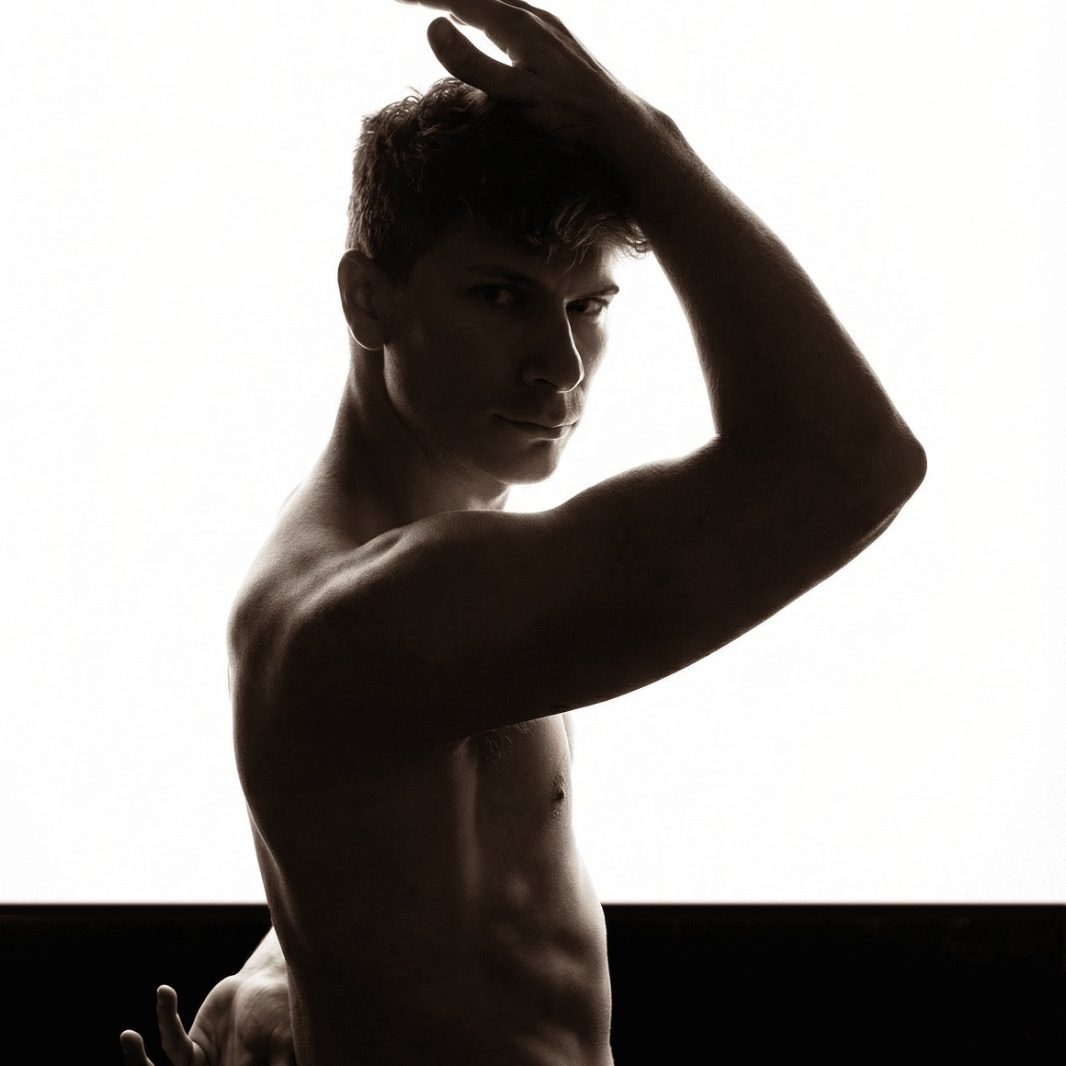
Michael, thank you for taking the time to share the story, creative process, and ideas behind “Eta Carinae” with DULAXI. This conversation offered a deeper look into the many layers behind the record, from its emotional inspiration and production journey to the artistic philosophy shaping your future direction.
For listeners discovering Michael Grandel’s work for the first time, “Eta Carinae” offers an opportunity to experience electronic music that carries both physical energy and emotional meaning. We encourage everyone to listen to the release, explore the world behind the music, and continue following Michael’s evolving journey as he continues building his unique connection between sound, science, and human experience.
Thank you for spending time with DULAXI. Stay connected with us for more conversations, stories, and interviews celebrating artists from around the world.