
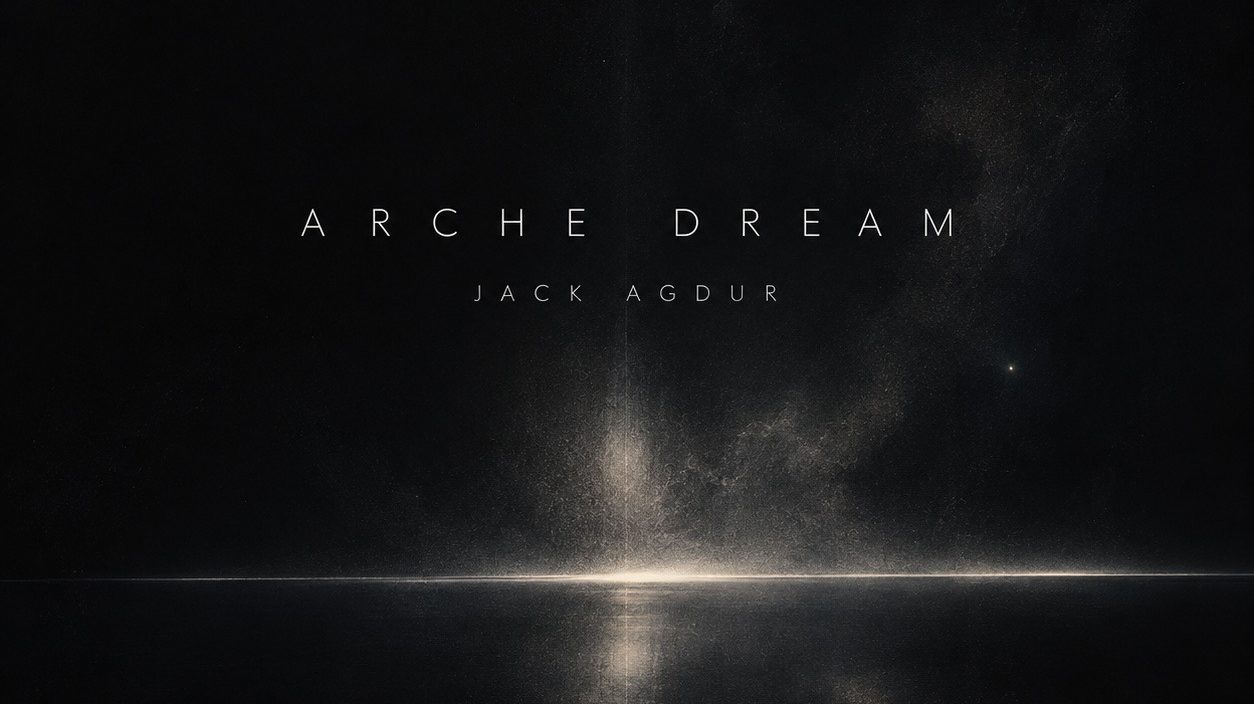
Hello everyone, it’s your host Oliver from DULAXI, and today I’m delighted to be joined by Swedish composer and pianist Jack Agdur to discuss his latest single, “Arche Dream,” released on 30 September 2026. Working across contemporary classical and ambient music, Jack has developed a distinctive approach to composition that places minimalism, musical time, and the listener’s personal experience at the centre of his work. Through his solo-piano compositions, he explores how small changes, recurring patterns, and the natural movement of a melody can create space for different interpretations and emotional responses.
Before we begin our conversation with Jack Agdur, here’s what you need to know about today’s featured project.
About Jack Agdur
Based in Stockholm, Sweden, Jack Agdur is a composer and pianist whose work explores the relationship between minimalism, contemporary classical music, and meditative sound. His compositions often centre on the piano, using recurring musical figures, gradual changes, and carefully considered space to develop ideas without relying on constant movement or conventional song structures. Rather than directing listeners towards a single emotional response, his music allows room for personal interpretation, making the experience of listening an important part of the composition itself.
Agdur’s musical identity has developed through both his creative practice and his academic engagement with music. His studies in musicology at Stockholm University included a master’s thesis examining the variation techniques of American composer Morton Feldman in Palais de Mari. This research deepened his interest in repetition, memory, and the perception of musical time, subjects that continue to influence his compositional decisions. His experience as a pianist and music educator also informs his understanding of music as something shaped through playing, listening, and communicating with others.
His album Timing Cloud Flights established an important point of reference in his exploration of recurring figures and a sense of floating movement. These interests continued to develop in Veiled States, a project concerned with the possibility of music existing without necessarily moving towards a definite point of arrival. His more recent work, “Arche Dream,” approaches related questions through the ideas of dreams, origins, and the relationship between sound and lived experience.
Released on 30 September 2026, “Arche Dream” is a contemporary solo-piano composition built around flowing melodic lines and an intuitive sense of musical development. Its central idea is to bring music closer to everyday experience, allowing a melody to feel as immediate as a breath, a sensation, or a thought that has only just begun to take shape. A subtle influence from spontaneous singing informs the movement of its phrases, giving the composition a natural quality that connects instrumental expression with the rhythms of the human voice.
The inspiration behind the piece emerged from Agdur’s imaginative consideration of ancient dreams and the question of when the first dream might have occurred in the universe. Rather than approaching this as a scientific question, he uses it as a creative starting point for exploring something that feels primordial, an experience of origin that can be sensed without being fully explained. This idea gives the composition an open conceptual foundation, allowing the music to suggest possibilities without requiring listeners to follow a fixed narrative.
Beyond his solo work, Agdur has explored the relationship between music and other artistic disciplines through collaborations with the PRZ performance duo and Meta4 Dance company. These experiences have provided opportunities to encounter music in relation to movement and performance, opening further possibilities for his compositions. Looking ahead, his interest in musical recurrence, variation, and the experience of time continues to guide his creative direction, alongside an openness to collaborations involving piano, visual storytelling, and movement.
Having this brief introduction to today’s featured project, I’m sure both new listeners and longtime followers of Jack Agdur will be interested in hearing more about the ideas behind his music. So, without further ado, let’s begin today’s interview.
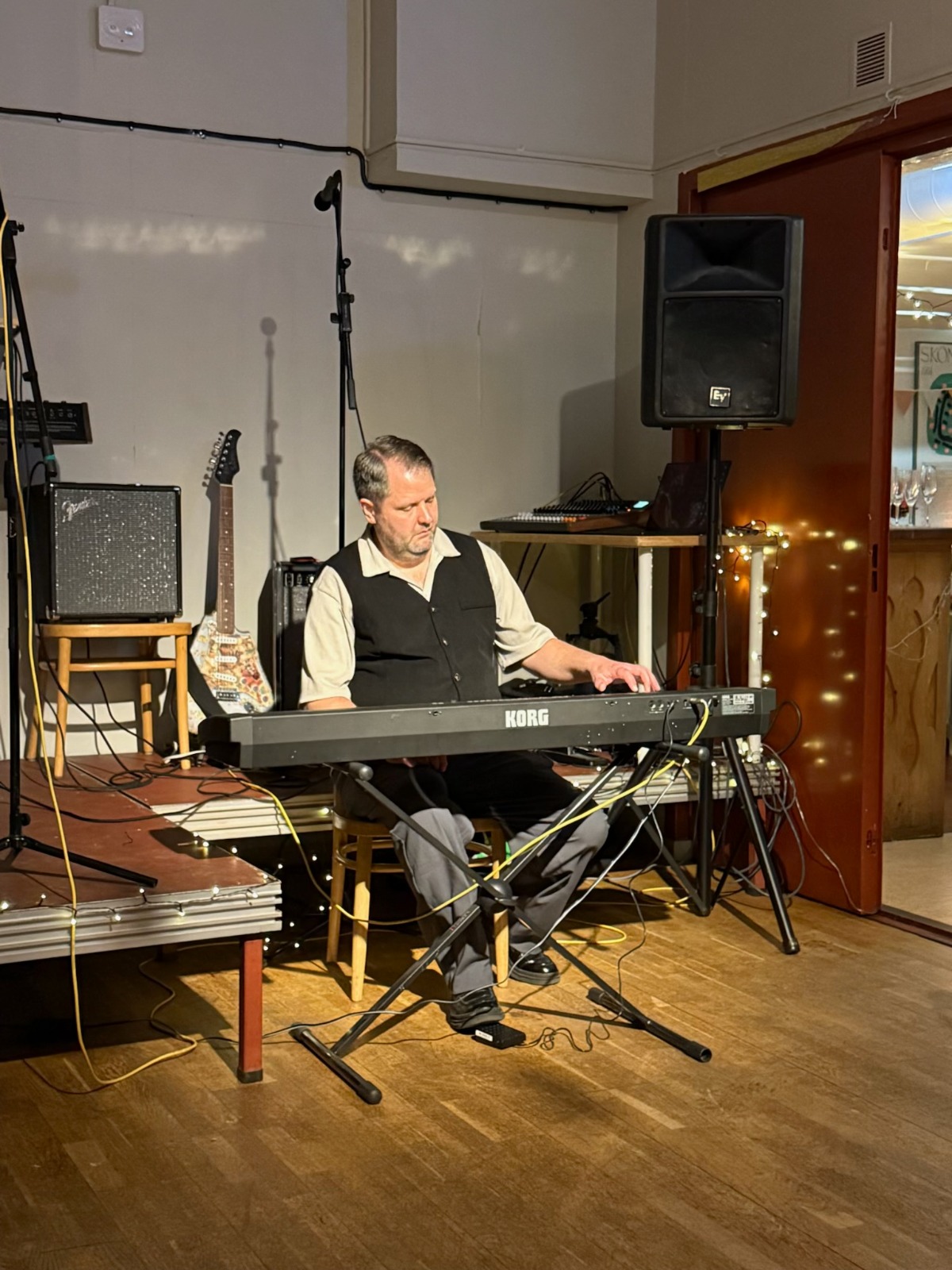
INTERVIEW SESSION
Oliver:
For readers discovering your music for the first time, how would you describe your identity as a composer, and what first drew you towards minimalist and meditative music?
Jack Agdur:
I am a Swedish composer and pianist, and much of my music grows through a process that takes place constantly. Then when I compose some ideas that I have carried may end up in the composition.
Minimalism attracts me because it gives small changes in the music room to be heard. Although people sometimes describe my music as meditative, I prefer the word openness. I want the listener to have freedom within the music, including the freedom to experience something unsettled or unexpected.
Oliver:
Your compositions are often centred around the piano and built through subtle changes and evolving patterns. What attracts you to this more restrained approach to composition, and what do you believe it allows you to express?
Jack Agdur:
The piano allows me to work with both the clarity of an attack and the uncertainty of what follows as the sound fades. That relationship is very expressive to me.
When the material is restrained, a change in register, accent or spacing can become a significant event. I am drawn to the sensation that something is floating, or that the ground beneath it is moving slightly. I am capturing musical ideas, when I compose I am trying to find a way for them to get the right place in the composition. That gives me a way to explore experiences that are difficult to describe in words.
Oliver:
You’ve developed a musical identity that brings together modern and classical influences. Which musical experiences, composers, or personal discoveries have played the greatest role in shaping your creative direction?
Jack Agdur:
Morton Feldman has been particularly important. My master’s thesis in musicology at Stockholm University focused on his variation techniques in Palais de Mari. Studying that work brought me into close contact with questions about repetition, memory and musical time.
One lasting discovery was that transformation and recurrence can be closely connected: material may undergo a change and nevertheless return to an earlier pitch configuration. That continues to interest me as both an analytical problem and a compositional possibility.
My experience as a pianist and music educator also matters. It keeps musical thinking connected to playing, listening and communicating with other people.
Oliver:
Albums such as Timing Cloud Flights have helped establish your presence within the independent music scene. How do you feel your approach to composition and artistic expression has developed since those earlier releases?
Jack Agdur:
Looking back at Timing Cloud Flights, I recognise the interest in recurring figures and floating movement that still runs through my music. What has developed is my understanding of what I want in a composition.
With Veiled States, I articulated an interest in music that does not require an arrival point. The idea of a veil suggested something we perceive through, without necessarily removing it. Arche Dream approaches related questions through dreams and origins. I see these releases as different perspectives on a continuing exploration, with increasing attention to the listener’s freedom.
Oliver:
Your description of “Arche Dream” places particular emphasis on shortening the distance between music and lived experience. What does that idea mean to you personally, and how did it become the central concept behind this composition?
Jack Agdur:
It means allowing music to be experienced as something close to a sensation, a breath or an emerging thought. I am interested in that moment before we have fully named what we feel.
For Arche Dream, I imagined ancient dreams. I found myself asking: when did the first dream occur in our universe? That is an imaginative question, rather than a scientific claim. It led me towards the possibility of music suggesting something primordial—an experience of origin that we can feel without being able to explain it completely.
Oliver:
One distinctive aspect of “Arche Dream” is the subtle influence of spontaneous singing on its flowing melodic lines. How did that connection between the voice and the piano emerge, and what does singing intuitively bring to your instrumental writing?
Jack Agdur:
Spontaneous singing offers a way of finding a phrase through its movement and breath. A melody can emerge before I have decided exactly how to describe or organise it.
That interests me at the piano because an instrumental phrase can retain something of the voice: its hesitation, continuity and natural rise and fall. In Arche Dream, this connection is one element of a broader musical idea. I would not want it to explain the whole piece, but it helps describe the sense of immediacy I am seeking—the feeling that a line is taking shape close to experience.
Oliver:
When composing a solo-piano piece, there is nowhere for the central musical idea to hide behind other instruments or arrangements. How do you approach creating enough movement, variation, and emotional depth while keeping the piano at the centre?
Jack Agdur:
I listen for what is already possible within the material. Movement can come from the relationship between the hands, from shifting accents, or from placing a familiar figure in a different register. It can also come from resonance and the space between events.
A recurring phrase changes as we become familiar with it. We remember what came before and begin to anticipate what might happen next. I find emotional depth in that relationship between expectation and what actually occurs. The piano gives me enough possibilities to explore it without requiring a dense arrangement.
Oliver:
The description of “Arche Dream” suggests an open encounter where sound, emotion, and perception merge. How do you translate an abstract idea like that into something a listener can experience through music?
Jack Agdur:
I let the idea guide my attention to concrete musical decisions: how a phrase moves, how long a sound remains, how repetition changes the sense of continuity, and where space is needed.
The listener does not have to reconstruct the images I had while composing. My thought about an ancient dream might become someone else’s memory, landscape or entirely wordless experience. I value that possibility. An abstract idea becomes useful to me when it helps create an encounter that can be felt, while leaving its meaning open.
Oliver:
Your work is associated with contemporary classical and ambient music, but the emotional character of a composition can sometimes reach beyond genre definitions. Do you begin with a particular musical category in mind, or do you allow the composition to determine its own direction?
Jack Agdur:
I generally begin with a musical relationship or a feeling of movement. Genre can be useful later, when describing the work and helping listeners find it.
Contemporary classical music provides part of my background, and the attention to space and sustained perception in ambient music has a connection with what I do. But I want each composition to develop according to its own material. A piece may invite several ways of listening, and I am comfortable with that.
Oliver:
Minimalist music often relies on repetition, gradual development, and small changes that can transform how a piece is perceived. How do you decide when a musical idea has said enough and when it needs to evolve further?
Jack Agdur:
I listen for whether the repetition is still changing the experience. The notes may remain similar while their weight, familiarity or relationship to the surrounding music develops.
Sometimes the material needs a transformation. Sometimes it needs more time. My research into Feldman made me especially attentive to the difference between what is present in the score and what recurrence does to our perception. There is no single formula for deciding when to move on. I try to hear whether continuing allows something to become clearer or whether the piece is asking for another direction.
Oliver:
Your music is frequently described as calming and introspective. When you compose, are you consciously trying to create a particular emotional atmosphere, or is that quality something that emerges naturally from the process?
Jack Agdur:
Those qualities can emerge naturally, but calmness is not my only interest. I am also drawn to ambiguity, suspension and the slight instability that can exist within an apparently quiet surface.
I prefer openness as a description because it allows for different responses. One person may find comfort in a recurring pattern, while another hears longing or uncertainty. I have my own emotional relationship with the music, but I do not want that relationship to become an instruction for the listener.
Oliver:
With “Arche Dream,” how important was the balance between technical control and spontaneity? Did you approach the recording or performance with a clearly defined structure, or leave room for intuitive expression?
Jack Agdur:
The balance matters because a recurring structure needs coherence, while the phrase also needs to feel alive. My approach brings intuitive musical movement into a process of listening, shaping and refinement.
Spontaneity can remain present in the breathing of a phrase, its emphasis and the way one gesture leads into another. Technical control helps those details become audible. With Arche Dream, I wanted the musical form and the sense of immediate experience to support each other, so that the listener could follow the piece while still feeling its openness.
Oliver:
Piano music can create very different experiences depending on the listener’s surroundings and state of mind. What kind of personal connection or listening experience would you hope someone discovers when spending time with “Arche Dream”?
Jack Agdur:
I hope someone finds room for their own attention and imagination. They might connect with an image, a memory or a feeling they have not yet put into words.
The title suggests dreams and origins, but it leaves a great deal unresolved. I would be happy if the piece encouraged someone to stay with that uncertainty for a while. The connection does not have to be dramatic or easily explained. Sometimes a small change in how we experience a moment is enough.
Oliver:
Your compositions have connections to contemporary classical, ambient, cinematic, and soundtrack music. Can you imagine your work accompanying particular kinds of visual stories, and what qualities do you think make a piano composition suitable for film or other visual productions?
Jack Agdur:
Yes I can imagine the music accompanying visual work concerned with memory, landscape, origins or inward experience.
My collaborations with PRZ and Meta4 Dance have also given me opportunities to encounter music in relation to performance and movement. For me, a piano composition can work well with images when it offers its own perspective while giving the visual story room to breathe. I am open to collaborations where that relationship can be explored.
Oliver:
Your artistic approach seems to place considerable value on subtlety rather than overwhelming the listener with constant musical activity. Has this philosophy influenced other aspects of your creative life or the way you evaluate your own compositions?
Jack Agdur:
It has made me attentive to how much a small gesture can carry. When evaluating a piece, I ask what each change contributes and whether the material has enough room to be heard.
As a music teacher, I also spend time thinking about attention and listening. A simple musical idea can offer a great deal to explore when we give it time. That experience connects with my composing, although teaching and composition have different purposes. Both remind me that musical significance does not depend entirely on complexity or the number of events.
Oliver:
As someone whose music brings together classical traditions and contemporary sensibilities, how do you maintain your own creative identity while remaining open to new musical ideas and possibilities?
Jack Agdur:
My identity seems to persist through the questions I return to: circling, variation, recurrence, and the sensation of movement within something familiar. Those interests give continuity to the work.
At the same time, I want to remain responsive to new sounds, performances and collaborations. Studying music closely can deepen that openness. An influence becomes especially valuable when it helps me hear a possibility I can explore in my own way. I do not need every piece to sound alike for them to belong to the same artistic inquiry.
Oliver:
Looking back at your journey so far, what has creating and releasing music taught you about the relationship between artistic expression and the way people experience or interpret a composition?
Jack Agdur:
It has taught me that a composition can become meaningful in ways I could not have predicted. I may begin with a particular image or musical question, but listeners bring their own experiences to it.
That became especially clear as I developed the ideas around Veiled States and Arche Dream. Describing a work can offer a point of entry, but it cannot contain everything the music may become for someone else. I find it rewarding when a listener’s response reveals a connection I had not consciously considered.
Oliver:
Looking ahead, what would you like to explore next in your compositions, and are there particular musical ideas, collaborations, or creative directions you feel drawn towards as you continue developing your work?
Jack Agdur:
I would like to continue exploring how variation and recurrence affect our experience of musical time. That connects my compositional work with the analytical questions I began investigating through Feldman.
I am also drawn to further encounters between piano music, movement and images. The questions behind Arche Dream—about dreaming, origins and experience before explanation—still feel open to me. I would welcome collaborations that allow those ideas to develop through another artistic perspective, while continuing to deepen my own musical explorations.
“Jack Agdur’s approach to composition reminds us that music does not always need to explain itself to make a connection. In ‘Arche Dream,’ the space between a musical idea and the listener’s own experience becomes an essential part of the conversation, leaving room for memories, questions, and interpretations that belong to each individual.”
~ Oliver (DULAXI Team)
EDITORIAL PERSPECTIVE
What stands out about “Arche Dream” is the relationship between its musical simplicity and the depth of thought behind it. Agdur approaches the piano as a space for examining how repetition, timing, and small changes can influence perception. His reflections on ancient dreams offer an intriguing starting point, but the composition does not depend on listeners sharing that image. Instead, its openness allows the music to meet each person differently. Our conversation also reveals a composer whose academic interest in musical time remains closely connected to his practical understanding of performance and listening.
~ Oliver (DULAXI Team)
CLOSING
A sincere thank you to Jack Agdur for joining us at DULAXI and sharing the ideas, experiences, and creative questions that continue to shape his music. Our conversation has offered a closer look at the thinking behind “Arche Dream,” from its imaginative connection with ancient dreams to Jack’s interest in musical recurrence, the perception of time, and the freedom listeners bring to a composition.
For readers who have not yet experienced “Arche Dream,” the single offers an opportunity to spend time with Jack’s approach to contemporary piano music and discover what its melodies and gradual development might bring to their own listening experience. Those already familiar with his work can also explore how the ideas behind this release connect with his earlier projects, including Timing Cloud Flights and Veiled States.
We encourage you to follow Jack Agdur’s continuing musical exploration and keep an eye on his future work, particularly his interest in collaborations that bring piano music into conversation with movement and visual storytelling.
Thank you for spending time with us at DULAXI. We appreciate your continued support and invite you to join us again as we bring you more conversations with artists whose work offers fresh perspectives on music, creativity, and the experiences that shape us.