
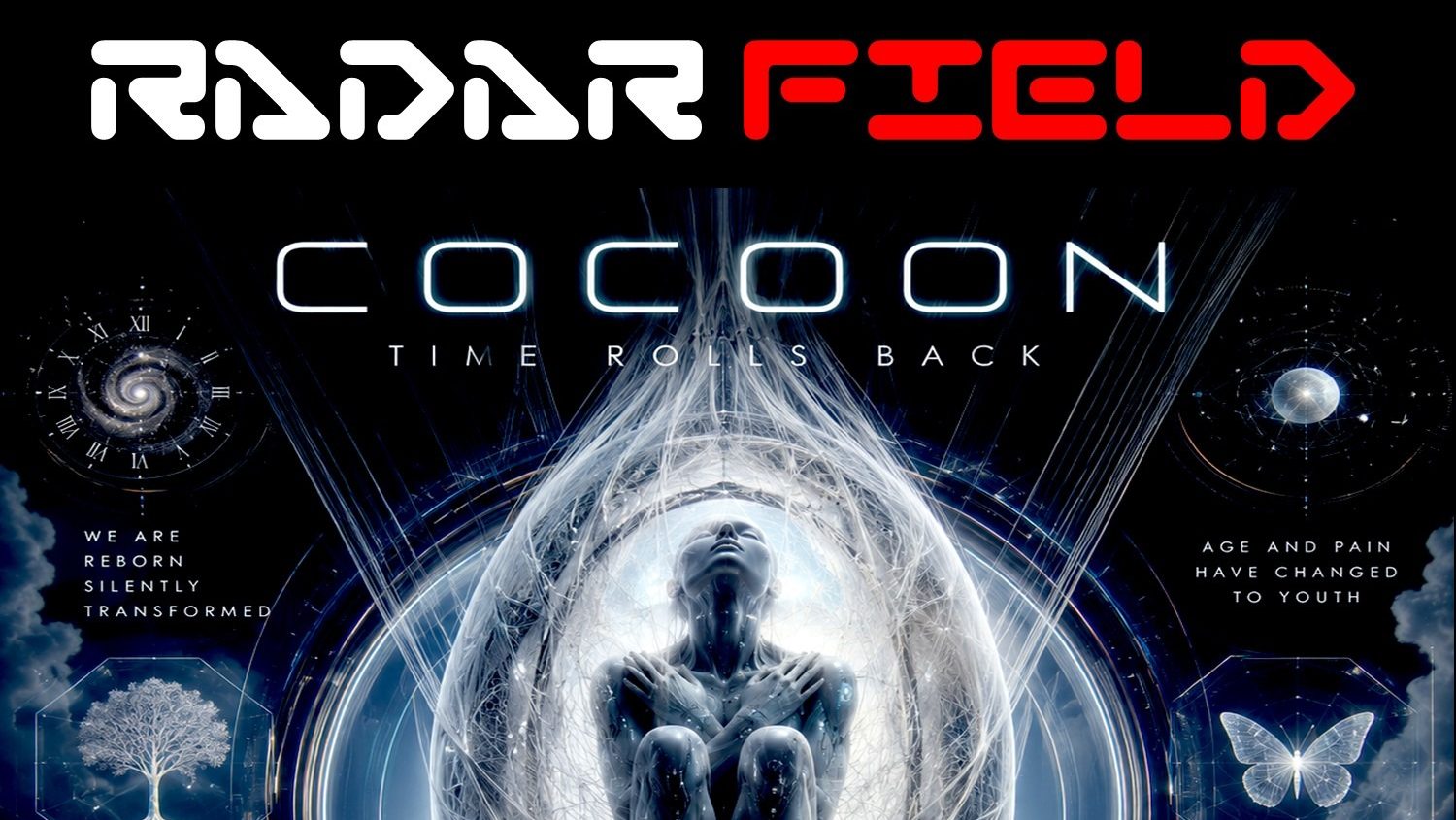
Hello everyone, it’s Oliver from DULAXI, and today I’m delighted to be joined by Tom Radar, the lead singer of RADARFIELD, an independent electronic music project based in Berlin, Germany. Blending Darkwave, Synthpop, Electronica, Synthwave, and elements of Drum & Bass, RADARFIELD has spent more than 15 years exploring the relationship between sound, imagery, technology, and human experience. Our conversation today focuses on “Cocoon,” the project’s latest single, released on August 2, 2026, which examines the relationship between protection, isolation, and transformation.
Before we begin our conversation with Tom Radar, here’s what you need to know about today’s featured project.
About RADARFIELD
Founded in Berlin in late 2010, RADARFIELD began with a vision of exploring the visible and invisible worlds through music and visual storytelling. The project initially took shape as a four-piece band featuring vocals, guitar, bass, keyboards, and drums. Drawing from Post-Punk and Alternative Rock, its early sound reflected the musicians’ interest in combining guitar-driven arrangements with atmospheric songwriting. However, as the project evolved, changes in its lineup encouraged a different creative direction. The introduction of a drum machine in 2011 marked an important step towards electronic production, and the eventual decision to continue as a duo allowed the project to explore new sonic possibilities with greater freedom.
For Tom Radar and his collaborator Marcus Plasma, the development of RADARFIELD has been an ongoing process of experimentation rather than an attempt to settle into a single musical category. Their work gradually expanded to incorporate Darkwave, Synthpop, Electronica, Synthwave, and Drum & Bass influences, creating a distinctive musical identity rooted in dark atmospheres, electronic textures, and lyrics that invite listeners to imagine their own stories. The name RADARFIELD reflects this original concept: using the idea of radar to explore a broad field of tangible, intangible, and imagined experiences, then translating those discoveries into sound and imagery.
Throughout its history, RADARFIELD has built an independent catalogue that reflects this continuing evolution. Early releases such as “FightN Machine,” “Sea Drones,” “Discovered Secrets,” and “Black & Chrome” helped establish the project within the alternative and underground electronic music scenes. Its music appeared on compilations associated with publications including Orkus!, Sonic Seducer, and Dark Spy, while several tracks received radio airplay and recognition through independent music platforms. The 2014 release of the seven-track EP Red Planet marked another stage in the project’s development, followed by the 13-track album Black Planet in 2022, which brought together material from different periods of its musical history.
Alongside its music, RADARFIELD has developed a visual catalogue that includes official videos for songs such as “Sea Drones,” “Discovered Secrets,” “Silverlight,” “Vampire Diary,” “Memory Impairments,” “Tomorrow’s World,” “Hypnotized,” “Death & Beauty,” and “Séance.” For Tom, the relationship between music and imagery often begins during the writing process, when particular words and melodies bring certain pictures or ideas to mind. Rather than simply illustrating lyrics, the finished videos can develop these initial impressions into visual worlds that complement the music.
Released on August 2, 2026, “Cocoon” represents the latest chapter in this continuing creative evolution. At its centre is a question about the meaning of safety and the possibility of transformation. A cocoon is commonly understood as a place where change takes place away from the outside world, but the song approaches this image through the desire to escape the passage of time, regain a sense of youth, and find somewhere to retreat from the pressures of everyday life. Drawing partly on the idea of a place where a person could undergo a complete transformation and emerge renewed, the song also has a loose connection to the 1985 science-fiction film Cocoon, which explores rejuvenation and the limitations of human ageing.
Musically, “Cocoon” combines atmospheric synthesizers, haunting melodic elements, and a driving electronic rhythm. The track began with Tom’s guitar-based composition and vocals before Marcus developed the electronic arrangement, experimenting with synthesizer parts, guitar textures, and rhythmic elements. The bridge required several rounds of discussion and revision before the collaborators settled on an arrangement that felt right. The result reflects RADARFIELD’s ability to bring its guitar-oriented beginnings into conversation with its more electronic identity.
As RADARFIELD continues to develop its sound, Tom remains interested in exploring new directions rather than repeating a successful formula. Future ambitions include releasing an album, making the music available on physical CD, and expanding the project’s international reach. For now, “Cocoon” offers an opportunity to explore the ideas, creative decisions, and experiences behind one of the project’s most recent releases.
Having this introduction to RADARFIELD and the story behind “Cocoon,” I’m sure both new listeners and longtime followers will be interested in hearing directly from Tom about the project’s evolution, the inspiration behind the single, and the creative process that continues to shape its music. So, without further ado, let’s begin today’s interview.
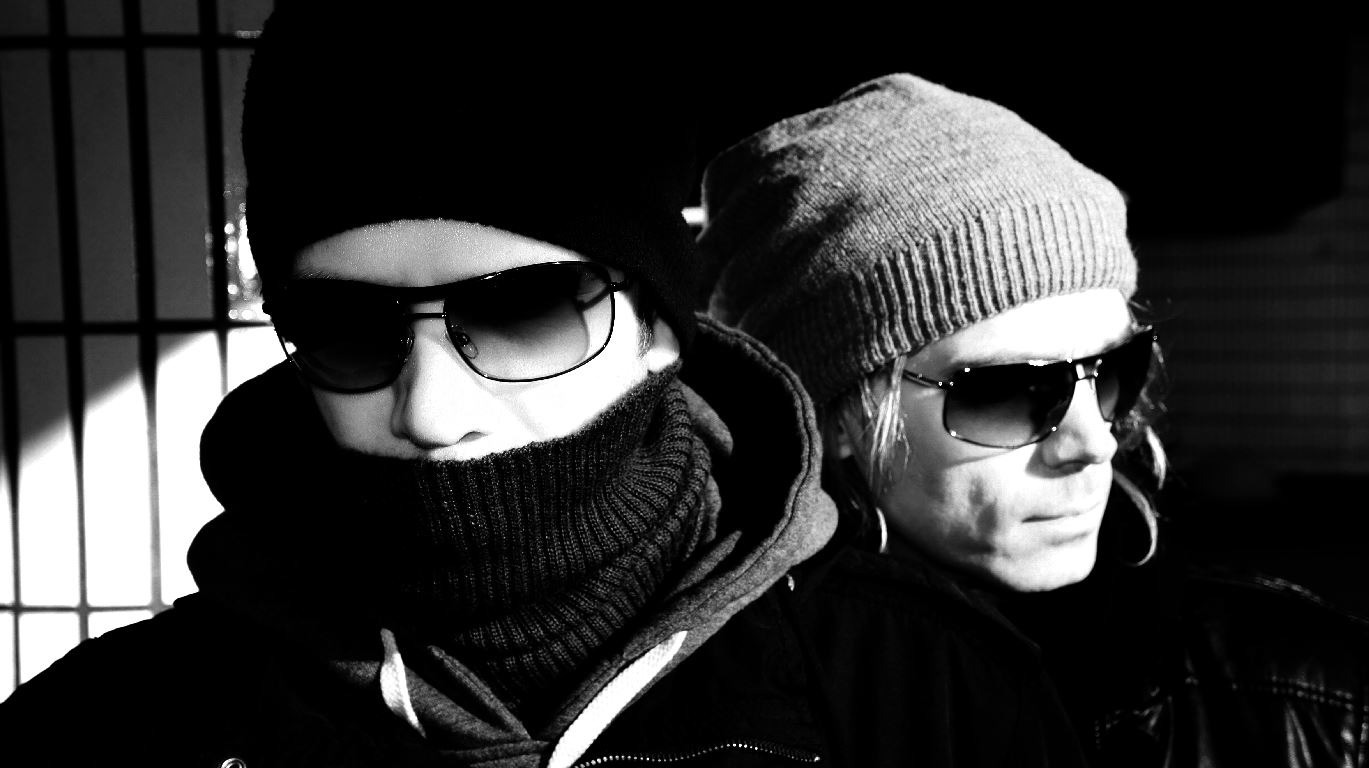
INTERVIEW SESSION
Oliver:
RADARFIELD was founded in Berlin in 2010 with the idea of exploring the relationship between the visible and invisible worlds through music and visual elements. What originally inspired you to develop this concept, and how has your understanding of it changed over the years?
Tom Radar:
My original vision was to combine music from video games with guitars and synthesizers. However, for legal reasons, we couldn’t pursue that idea any further. RADARFIELD initially started out as a classic four-piece post-punk band. Later, when we had to rethink our direction as a duo, we faced the question of which musical path we wanted to take.
We didn’t simply want to continue with our existing style. Instead, we wanted to create something of our own — music with interesting stories that would bring images to life in the listeners’ minds. In a sense, we wanted to use a radar (RADAR) to scan a wide field (FIELD) for things that aren’t always immediately visible or tangible, and then translate our impressions into music and vocals.
Over the years, this vision has evolved for me. At first, it was mainly about finding new musical directions and telling stories that would create images in people’s minds. The idea of scanning the world, as if with a radar, for things that aren’t immediately apparent has remained. But today, I have an even stronger sense of how much room music leaves for personal interpretation. Every listener can discover something different in our songs and find their own story within them.
Oliver:
Before RADARFIELD came into existence, the musicians involved had already gained experience in other projects. What were you each looking for creatively at the time, and why did RADARFIELD become the project through which you wanted to bring those ideas to life?
Tom Radar:
Marcus and I had already played together in another band before we decided to end that project and look for new musicians to form RADARFIELD. We came from slightly different musical backgrounds. I was more focused on guitar-oriented music, while Marcus brought experience with guitars, synthesizers and drum & bass.
With RADARFIELD, we wanted to explore new possibilities rather than simply continue doing what we had done before. The idea was to bring our different musical perspectives together, experiment with guitar-based and electronic sounds, and create something of our own — music with atmosphere and interesting stories that would spark images and ideas in the listeners’ minds.
Oliver:
RADARFIELD initially evolved from a four-piece band into a smaller lineup. First, you introduced a drum machine, and later your sound developed a much stronger electronic direction. How did these changes influence your approach to songwriting and the musical possibilities you went on to explore?
Tom Radar:
In RADARFIELD’s early years, when we still rehearsed regularly in the practice room, everyone brought their own ideas, which we then developed together. It didn’t matter who an idea came from. If it suited the song and sounded good, we used it.
After our drummer left the band, we began working with a drum machine and making increasing use of synthesizers. Gradually, this moved our sound in a more electronic direction. It opened up new possibilities for experimenting with rhythms, sounds and atmospheres. The aim wasn’t to leave our roots behind, but to develop our sound further and discover new ways of expressing ourselves.
Oliver:
You’ve described the departure of the original bassist as a turning point that eventually led RADARFIELD to make greater use of electronic elements. How did that period affect the project personally and creatively, and how did you find a new direction after such a significant change?
Tom Radar:
After our bassist left the band, Marcus and I decided to continue as a duo. We were the closest to each other musically and had similar ideas about the direction our songs should take. We didn’t want to keep making additional compromises over musical decisions, as that would have prolonged the songwriting process even further.
Working as a duo allowed us to put our ideas into practice more directly and make decisions more easily. It gave us greater freedom to develop our sound. Over time, electronic elements became increasingly important, and RADARFIELD gradually moved in a new musical direction.
Oliver:
RADARFIELD now combines elements of darkwave, synthpop, electronica, synthwave and drum & bass while retaining connections to its post-punk and alternative rock beginnings. How do you decide which musical elements are right for a particular song? And do you consciously try to avoid being confined to a single genre?
Tom Radar:
Our approach to working on newer songs has evolved somewhat. I record the guitars and vocals, while Marcus follows his musical instincts, develops the synthesizer parts and adds additional guitars. Sometimes a song takes a completely different direction during this process from the one we originally had in mind. We’re open to that if the new direction feels right for the song. In one case, we even replaced the entire lyrics.
Our post-punk and alternative rock roots are still part of RADARFIELD, but we don’t want to limit ourselves to them. We see genres as different ways of expressing ourselves musically rather than fixed boundaries. What matters to us is that all the elements work together and that every song develops its own character.
Oliver:
Artists such as Depeche Mode, The Cure, New Order, Gary Numan, Joy Division and David Bowie are often mentioned as influences on RADARFIELD. What have you taken from these artists, and how do you make sure their inspiration contributes to your own musical identity rather than defining it?
Tom Radar:
We don’t consciously try to sound like any particular artist. Usually, we start with a feeling or an idea of how a song might sound and develop it from there. Sometimes there are points of connection with artists such as Depeche Mode, The Cure, New Order, Gary Numan, Joy Division, Bauhaus or David Bowie. However, these aren’t sounds we’re deliberately trying to reproduce.
We appreciate different elements of these artists, and of course our musical backgrounds influence what we do. At the same time, we bring in ideas from other directions and combine everything in our own way. Sometimes listeners hear similarities that we never consciously intended. For us, it’s important to follow our own ideas and see where they lead rather than trying to capture the style of a particular artist.
Oliver:
Your lyrics often explore mysterious and sometimes unsettling subjects, including human fears and shortcomings, relationships, and the darker possibilities of the present and the near future. What draws you to these themes, and how important is it to you that listeners interpret your lyrics in their own way?
Tom Radar:
Living in a capital city like Berlin, we’re constantly confronted with subjects related to modern urban life, its contradictions and the possibilities of our society. At the same time, there’s a longing for silence, security and a place where you can retreat. This contrast provides plenty of material for songwriting.
My more recent lyrics have become somewhat more abstract. I don’t always want to explain everything in detail. Instead, I want to leave listeners more room for their own imagination and interpretation. I find it exciting when people discover something personal in a song that may be completely different from what I had in mind when I was writing it.
Oliver:
“Cocoon” challenges the familiar idea of a cocoon as a place of protection, presenting it instead as something that can become a prison. What originally led you to this metaphor? Were there any personal experiences or observations that shaped the song?
Tom Radar:
Several ideas came together in “Cocoon.” One was the desire for protection and security, especially when living in a big city like Berlin. At the same time, advertising and pop culture constantly confront us with promises of eternal youth and beauty.
I began imagining what it would mean to retreat into a cocoon, undergo a transformation and emerge young and fresh again, as if time had been turned back — “and the time rolls back.” What if such a possibility really existed, but not on Earth?
There’s also a loose connection to the 1985 science-fiction film Cocoon, which also explores rejuvenation and the possibility of escaping the limitations of human ageing. My own idea was primarily to imagine a place where you could retreat, undergo a transformation and emerge again. As the lyrics put it: “transformation has come.”
So everyday experiences, the desire to escape the passage of time and a science-fiction idea came together. The cocoon became a symbol connecting all these different thoughts.
Oliver:
At the heart of “Cocoon” is an interesting contradiction: the same walls that provide a sense of security can eventually prevent us from growing. When did you begin to recognise this tension as a central idea of the song, and what does it mean to you personally?
Tom Radar:
For me, the original idea was more like a kind of miracle chamber — a place where you could turn back time and find protection. You would enter as an adult and come out as a child, young and fresh, with a renewed sense of freedom, lightness and room to breathe. It was the fantasy of a fresh start and a return to a state in which everything seems open and possible again.
At the same time, there’s the line “Life clock is so guilty.” We can’t escape the fate of growing older — or perhaps we can? The line “age and pain have changed to youth” captures precisely this idea: age and pain are replaced by youth.
I was fascinated by the possibility that something like this might exist somewhere beyond Earth, even if it seems impossible in our world. The cocoon thus became a way of bringing together ideas about protection, transformation, eternal youth and the desire for a fresh start.
Oliver:
The song explores the difficult tension between withdrawing from the world and finding the courage to venture beyond familiar surroundings. Do you see change as something people consciously choose, or can it sometimes become inevitable when the life they’ve built no longer allows them to grow?
Tom Radar:
I think every listener should be able to decide for themselves what change means to them. For some, the cocoon might represent a fantastic opportunity to escape ageing, their thoughts and the limitations of their previous lives, and to start all over again. For others, it might simply be a place of protection and security where they can retreat and feel comfortable.
I didn’t want to give the song one single, fixed meaning. Everyone can find their own interpretation and decide for themselves what the cocoon represents. That’s part of what makes music interesting to me: it can mean very different things to different people, depending on their experiences and what they need at a particular moment.
Oliver:
You describe “Cocoon” as a song that places listeners in a state of uncertainty rather than simply telling them a story. How did you approach translating this psychological experience into music, particularly in terms of atmosphere, synthesizer sounds and rhythmic movement?
Tom Radar:
With “Cocoon,” I started with my guitar version and the vocals. Marcus took that foundation and developed it into a more electronically oriented arrangement. He paid particular attention to how the individual notes fitted with my vocal melody.
The bridge went through a longer development process. We tried several different versions and also involved other people in the discussion to work out together which version worked best. We experimented, listened carefully and searched for the version that felt right for the song.
That’s an important part of the way we work: the final sound doesn’t always emerge immediately. Sometimes it takes time, experimentation and different perspectives before all the elements come together.
Oliver:
The song gradually draws listeners deeper into its electronic world, with eerie melodies and a driving rhythm. How did you shape this development, and what did you want listeners to experience from the beginning to the end of the song?
Tom Radar:
Marcus developed the electronic arrangement with a clear idea of how it should feel: atmospheric, cool and driven by a strong, forward-moving beat. Using my original guitar version and vocals as a starting point, he experimented with synthesizer sounds and rhythms to find the right direction for the song.
He even picked up a guitar himself and replaced my original guitar parts with his own because he felt they fitted the overall arrangement better. That’s an important part of our collaboration: we’re open to changing things when a different approach works better for the song as a whole.
The song doesn’t undergo a major musical transformation from beginning to end. Instead, its atmosphere, melodies and driving rhythm carry listeners through the track. The final arrangement emerged from Marcus’s musical instincts and our shared search for the version that worked best.
Oliver:
RADARFIELD’s music has always had a visual dimension, from the background of the project’s name to your growing catalogue of official music videos. How do you shape the relationship between sound and image? And do visual ideas sometimes influence the development of a song?
Tom Radar:
For me, the visual dimension often begins while I’m writing the lyrics. I usually have a vision or certain images in my mind that develop as the words take shape and connect with the melodies. The lyrics, music and images evolve together.
When we create a music video, we can develop these initial ideas further and give them a visual form. The video doesn’t necessarily have to illustrate the lyrics literally. I prefer to create a visual world of its own that complements the music and gives it another dimension.
This connects with the original idea behind RADARFIELD: creating music that brings images and stories to life in the listeners’ imaginations. For me, sound and images are different ways of exploring and expressing the same creative vision.
Oliver:
Your catalogue includes songs such as “Sea Drones,” “Discovered Secrets,” “Vampire Diary,” “Memory Impairments,” “Death & Beauty” and “Light Fantastic.” Looking back at these different releases, which were particularly important turning points in RADARFIELD’s development, and what did you learn from those respective phases?
Tom Radar:
I remember a radio presenter once saying that RADARFIELD had only found its own style in its last four songs. I thought that was an interesting observation because I can also recognise a common thread running through songs such as “Cocoon,” “Death & Beauty,” “Light Fantastic” and “Séance.” In a way, they belong to the same musical world and reflect where RADARFIELD stands today.
At the same time, I wouldn’t say we’ve already reached our final destination. I suspect our next song will sound different again. We don’t want to keep repeating the same formula simply because it works. To me, developing our own style doesn’t mean standing still. It’s about having a recognisable musical identity while remaining open to new ideas and directions.
Looking back at our catalogue, I see our releases as different stages in an ongoing process. Every song contributes something to that development, and I’m curious to see where the next one will take us.
Oliver:
Your music is played on radio internationally, has appeared on underground compilations and reaches listeners in different countries. RADARFIELD has also accumulated more than 90,000 plays on Number1Music and repeatedly reached top positions in the Electronica charts. How has this international response influenced your relationship with the project and your understanding of your audience?
Tom Radar:
We’re very happy that RADARFIELD has found an international audience. The radio airplay and the response on Number1Music are wonderful confirmations of our work. What’s particularly rewarding, though, is that we’ve developed personal relationships with some radio stations over time. You get to know people, and eventually it becomes about more than simply submitting music and getting airplay. We really value these personal connections.
Since October, we’ve also been working with Phoenix Records, who have contacts in the Chinese market. Perhaps this collaboration will open up new horizons for us and help us reach listeners in places where our music hasn’t been as present so far. It’s too early to know what will come of it, but we’re excited about the possibilities.
Ultimately, the international response encourages us to keep going and to create music on our own terms. It shows us that songs created in Berlin can reach people in very different parts of the world. Even though we don’t know our listeners personally, it’s great to know that our music resonates with them and can create a connection.
Oliver:
RADARFIELD has developed independently for more than 15 years. What have been the biggest challenges in keeping the project alive, and what has motivated you to continue making music through its different phases of development?
Tom Radar:
One of the biggest challenges has been finding enough time for music alongside work and everyday life. With an independent project, you have to provide the time and energy yourself to keep things moving forward, even when other commitments have to take priority. Changes in the band’s lineup have also meant adapting to new situations and finding different ways of working together.
Another challenge is staying motivated when success is difficult to predict. You can invest a great deal of time and creativity in a song without knowing how it will be received or how many people it will reach.
What keeps me going above all is the creative process itself. I still enjoy developing new ideas, experimenting with sounds and expressing something through music that I haven’t expressed in that particular way before. For me, RADARFIELD is an ongoing creative journey. As long as I have ideas I want to explore and music I want to make, I have a reason to continue.
Oliver:
With “Cocoon,” you explore the idea that the greatest danger may not lie in leaving a familiar environment, but in staying there. What would you hope people take away from the song when they feel isolated, uncertain or are going through a difficult period in their lives?
Tom Radar:
I think everyone should have the freedom to discover their own meaning in “Cocoon.” For me, the song began with the idea of a place where you could retreat, undergo a transformation and then emerge young and fresh again, as if time had been turned back.
The song also gave me the opportunity to experiment with unusual lyrical phrases that I felt worked very well with the music. Sometimes a particular combination of words and sounds creates an atmosphere that would be difficult to achieve with more conventional lyrics.
I don’t want to tell anyone what they should take away from the song. Perhaps it can give people going through a difficult time the feeling that they can find a protected space for a moment, take a breath and imagine new possibilities. Maybe it can also help them look at their situation from a different perspective. For me, music is particularly interesting when it leaves room for different interpretations and allows everyone to discover something of their own in it.
Oliver:
As RADARFIELD moves into a new chapter, are there particular musical areas, themes or visual concepts you’d like to explore? What would you still like to achieve with the project that you haven’t had the opportunity to do so far?
Tom Radar:
There are still a few things I’d like to achieve with RADARFIELD. Releasing an album and making our music available on a physical CD are definitely among them. I’d also like to expand our international reach and connect with even more listeners around the world.
We’ve been working with Phoenix Records since October, and I’m curious to see what we can achieve together and what new opportunities this will open up. It’s still early, so we’ll have to wait and see how things develop.
Musically, I want to continue exploring new ideas rather than committing myself to a particular formula. I hope we’ll continue to surprise ourselves, develop our sound and create music that feels genuine and authentic to us.
Above all, I hope people enjoy listening to our music, find it interesting and perhaps discover something new in it each time they listen. If our songs reach people, move them and leave a lasting impression, that’s already something valuable to me. And of course, I hope RADARFIELD will continue to evolve and remain a project that people enjoy discovering and talking about.
“Cocoon” reveals the fascinating possibilities that emerge when electronic music becomes a space for imagination, where a single idea about protection, time and renewal can lead listeners towards entirely different interpretations.
~ Oliver (DULAXI Team)
EDITORIAL PERSPECTIVE
What stands out about “Cocoon” is the way its musical and lyrical ideas leave space for the listener to participate in the experience. The electronic arrangement developed by Marcus Plasma gives Tom Radar’s original guitar-based composition a different dimension, while the song’s unusual imagery connects everyday concerns with science-fiction possibilities. Tom’s explanation of their collaborative process also highlights the importance of experimentation, particularly when an arrangement requires several attempts before it feels complete. For a project with more than 15 years of history, RADARFIELD’s willingness to keep exploring new directions remains central to its creative identity.
~ Oliver (DULAXI Team)
CLOSING
A sincere thank you to Tom Radar for joining us at DULAXI and sharing the ideas, experiences, and creative decisions behind RADARFIELD and “Cocoon.” Our conversation has offered a closer look at the project’s evolution, the collaboration between Tom and Marcus Plasma, and the imagination that continues to shape their music.
Listeners who have not yet experienced “Cocoon” can discover the single on the project’s digital platforms and explore the atmospheric electronic sound that has become an important part of RADARFIELD’s identity. Whether the song brings to mind protection, renewal, the passage of time, or the possibility of beginning again, its open-ended approach leaves plenty of room for personal interpretation.
We look forward to following RADARFIELD’s continued development and seeing where its next musical ideas lead. Thank you for spending your time with DULAXI and reading our conversation with Tom Radar. Stay connected with us for more interviews exploring the music, stories, and creative perspectives of artists from around the world.