

Hello everyone it’s your host Daniel from Dulaxi, and today I have with me the exceptional artist, Rusty Reid from Seattle, United States. And Rusty Reid is here to discuss his recent cover single “All Through My Days” which was released on April 21st, 2026. So, welcome, Rusty Reid! But before we begin our interview, to our audience; here is what you need to know about this artist.
Rusty Reid is an American indie folk-pop-country-rock singer-songwriter originally from Texas and now based in Seattle, United States, whose career continues to reflect a deep connection to his roots and an evolving approach to musical storytelling through genre-blending expression. He has released his fifth album, a large-scale double-album project that marks a significant departure from his usual focus on original material, instead presenting a curated collection of cover songs exclusively written by Texas songwriters in tribute to the state where his artistic identity was shaped. Titled “Lone Stardust (Masterworks of Texas Songwriters)”, the album functions as a homage-driven concept work featuring nineteen tracks that span both well-known and lesser-known compositions, including songs associated with influential figures such as Buddy Holly, Roy Orbison, Johnny Nash, Jimmy Webb, J.D. Souther, Jon Dee Graham, Jimmy LaFave, Townes Van Zandt, Shake Russell, Kacey Musgraves, and ZZ Top, alongside more obscure writers brought into renewed focus. The project alternates between faithful renditions and reimagined interpretations, brought to life by a wide network of musicians spanning the Pacific Northwest, Los Angeles, Nashville, and Mumbai, with Reid’s distinctive voice acting as the unifying element across its diverse sonic landscape. The first single from the album, “All Through My Days,” written by Vince Bell and Connie Mims Pinkerton from Houston, was released on April 21st, 2026 and introduces the project with a bouncy, upbeat urban love song characterized by unique lyrical phrasing, chimey yet brash guitar textures, and a dynamic structure that builds steadily toward a heightened third verse and concluding tag, ultimately setting the tone for the album’s broader exploration of Texas songwriting heritage through reinterpretation and stylistic reinvention.
Having this brief Introduction about Rusty Reid, I’m sure new and current fans must be excited about our Interview today.
INTERVIEW SESSION
Daniel: You’ve built a reputation as an indie folk-country-rock singer-songwriter with original material across multiple albums. What inspired you to take such a bold turn into an entire double-album of cover songs for “Lone Stardust (Masterworks of Texas Songwriters)”?
Rusty Reid: Hi Daniel, and thanks for the interview. Yeah, such a project was not on my radar until a friend of mine, Steven Beasley, came up to my place so I could teach him what I knew about computer recording. We did two test projects, both songs written by Houston songwriter friends of ours. Those two songs came out pretty well, so an idea was planted. Why not an album full of Texas songwriter songs? I asked Steve if I could use one of his songs on this newly conceived album, and he said yes, so now I had a running start of three songs. Sure enough, the first two songs on Lone Stardust are those test projects: “Roll on Santa Fe,” written by Bill Browder, and “All Through My Days” written by Vince Bell (and Connie Mims Pinkerton, I found out later). Steve Beasley’s song “Cool Wind” is the fourth song on the track list, Jon Stone’s “Heart of Hearts” is fifth, then ZZ Top, then “Galveston.” So the first third of the album is all Houston-area oriented. That wasn’t pre-planned; just ended up that way. But I like it.
Daniel: Being born in Texas and now based in the Pacific Northwest, how have both places shaped your identity as an artist and storyteller over the years?
Rusty Reid: It’s kinda weird, but maybe not… I left Texas decades ago, but it seems I still see through Texas eyes, and hear through Texas ears, and feel with a Texas heart. Not long ago I was in Glacier National Park, and thought to myself, “We don’t have anything like this in Texas.” What? Who is “we?” Why am I still thinking like that? Most likely it’s that the cultural and mental programming we received as impressionable children and teens and young adults are the substrate of our consciousness, that later concepts and experiences and questions tap into even if they have to go through newer layers of the soil of the self. I didn’t realize it until fairly recently, but Texas songwriters tend to write plainly, to say what they mean. “Poetic” abstraction and foggy symbolism are far less common. That’s largely true in the Northwest, as well, though the ethos up here leans more toward questioning society and tradition, even identity, while the Texans love to celebrate them, even when they, themselves, get battered. Maybe I’m now an amalgamation of the two.
Daniel: Your music often blends folk, country, rock, and indie influences so naturally. How would you describe the heart and soul of Rusty Reid as an artist at this stage of your career?
Rusty Reid: Winding down, that’s for sure. But I still have some spunk left. Another album or two, maybe. Themes keep appearing to me that I’d like to explore through song. Important truths that few seem to be singing about. A philosophy, a worldview, to offer. In these stupid, evil poiltical times, I want to keep punching back. Above and beyond that, there’s a spiritual dimension that I must serve: that of love for self, for others, for animals, for the entire biosphere, the world, the Universe.
Daniel: “Lone Stardust” feels like both a tribute and a personal musical journey. What central message or emotional thread were you hoping listeners would take away from the album?
Rusty Reid: I’m not sure there’s any central message, other than: It’s life, embrace it, feel it. Emotionally it’s all over the map: highs and lows, ups and downs. All of them are emotional in their own way; as a group they pretty much explore the whole gamut from utter joy to deep gloom and, finally, with the last song: mystical bliss.
Daniel: The album honors Texas songwriters from legends like Buddy Holly and Roy Orbison to lesser-known writers you’ve pulled from relative anonymity. Why was it important for you to shine a light on both the iconic and the overlooked voices from Texas?
Rusty Reid: Well, the project started off with songs by Bill Browder, Vince Bell and Steven Beasley, three Texas songwriters that few have heard of, but I would rank right up there with the very best. So from the start I had a direction: this album was definitely not going to be a “hits only” collection nor a redux of the ususal suspects of “best Texas songwriters.” The song mattered more than the songwriter. My impulse was to gather up at least some of the songs that have been dear to my heart, and own musical journey, which would inherently likely have been big hits. So Buddy Holly and Roy Orbison, fellow West Texans, were sure to make the list. Johnny Nash’s “I Can See Clearly Now” may well be one of the greatest pop songs ever; I loved it the moment I heard it, so that was a shoe-in. I’ve always thought the guys in ZZ Top (they all got songwriting credits) were underrated as songwriters. Blues-rock doesn’t get any better, if you ask me. For them, I chose “Balinese,” not one of their hits… but their song that means the most to me because of its subject matter (though I did tinker with the lyrics, adding an update). Jimmy LaFave’s “The Beauty of You” is one of the greatest love songs to Mother Earth. “The Change” by Jon Dee Graham hits the nail on the head about the melanchoy of aging and regret. I had a chance to send my version to him a few months before he died, and he responded: “This is beautiful. I am honored.” So I’m thankful for that. Another song I loved on first listen is “Neon Moon” by Ronnie Dunn, and weirdly painful on that occasion he was describing the very situation happening! Shake Russell is another from that Houston scene. His “You’ve Got A Lover” was a local hit, setting an impossible bar for the rest of us. Tito Larriva, originally from El Paso, I discovered out in L.A. in the 1980s with his band the Cruzados, and was just gobsmacked by his songwriting, singing and style. He was an early addition to the album. Some Texas songwriters are not widely recognized as such. Think Steve Miller, Stephen Stills, Don Henley. I didn’t know J.D. Souther was from Texas; when I found out, I added him to the mix. I was open to discovering songwriters I had never heard before or hadn’t given enough attention. This approach snagged Zack Kibodeaux and Keith Gattis. One guy I was determined not to include was Townes Van Zandt. It just seemed too easy, too obvious, too predictable, maybe a reflex against his labeling (by some) the “greatest Texas songwriter,” as if there could possibly be such a thing considering the vast breadth of Texas music. But in the end, after listening to a bunch of bad renditions of “Pancho and Lefty,” I surrendered, and decided to just do it myself. So there you go, Townes. I’m still not willing to concede “the greatest,” but it’s damn near the perfect “Texas song.”
Daniel: “All Through My Days” is described as a bouncy and upbeat urban love song with unusual lyrical imagery. Which lines from the song connected with you the most personally when you first heard it?
Rusty Reid: The first single off the album, “All Through My Days” by Vince Bell and Connie Mims, has been on my mental playlist since the 70s. It’s just such a well-crafted song. Cool rhythm, original melody and very intriguing lyrics. “You were ruled by the Southen sky, made you trade your world for another style, the way you slipped through the streets of my city, you were a melody.” Say what? Who writes that? Barely remembered now, is that Vince had a girlfriend named… Melody. How romantic is that? In our Houston scene, everybody loved this song. If you didn’t, something was wrong with you.
Daniel: The title “Lone Stardust” itself is incredibly evocative and cinematic. What does that title symbolize for you emotionally and artistically?
Rusty Reid: Yeah, I love that title. I’d like to brag about how smart I was to so cleverly come up with it, but for months, this album was going to be called “Texas Heart.” Really? You have an album called “Head to Heart.” Now another album titled “heart” something? I finally realized that was stupid. Still, it needed to reference Texas somehow. Well, Texas is nicknamed the “Lone Star State.” So I began playing around with Lone Star. Lone Star this. Lone Star that. Finally, Star…dust. Like magic, sparkle dust. That’s what songwriters do with great songs… they sprinkle stardust on them. So Lone Stardust it became.
Daniel: You mentioned that some songs stay faithful to the original arrangements while others take completely new directions. How did you decide which songs deserved reinvention and which ones needed preservation?
Rusty Reid: I just went with my gut feelings. I just wanted to honor the song. If the arrangement was practically perfect to begin with, who am I, really, to go drastically rearranging things? Sometimes that approach can seem so gimmicky, a curiosity you listen to only once, and may even wonder if that was one too many. So songs like “I Can See Clearly Now,” “Cool Wind,” “Balinese,” “Galveston,” “Faithless Love,” “Only the Lonely,” “The Beauty of You,” “Neon Moon,” “Alchemist,” “Back to the House that Love Built,” and “Day of the Dead” are pretty loyal to the earlier versions, though they all have my (and bandmates’) stamp on things. The rest are original takes, generally because I felt the well-known versions didn’t quite live up to their potential, or my version should just be different in order for me to deliver it honestly. In the case of Buddy Holly’s “True Love Ways,” I always thought his version was too lush with strings, and lost some of its heart and soul as a result. Listening to other covers of it, I noticed that most either followed Buddy’s stringy arrangement or Mickey Gilley’s piano-based version (which I actually like better). But I decided to go with a completely stripped down, basically guitar and voice version that really accented the beautiful melody and sweet emotion and devotion of the lyrics. Speaking of other covers, if you want an excruciating experience try to make it through some of the versions of Van Zandt’s “Pancho and Lefty.” Ai-yi-yi. For my version, i wanted to capture the authentic flavor of a Townes’ bar room rendition, with a little more guitar sophistication, and a bit of harmony. Shake Russell’s “You’ve Got a Lover” is another that demanded a remodel. I actually think Shake has let this song down. He seems to insist on recording it as a duet, which I don’t think serves the song. In my view, everyone plays it too fast, especially Ricky Skagg’s runaway romp. It’s a sad tale; why the uptempo? So I slowed it down, returned it to its acoustic roots, and in my humble and totally unbiased opinion is the best version of this great song.
Daniel: “All Through My Days” features chimey and brash guitars with dynamics that build strongly in the third verse and tag. What was the creative vision behind crafting that particular sonic atmosphere?
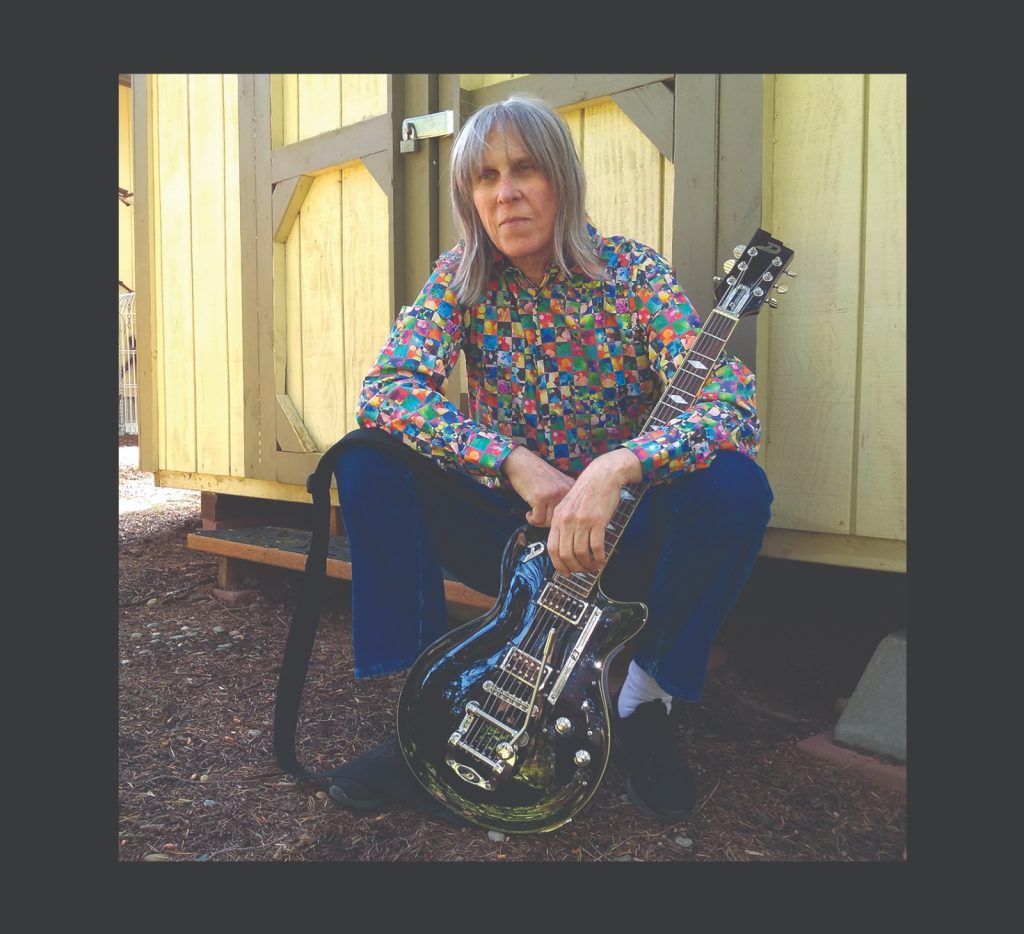
Rusty Reid: This was one of those first test songs. Steve Beasley actually brought the backing track with him for us to start with: bass, drums, acoustic guitar and a nifty kind of arbitrary chunking guitar (mostly in the left channel) that gave it a bit of a jazzy feel. Then we added vocals, me singing the verses and him singing the choruses, both of us on harmonies. This was all before the album was conceived. Once the album came into view, I went back to sing the choruses myself. It was nice just like that. But I felt that it was still a little bare-bones. It needed a signature guitar lick or something. So that’s when the chimey guitar parts were added. They give the song a more cinematic flair, I think. That’s my Gretsch Nashville going there. It does what it wants; I just hang on for the ride, and on this one it was soaring.
Daniel: With musicians contributing from places like the Pacific Northwest, Los Angeles, Nashville, and even Mumbai, what was the collaborative process like in bringing such a diverse musical project together?
Rusty Reid: Ah, the beauty of digital recording. I wish we had this when I was in my twenties. Strangely enough, no one actually in Texas is on this record. With my hub just outside of Seattle, I’ve got a network of players spread here, there and everywhere that I can call upon. Tip of the cap to multi-instrumentalist Jason Roller for organizing the Nashville bands. And yeah, this is the second time I’ve worked with Rohit Bhusan in Mumbai, India, who knocks it out of the park on “Alchemist.” I’m actually a huge fan of world music, so I love bringing such talent into my projects.
Daniel: Since this is your fifth album, how do you think your songwriting instincts and musical confidence have evolved compared to your earlier releases?
Rusty Reid: I imagine that most artists have encountered the phenomenon of people liking their earlier stuff better. I’m that way, too, with some of my favorite artists. But I do think I’ve objectively become a much better writer, especially lyrically, and definitely a better singer and guitar player, through the years. My mind is far clearer now. I was just in a fog in the earlier days. I knew I had something important to say, I just didn’t know what it was. Now I know. So the themes are more interesting and I have them better figured out. At the same time, my chordal progressions have gotten more sophisticated. I used to write songs quickly. That’s usually a mistake, I learned. Take your time with them, every lyric, every melody, every chord progression can be refined and improved.
Daniel: Covering songs written by other artists can still reveal a lot about the performer. What did this project teach you about yourself creatively and emotionally?
Rusty Reid: There’s a unique challenge involved when you cover a song, whether you are loyal to the original arrangement or strike out into different territory. Of course, the first question is: Why? Why bother? Why do we need another version? Why are you the person to do it? The answer must be because you bring something new and different to it. OK… so now you have to prove it. It takes a bit of audacious confidence to dare cover somebody else’s creation. And/or maybe just a bit of cluelessness. Because most covers are fairly well-known, there’s extra pressure to rise to at least the ballpark of the original. That’s a dubious proposition for starters. With a large collection like this, you are continually cycling through the emotions of doubt and a bit of fear about perhaps not being creative enough or skillful or talented enough to really pull it off. Any one of these could be the trap that exposes you as an imposter.
Daniel: Was there a particular song on the album that challenged you the most either vocally, emotionally, or musically?
Rusty Reid: Yep. Jon Dee’s “The Change” really put the screws to me. “Technically,” it’s probably my worst singing on record. Barely in tune. “Pitchy,” as they say. But that’s what it had to be. It’s the rawest of emotion. It’s the voice of a depressed, old man, who can’t sleep, wistfully looking backwards, through a mirror. I tried to sing it pretty and in tune. That was a failure, because it was dishonest. Who’s going to believe this? There are some harmonies for relief, but the raggedness is the thing. Jon Dee still does it better, but I think this is one of the standouts on the album. It’s the freakin’ starkest, that’s for sure.
Daniel: You joked about becoming a “halfway decent singer-songwriter.” How do humor and humility help keep you grounded throughout your artistic journey?
Rusty Reid: See, there’s the Texan coming out again. “Halfway decent” is high praise in Texas, so the statement wasn’t as humble as you might think. But we are often self-effacing and don’t like taking things too seriously. True, that latter habit can become a problem in their voting. But yeah, I think humor and humility are two of the keys to happiness. I’ve achieved hardly anything in life, yet I consider it a wild success. Why? Because I’ve followed my bliss, I’ve done things my way; I was never an employee… for long. l’ve lived, I’ve loved, I’ve traveled, I’ve learned, I’ve experienced, I’ve felt, I’ve thought very deeply. I’ve soared to emotional and spiritual heights. I’ve pursued my craft, or art if you want to call it that, and I’m satisfied with many of the results. I think I’m my own worst critic; I call myself out for crap, but I’m pretty pleased with how some of it turned out. I don’t expect anyone else to agree.
Daniel: Looking back on your career so far, what moment or realization made you feel that music was truly your lifelong calling?
Rusty Reid: Not exactly. In my song “The Meaning of Life,” I claim that the meaning of life is the Pursuit of Happiness. Not happiness, itself… but the pursuit, the quest. This is true of all living things…which must be the case for the true “meaning of life,” right? So this is why I can deem my life a wild success. I’ve pretty much stayed on the pursuit of happiness my entire life. When I fell off, I got back to it fairly quickly. Most creatures do, as it turns out. It’s not nearly as hard as humans make it out to be. We are the only species that finds happiness difficult. As my song says, “Happiness is so elusive, but only if we’re hard to please.” My, particular, happiness involved music… but that was only part of my pursuit and the happiness that was achieved. My “lifelong” calling, which I think should be for all humans, was identifying what is true, important, good and beautiful in the world, celebrating it… and passing along the info. Music is just one of the communication channels I use for that higher purpose.
Daniel: How have listeners responded so far to the idea of an entire album dedicated to Texas songwriters, especially one that mixes familiar classics with hidden gems?
Rusty Reid: It’s early yet, but so far, so good. Nice reviews are coming in, and quite a few playlists have already picked up the first single. “All Through My Days” is not one of the familiar classics, so I’m cheered that people have been receptive to something new to their ears. I had intended to only release singles from the album that would be new to ears. Why not allow these “hits that never were” to have their chance? I’m getting some pushback on that, with some insisting that I’d do better by releasing well-known material. I’m mulling it over.
Daniel: When fans listen to “All Through My Days,” what emotions or memories do you hope stay with them long after the song ends?
Rusty Reid: It’s a feel-good song, and very hopeful. Life holds its nice surprises. “I never knew it could so simple. I never knew it could be this way.” isn’t that all of us… just before we step into something wonderful?
Daniel: With “Lone Stardust” now making its way into the world, what future plans do you have for touring, collaborations, or upcoming musical projects?
Rusty Reid: No touring plans as of now. Maybe some one-off appearances here and there. Next album is already taking shape. Back to originals. Another double-album, perhaps my most personal yet. Hopefully out in 2027.
Daniel: You mentioned the possibility of someone doing a full track-by-track review of the album. If listeners take that deep dive into “Lone Stardust,” what do you hope they ultimately discover about Rusty Reid and the musical legacy of Texas songwriting?
Rusty Reid: Well, even as a double-album, this is the tiniest slice of Texas music and songwriting, concentrating only on a specific style of folk-country-rock. But even then, this collection speaks to the depth, range and quality of Texas songwriting. I hope that the inclusion of songs that they’ve never heard before suggests the larger truth that there are far more great songs that barely, or never, get heard than there are that become big hits. It’s sad to think that the most profound, the most beautiful song ever written is completely lost to time and culture. But here, using my limited voice as the portal, I’ve tried to curate a collection that showcases a diverse batch of songwriters and their magnificent creations, true “masterworks” of the craft. I hope I’ve managed to become a vehicle for these songs to sing again, and perhaps prompt the listener to think, “That is a damn good song.”
After A Close Listen To This Deeply Humane And Emotionally Resonant Single, Here Are My Thoughts.
“All Through My Days,” by Rusty Reid is a bouncy, slightly unconventional urban love song that balances warmth with emotional surprise. From a personal standpoint, the most striking element is Reid’s vocal delivery, which feels raw, conversational, and deeply intimate, sitting naturally between folk storytelling and pop-rock crooning while carrying a weathered sincerity that makes every line feel lived rather than performed. His phrasing shifts effortlessly from near-whispered vulnerability to fuller melodic openness, giving emotional weight to lyrics like “All through my days, all over my nights… I never dreamed it could be so simple,” while the central idea that “there’s no good place for your heart to hide” captures the inevitability of surrender in love. Thematically, the song explores the sudden collapse of emotional barriers when unexpected romance arrives, transforming complexity into clarity and resistance into quiet acceptance. Instrumentally, it is rooted in a classic folk-rock structure driven by clean acoustic guitar strumming, a warm anchoring bassline, and restrained percussion that maintains a steady mid-tempo flow, while chime-like and occasionally brash electric guitar textures introduce a subtle edge that keeps the arrangement unpredictable. As the track progresses into the third verse and tag, the dynamics gently expand, creating a natural emotional lift that mirrors the lyrical deepening, all within a production style that remains organic, uncluttered, and intentionally live-sounding. Overall, “All Through My Days” feels like a tender yet restless meditation on love’s disarming simplicity, where emotional surrender becomes not a loss of control but a quiet form of revelation.
~ Daniel (Dulaxi Team)
Finally to our audience, I urge you to listen to “All Through My Days”, add it to your playlist and be inspired by it, and on behalf of Dulaxi I like to appreciate you all by saying thank you everyone, See you on our next interview.
For more information about Rusty Reid, click on the icons below.