

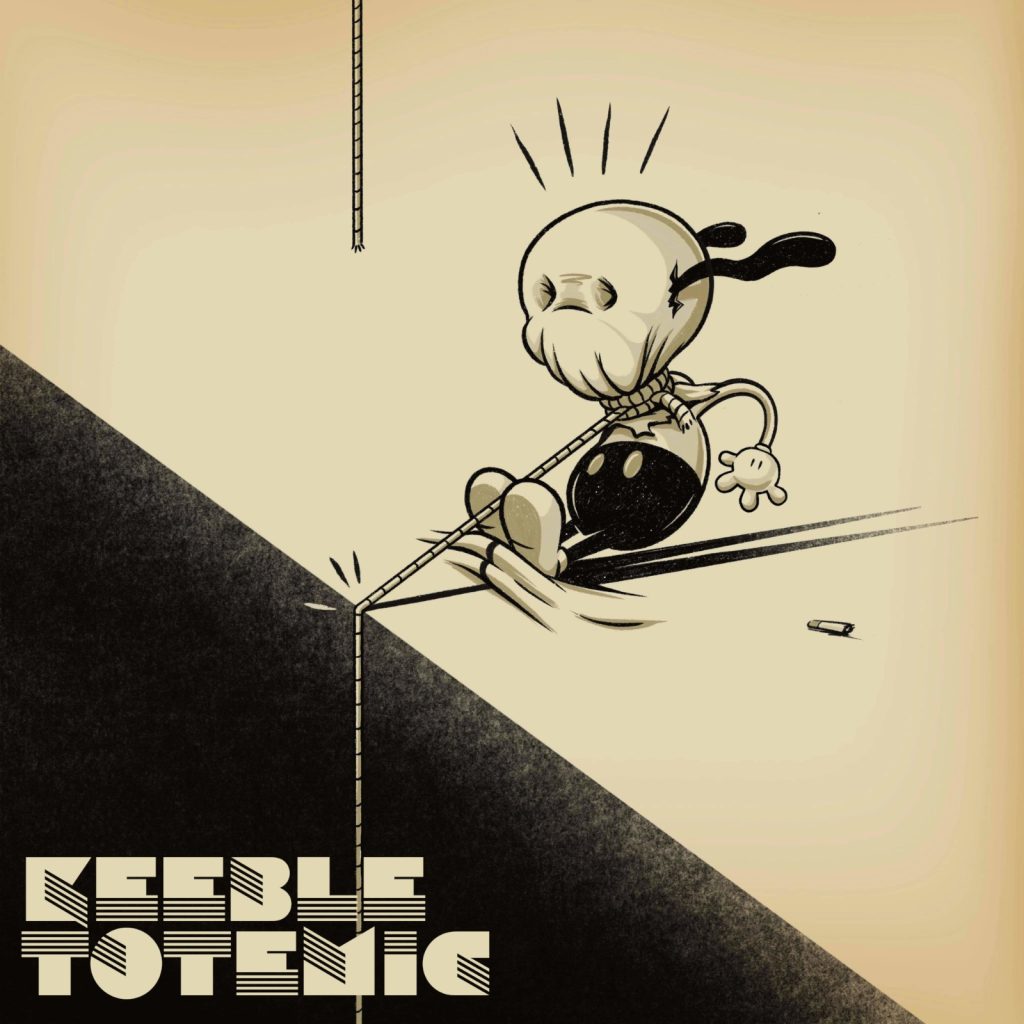
Released on 29th May 2026, “Totemic” is the debut original album from Keeble, an Essex, England-based artist, presenting a ten-track project that fuses dystopian disco with psych-pop while constructing an immersive, experimental electronic sound world. The album builds a conceptual framework around personal totems, using them as symbolic emblems of confinement and liberation, rage and release, adaptation and stillness, all woven into a unified sonic and thematic experience. Rather than relying on traditional song-led storytelling, “Totemic” develops its identity through atmosphere, repetition, and evolving texture, forming a cohesive listening environment that feels ritualistic in structure and intent. The production is defined by atmospheric, minimalist, and electronically driven composition, where spatial mixing, heavy reverb, and delay create a constant tension between enclosure and expansiveness.
Vocals are not positioned as dominant narrative elements but are instead treated as integrated textures, blending into the instrumental fabric to reinforce mood, tone, and psychological depth. Across the project, Keeble emphasizes controlled emotional restraint, mechanical precision, and ambient diffusion, allowing each sonic layer to unfold gradually without conventional structural predictability. Thematically, “Totemic” explores psychological transition, internal pressure, adaptive identity, and emotional stillness, presenting consciousness as cyclical, unstable, and continuously reconstructed through sound rather than fixed expression. The album frames human experience through sonic contrast and tonal shifts, using sound design as the primary vehicle for meaning rather than explicit lyrical exposition. This results in a deeply immersive experimental electronic work that prioritizes spatial awareness and emotional suggestion over direct narrative clarity, establishing Keeble’s artistic direction as both conceptually focused and sonically exploratory.
Planes:
The track “Planes” by Keeble on the album “Totemic” is constructed around a restrained vocal methodology where the human voice is deliberately minimized and embedded into the overall sonic architecture. Keeble avoids traditional melodic phrasing, instead shaping the vocal presence as a textural extension of the instrumental framework. The delivery is detached and deliberately understated, with vocal fragments processed heavily and positioned deep within the mix. Rather than functioning as a narrative driver, the vocals operate as rhythmic and atmospheric reinforcement, merging with the surrounding electronic elements to form a unified sound field. This approach removes emotional directness and replaces it with controlled abstraction, where meaning is communicated through structure and repetition rather than lyrical emphasis. The instrumental design of “Planes” is centered on layered synthetic textures, subtle percussive movement, and a persistent ambient pulse that maintains continuity throughout the track. Keeble constructs the production with a strong emphasis on spatial depth, using reverb, delay, and stereo widening techniques to create an expansive yet enclosed auditory environment.
The rhythm remains steady and minimal, avoiding abrupt changes or breakdowns in favor of gradual evolution. Metallic tonal accents and faint harmonic shifts are introduced sparingly, providing contrast without disrupting the overall cohesion. The production prioritizes immersion over dynamism, allowing the listener to sink into a continuous flow of sound that feels both mechanical and organic. The theme of “Planes” focuses on cognitive transition, perception instability, and the fluid nature of awareness. Keeble uses repetition as a structural and conceptual tool to represent cyclical thought processes, where ideas do not progress linearly but instead loop and transform within shifting mental states. The track presents consciousness as a constantly moving system, where clarity is temporary and perception is continuously reconstructed through internal and external stimuli. The message is direct and consistent: identity and awareness are not fixed entities but evolving processes shaped by continuous sensory reinterpretation and psychological fluctuation.
Bruiser:
“Bruiser” by Keeble from the album “Totemic” presents a more aggressive and mechanically structured sonic identity, where the vocal performance is reduced to fragmented rhythmic components rather than expressive lyrical content. Keeble employs short vocal bursts that are heavily processed, chopped, and looped in synchronization with the percussive foundation of the track. The voice is stripped of melodic function and transformed into a percussive instrument, reinforcing the track’s structural rigidity and industrial aesthetic. This approach eliminates emotional softness and replaces it with precision, repetition, and controlled sonic aggression, positioning the vocal presence as part of the rhythmic machinery rather than a separate narrative layer. The instrumentation of “Bruiser” is dense in tonal weight yet minimal in harmonic development. Keeble builds the track around tightly controlled percussion, low-frequency synth pulses, and layered electronic textures that maintain constant forward pressure.
The rhythmic structure is unyielding, with no significant breakdowns or melodic expansions, reinforcing a sense of continuous tension. The production is carefully balanced between dry, immediate foreground elements and heavily reverberated background layers, creating a spatial contrast that enhances the feeling of confinement. Each sonic component is precisely placed to maintain intensity without overcrowding the mix, resulting in a focused and controlled auditory experience. The theme of “Bruiser” revolves around psychological pressure, internal tension, and sustained emotional compression. Keeble constructs a sonic environment that reflects the accumulation of stress over time, where repetition becomes a representation of escalating internal strain. The track communicates a clear message: prolonged intensity without release results in psychological fatigue and emotional constriction. There is no resolution within the composition, only continuous reinforcement of pressure, mirroring the experience of being trapped within cycles of modern mental and environmental overload where relief is absent and endurance becomes the only response.
The Great Adaptors:
In “The Great Adaptors,” Keeble delivers a more emotionally expressive yet still controlled vocal performance compared to earlier tracks on “Totemic.” The vocals are breathy, intimate, and carefully integrated into the instrumental mix, maintaining a balance between clarity and diffusion. Keeble alternates between reflective phrasing and slightly more assertive tonal expressions, allowing subtle emotional variation to emerge without disrupting the track’s overall restraint. The voice remains partially embedded within the production, functioning as both narrative element and atmospheric texture, reinforcing the track’s introspective and contemplative tone while maintaining structural cohesion. The instrumental arrangement blends indie-pop sensibilities with electronic production techniques, resulting in a layered and spatially rich sonic environment.
Keeble constructs the track using evolving synth pads, understated rhythmic patterns, and delicate melodic motifs that shift gradually over time. The production emphasizes spatial openness, with extensive use of reverb and delay to extend harmonic elements and create a sense of continuous movement within a static emotional framework. The rhythm remains steady and mid-tempo, providing a stable foundation that supports the atmospheric and melodic components without overpowering them. Each layer is carefully positioned to maintain clarity while contributing to the overall immersive depth of the composition. The theme of “The Great Adaptors” centers on human contradiction, emotional adaptability, and the tension between resilience and internal uncertainty. Keeble explores how individuals adjust to shifting emotional, relational, and existential conditions, often reshaping identity in response to instability. The message is clear and direct: adaptation is both a necessary survival mechanism and a psychological burden. The track presents this duality without resolution, emphasizing the ongoing conflict between doubt and persistence as an inherent aspect of human experience, where stability is continuously negotiated rather than permanently achieved.
Inertia:
“Inertia” by Keeble from the album “Totemic” is defined by a subdued and atmospheric vocal approach that emphasizes emotional distance and psychological stasis. The vocal delivery is restrained, heavily processed, and deeply integrated into the instrumental framework, creating a sense of suspension and detachment. Keeble avoids dynamic vocal escalation, instead maintaining a consistent tonal presence that reflects emotional inertia and internal stillness. The voice functions less as a communicative tool and more as an atmospheric layer, reinforcing the track’s meditative and immobilized character. The production of “Inertia” is built on slow-evolving ambient synth layers, minimal percussive elements, and sustained harmonic textures that unfold gradually across the track’s duration. Keeble employs repetition and subtle variation as core structural principles, allowing the composition to develop through incremental shifts rather than dramatic transitions.
The rhythmic foundation is minimal but persistent, acting as a subdued pulse beneath the atmospheric layers. The sound design is heavily processed with reverb and spatial diffusion, creating a hazy, dreamlike environment where sonic elements blend into a unified field rather than remaining individually distinct. The theme of “Inertia” focuses on psychological stagnation, emotional immobility, and the tension between awareness and inaction. Keeble presents a narrative in which perception remains active while movement is absent, creating a state of internal conflict where understanding does not translate into change. The message is direct and unambiguous: inertia is not the absence of internal activity but the presence of unresolved cycles that prevent progression. The track frames stillness as both a protective state and a form of confinement, capturing the dual nature of emotional paralysis within the broader conceptual structure of “Totemic.”
Totemic Transforms Confinement, Adaptation, And Self-discovery Into An Immersive Sonic Ritual, Reminding Us That Identity Is Never Fixed But Constantly Evolving.
~ Daniel (Dulaxi Team)
Keeble emerges from Essex, England, with a distinctive artistic identity that occupies the space between indie pop, psych-pop, dystopian disco, and what can best be described as plastic psych. Rather than pursuing conventional pop structures, the artist embraces instinctive production choices and emotionally charged atmospheres, creating music that feels simultaneously danceable, disorienting, and deeply personal. This approach is fully realized on the ten-track debut album “Totemic,” a project centered on themes of primal energy, identity, transformation, and self-exploration. Keeble’s ability to balance immersive electronic textures with raw emotional undercurrents allows the music to resonate beyond its experimental framework, inviting listeners into a world where introspection and movement coexist. The artist’s commitment to atmosphere, sonic detail, and psychological storytelling establishes a unique creative voice capable of turning abstract emotions into vivid listening experiences. Ultimately, “Totemic” stands as a confident and thoughtfully constructed debut that showcases both artistic vision and sonic ambition. Listeners who appreciate atmospheric electronic soundscapes, psych-pop experimentation, and music that reveals new details with every listen will find plenty to connect with here. Whether experienced through headphones in quiet reflection or absorbed within its hypnotic rhythms, “Totemic” offers a captivating journey through identity, change, and emotional complexity, making it an album that invites repeated returns long after its final moments have passed.
For more information about Keeble, click on the icons below.