
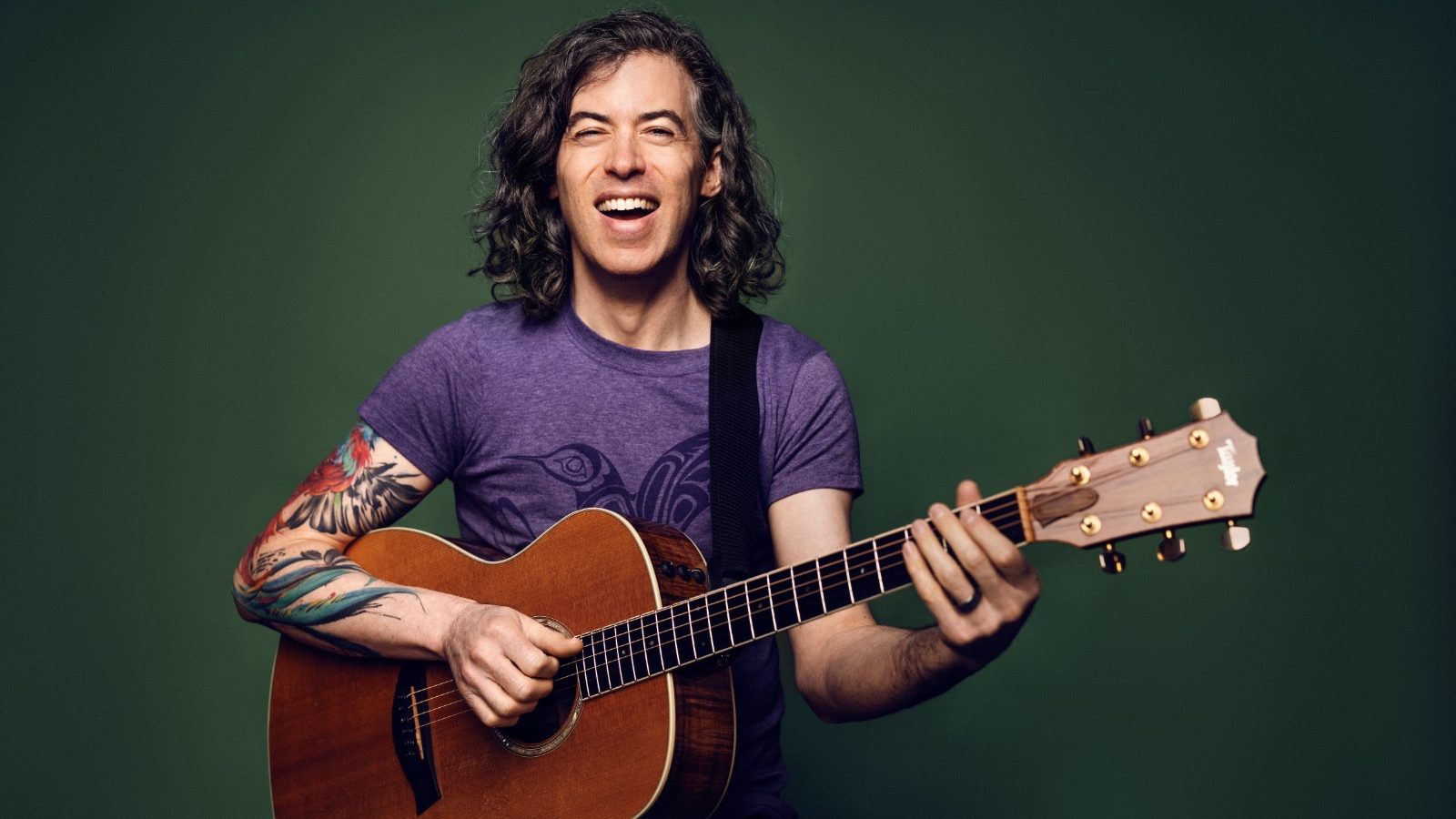
Hi everyone, it’s your host Faithfulness, and today I have with me DadJoke from Chicago, Illinois, United States. DadJoke is here to share more light about his musical career, while diving into his upcoming debut album for kids and families, “Fun Intended,” set for release on June 12, 2026, in time for Father’s Day. This playfully chaotic children’s album turns the idea of “kids’ music” on its head, overflowing with imaginative storytelling, unexpected genre shifts, and a celebration of curiosity, kindness, creativity, and the weird. In DadJoke’s words, he describes his sound as “Weird Music for Weird Kids” unpredictable, stylistically diverse, and built to surprise both children and adults alike. What does it mean to create music for kids that refuses to simplify imagination? And how far can playful chaos go when it is fully embraced as an art form? Let’s find out.
Welcome, DadJoke. Before we begin our interview, here is what you need to know about this talented creator. DadJoke is the children’s music project of award-winning composer, educator, and musician Dave Reminick, best known for nearly two decades as guitarist, singer, and songwriter in the Chicago-based post-punk band Paper Mice, and widely known among friends and family as a connoisseur of dad jokes. Unlike most children’s music, “Fun Intended” avoids simplicity for its own sake, instead embracing intricate songwriting, playful chaos, and genre diversity that spans rock, punk, funk, jazz, folk, metal, R&B, Broadway, Disney style composition, and avant garde influences. His work is shaped by inspirations ranging from 80s cartoons and sitcoms to The Muppets and Mister Rogers, as well as filmmakers, writers, and composers such as David Lynch, Terry Gilliam, Jorge Luis Borges, and Lin Manuel Miranda.
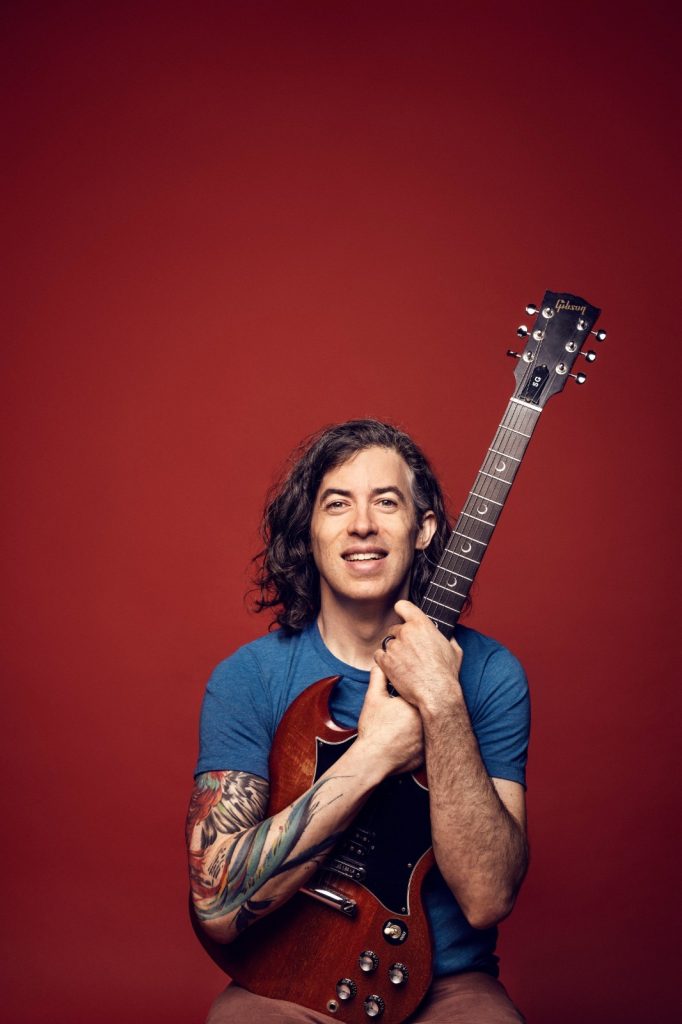
DadJoke explains that “Fun Intended” was created without creative restraint, built entirely from what he calls his “wish list” of the most ambitious and over the top musical ideas he could imagine. From monsters playing metal to rodent jazz bands, from chaotic storytelling to sudden orchestral expansions, every song embraces unpredictability as a core principle. Across tracks like “We’ve Got the Squiggles,” “Wakey Wake Up,” and “I Tried to Use AI… But It Came Out WEIRD,” the album celebrates imagination in its most unfiltered form, balancing humor with sophisticated composition. What happens when a children’s album refuses to simplify creativity and instead expands it to its most extreme and joyful form? Let’s find out.
Having this brief Introduction, I’m sure new and current fans must be excited about our Interview today.
INTERVIEW
Faithfulness: Growing up in East Northport and later studying at Oberlin, what early experiences first made you realize music would be your lifelong language?
DadJoke: I usually credit two things with my interest in music. The first is my grandmother — my mom’s mom, to be precise. She was an amateur pianist, a wonderful musician, and when we would visit my grandparents in Brooklyn, I would sit next to her on the piano bench and try to copy what she was playing. After several years of visits, I remember finally being able to reproduce the opening of a Chopin Waltz – a piece that was far beyond my level at the time – and the overwhelming sense of joy and inspiration I felt seeing my family’s reaction.
The other experience was years later, in high school. I was in the car with my mom and sister, riding shotgun, flipping through the radio. On a whim, I checked the lower end of the FM dial and stumbled upon 89.9 FM WKCR – Columbia University’s radio station. I haven’t lived in New York since 1997, so I don’t know how it’s changed since then, but at the time they played a lot of experimental and avant-garde music.
I was probably 16 at the time, and I had never even heard of avant-garde music, so when the music came on – a live recording of a live solo performance by legendary free jazz pianist Cecil Taylor – I couldn’t believe what I was hearing. He was all over the piano, playing the most raucous and cacophonous music I’d ever heard, and I was completely blown away. I begged my mom to leave the radio on so I could find out who it was, and thankfully she obliged. I walked out of the car that day certain I wanted to pursue music. I don’t think I had ever been truly moved by a piece of music until that day. Hearing Taylor’s playing opened my eyes not only to the universe of possibilities that music offers, but to the profound and life-affirming effect it can have on you.
Faithfulness: You’ve trained extensively across psychology, saxophone performance, music theory, and composition. How do these different academic paths shape the way you approach making music for kids today?
DadJoke: For a long time, I regretted not choosing one path and sticking to it, but more and more I find my diverse experiences to be a strength.
I spent many years as a professional saxophonist, and while I learned so much, both about the intricacies of the instrument and, more generally, how to be a performer, it also helped me realize that playing music that other people wrote would never be enough for me. I wanted to compose.
When I first started studying music theory, I thought it was basically composition in reverse – that theory would tell you what music is supposed to do. I quickly realized I had it exactly backwards. Music theory tries to make sense of music – to understand it and describe how it is made. Understanding that, I realized there were no prerequisites to writing.
Now that I am more well-versed in theory, it can actually be tricky to turn off that part of my brain so I can just write freely. So much of music analysis involves finding connections within a piece of music, especially elements that unify the form and content. While I enjoyed a lot of music that fits that mold, I realized my priorities as a composer were different. I don’t necessarily need everything in my music to be unified; the things I enjoy in music don’t necessitate an explicit relationship between form and content. Once I stopped trying to do what I thought I was supposed to do, and started trusting my own voice, I was able to write music that felt honest and genuine.
Faithfulness: You spent nearly 20 years performing with the post-punk band Paper Mice. What creative shift happened when you moved from that world into children’s music as DadJoke?
DadJoke: It might sound funny, but to be honest, it wasn’t that big of a shift. So many elements of Paper Mice made their way into DadJoke – the puns, the humor, the quirky melodies and odd rhythms, even the dissonance. I mean, my song “This Is a Duck” is essentially a Paper Mice song!
But where Paper Mice mostly lives in a harsh, dissonant sound world, DadJoke is more stylistically varied from song to song and more noticeably tonal in its harmonic vocabulary.
I’ll add that, for the first decade or so of Paper Mice being a band, I was adamant that all our recordings directly reflect what a live performance would sound like. I was staunchly averse to overdubbing extra instruments or voices, and was passionate that we maintain a raw, unprocessed, power-trio sound. Our bassist, Taylor Hales, aside from being a wonderful person and an amazing musician, is an incredible engineer/producer, who works at Chicago’s famous Electrical Audio studio. For years, he encouraged me to expand my thinking about what a recording could be, proposing all sorts of interesting sonic possibilities that, in my pigheadedness, stubbornly shut down. I remained set in my ways for quite some time, but when I finally got over myself and listened to him, I was blown away by the creative freedom that was suddenly available to us. Our 2020 album, 1-800-MONDAYS, reflects that: there’s a string quartet on two of the tracks, a tuba and a contra bassoon on one of them, some really cool effects and processing across the album; there’s even three-part vocal harmony on a few songs! Taylor really stoked my imagination, so that when I started DadJoke, I went in with not just an open mind, but a curious one.
Faithfulness: You play multiple instruments including saxophone, banjo, and ukulele. How does switching between instruments influence the playful identity of your sound?
DadJoke: I’ve noticed that I have different strengths on different instruments, and when I’m writing a song, I try to draw from those strengths as they’re needed. So, for example, I tend to write my best melodies on guitar, so if I’m struggling to come up with a melody, that’s what I reach for. However, if I’m writing a chord progression or orchestrating, the piano is usually my first choice. You never know when inspiration will strike or where it will come from, and I’m always interested to see what unexpected ideas might come from experimenting with different instruments.
Faithfulness: You’ve cited influences ranging from Debussy and Chopin to Mister Rogers and Looney Tunes. How do you balance such wide artistic inspirations without losing your own voice?
DadJoke: That’s a really interesting question. For me, inspiration is a subconscious thing. It might sound a little weird, but I imagine a person’s influences as a sort of a constellation of stars orbiting some central point. Everybody shares some influences with other people, but when we consider the totality of any one person’s constellation, it will be unique to them. Their true artistic voice therefore isn’t contained in the constellation, it is delineated by it – it is the center of gravity that the constellation orbits. From this perspective, our influences are a part of us, definitional elements of our individual musical identities.
Faithfulness: “Fun Intended” is described as “Weird Music for Weird Kids.” What does that phrase mean to you in the context of this album?
DadJoke: When I started writing the songs that became “Fun Intended,” I wanted to create music that is as much what I would have wanted to listen to as a child, as it is what I want to listen to today. I really had no idea what that combination was going to end up sounding like, but as it turns out, it’s weird. For one, it’s full of surprises – the songs are harmonically dense, rhythmically off-kilter, and structurally unpredictable. Perhaps more significantly though, I gave my imagination and sense of humor full control of the songwriting process, so I ended up with songs about believing that dinosaurs sounded like modern-day farm animals, forgetting to buy a Halloween costume and accidentally wishing for (and receiving) a poop emoji costume, and being irrationally afraid of getting hit in head by a big red rubber horse, only to then *immediately* get hit in the head by a big red rubber horse. “Weird Music for Weird Kids” is at its heart a message of recognition and acceptance – a call for kids (and adults) to embrace and find joy in being exactly who they are.
Faithfulness: You mentioned finally letting your “wish list” ideas come fully to life on this project. Can you share a moment where you thought, “This is too big,” but made it work anyway?
DadJoke: The most obvious example would have to be the last song on the album, “I Tried to Use AI… but it Came Out WEIRD.”
Toward the end of the song, the lyrics have me asking the AI to show me an image of “a bunny riding on a horse.” The image – which you can see in the video for the song – is so bizarre, so unexpected – I knew the texture had to change drastically. Most of the instruments and harmonies up to that point had been harsh and distorted, and my gut told me the moment demanded something soft and tender to amplify the humor. I wrote a really pretty acoustic guitar part, and tried to make the recording sound like vinyl from the 70s a la Paul Simon or Leonard Cohen.
As the section moves on and the lyrics shift, my actual views about the dangers of AI in music bubbling to the surface, I wanted the music to blossom, becoming increasingly intense and dramatic. I added bass guitar, organ, and cymbals, but the music just seemed to need more. So I started expanding the orchestration, adding piano, background vocals, timpani, percussion, and… oh yeah… a string orchestra! By then, I knew things had gotten way out of hand, but I was so excited and inspired, I just took my hands off the wheel and let the song take me where it wanted, adding harp, clarinet, flute, and eventually a full brass section.
I had gone WAY overboard, and while the whole grandiose orchestral excursion may have only amounted to a minute of music, it enabled me to give the song the ending I felt it needed. As the orchestra fades away, it leaves behind only my voice and the piano. Lyrically, this section is the heart of the song, and the back-to-back juxtaposition of full orchestra with voice and piano makes the moment feel so much more intimate and vulnerable than I could have otherwise achieved. There was no way I could dial things back at that point – I just couldn’t fathom the song being any other way.
Faithfulness: Songs like “Wakey Wake Up” and “I Tried to Use AI” blend wildly different styles. How intentional was that genre-hopping approach during the writing process?
DadJoke: I don’t typically think about mixing styles when I first start a song; at that point, I rarely know enough about a song to predict what it’s going to need. It’s usually something that emerges naturally during the songwriting process. One of the rules I make myself stick to when I compose is to trust my instincts. As I get deeper into writing a song and start to understand its material better, my imagination starts “sparkling” and my brain starts spitting out ideas. Sometimes the ideas are stupid and don’t work; I jot them down in my notebook, where they stay, should I ever want to go back to them. Other times, they ideas are stupid and they DO work! No matter how ridiculous they seem, I give myself full license to explore them as far as they’ll take me. For me, that’s when the genre-hopping usually begins.
Faithfulness: The album moves between playful chaos and sincere emotional moments. How do you decide when a song should be purely fun versus emotionally grounded?
DadJoke: Similar to the genre-hopping question, that’s a decision that usually happens for me during the songwriting process. When I started writing “I Tried to Use AI,” for example, I figured it was going to be lighthearted and silly – a song I could dash off quickly and easily. But as I got deeper into the process, and thought more about what Artificial Intelligence represents in the arts, I realized, “Oh, this is leading me somewhere. There’s a message in here.” What I had written so far was indeed quite silly, but the seeds of a sincere and deeply-felt message were apparent through the humor and chaos, and I couldn’t shake the urge to plant them.
Faithfulness: You’ve described the album as celebrating curiosity, kindness, and creativity. Was there a core message you kept returning to while writing?
DadJoke: I think the guiding principle behind what I do is really an overwhelming admiration and respect for children. When I think back to watching Mister Rogers’ Neighborhood as a kid, I remember feeling like Fred Rogers understood me – like he really got how I felt. It was like getting a hug. I know it was “just” a TV show, but it showed me what children’s media is capable of.
I want kids to hear my music and feel the way I felt watching Mr. Rogers. I believe that when you pour everything you have into making something for children – when you take it as seriously as you would something made for adults – you send them a very specific message: that they are loved and valued.
They may never consciously recognize it, but I hope that on some level they hear it and think, “Wow – you did all this for me? I must be really special.”
Faithfulness: Tracks like “This is a Duck” and “What Did the Dinosaurs Say?” lean heavily into imagination. How do you keep childlike wonder alive in your songwriting without overthinking it?
DadJoke: I love hanging out with kids, especially my daughter. I know I’m getting older, but I still feel really connected to her sense of humor. A lot of the things that make me laugh are the same things that make her laugh. When I come up with a really absurd idea, one of the first things I think is, “I wonder what my kid is going to think about this.” And usually, the weirder or more preposterous the idea is, the more she connects with it.
I try not to write with a heavy hand. If something feels fun or silly and feels worth writing a song about, then I’m going to write it. One of the things I love most about making music is interacting with my imagination and trying to write the way I might have written as a kid.
As adults, we tend to overthink things. You spend years learning rules, worrying about what people will think, trying to sound smart or impressive – it’s exhausting! The more I can peel those layers away and reconnect with my “child brain,” the better and more sincere my music becomes. It’s more honest, more imaginative, and more interesting.
Faithfulness: You worked with layered arrangements including orchestral elements, jazz textures, and even metal influences. What was the most surprising combination that actually worked?
DadJoke: That would probably be “Wakey Wake Up.” It moves between a rock/fusion-ish texture, a metal band of screaming monsters, and a mouse-fronted jazz/lounge band. Those elements feel really disjunct, really unrelated, but for some reason, they just felt to me like they were meant to go to together.
Faithfulness: There’s a strong sense of humor throughout the album, even in its more complex musical moments. How do you make sure the humor enhances the music rather than overshadowing it?
DadJoke: Years ago, I remember reading an interview in which a well-known contemporary composer talked about his distaste for humor in music. His argument – that humor distracts from music’s emotional content – is an interesting one, but it’s one that I just can’t agree with.
Humor can be so many things. It can be a tool for satire. It can help us deal with feelings that might otherwise feel too heavy. It can be an end in itself. And it can also be an amplifier of emotion. In movies, music, or books, when something is really sad and someone cracks a joke, that’s often the moment the tears actually start to flow.
That being said, I am always careful to revisit a song again and again to make sure it feels balanced – that the humor isn’t out of place or distracting. To be extra certain, I also run every song by my family multiple times, often to their annoyance. They are always insightful, helpful, and brutally honest – exactly what I need.
Faithfulness: When kids and families listen to “Fun Intended” years from now, what feeling or memory do you hope stays with them?
DadJoke: More than anything, I want my music to be something kids and parents can enjoy together. People often think kids’ music is only for kids, but I don’t think it has to be. To me, the gold standard is making music that adults can genuinely enjoy too, while still being something kids love.
That’s what I’m aiming for. I want DadJoke to be something kids can ask for and parents don’t feel like they’re just putting up with; something they can be silly with together, and also talk through the slightly deeper or heavier ideas when they come up.
Ultimately, my dream is for my music to become part of their childhood in a way they look back on fondly.
Faithfulness: Looking ahead, do you see DadJoke expanding further into storytelling, performance, or other creative worlds beyond music?
DadJoke: For the moment, the project is still so young that I really don’t know where it’s going to end up. If the opportunity ever arose, I would absolutely love to write a musical. I’ve been interested in musicals for a long time, and I actually started writing one for my dissertation project, but it never really came to fruition.
I’ve also started a book of “Poop Haikus,” based on my many unfortunate run-ins with diaper changes as a new father. I would love to see it published one day. Here’s just a taste:
Diaper Chess (Poop Haiku #7)
She makes her first move
I look down in disbelief.
“Checkmate,” she whispers.
But for now, I’m just focused on getting my music into people’s homes and into kids’ ears – having them hear what I’m doing and hopefully building a fan base that feels a real sense of connection to it. We’ll see what happens from there.
HAVING LISTENED TO ‘Fun Intended’, HERE ARE MY HONEST THOUGHTS
“Fun Intended” by DadJoke presents children’s music as a sophisticated imaginative world where humor, curiosity, and emotional sincerity coexist. The album resists simplicity, instead building richly layered arrangements that shift between playful unpredictability and carefully structured musical ideas. Its sound design blends theatrical storytelling, rhythmic surprises, and melodic clarity, allowing each moment to feel both spontaneous and intentional. Beneath the whimsy lies an emotional core emphasizing kindness, connection, and presence, giving the project depth beyond its playful surface. The writing balances absurd imagination with grounded musical logic, making it engaging for listeners across ages. Much of its cohesion stems from Dave Reminick’s background in composition and education, shaping harmonic detail and structure. His experience in performance and teaching shapes a work that feels both intellectually considered and joyfully accessible. Ultimately, the album reframes children’s music as serious artistic expression, merging creativity, warmth, and technical craft into a unified listening experience.
~ Faithfulness (Dulaxi Team)
Finally to our audience, I urge to listen to “Fun Intended”, add it to your playlist and be Inspired by it and on behalf of Dulaxi I like to appreciate you all by saying thank you everyone, See you on our next interview.
For more information about DadJoke, click on the icons below.