

Released on 1st May 2026, “Digital Poison” finds Joshua Scurfield continuing to refine his identity as a self-produced rock artist working at the intersection of alternative guitar music and modern digital anxiety. As his third solo release since beginning this phase of his career at the start of the year, the single carries a clear conceptual weight, focusing on the emotional consequences of a life increasingly mediated through screens, algorithms, and curated digital environments. Rather than presenting itself as a straightforward rock track, it arrives as a reflective, immersive piece that questions how connection and disconnection now coexist in the same space.

From its earliest moments, the song establishes an atmosphere that feels deliberately enclosed and introspective, built on slow-moving textures and a restrained sense of motion. Scurfield constructs the track using layered guitar work, long delay trails, and subtle tonal shifts that create a feeling of distance even when the sound is close and intimate. Instead of pushing toward immediacy, the composition lingers, allowing repetition to become its own form of tension. This approach creates a sonic environment that mirrors the psychological loop of digital engagement, where time feels continuous yet fragmented, and attention is constantly pulled inward.
Instrumentally, “Digital Poison” sits within a space shaped by alternative rock and post-rock influences, yet it avoids leaning too heavily on nostalgia by filtering those references through a modern production sensibility. Distorted guitars appear in waves rather than constant presence, often dissolving into ambient space before fully resolving, while acoustic textures provide contrast without breaking the underlying mood of restraint. The rhythm remains steady and almost mechanical throughout, reinforcing a sense of inevitability that runs through the entire arrangement. Rather than relying on dynamic peaks or traditional rock escalation, the song commits to a controlled consistency that reflects the numbing repetition of digital routines.
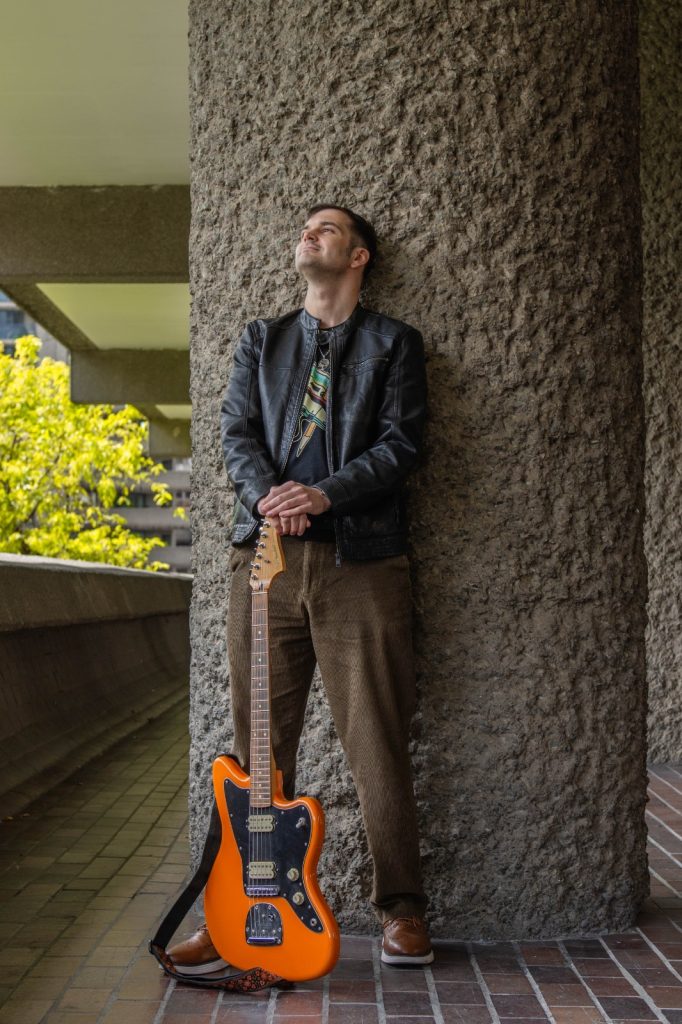
Vocally, Scurfield delivers one of the track’s most defining elements through a performance that is intentionally subdued, detached, and carefully controlled. His voice is placed slightly within the mix rather than on top of it, giving the impression that it is emerging from within the same confined space the song seems to inhabit. This production choice deepens the feeling of isolation, as though the vocal is not addressing an audience but instead echoing inside a private, enclosed mental environment. The restraint in his delivery avoids dramatic emotional release, instead maintaining a steady emotional temperature that aligns with the song’s overarching themes of disconnection and internal withdrawal.
Lyrically, “Digital Poison” captures the contradictions of modern digital existence with striking clarity, balancing cynicism with moments of vulnerable honesty. Lines such as “I’m so safe inside this chamber / No one ever comes in here” frame isolation as something deceptively comforting, where separation from others becomes both protection and limitation. The abrupt confession “cuz I human” interrupts this detachment, exposing a raw, unresolved tension between emotional instinct and digital adaptation. Meanwhile, “killed all the friendships that I had / cuz there’s nothing cleaner than the wide screen” distills the central irony of the track, where the pursuit of clarity and control within digital spaces comes at the cost of lived, imperfect human connection.

Digital Poison Is A Haunting, Atmosphere-Driven Exploration Of Digital Isolation, Blending Introspective Guitar Textures, Restrained Vocals, And Emotional Unease Into A Chilling Modern Rock Experience
~ Faithfulness (Dulaxi Team)
Ultimately, “Digital Poison” functions less as a conventional single and more as a sustained emotional environment, prioritizing cohesion and atmosphere over hooks or traditional structure. Its strength lies in its refusal to resolve its own tension, instead leaving the listener suspended within its sonic and thematic space long after it ends. This approach reflects Joshua Scurfield’s broader artistic direction as a British self-produced musician drawing from analogue influences while responding to contemporary emotional realities. Blending echoes of Radiohead’s more introspective eras with post-rock atmospherics and a distinctly modern production mindset, he continues to shape a sound defined by introspection, texture, and unease. In this context, “Digital Poison” stands as a clear statement of intent, positioning him as an artist documenting the emotional weight of a disconnected age through guitar-driven music that feels both familiar and unsettled.
For more information about Joshua Scurfield, click on the icons below.