
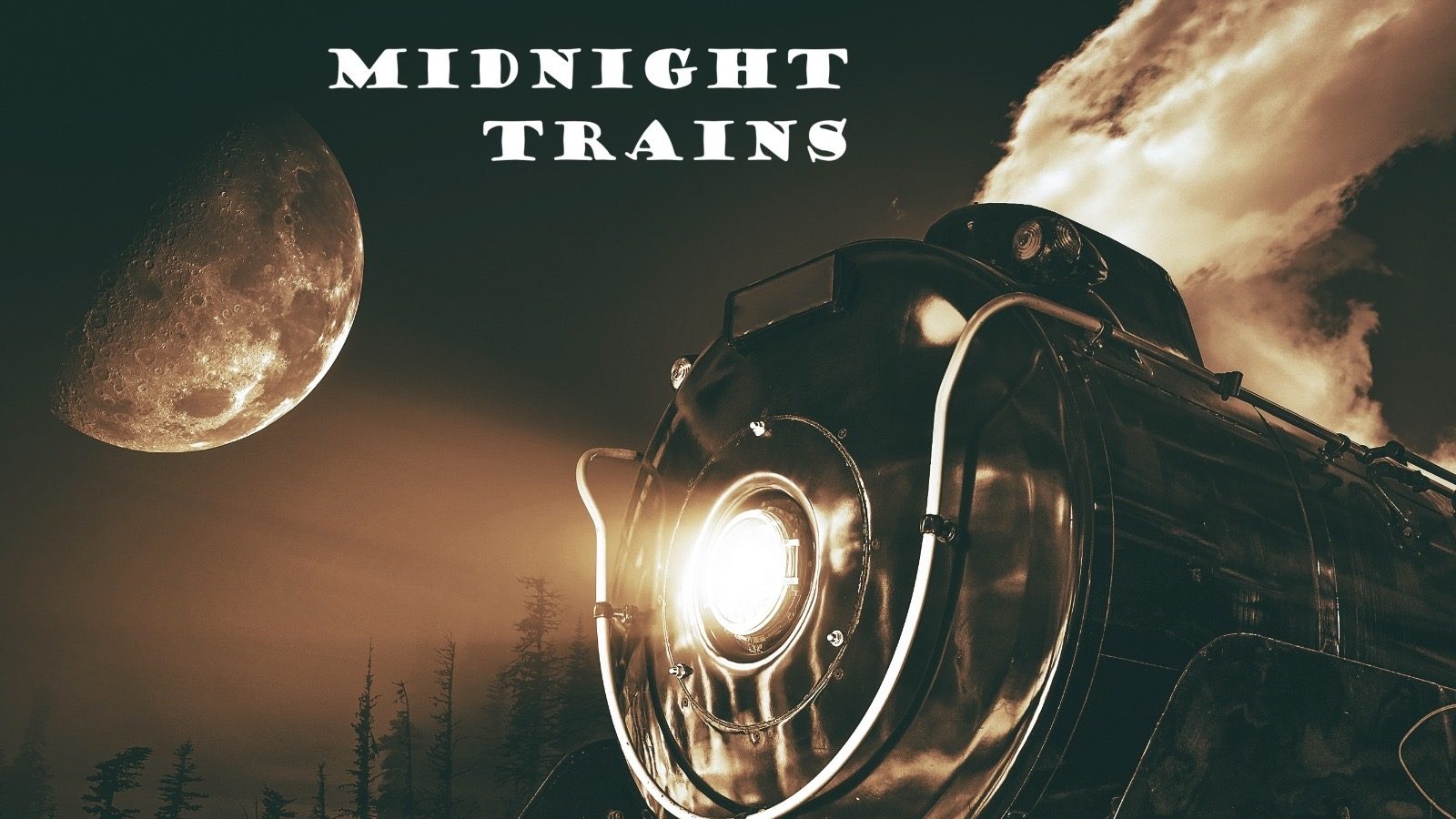
Hello everyone, it’s your host Oliver from DULAXI, and today I’m delighted to be joined by Lior Golan, a Tel Aviv-based rock artist from Israel whose music is shaped by passion, personal struggles, imagination, and a determination to create without compromising his artistic vision. Together with guitarist Gabriel Lefelman, Golan has spent approximately 15 years developing a musical partnership that has endured changing band lineups, difficult circumstances, and years of waiting to bring their work into a professional recording environment. Their first professionally recorded EP, MIDNIGHT TRAINS, released on 12th March 2026, brings together blues, classic rock, hard rock, psychedelic influences, and the spirit of uncompromising rock and roll. Before we begin our conversation with Lior, here’s what you need to know about today’s featured project.
About Lior Golan
Lior Golan’s musical journey has been shaped by a commitment to creating music that comes from genuine experience rather than commercial expectations. Based in Tel Aviv, Israel, Golan has spent years developing his sound alongside guitarist Gabriel Lefelman, with whom he shares a musical partnership that began approximately 15 years ago. Their collaboration grew out of chance musical connections and a shared desire to create rock music, gradually evolving through different band lineups, limited performance opportunities, financial difficulties, and the challenges of sustaining a band over the years. Despite these obstacles, their connection as musicians continued to provide the foundation for their songwriting and creative ambitions.
Influenced by the powerful dynamics of Led Zeppelin, alongside Black Sabbath, Pink Floyd, Deep Purple, Cream, Muse, Faith No More, King Crimson, and Lamb of God, Golan’s musical approach draws from a wide range of rock traditions while maintaining a strong emphasis on expressive playing, intensity, and emotional authenticity. His first professionally recorded EP, MIDNIGHT TRAINS, represents an important milestone in a journey that began long before the recording sessions. The five songs had remained on his laptop for approximately four years, following a period in which both musicians were dealing with personal difficulties. Eventually, Golan decided that the material deserved to be professionally recorded and brought to listeners.
Recorded at Shardo Studio in Israel, the EP captures a more organic recording approach, with bass and drums performed together to preserve the energy of the musicians playing in the same environment. The sessions were further developed through the contributions of keyboardist Niv Hovav, whose Hammond organ, synths, and piano added further dimensions to the arrangements, while additional guitar layers and vocals completed the recordings. The resulting production reflects Golan’s desire to retain the energy of live rock music while giving the songs room to develop through their instrumental arrangements.
Behind MIDNIGHT TRAINS is a deeply personal story involving Golan’s experiences with PTSD following his IDF service, substance abuse, recovery, and the devastating loss of his sister at the NOVA party. Music became an outlet through which he could express, process, and navigate some of these difficult experiences. With encouragement from Israeli artist Guy Mentesh, he eventually chose to release the material independently, allowing the songs to reach an audience after years of being kept close to him. Now working from his own studio and developing additional material with Gabriel, Golan is continuing to explore new musical directions, with further recordings and projects already in progress.
Having this brief introduction to Lior Golan and MIDNIGHT TRAINS, I’m sure both new listeners and longtime followers of his musical journey are interested in hearing more about the experiences, creative decisions, and personal reflections behind the project. So, without further ado, let’s begin today’s interview.
INTERVIEW SESSION
Oliver:
You and Gabriel Lefelman have been creating music together for around 15 years, beginning with chance encounters in Tel Aviv and continuing through different versions of the band. Looking back at those early days, what was it about your connection as musicians that made you feel there was something worth continuing to build together?
Lior Golan:
The only thing worth was our sanity. Our life is so fucked up-and this world can be wicked- that was our northern star guide- the music-inside all this chaos.
Oliver:
Your story with Gabriel includes years of difficult circumstances, changing band lineups, limited opportunities to perform, and a long wait before the music could finally be recorded professionally. What kept you holding on to the idea of making this music when there were so many reasons to put it aside?
Lior Golan:
It was in did against all odds and logic- but I’ve always said that ” a creator has no excuses “
Oliver:
You describe yourself as someone who writes from passion, pain, imagination, and personal experience rather than trying to make something simply because it is commercial. How has that philosophy shaped the kind of artist you have become?
Lior Golan:
It guides me all the time-learning-theory and sound- equipment – got my own pro studio now and its crazy- more music to come soon. I also got 2 different project- Ambient rock- Orshina- and a new house project coming out on the 20 this month. So this ideology kept me involved into other genre and project-the main idea is to create something new all the time.
Oliver:
You have pointed to Led Zeppelin as a major influence, particularly their ability to hit hard while still giving space to each instrument. What have you learned from that balance, and how does it influence the way you approach your own arrangements?
Lior Golan:
With a great respect to the listener ear- and ill quote Jimi Page here: “Dynamic is the most important element”
Oliver:
Your influences also reach from Black Sabbath and Pink Floyd to Deep Purple, Cream, Faith No More, King Crimson, Muse, and Lamb of God. What do you think connects these artists for you despite the differences between their sounds, and what is it that you continue searching for in rock music?
Lior Golan:
I’m a music investigator-before everything- that’s how I get my inspiration, I always look for new music- Kendrick Lamar is big for me now – I think his the Michael Jackson and David bowie of our generation. I also adore Simon & Garfunkel and many others- the difference in sounds doesn’t meter- it’s the intension and energy that I feel and hear- and give me power to move on with my life. Music is my guide. I got no one else.
Oliver:
MIDNIGHT TRAINS was recorded professionally, but the songs had already existed for several years before they reached the studio. When you returned to those recordings after such a long period, how did your perspective on the songs change compared with the person who originally wrote them?
Lior Golan:
the songs didn’t change much- we performed and made lots of rehearsal- and in the 4th collapse I said to Gabe that we will record and I’ll pay so it went a long period before the collapse to the studio-and its all during corona time.. crazy
Oliver:
The EP was recorded at Shardo Studio, with bass and drums performed together during the recording process before the additional guitars, vocals, keyboards, Hammond, synths, and piano were added. What did recording the rhythm section live contribute to the character and energy you wanted these songs to have?
Lior Golan:
as I grew on the mighty bands who recorded live everything-that was the list I could do- there is no other way in kinetic rock music- I remember this well- I was between raz and benny, and the technician on the console-one of the greatest moments of my life
Oliver:
Bringing Niv Hovav into the sessions added Hammond, synths, and piano to a project strongly rooted in guitar-driven rock. What did his playing bring to the arrangements that you may not have achieved through guitars alone?
Lior Golan:
NIV HOVAV is remarkable player and human being- he contributed to the atmosphere of the players- and added a lot of power- harmonies sounds and motivation playing with them is a great honor if we were in USA he had a mansion.
Oliver:
You have described songwriting as a form of escape and a way of processing experiences that were difficult to carry. When you write from such personal places, how do you decide which emotions become lyrics and which remain private?
Lior Golan:
I write music when I’m alone playing- new staff coming up that like- I combine the together and present them to Gabriel lefelman -playing in loops while he write lyrics, sometimes it takes hours for one song… Beside You Tried Your Best which I wrote the lyrics. This song came to me and in 10 minutes was finished. Neil Young once said “you need to be like an antenna”
Oliver:
One of the lines you chose from “You Tried Your Best” speaks about becoming whole again and serving as a light. What does that idea of becoming whole mean to you personally, and why did that particular lyric feel representative of your journey?
Lior Golan:
That’s a very good and unique question- because as a matter of fact -this line was added later by me during rehearsal, the bridge was empty- and this line came in my mind -I can’t explain how or what it really means- it’s like a sword- maybe the stars represent the darkness we all live in. i’d like everyone to interoperate in his own way
Oliver:
There is a strong contrast between the darkness behind some of your experiences and your desire to bring light to people who may also be struggling. How do you balance those two sides when you are writing and performing your music?
Lior Golan:
first-that’s music for me- I listen daily 3 hours max- between creating and mixing, and having an album with a battle of wine alone is great experience for me to learn and get inspired . Second- they say ” clowns are the saddest people ” -couldn’t agree more
Oliver:
You have described MIDNIGHT TRAINS as your first professionally recorded EP and as the result of many years of dreams, setbacks, and persistence. What did finally completing the project teach you about yourself that you could not have learned simply by writing the songs?
Lior Golan:
Its about my identity, self esteem, value, moral, its everything basically
Oliver:
The songs spent years on your laptop before you were ready to release them independently. Now that MIDNIGHT TRAINS is finally in the world, how does it feel to hear people encounter music that existed for so long as something deeply personal to you?
Lior Golan:
I was struggling many issues together- and had few open fronts to fight- C-PTSD, Drug Abuse, Economic pressure, grief for my beloved sister. So I locked my self in a village-putted my studio there- and got isolated-clean and focus. On the other hand its very disappointing I wish my sister would hear the (although she hears from high above)-but I wish her to dance to – my Tiny Dancer… and if I was focused maybe concert would come up- but on December we will record the other part of the ep and go ON TOUR!!
Oliver:
You have mentioned that the band has gone through another period of separation and that there are currently no performances planned. How has that reality affected the way you think about MIDNIGHT TRAINS as a project, and what would need to happen for you to bring these songs to a live audience?
Lior Golan:
First it mad me develop as a producer, and I got tired of searching players and rehearsals with no feedback. I was unprofessional, and leading a band with no budget is the hardest thing to do. If we were at 70s I imagine everything looked different…
Oliver:
You and Gabriel still have several finished songs that were not recorded for this EP, and you have also spoken about another EP coming in the future. How has the experience of making MIDNIGHT TRAINS influenced the way you are approaching those unreleased songs?
Lior Golan:
Motivated me like a million horses, or trains, or million horses power train… its coming soon all is closed and a new drummer will be on this one.
Oliver:
After everything you experienced while creating this project, what do you now understand about your own creative process that you did not understand 15 years ago when you and Gabriel first began writing together?
Lior Golan:
-I can write a book about- but I’ll let my music tell it- and many more new music and shows to come.
Oliver:
You want your music to reach people who may recognize themselves in its struggles and search for some kind of light through it. When someone finishes listening to MIDNIGHT TRAINS, what do you hope they understand, feel, or carry with them from the experience?
Lior Golan:
If I manage to have place in a human heart- and he wakes up in the morning whispering my song- I did my roll on this planet.
Oliver:
As you continue working in your studio and preparing new music with Gabriel, what kind of artist do you want Lior Golan to become from this point forward, and what do you hope the next chapter of your music will say about everything you have learned along the way?
Lior Glendive:
learned that the way is what counts, and the steps we do- and its all mystery and mystical. Humbleness is the key.
“Some musical journeys are measured not by how quickly the songs reach the world, but by everything a person must endure before they are ready to let those songs go. MIDNIGHT TRAINS carries the weight of years of persistence, friendship, and the determination to keep creating even when the road seems uncertain.”
~ Oliver (DULAXI Team)
EDITORIAL PERSPECTIVE
MIDNIGHT TRAINS reflects a long creative partnership shaped by persistence, musical curiosity, and the willingness to keep working through difficult circumstances. The interplay between guitar-driven rock, the contribution of keyboards, and the energy of the rhythm section helps give the project a character that remains rooted in the musicians’ shared vision. What stands out in Golan’s story is his continuing desire to create, explore different genres, and develop as a musician and producer. The EP marks a chapter in that process rather than its conclusion.
~ Oliver (DULAXI Team)
CLOSING
Our sincere thanks to Lior Golan for taking the time to share the story behind MIDNIGHT TRAINS, the experiences that shaped his songwriting, and the creative journey he continues to pursue alongside Gabriel Lefelman. His reflections offer a glimpse into the realities of sustaining a musical partnership, navigating personal challenges, and finding the motivation to continue creating when circumstances are far from straightforward.
We encourage our readers to spend some time with MIDNIGHT TRAINS and discover the music for themselves, taking in the ideas, influences, and personal experiences that have shaped its five tracks. As Lior continues developing new recordings and exploring further musical projects, we look forward to seeing where his creative path leads next.
Thank you for joining us here at DULAXI and for taking the time to read today’s interview. Stay with us as we continue bringing you conversations with artists from across the world, exploring the people, stories, and creative experiences behind their music.