
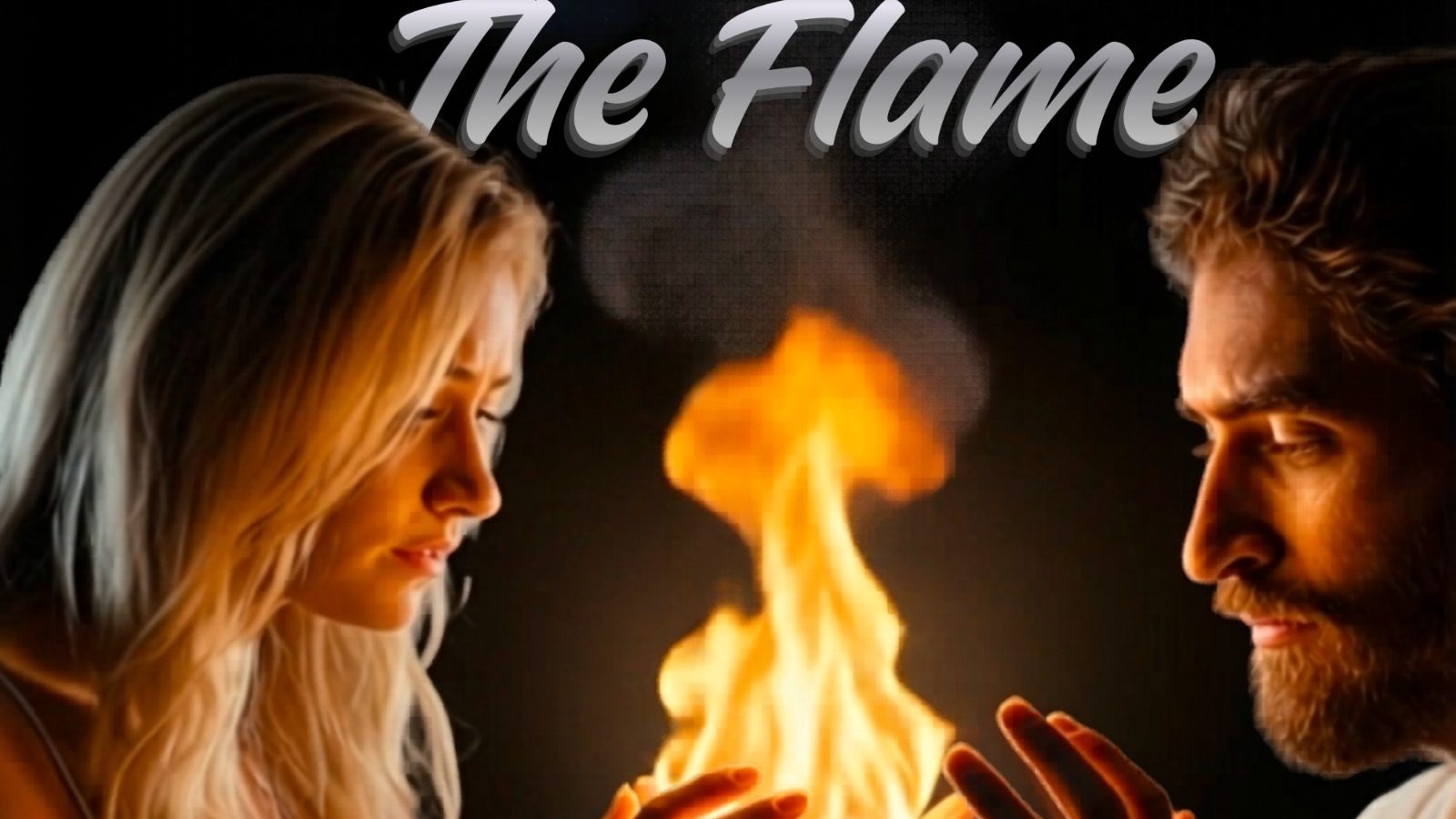
Fishburn’s “The Flame,” released on May 20th, 2026, arrives as a deeply reflective and emotionally charged entry into the contemporary Christian music landscape. Emerging from Chicago’s evolving independent music scene, the single immediately establishes itself as more than a standard worship-inspired electronic pop record. Instead, it becomes a vulnerable confession wrapped in cinematic production, exploring the painful emptiness that follows spiritual distance and the longing to rediscover divine connection. From its opening moments, the song creates an atmosphere of emotional isolation, drawing listeners into a personal narrative of loss, repentance, and rediscovery that feels both intimate and universally relatable.
What makes “The Flame” especially compelling is the way it balances modern electronic production with sincere spiritual storytelling. Russ Harris, the songwriter and producer behind Fishburn, carefully constructs a soundscape that feels expansive yet emotionally focused. Ambient synth textures, restrained rhythmic pulses, and spacious production choices allow the track to breathe naturally without overwhelming its emotional core. The arrangement mirrors the song’s lyrical themes perfectly, beginning with an almost haunting stillness before gradually expanding into a soaring and uplifting climax. The cinematic quality of the instrumentation gives the song an almost visual dimension, as though listeners are moving through darkness toward the faint reappearance of light. Every production decision feels intentional, reinforcing the tension between despair and hope that defines the track.
Caroline Brooks delivers one of the song’s strongest elements through a vocal performance filled with emotional honesty and controlled intensity. Her voice carries the weight of someone standing at the edge of spiritual exhaustion while still holding onto the possibility of redemption. In the verses, her breathy and restrained delivery communicates loneliness with striking realism, while the choruses allow her vocals to rise into moments of desperation and surrender. Lines such as “I don’t wanna breathe without You, I can’t see without You” become emotional anchors within the song, transforming personal spiritual anguish into something listeners can immediately connect with. Brooks avoids excessive vocal dramatics, choosing instead a grounded and believable vulnerability that makes the emotional progression feel authentic rather than performative.
Lyrically, “The Flame” succeeds because of its strong use of metaphor and emotional clarity. The imagery of drifting alone “on a raft without You” captures the terrifying feeling of spiritual displacement, while the recurring contrast between darkness and flame creates a memorable symbolic framework throughout the song. The writing leans into the tradition of lament often found in worship music, yet it avoids becoming overly abstract by remaining emotionally accessible. One of the song’s most effective moments comes through the realization, “I now see how bright it was when You were in my life,” a line that encapsulates the regret and awakening that fuel the entire narrative. Rather than presenting faith as effortless certainty, the song acknowledges struggle, distance, and emotional confusion, making its eventual hope feel earned and deeply resonant.
As the debut release from the upcoming BUKRA project, “The Flame” also offers a promising introduction to Fishburn’s broader artistic vision. The ambitious yearlong campaign, which will include original songs, remixes, covers, and acoustic reinterpretations, reflects a creative approach designed to maintain both musical variety and emotional continuity. What stands out about Fishburn’s direction is the seamless blending of contemporary Christian themes with electronic pop accessibility. The song feels equally capable of resonating with faith-based audiences seeking worshipful reflection and mainstream listeners drawn to emotionally immersive electronic music. That crossover appeal gives “The Flame” a distinct identity within the growing Christian electronic pop space, positioning it as a release capable of reaching beyond traditional genre boundaries.
The Flame Transforms Spiritual Loss Into A Cinematic Christian Pop Experience, Blending Vulnerable Vocals, Atmospheric Production, And Hopeful Redemption Into A Deeply Resonant Journey
~ Faithfulness (Dulaxi Team)
Behind Fishburn is Russ Harris, a Chicago-based producer and songwriter whose musical evolution gives “The Flame” additional depth and authenticity. Having previously gained recognition on the Billboard Dance Charts during the 2000s for electronic productions and remixes, Harris brings decades of experience into this new faith-centered chapter of his career. Since shifting his artistic focus toward Christian music in 2020, he has steadily developed a sound rooted in worship, hope, and emotional transparency while still preserving the polished energy of contemporary dance and pop production. Through collaborations with vocalists like Caroline Brooks, Fishburn continues to craft music that feels spiritually grounded yet sonically modern. “The Flame” ultimately stands as a powerful introduction to that vision, revealing an artist committed not only to technical excellence, but also to creating music capable of speaking directly to wounded, searching, and hopeful hearts alike.
For more information about Fishburn, click on the icons below.