
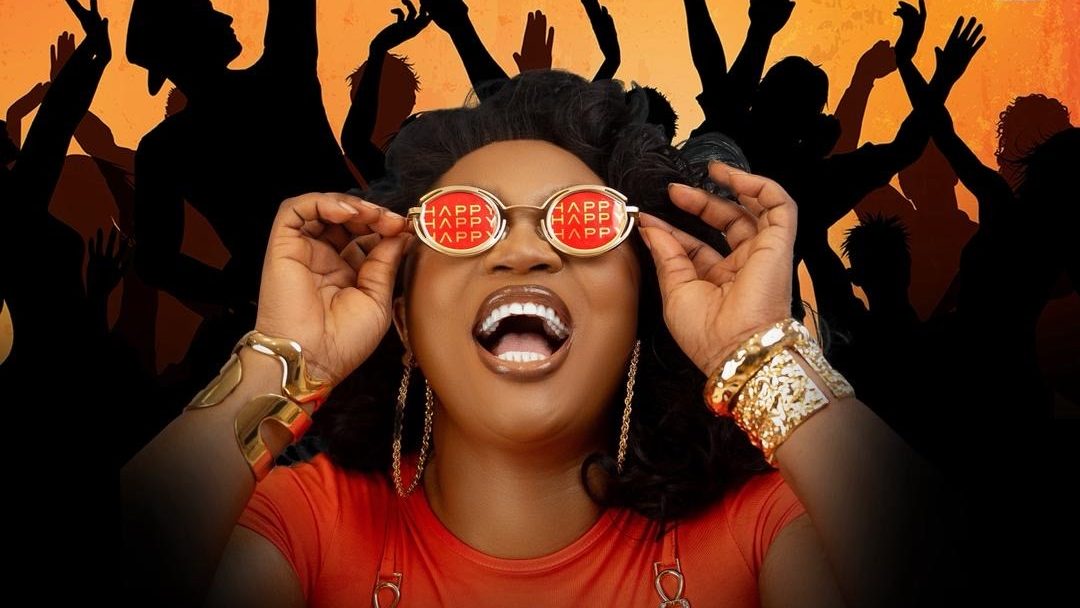
“HAPPY” by Debra Can is a high-energy Afrobeat single released on 17th April 2026. From its opening moments, the track establishes itself as a rhythm-driven celebration rooted in contemporary Afropop sensibilities. Built for immediate impact, it leans into a bright, dancefloor-oriented aesthetic where percussion and brass work in tandem to create a sense of forward motion. The production is intentionally direct, prioritizing groove and accessibility while maintaining a strong connection to the energetic pulse of Lagos street culture that informs its creative direction.
Musically, “HAPPY” is anchored by syncopated percussion patterns that reflect classic Afrobeat foundations while embracing a modern, streamlined production style. The beat structure is steady yet lively, allowing space for a soaring brass section that lifts the track into a euphoric sonic space. Rather than relying on complex layering, the arrangement emphasizes clarity and repetition, which reinforces its hypnotic, party-ready quality. This approach makes the song highly adaptable for playlists and social settings where rhythm and immediacy are central to listener engagement, particularly within global Afro-pop listening environments.
Vocally, Debra Can delivers a performance that alternates between a relaxed conversational tone and a more assertive rhythmic cadence. This duality gives the track emotional range while keeping it grounded in its celebratory purpose. Her delivery enhances the song’s mantra-like hooks, ensuring they remain engaging even through repetition. The vocal phrasing is tightly integrated with the beat, creating a seamless interaction between voice and instrumentation that reinforces the song’s message of confidence and self-directed happiness without disrupting its danceable flow.
Lyrically, “HAPPY” functions as a declaration of independence and emotional clarity. The songwriting centers on affirmations of self-assurance, with direct phrases that emphasize living freely and rejecting unnecessary conflict or “drama.” These statements are delivered in a straightforward, unembellished manner, reinforcing the track’s focus on simplicity and intent. The lyrics do not overcomplicate their message; instead, they present happiness as a conscious decision shaped by personal boundaries and a commitment to peace, aligning with the song’s overall uplifting sonic identity.
The collaborative presence of Cheqwas introduces an additional layer of texture and energy to the record. Their contribution complements Debra Can’s lead vocals, creating a call-and-response dynamic that enriches the track without overwhelming its minimal structure. This interplay helps sustain momentum across the song’s runtime, preventing monotony while preserving its loop-like, seamless composition. Structurally, the track avoids abrupt transitions, instead relying on gradual evolution that enhances its replay value and reinforces its identity as a continuous, immersive Afro-pop groove.
HAPPY Is A Vibrant Afrobeat Celebration Of Joy, Independence, And Lagos Street Energy, Driven By Infectious Percussion, Soaring Brass, And Uplifting, Dancefloor-Ready Optimism
~ Faithfulness (Dulaxi Team)
Emerging from the vibrant creative landscape of Lagos, Nigeria, Debra Can positions herself within a new wave of Afrobeat artists influenced by both local street culture and global Afropop trends. Drawing inspiration from the energetic rhythms of her environment, she channels everyday urban life into music designed for celebration and movement. With “HAPPY,” she strengthens a developing artistic identity built on joy, rhythm, and accessibility, aligning her sound with contemporary African pop while maintaining cultural authenticity. Supported by a planned viral TikTok dance campaign and targeted Afropop PR rollout, her trajectory reflects a strategic blend of artistry and visibility. As a result, Debra Can stands as a rising voice in modern Afrobeat, shaping music that bridges Lagos-rooted expression with global dancefloor appeal.
For more information about Debra Can, click on the icons below.