
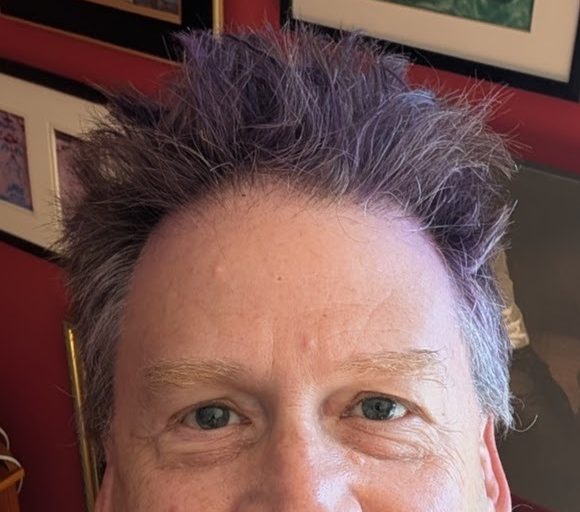
Hello everyone it’s your host Daniel from Dulaxi, and today I have with me the exceptional Joseph Schwartz from Chicago, United States. And Joseph Schwartz is here to discuss his recent existential album “Maybe I Belong” which was released on April 24th, 2026. So, welcome, Joseph Schwartz!. But before we begin our interview, to our audience; here is what you need to know about this artist.
Chicago-based artist Joseph Schwartz stands at the forefront of a new era in music, redefining creative boundaries through his self-described “Hybrid-Human” workflow that merges artificial intelligence with deeply intentional human artistry. Known for shaping the “Post-Human Arena Rock” and “Neural-Symphonic Pop” landscapes, Schwartz approaches technology not as a shortcut, but as a sophisticated instrument for emotional expression, spending countless hours refining hundreds of lyrical and sonic generations until raw human feeling and algorithmic precision become indistinguishable. Drawing inspiration from the arena-sized energy of Foo Fighters and Pearl Jam, the cinematic scale of Trans-Siberian Orchestra, and the emotionally direct storytelling of artists like Taylor Swift and Dua Lipa, Schwartz creates music that balances classical sophistication with modern rock intensity. His critically noted projects, including “Superhuman” and the breakout EP “Ready for Doom,” established his reputation for crafting immersive concept-driven works that explore political unrest, identity, emotional conflict, and personal resilience. Working primarily as a solo creator, composer, director, and lead engineer, Schwartz utilizes Suno AI for sound generation alongside extensive manual editing and arrangement in Audacity, developing a proprietary mixing and mastering process that preserves a distinctly organic and emotionally authentic sound. His upcoming original album “Maybe I Belong,” arriving on April 24th, 2026, continues this artistic evolution through a deeply reflective narrative centered on the daily struggles of creators navigating self-doubt, artistic gatekeeping, online criticism, ego, and eventual triumph. From the Clarence Clemons-inspired saxophone textures of “Treadmill of Hope” to the Rachmaninoff-inspired title track that transforms classical composition into emotionally charged guitar rock, the album captures the vulnerability and determination of modern artistry while proving that AI-assisted music can still possess soul, depth, humanity, and lasting emotional resonance.
Having this brief Introduction about Joseph Schwartz, I’m sure new and current fans must be excited about our Interview today.
INTERVIEW SESSION
Daniel: Your work has been described as existing at the intersection of “Post-Human Arena Rock” and “Neural-Symphonic Pop.” How did you arrive at these artistic identities, and what do they represent for you creatively?
Joseph Schwartz: We’re at a time where we are playing with words to describe new things and new twists on things. The first was really the starting point for my intention when I made my Superhuman EP, where my intention was to use AI to be “superhuman” or utilize my access to unlimited virtuoso capabilities to create music. I decided that I wanted the kind of song that could fill a stadium, even if it would never really be played live. The whole point of AI is to break the constraints (time, money, access to skills) that are currently barriers for musicians to create as big as they can conceive. With that mindset, I thought it would be even bigger to do it across genres.
Really those terms are just strrawmen until we can decide terminology to use to describe the genre extensions and evolutions that will be enabled with AI.
Daniel: As a Chicago-based artist pushing the boundaries of AI-assisted music creation, what personal experiences shaped your vision for blending human emotion with algorithmic experimentation?
Joseph Schwartz: Everything started and continues to be an experiment. I don’t come at this as a driven performer or musician. I am driven by the love of listening to music, expressing my thoughts, and learning through experimentation. When I started with AI music, I had just retired and I just wanted to see what AI could do. So, each new song was an experiment in objectives, techniques, tools, etc.
My whole life I worked in software development and particularly in management. So, the things that I immediately recognized were:
You could get incredibly fast feedback, which is hugely important in software and all business ventures
The process was not building from the note up (like software), it was more “direct-and-curate” and followed the idea that what was important wasn’t the creation as much as the curation or “quality assurance”. You can create objective and acceptance criteria (“I like it and want to listen to it over and over”) and sort through a lot of experiments until you have what you want. You can take pieces and build and refine iteratively and learn as you build.
All that said, the final product had to be something that you would want to listen to and makes you think or feel something. Personally, I am not interested in generic paths taken a million times, so most of my songs are my own rants about something I am sick of talking about. Success for me would be any song that starts a conversation, but I have realized getting to that point is incredibly elusive because you have to engage people sonically so they care enough to listen enough to care about the words and it has to impact them enough to spark an idea worth talking about.
Daniel: You’ve mentioned treating technology as an instrument rather than a replacement for creativity. At what point did you realize AI could become a meaningful extension of your artistic voice rather than just a technical tool?
Joseph Schwartz: After I retired, I wanted to keep up to date as I knew AI would change the world even faster than the world wide web did. So, I was just playing with Udio and realized I could give it a command like “make a song that integrates the concepts in King Lear and The emperor has no clothes” and I instantly had a vision from the result that it could turn into a compelling song. Once it seemed possible, then I invested time and focus into figuring out how to get songs that I thought communicated what I wanted to say and I would want to listen to over and over again.
Daniel: “Maybe I Belong” feels deeply narrative-driven, following the emotional arc of a creator navigating doubt, criticism, ambition, and eventual confidence. What inspired you to structure the album as such a personal and reflective journey?
Joseph Schwartz: Actually, I started with the idea of turning a classical piece into something completely modern with different instrumentation. After I got the beginning, then I happened to be at a point where I had gotten more personal success than I ever imagined that I could (i.e. other people listened and liked my song “Ready for Doom”). So, I thought about making a song about overcoming forces of doubt (both external and internal) and started to focus on lyrics about that. I realized after more research that Rachmaninoff had imposter syndrome, so that became the cherry on top.
It was an evolution of thought. One vision was that this might be what Rachmaninoff would create today with modern instruments and in the current social media environment.
Daniel: The title track transforms Rachmaninoff’s Op. 32, No. 12 into modern guitar rock while exploring imposter syndrome. What drew you to that classical piece specifically, and how did its emotional weight connect with the album’s message?
Joseph Schwartz: I started with the idea of taking a classical piece and transforming it. Rachmaninoff was definitely in line with my mindset of “superhuman” musicians. So, I just listened to a whole bunch of his pieces and I liked that one as a starting point.
Most of the songs on the album were created at separate times previously. In fact, I had released “Maybe I belong” in my previous symphonic metal album “Chromium Symphony”. This may sound way more backwards and not artistic than you expect, but because of all the noise about how a song won’t get a chance if the intro is too long, I wanted to release an abridged version and then package it with the full song. I thought the abridged version was strong enough as a song and people are just missing out by not listening to the full version. So, then I thought the abridged version sounds like a critical moment in a story. The obvious story is the growth of an artist, which I had already created a number of songs about. I had a “Treadmill of hope” remix that I really liked that I hadn’t released yet (although I still love the original version). I thought that provided a good overview of the struggles and I realized that “What is art?” and “Poison Darts” really fit in to focus on the initial fight through negativity. It was perfect for the abridged version to pickup and drive the story, and it was reasonable to drop the intro, so as to not disrupt the story. Finally, “Rock Superman” felt like a good close with a message of success by spreading inspiration. “Vanity” also felt like a good warning to place in there: as you start to feel good, there are risks. Then, made sense to put the full version of “Maybe I belong” both because the feel is different after the story is done and it is like a bonus that if you made it that far, you would appreciate the 1:40 intro.
Daniel: “What is Art?” directly challenges artistic gatekeeping and conversations surrounding AI-generated creativity. What were the most important questions or frustrations you wanted listeners to confront through that song?
Joseph Schwartz: It is perfectly valid to not like a piece of art. Most people don’t like most art, no matter how famous or critically acclaimed. But, trying to constrain art (“AI is not art”) is the antithesis of art. And expressing an opinion about a piece that you have not experienced is just foolish noise.
Daniel: “Poison Darts” tackles online criticism and trolling in a very direct way. Were there particular moments or experiences that pushed you to address the emotional impact of digital negativity within the album?
Joseph Schwartz: After I started making music, I wanted to see if other people would like it. It was crazy how much I like music that I make specifically for my taste. I had NO social media, except LinkedIn. So a new chapter started, where I thought I could go and get some feedback, criticisms, opinions from others. What I found was 90% of active feedback was just trolling with unnecessary intentional meanness. The other 10% was supportive but not necessarily helpful in learning. I saw traditional musicians talking online about the hate they got for no reason. I am blessed that this is a hobby I enjoy and I do not depend on it as my livelihood. I see a lot of musicians that have devoted their lives and made huge sacrifices and really made themselves vulnerable just to get some connection and authentic positivity from others, and then there are people that spread negativity that only hurts people when they really need a smile, a like, etc.
While this song was sparked by my personal feelings one day, it was really meant to be a message for a lot of people. This is similar to “Treadmill of hope” that was originally an homage to the other artists and musicians and creators that work through all the challenges wanting to quit and get up and do it more every day.
Daniel: Lines and themes throughout the record seem to wrestle with belonging, validation, and creative identity. Was there a specific lyric or moment on the album that felt especially vulnerable or personally revealing for you while writing it?
Joseph Schwartz: I think some of the lines that resonate emotionally are as much or more empathy toward others than overdramatize personal distress. The line “emotionally homeless, trying to stay out of the rain” does reflect moments where it is difficult to feel sanctuary in expressing feelings of the moment and trying to avoid further negativity at those times, however it is probably something more resonant for others, who feel it deeper and longer and more impactfully.
Daniel: Your workflow involves hundreds of AI generations before manual refinement in Audacity. What does your selection process look like when deciding which generated ideas possess the emotional “DNA” worth building into a finished track?
Joseph Schwartz: I’ll say there are many variations of the process. Mostly, I set my starting point and trying to create many prompts that either express what I think I want or wildly different stuff just to see what it sounds like. I listen and save the ones that have potential, then I play with lyrics cadences and generate to see what might fit well, is a rhyme too trite, etc. When I find pieces I like, I trim the parts I like and save all the ones with potential. Then I build on each of those, using the same type of process. I keep going until I feel like I have one or more complete songs. Then, I have a listening battle royale and keep eliminating ones or marking ones I especially like “except for between 3:02 and 3:16”. If something is great except for a small fix, then I do the more detailed set of fixes. Sometimes that can be done in Suno, and sometimes I make changes in Audacity, then come back to Suno. When I have multiple versions that are done, I have a final contest where I listen to them all over and over until I weed out ones that are not as good as others.
Before I decide to release, I go back to Audacity and fix the inevitable AI artifacts to get a more real sound.
Daniel: Songs like “Treadmill of Hope” and “Rock Superman” balance cinematic scale with deeply human themes. How did you approach the album’s instrumentation and pacing to maintain both emotional intimacy and arena-sized energy?
Joseph Schwartz: With “Rock Superman”, I wanted something like “Cum on Feel the Noize” that was simple and catchy. So I started with the chorus. The intent was to build the most over-the-top superhuman instrumentation that would sound good. I ended up starting the song with why I started making AI music (to stop being consumed with the news and be able to express myself in protest songs). Then, I thought with the instrumentation, it would be fun to describe how over the top the instrumentation was. (So, in each song on the “Superhuman” EP, the lyrics about instrumentation change to adapt to the genre of the song).
“Treadmill of hope” was originally created as a high-energy pop rock song. I had been playing with adding a sax to ease into it and thought that was just right for opening the album. My highest energy songs were already created that way and just placed where they needed to be for the story.
Daniel: You developed a proprietary mixing and mastering protocol aimed at preserving an organic “human” feel. From a technical and artistic perspective, what were the biggest challenges in making the album sound emotionally authentic rather than mechanically polished?
Joseph Schwartz: Frankly, I think my songs often sound emotionally authentic as I am building them, so I credit Suno with being able to take instructions and eventually deliver a resonant performance. That is more of an issue of curation than tuning.
I think most of the issues I address in Audacity are technical, e.g adding noise in the digitally quiet places between notes or trying to get rid of various common AI sound artifacts at the edge of the spectrum. Some issues are about getting the vocals to stand out a bit more since my songs are so lyrically focused, I very much prefer my vocals to be very clear.
Daniel: Across projects like “Ready for Doom,” “Superhuman,” and now “Maybe I Belong,” your music consistently explores struggle, resilience, and transformation. How do you think your perspective as an artist has evolved throughout these releases?
Joseph Schwartz: Each time I try something and it works, I have to balance the excitement of hitting the same button over and over (e.g. superhuman instrumentation) and doing something different. I also am focused on learning about audience acceptance and promotion. So this year, my releases are much more focused on being sonically coherent than I was last year where I was having fun putting wildly different songs together on an album tied together by a concept or a technique or a set of lyrics.
I think a lot of the decisions I am making about packaging and releasing songs is trying to understand if I can get any traction with pop songs or country songs or folk songs after building a rock audience from “Ready for Doom”. I am often reminded that it is a bad idea from a promotion perspective, but again, what is the point of using AI unless it is to cross boundaries? So, I am trying to somewhat methodically release so that I can develop multiple audiences and hopefully there is a common thread.
As an artist, I am trying to take these external considerations into the process, while continuing to step back at various moments and think “what do I care about right now and how can I express that in song?”
Daniel: Your music often bridges traditional musicianship with futuristic production methods. Have you ever faced internal conflict about balancing innovation with the expectations of more traditional music audiences?
Joseph Schwartz: Yes, as I said above, I do, but I am not writing for an audience. I am trying to find the audience that likes my songs. I think this is where most artists have it wrong. Art is not good or bad. There are just different people that like it and how efficient you can be at finding who likes it determines whether you can be profitable or not.
Daniel: There’s a recurring sense of perseverance throughout this album, especially in tracks dealing with self-doubt and artistic rejection. During the making of “Maybe I Belong,” were there moments where you personally questioned your own creative path?
Joseph Schwartz: No. I am always learning, and I don’t have the pressures that most people have. So, if I do something that works, it is surprising and amazing and I try to learn from it. If I do something that doesn’t work, I try to learn from it. Alan Kay, the former head of Xerox Parc, once said “my job is to succeed or fail strongly in a particular direction”. As long as I am learning, I am happy. That said, I don’t learn anything unless I am trying my hardest to succeed even when I fail.
Daniel: You’ve cited influences ranging from Clarence Clemons to Rachmaninoff, while also drawing comparisons to artists like Foo Fighters, Pearl Jam, Taylor Swift, and Dua Lipa. How do such diverse inspirations coexist within your songwriting identity?
Joseph Schwartz: They are not part of my identity as much as influences that make me think “oh, I love this particular thing about them; I wonder if I can capture that element in a song with a bunch of other thoughts/experiments?” I can’t imagine that everyone who listens to music (or has as long as I have) doesn’t have a list 100 times that long of musicians that create a spark whenever they hear them.
Daniel: Your work challenges conventional definitions of authorship and creativity in music. Looking ahead, how do you hope your artistry contributes to broader conversations about the future relationship between humans and AI in creative spaces?
Joseph Schwartz: From the beginning, my experiment has been “how much can AI enable a non-musician to create viable music?”. Very quickly, I realized that a trained musician or songwriter could do so much more with it. I want people breaking boundaries. Even without AI, you can see what Twenty One Pilots does to break constraints of traditional performance. I want better music. I would LOVE to work with a musician to help them try to change their sense of boundaries or have my music actually able to be performed.
For now, the resistance is so strong that I don’t know how to gain acceptance or contribute to a traditional musician’s process, so I am content to keep making music for myself. I suspect everyone else will figure it out with or without me and in ten years, the world will be way more different than anyone can imagine.
Daniel: Early reactions to your music have described it as a “musical laboratory” and a “brave new blend.” How has audience reception influenced your confidence in continuing to experiment with unconventional creative methods?
Joseph Schwartz: Well, spending a little money to put it in front of a global audience has been enlightening and inspiring. When I see that the majority of listeners to a protest song like “Better Off” are in the Ukraine, it swells my heart. When I see that I consistently get a higher number of listeners in Sweden, it reinforces that everyone probably has an audience and the challenge is finding them efficiently.
The fact that my songs beat some industry standards for a “good” song is enough to inspire me to keep trying to promote and find an audience.
Daniel: Many listeners connect with themes of imposter syndrome, artistic struggle, and the search for validation in your music. What do you hope fans emotionally take away from “Maybe I Belong” after experiencing the album from beginning to end?
Joseph Schwartz: First, I hope the experiences resonate and they don’t feel alone. Then I hope they are inspired to keep going. Overall, I think the message of facing negativity and temptation with hard work, inspiration and self-reflection will lead to personal growth and ultimately the ability to help others, is something that everyone should be able to feel good about. And hopefully the music behind the message helps carry the feeling through.
Daniel: As a studio-focused artist who currently prioritizes digital music production over live performance, what exciting creative directions or innovations are you hoping to explore next?
Joseph Schwartz: My videos are improving, and I think they are fun, but realistically, I have a long way to go in that medium. I continue to have a long-term dream (but not really an action plan) to partner with traditional musicians to make music and see my songs performed live. I am continuing to learn in the creation and promotion space. I am participating and experiencing the growth of music sharing on TikTok, which I think will develop into global “music slams” or something really interesting that I can’t predict. I am spending more time focusing on understanding the landscape right now than trying to set the vision.
Daniel: With “Maybe I Belong” marking another major step in your artistic evolution, what future projects, concepts, or long-term ambitions are you most excited about pursuing in the years ahead?
Joseph Schwartz: I hope one or more of my social commentary songs can help inspire people to continue to fight for what’s right. I hope to consolidate my learnings around finding an audience and help people share their work more efficiently. I have a big backlog of songs in other genres, e.g. country and folk, that I would like to share in a coherent way as I understand better how to navigate and evolve audience profiles across genres. And again, I would like to integrate human performance into my music.
In the immediate future, I have a number of female-voiced social commentary pop songs that I am in the process of releasing and I LOVE LOVE LOVE them. I have always leaned toward listening to female vocalists, so I need them to be part of my catalog where I am creating songs for me to listen to.
Having Had A Close Listen To This Existential Body Of Work, Here Are My Thoughts.
Listening to “Maybe I Belong” by Joseph Schwartz felt less like consuming a conventional rock album and more like stepping directly into the unstable emotional interior of a creator wrestling with identity, validation, exhaustion, and the desperate need to remain authentic in a rapidly evolving artistic world. Released on April 24th, 2026, the album unfolds with remarkable thematic cohesion, carrying a persistent emotional tension that never fully resolves, which is precisely what makes the experience feel so human and deeply affecting. What impressed me most throughout “Maybe I Belong” was the way Joseph Schwartz transforms vulnerability into structure itself; every vocal inflection, dynamic shift, layered harmony, and atmospheric transition feels intentionally designed to mirror psychological instability and creative pressure. The vocals are especially powerful because they avoid polished perfection in favor of emotional honesty, constantly shifting between restrained introspection, wounded persistence, philosophical questioning, and explosive self-assertion. Instrumentally, the album balances dense guitar-driven rock passages with spacious cinematic textures that create room for reflection without ever weakening the emotional intensity. I was particularly captivated by how seamlessly Schwartz merges classical influence, modern rock energy, and experimental production into one coherent artistic language that never feels fragmented despite its ambitious scope. The hybrid-human production approach gives the record a strangely intimate character, where technological precision and raw emotional expression coexist naturally rather than compete. More than anything, “Maybe I Belong” succeeds because it understands that belonging is not presented as a destination, but as a continuous emotional negotiation between doubt and self-belief. It is a bold, existential, and emotionally intelligent body of work that lingers long after the music fades, leaving behind questions about creativity, identity, and what it truly means to find one’s place within modern artistic expression.
~ Daniel (Dulaxi Team).
Finally to our audience, I urge to listen to the album “Maybe I Belong”, add it to your playlist and be inspired by it and on behalf of Dulaxi I like to appreciate you all by saying thank you everyone, See you on our next interview.
For more information about Joseph Schwartz, click on the icons below.