

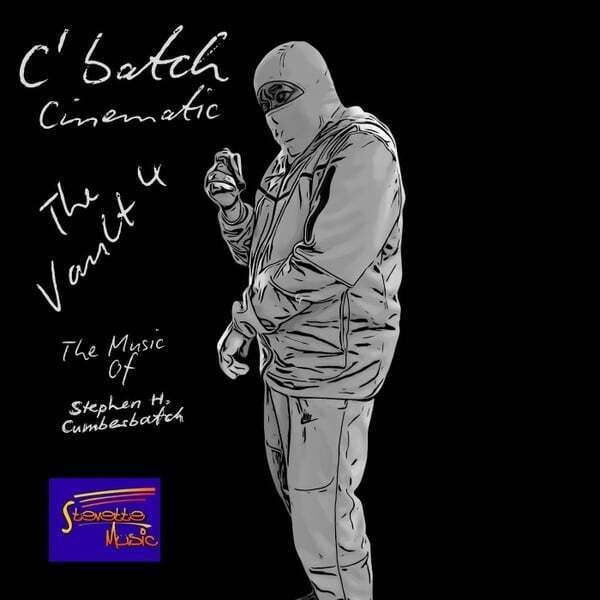
Released on 10th July 2026, C’batch’s “The Vault 4 – Cinematic” presents a 20-piece collection that approaches instrumental music as a form of visual storytelling. Across its 57-minute runtime, the album draws from cinematic, electronic, ambient, orchestral, soundtrack and downtempo traditions, creating the impression of an unseen film unfolding through sound. Rather than following the familiar structure of a conventional electronic album, C’batch shapes each composition as an individual chapter while maintaining a strong connection between the pieces. The result is an immersive experience built around atmosphere, emotional movement and the imagination of scenes that never need to be explicitly shown. A major strength of “The Vault 4 – Cinematic” is its ability to balance scale with intimacy. Expansive passages can give way to reflective moments, while periods of tension, movement and dramatic intensity are carefully positioned alongside more spacious and contemplative sections. C’batch’s approach to pacing is particularly effective because the music is given room to develop instead of constantly demanding attention. This creates space for emotions to linger and allows the listener to become absorbed in the environments being created.
The album also demonstrates an interesting evolution in his production, with several earlier compositions reinterpreted through a cinematic perspective while newly written material expands the project into fresh territory. Orchestral arrangements, ambient textures, cinematic percussion, melodic piano and electronic production work together to establish a sound that remains cohesive despite its stylistic range. What ultimately makes “The Vault 4 – Cinematic” effective is its commitment to emotional storytelling without relying on words. Feelings of isolation, tenderness, tension, hope, introspection and forward movement emerge through changes in atmosphere and intensity, allowing every composition to construct its own imagined world. The polished production supports these ideas without overpowering them, making the album accessible to ambient and instrumental listeners while also appealing to soundtrack enthusiasts, filmmakers, music supervisors and content creators. C’batch ultimately transforms “The Vault 4 – Cinematic” into an evolving collection of imagined scenes, demonstrating how instrumental composition can create images, environments and narratives entirely through sound.
The Beat of the Night (Alternate Version):
C’batch’s “The Beat of the Night (Alternate Version)” creates the feeling of entering a city after midnight, when familiar surroundings become strangely distant and every movement carries a little more tension. The track is driven by a persistent electronic pulse that gives it an immediate sense of purpose, while crisp, mechanical percussion adds a hard-edged character to the rhythm. Its energy never feels chaotic; instead, everything moves with remarkable control, creating a hypnotic forward motion that keeps the composition locked into its nocturnal atmosphere. Around that central drive, C’batch allows layers of atmospheric sound to gradually emerge and disappear, giving the arrangement an almost three-dimensional quality. Reverb and panning are used with precision, expanding the sonic landscape so that the music feels much larger than its compact runtime. Dark tonal colours reinforce the feeling of nighttime isolation, while the polished production keeps the dense textures exceptionally clear.
The result is a fascinating tension between intimacy and vastness: the rhythmic centre feels close and immediate, yet the surrounding atmosphere stretches outward into seemingly endless space. The title becomes particularly meaningful because the track treats “the beat of the night” as something almost physical, a force carrying someone through darkness. C’batch creates urgency without resorting to obvious drama, allowing the steady pulse and evolving atmosphere to tell the story. The composition feels futuristic, urban and slightly mysterious, like movement through a landscape where there are no familiar landmarks. Its cinematic character comes from this ability to create a setting entirely through sound. There is no dependence on a conventional hook or lyrical narrative; instead, mood, momentum, texture and spatial depth provide the storytelling. C’batch ultimately turns nighttime solitude into an immersive experience, balancing claustrophobic tension with an enormous sense of space.
Breaking My Heart (Cinematic & Orchestral 1):
C’batch’s “Breaking My Heart (Cinematic & Orchestral 1)” approaches heartbreak with patience, allowing its emotional intensity to grow rather than forcing it upon the listener. The arrangement begins from a deeply reflective place and gradually expands into something considerably more dramatic, with layered harmonies creating a feeling of emotional weight and scale. Its spacious production is central to the experience. Generous reverberation gives the composition an expansive atmosphere, while carefully separated layers allow the quieter passages to retain their intimacy. As the arrangement develops, the increasing density creates a natural rise in tension, leading toward a powerful climax before the energy gently falls away. That movement gives the piece the shape of an emotional journey rather than a static expression of sadness. C’batch understands that heartbreak is not one continuous emotion; it moves between recollection, loneliness, longing and moments when the full weight of loss suddenly becomes unavoidable. The changing intensity reflects those emotional shifts beautifully.
The theme is therefore not simply having a heart broken, but living inside the aftermath of that experience. “Breaking My Heart (Cinematic & Orchestral 1)” feels like the moment when memories become overwhelming and the past begins to occupy the present. Its cinematic quality comes from the way the arrangement creates emotional scenery around that idea. The gradual build feels like suppressed feelings becoming impossible to contain, while the eventual retreat leaves a lingering sense of emptiness. There is something bittersweet about the entire progression: the composition reaches outward dramatically, yet its emotional centre remains deeply personal. C’batch’s use of space gives the sadness room to breathe, preventing it from becoming melodramatic. Instead, the track feels sincere, contemplative and intensely visual. It is easy to imagine the composition accompanying a decisive moment in a film where words have become unnecessary because the emotional consequences are already understood.
Spring (Alternate Version):
C’batch’s “Spring (Alternate Version)” gives renewal an unexpectedly energetic and futuristic identity. Rather than presenting the idea of spring as something gentle and predictable, the track makes transformation feel restless, physical and constantly in motion. Its rhythmic foundation is unusually active, with shifting patterns creating a persistent sense of change beneath the brighter melodic material. The arrangement continually places lighter, more fluid textures against heavier electronic energy, producing an engaging contrast that keeps the composition moving. Atmospheric layers stretch across the mix, while modulated sounds create a sense that the surrounding environment is constantly changing shape. C’batch’s production keeps this complexity remarkably controlled, maintaining clarity even when multiple rhythmic and atmospheric elements occupy the same space. The stereo field feels expansive, allowing different textures to move around the listener rather than remaining fixed in one position. This gives the track a strong cinematic quality because it feels less like a conventional song and more like a constantly changing landscape.
That sense of movement becomes the heart of the track’s theme. “Spring (Alternate Version)” is about emergence, renewal and stepping into something unfamiliar. The music does not portray change as effortless; instead, it captures the tension that accompanies leaving one state behind and entering another. Its contrasting textures create the feeling of old and new forces existing simultaneously, while the persistent rhythmic motion keeps pushing the composition toward its next stage. The futuristic character adds another dimension to the concept, transforming the familiar idea of seasonal renewal into something almost technological. It feels like nature being reimagined through an electronic world, where growth happens through pulses, patterns and constantly shifting atmospheres. C’batch consequently creates a piece that feels bright without becoming sentimental and energetic without becoming overwhelming. At just over two minutes, “Spring (Alternate Version)” wastes no space, establishing its atmosphere quickly and developing its central idea through movement, contrast and carefully controlled sonic evolution. It is a concise but vivid expression of transformation.
The Dance Song (Alternate Version):
C’batch’s “The Dance Song (Alternate Version)” brings a different kind of energy to “The Vault 4 – Cinematic,” replacing introspective tension with warmth, movement and an unmistakable sense of nightlife. The track is built around a steady rhythmic pulse that immediately invites physical movement, but its appeal extends beyond straightforward dance-floor energy. Its groove is layered and sophisticated, drawing on the rhythmic language of R&B, funk and house while maintaining the spacious atmosphere associated with C’batch’s cinematic work. The production is exceptionally clean, with a strong sense of separation that allows the rhythmic foundation, harmonic layers and brighter accents to coexist without becoming crowded. Smooth transitions help the composition maintain its momentum, while the spacious sound design creates an immersive environment around the groove. Rather than pushing everything toward maximum intensity, C’batch understands the value of restraint. The track breathes, giving its rhythm room to settle while gradually introducing additional colour and movement. That balance makes it feel polished without becoming sterile and energetic without becoming exhausting.
“The Dance Song (Alternate Version)” explores the freedom of losing yourself in a moment of movement. There is a distinctly late-night quality to it, but the mood is warm rather than dark. The track evokes a space where people can forget the outside world for a while and allow rhythm to become the centre of attention. Its cinematic quality comes from the atmosphere surrounding that experience: this is not merely music designed to make someone move, but music that creates a setting in which movement becomes part of a larger story. The blend of groove, spaciousness and evolving texture gives the composition a continuous, almost hypnotic flow. C’batch also avoids allowing the arrangement to become predictable, using subtle changes to keep the listener engaged throughout its compact runtime. “The Dance Song (Alternate Version)” ultimately feels sophisticated, uplifting and effortlessly rhythmic, capturing the atmosphere between an energetic club and an intimate late-night lounge. Within “The Vault 4 – Cinematic,” it provides an important shift in emotional temperature, proving that C’batch’s cinematic approach can be just as vibrant as it can be reflective.
“The Vault 4 – Cinematic” Transforms Instrumental Music Into Visual Storytelling, Exploring Emotion, Movement, Solitude And Renewal Through Sound, Atmosphere And Imagined Worlds.
~ Daniel (Dulaxi Team)
C’batch, the creative name of Stephen H. Cumberbatch, brings to “The Vault 4 – Cinematic” background as a composer, author, producer, guitarist, keyboardist, synthesizer and sampler programmer. Based in White Plains, New York, he is a distinguished member of ASCAP and has collaborated with professionals. His published credits include work connected to Sinnamon’s “I Need You Now,” NV’s “Let Me Do You,” Kreamsicle’s “Playgirls,” and Eleanore Mills’ “Geisha Love,” connecting him to influential club and electronic music. His impact is especially notable through “I Need You Now,” a New York club anthem whose production and vocal elements became widely sampled, while “Let Me Do You” became associated with evolving electro-funk and early house culture.
That experience continues through Stevette Music, Inc., the independent music publishing and production company Stephen founded with Yvette Cumberbatch in 1984. The company has supported projects such as Cbatch & Herring’s “Unfinished Business” and several EPs, while C’batch continues developing collections that document his lifelong musical journey and varied influences. This history gives “The Vault 4 – Cinematic” context: it becomes another chapter in his archive, connecting past experience with a cinematic vision. For listeners drawn to atmospheric, emotional and instrumental music, this album is worth exploring. “The Vault 4 – Cinematic” is a compelling choice for anyone seeking music that transforms quiet moments into vivid imagined worlds and rewards repeated listening with new emotional detail.