
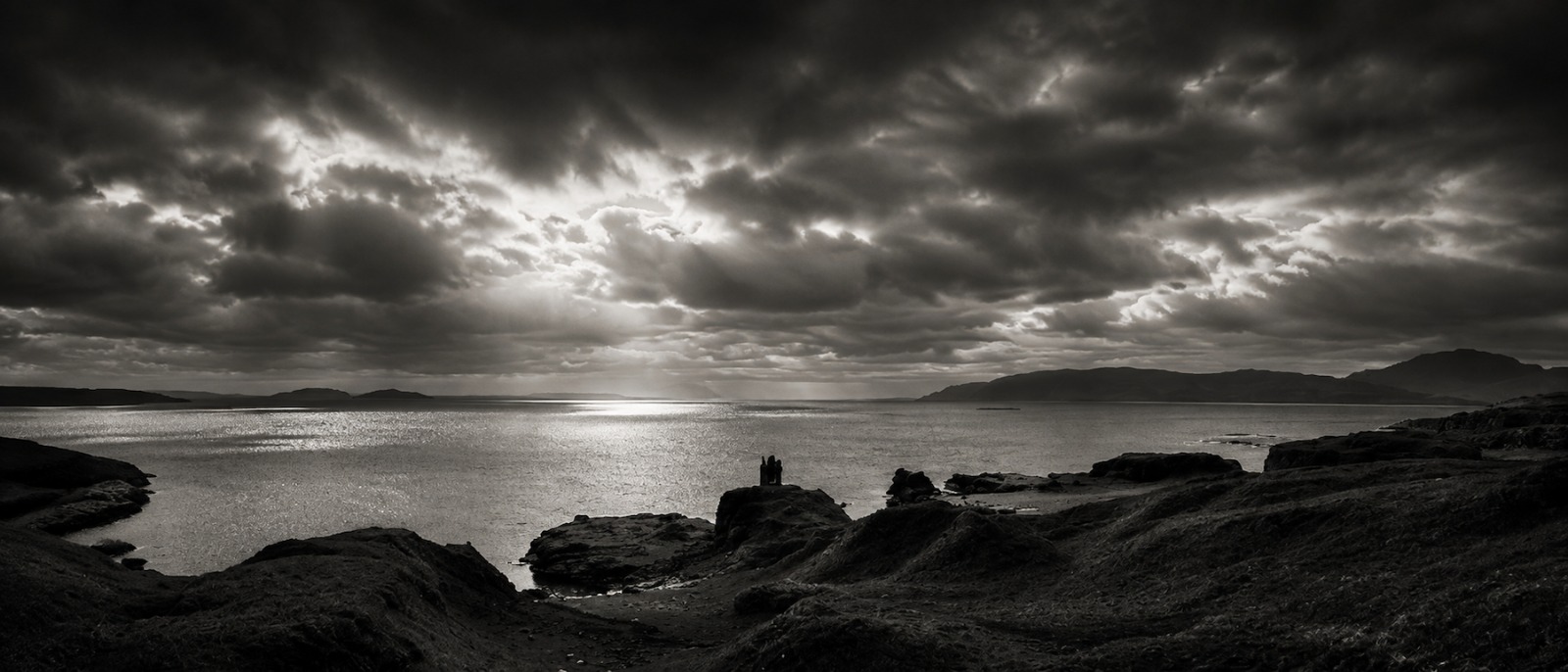
Hello everyone, it’s your host Oliver from DULAXI, and today I’m delighted to be joined by Marc Rattue, a singer-songwriter from Warminster, England, whose music draws on folklore, landscape, history, and the lasting influence of literature. After decades of writing songs while pursuing a career at sea, Marc has begun sharing his work publicly, bringing a deeply personal collection of compositions to listeners through his debut album, To the Elven Shore. Today, we’re exploring his single “Farewell to the Forest,” released on 31st August 2026, a folk-inspired composition shaped by the literary world of J.R.R. Tolkien and the possibility of finding something extraordinary beyond everyday experience.
Before we begin our conversation with Marc Rattue, here’s what you need to know about today’s featured project.
About Marc Rattue
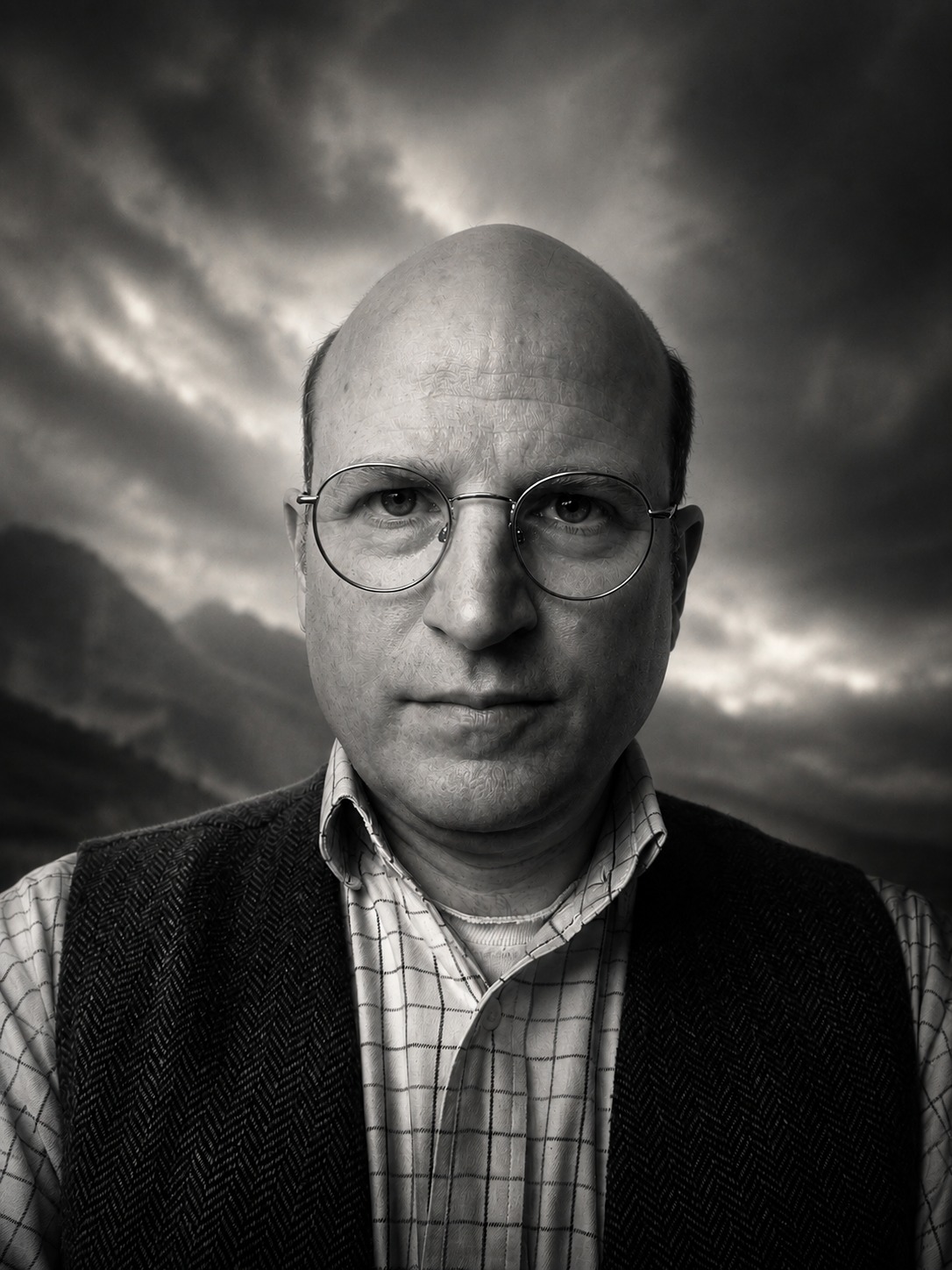
Marc Rattue is a singer-songwriter and writer from Warminster, England, whose creative life has developed across several decades. Alongside his work as a merchant ship captain, a profession he has pursued for more than thirty years, Marc has continued to write songs inspired by the places he has visited, the histories connected to them, and the feelings that particular landscapes can awaken. His interests extend across English folklore, ancient history, the sea, memory, and the relationship between the present and the past. These subjects form an important part of his creative identity, giving his songwriting a literary quality that reaches beyond straightforward descriptions of places and experiences.
Although Marc began writing songs as a teenager, much of his musical work remained private for years. His decision to release these compositions publicly came about through the possibilities offered by modern production technology. Songs that had existed in earlier demos could now be developed into more polished recordings, allowing him to share material that he had previously considered unsuitable for a wider audience. This process eventually led to To the Elven Shore, his debut album and the first publicly released collection drawn from a much larger body of creative work.
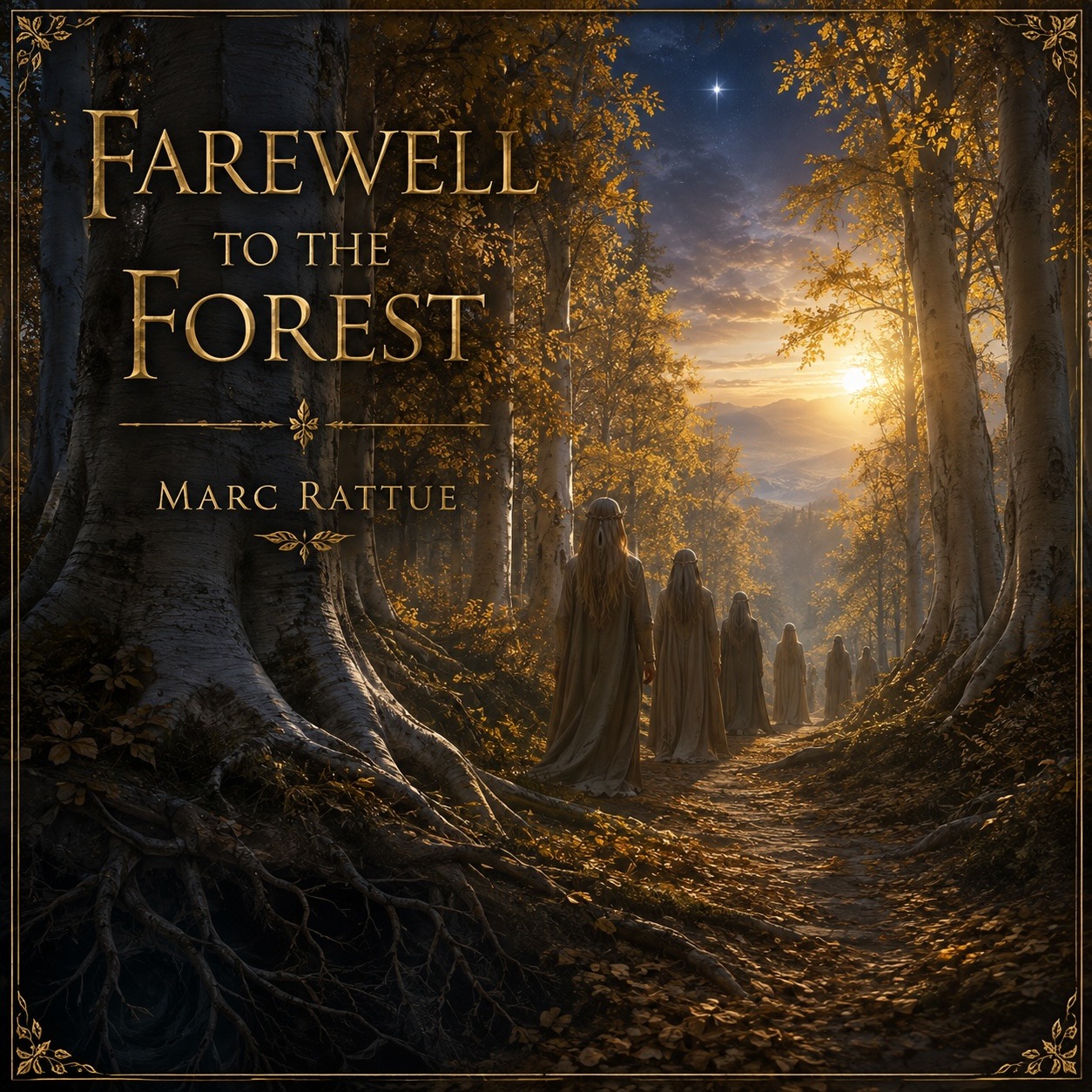
Released on 31st August 2026, “Farewell to the Forest” is one of the singles from that album. The song reflects Marc’s longstanding interest in J.R.R. Tolkien, whose writing has influenced his creative life for many years. However, his connection to Tolkien extends beyond an interest in fantasy or the fictional places described in the books. Marc has explained that these stories have helped him recognise the poetic qualities of the world around him, encouraging him to look more closely at familiar landscapes and consider the histories, emotions, and possibilities they contain.
The recording of “Farewell to the Forest” also represents a significant change in how Marc approaches his older material. Recorded at his home in Wiltshire, the song benefited from modern AI-assisted production that transformed an earlier demo into a more fully developed recording. Marc has described the experience as unexpectedly revealing, allowing him to hear the strength of a composition that he had written years earlier. Although the production process introduced a different performance approach, he felt that the original song remained intact.
Beyond To the Elven Shore, Marc has a wider catalogue of songs inspired by ancient English landscapes and his experiences travelling and working at sea. His plans include an EP featuring songs connected to the area around Uffington in Oxfordshire, known for its ancient remains, including the White Horse and Wayland’s Smithy. He has also written about places such as Glastonbury and Northumberland, alongside spiritual songs that explore experiences beyond any particular geographical setting. At present, he is also dedicating much of his time to writing a novel.
Having this brief introduction to Marc Rattue and “Farewell to the Forest,” we can now explore the experiences, influences, and creative decisions behind the release. So, without further ado, let’s begin today’s interview.
INTERVIEW SESSION
Oliver:
You have been writing songs since your teenage years, yet you have only recently begun sharing your music publicly. Looking back over those years, what role has songwriting played in your life, and what eventually encouraged you to bring these long-held creative ideas to a wider audience?
Marc Rattue:
The songs were always important to me, and I valued revisiting them from time to time, but the production, and I’m afraid to say, the performance, was too poor to offer up to a wider audience, barring one or two friends. That changed with the AI tools now available. It was as though my songs were taken up by a professional studio and given a very sensitive treatment by session musicians. This is something that I could never have afforded, and a facility that I never dreamed I would have access to. The results were very emotional and to be honest, much better than I would ever have imagined. I felt that they were essentially quite strong compositions.
Oliver:
You have spent more than thirty years working at sea and now serve as a merchant ship captain, while also developing a body of work as a songwriter and writer. How have these different parts of your life influenced the way you see the world, and where do you notice that perspective most clearly in “Farewell to the Forest”?
Marc Rattue:
For that specific track, I don’t think there is much correspondence with my working life, to be honest. There may be a slight similarity in the sense that ship board life has become a lot less fun than it used to be, so in a way, the ‘forces of darkness’ have encroached somewhat, though probably not in quite as malign a way as the forces of Sauron!
Oliver:
Your creative interests include landscape, history, folklore, the sea, and memory. When you begin writing a song, what usually draws you in first: a particular place, a story from the past, an experience you have lived through, or an idea that you cannot quite explain? How does that initial spark develop into a finished piece?
Marc Rattue:
A lot of my songs were travel pieces that came naturally out of a visit to a particular area. It became a habit of mine for a few years to make an album of material, or a series of poems, from what I had encountered. It encouraged me to look closely, feel deeply, and see a little beyond the obvious perhaps. With historically resonant songs, I think they come primarily as a process of trying to bridge the gap, to reach out into the past, to contact those who lived in a particular place, now long gone.
Oliver:
J.R.R. Tolkien has been an important influence throughout much of your songwriting life. What was it about his stories that first captured your imagination, and how have they changed the way you recognise beauty, meaning, and a sense of the extraordinary in ordinary places and experiences?
Marc Rattue:
Yes, he has been an immense influence. It is remarkable how a work of fiction can often seem more real and intense than the ordinary reality we face every day. In that effect we can discern the strangeness of the artistic effort and experience. Fields and trees and mountains are beautiful in themselves, but when a narrative is woven through them, they take on a different intensity. When they are painted, the same thing happens.
Oliver:
You have described “Farewell to the Forest” as expressing the movement from the ordinary towards the magical, something that music itself can help listeners experience. What does that transition mean to you personally, and how did you set about capturing that feeling in this particular song?
Marc Rattue:
The poetry of ‘Farewell to the Forest’ was already present in the plight of Lorien and the departing elves, because the source material was already a work of considerable poetic power. There was never a stage when the subject or the song was of the ordinary world. However, I hope the experience of listening to the song, in the same way as reading the episode in the book, can take the listener from the ordinary to the magical.
Oliver:
The title “Farewell to the Forest” suggests a departure from a place that holds meaning, whether that is a physical landscape, a familiar part of life, or a world that exists in the imagination. What does the forest represent to you in this song, and what lies behind the idea of saying farewell to it?
Marc Rattue:
I think for me there is no similar bond with the landscape as the elves had in Lorien. I find the countryside very evocative and calming, essential and enduring, but the sunset has always been where my eyes have turned, and the longing is not for staying, but for leaving. So the main meaning of the song for me is the departure from ‘Middle Earth’, from suffering and pain and indifference, to a realm of pure emotion and peace.
Oliver:
Although the song appears within a collection influenced by Tolkien, you have explained that your music is concerned with what his stories have taught you to notice rather than simply retelling his fictional world. How did you approach “Farewell to the Forest” in a way that allowed those wider lessons about the world to shape the music without making the song dependent on the original stories?
Marc Rattue:
The collection of songs influenced by Tolkien are my only such compositions. The vast majority are connected more with English landscapes and the sea. To enjoy Tolkien is to enter a different world, I think, the world of the poetic, and it is possible to do that from our own landscape, without having to invent one. That is what I have tried to do with my songs.
Oliver:
Your work brings together folk, Americana, country, and acoustic influences, creating a musical setting for themes rooted in history, landscape, and storytelling. Which elements of these traditions feel most natural to you as a songwriter, and how do you decide which musical style best serves the story you want a particular song to tell?
Marc Rattue:
It is very difficult to say exactly how influences work, but a pared down, intimate, and gentle delivery has always seemed my style, not because of an admiration for a particular singer or genre, but because I like the things that speak gently in life, the shy and genuine voices that are so easy to overlook and devalue.
Oliver:
“Farewell to the Forest” was written years ago and has now been given a new production. When you returned to the song, what did you hear in the original version that convinced you it was worth bringing forward, and were there aspects of its meaning that became clearer to you with time?
Marc Rattue:
To be honest, I was going through a drawn out illness, and I tried putting the song through an AI production process just as a distraction initially, as a curiosity. The result frankly blew off my socks. The song was essentially unchanged, and I felt no need to rewrite it, but suddenly it had gone from a scratchy demo to a professional level product. Yes, it was not me actually performing it anymore, but I have never been blessed with musical gifts to the degree that I would feel I could do a better job.
Oliver:
Revisiting older songs can be a very different experience from writing something new, because you are working with ideas created by an earlier version of yourself. How did you balance respecting the original character of “Farewell to the Forest” with making the production sound closer to what you wanted it to be today?
Marc Rattue:
I find that I have not really wavered from my love of Tolkien. If anything it has deepened, and the song is of more value to me now than ever. I suppose it is because I was never working with an idea, so much as an emotion.
Oliver:
You recorded the song in your home studio in Wiltshire, using modern AI production assistance to help develop the finished recording. What did this process allow you to achieve that might have been more difficult when you first wrote the song, and how did you decide where technological assistance could help without taking away from your own creative intentions?
Marc Rattue:
As I have mentioned, it was a ‘shot in the dark’ initially, with no more than curiosity as a motivation. I essentially took a demo tape to a studio and allowed a group of session musicians and a producer to do with it as they thought best, with a certain degree of prompting from me. The result was revelatory. The song was still mine, but the transformation in terms of performance and production was breathtaking. I am aware that some people would consider this dehumanising and even mildly fraudulent, but I think a beautiful song is a beautiful song, and there is no other way I would have ever brought it out without such assistance.
Oliver:
The recording process involved working independently from your home studio, giving you the opportunity to shape the music around your own ideas. What have you learned about your preferences as a producer through working on this material, and how do you decide when a song has reached the point where further changes are no longer necessary?
Marc Rattue:
In my own work, the new production quality available is such an incredible improvement to my old demos that slight touches here and there become matters of little importance, to be honest, although I do make quite a few changes. I have updated lyrics and inserted bridges here and there, though not in my Tolkien material.
Oliver:
Your life at sea offers a particular relationship with distance, changing landscapes, time, and the experience of being away from familiar surroundings. Do any of those experiences connect with the sense of departure or transition in “Farewell to the Forest,” and how do you draw on your maritime life when writing about places or feelings beyond the sea itself?
Marc Rattue:
I have written songs specifically about the sea that do not have a Tolkien association. The sea of Tolkien is essentially a literary fiction. An idea more than a reality.
Oliver:
Your debut album, “To the Elven Shore,” brings together songs developed across a much longer period of your life. Where does “Farewell to the Forest” sit within the wider collection, and what does its place on the album contribute to the relationship between the individual songs and the larger ideas connecting them?
Marc Rattue:
I went through an eight year period of writing songs. I am much more into writing poems and I’m currently writing a novel, and I never thought I would revisit them. It is only the transformative potential of modern technology that caused me to think again.
Oliver:
Landscape and memory are important parts of your creative world, and both can change in meaning as we grow older or revisit places from our past. When you write about a landscape, are you primarily interested in describing what is physically there, or in exploring the memories, histories, and feelings that a place can hold? How does that distinction influence your songwriting?
Marc Rattue:
I wrote mostly lyrical songs, always with a sense of history. I did write an instrumental or two, which were more geared towards the sensation of walking and the impact of the physical environment.
Oliver:
After keeping your songs largely private for many years, releasing “Farewell to the Forest” means allowing other people to encounter something that has been part of your life for a long time. How has it felt to move from writing primarily for yourself to sharing this personal material with listeners, and has the experience changed your relationship with your own work?
Marc Rattue:
It is an entirely new feeling to share these songs publicly. I feel as though they are worth the effort. Music is an act of communication, and I hope that something comes through them on an emotional, even spiritual level, because that was the original motivation.
Oliver:
Your music explores how storytelling can help us recognise wonder and meaning in the world around us. When someone listens to “Farewell to the Forest” without knowing your background or its connection to Tolkien, what would you hope they experience or take away from it? Is there a particular feeling or reflection you would like the song to leave with them?
Marc Rattue:
I like to think that there is an acknowledgment in the song that some things are antagonistic to us, and that these elements can grow stronger with time as we grow weaker, whilst at the same time holding out a hope of a place beyond such things, where only spirituality and peace exist.
Oliver:
You have indicated that “To the Elven Shore” represents only the beginning of a much wider body of work, including songs inspired by ancient English landscapes and your lifetime at sea. What other parts of your songwriting catalogue are you most eager to share, and how might those unreleased songs reveal different sides of your experiences and creative identity?
Marc Rattue:
I think I will next realise an EP of songs that were written in the vicinity of Uffington in Oxfordshire. It is a very rich place for ancient remains, including of course the famous white horse. There is also Wayland’s Smithy and one or two other places. I have songs written about Glastonbury, and Northumberland, from visits there years ago. In addition I have straightforward spirituals, with no particular sense of place, concerning that mysterious well of loveliness that can sometimes connect with us, and give us comfort beyond words.
Oliver:
Having spent decades writing songs before making your work public, you are now entering a new stage of your creative life. How do you see your identity developing as an artist from this point forward, and what would you like listeners to recognise about Marc Rattue beyond the stories, landscapes, and literary influences that inspire the music?
Marc Rattue:
I think it will depend somewhat on the reaction to the songs. As I have said, I am mainly giving my time to my novel, but if it seems as though there is an audience for these gentle, rather vulnerable pieces, then it will encourage me to write more. I have been surprised that the early signs are that two of what I thought were the weaker songs from the Elven shore album actually seem to be doing better than the rest, so it will be interesting to see if that continues.
Oliver:
Finally, when you consider “Farewell to the Forest” alongside the experiences that have shaped you as a songwriter, what does this release represent to you at this stage of your life? Looking ahead, what do you hope to build through your music, and what would it mean to you if these songs helped other people discover a new sense of wonder in the world around them?
Marc Rattue:
If the songs communicated or inspired a new sense of wonder in the world around us, then I will have been truly blessed. What achievement could possibly be more worthwhile?
“Marc Rattue’s decision to bring decades of private songwriting into the public eye reveals something important about creative expression: a song does not lose its value simply because it has waited years to be heard. Sometimes, all it needs is the opportunity to reach the people who may find something of themselves within it.”
~ Oliver (DULAXI Team)
EDITORIAL PERSPECTIVE
“Farewell to the Forest” brings literature and personal reflection together through its folk-oriented arrangement, measured instrumental development, and gradually intensifying vocal performance. Its connection to Tolkien gives the song a distinctive setting, but Marc’s explanation of its meaning reveals a deeper interest in departure, suffering, and the possibility of peace beyond familiar circumstances. The use of modern AI-assisted production also raises interesting questions about how technology can help artists share work that might otherwise remain unheard. Marc’s experience shows how an older composition can find a new audience without losing the feelings that inspired it.
~ Oliver (DULAXI Team)
CLOSING
A sincere thank you to Marc Rattue for taking the time to speak with DULAXI and share the experiences, influences, and creative decisions behind “Farewell to the Forest.” His reflections offer a valuable look into a songwriting journey that began decades ago and is now entering a new chapter, allowing listeners to discover music that has remained close to him for much of his life.
For readers who have not yet experienced “Farewell to the Forest,” this release offers an opportunity to explore Marc’s connection to Tolkien, his interest in the poetic qualities of the world around us, and his belief in music as a way of communicating something that ordinary language may struggle to express. His debut album, To the Elven Shore, also provides a starting point for discovering the wider collection of songs that have emerged from his years of writing and reflection.
As Marc continues to develop his work as a writer and considers bringing more of his musical catalogue to the public, we look forward to seeing where this next stage of his creative life leads. His planned songs inspired by ancient English landscapes promise another perspective on the places, histories, and experiences that have shaped his artistic identity.
Thank you for spending time with DULAXI and joining us for this conversation. We hope you will continue exploring the music and stories of artists who bring their own experiences and perspectives to their work. Stay connected with DULAXI for more interviews, musical discoveries, and conversations with the people behind the music.
Until next time, this is Oliver from DULAXI.