

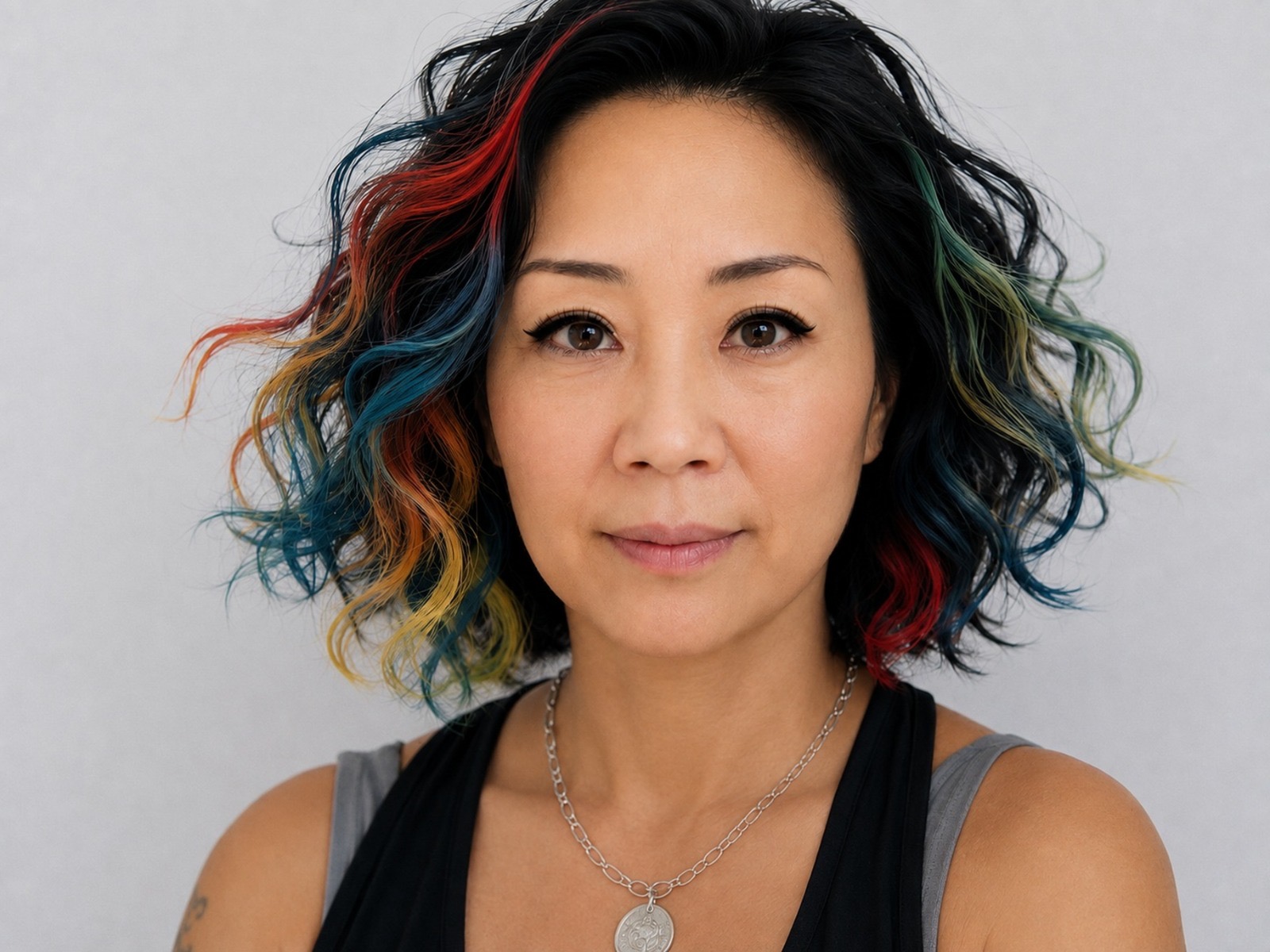
Hello everyone, it’s your host Oliver from DULAXI, and today I’m delighted to be joined by Sienná, a Japanese experimental electronic music artist, producer, and composer born in Kyoto and currently based in Oslo, Norway. Known for her distinctive East-meets-West musical identity and her commitment to creative freedom, Sienná has spent more than a decade developing a sound that moves beyond conventional genre boundaries. Her seventh full-length album, EMA, released on 23 September 2026, brings together nine compositions inspired by nature, spirituality, personal experiences, and the interconnectedness of all things. Moving between cinematic electronics, ambient music, drum and bass, glitch, and Japanese traditional influences, the album continues her exploration of music as a personal and unrestricted form of expression.
Before we begin our conversation with Sienná, here’s what you need to know about today’s featured project.
About Sienná
Born in the ancient Japanese city of Kyoto and now based in Oslo, Norway, Sienná has developed a distinctive approach to electronic music that reflects her experiences across different cultures and artistic environments. Over a career spanning more than a decade, she has worked as a live electronic artist, DJ, producer, songwriter, and composer, building a body of work that combines experimental electronics with influences from house, jazz, classical music, and traditional-contemporary Japanese aesthetics. Her collaborations and performances alongside internationally recognised musicians, including Norwegian psychedelic jazz trumpeter Nils Petter Molvær, the late English bassist Mick Karn, and The Crazy World of Arthur Brown, have also formed part of her artistic journey.
At the centre of Sienná’s creative philosophy is a commitment to working without fixed rules. Rather than following established musical formulas or reproducing familiar trends, she allows individual ideas to determine the direction of each composition. This approach has shaped her cross-cultural sound, where electronic experimentation and traditional influences can exist alongside one another without being restricted by conventional expectations. Her 2023 concept album, Wa-Kei-Sei-Jyaku, represented an important stage in this ongoing exploration, establishing a foundation for the ideas she continues to develop through her music.
Released on 23 September 2026, EMA marks Sienná’s seventh full-length album and her first album release since Wa-Kei-Sei-Jyaku. The nine-track project explores the interconnectedness of existence through what she describes as image-to-sound syntheses. Rather than beginning with conventional songwriting structures, she draws inspiration from images, sensations, and observations gathered from the natural world, translating these experiences into electronic compositions.
Two locations played an important role in the album’s development: Kibune valley in Kyoto and Ischia island. During periods of solitude in these natural environments, Sienná found herself reflecting on her surroundings and allowing musical ideas to emerge from the experience. Her original intention was to capture what she observed through drawing, but she ultimately chose music as her means of expression. By approaching sound as a form of visual painting, she built compositions through layers of electronic textures, synthesizer sounds, and other musical elements that reflected the impressions she had gathered.
The album’s title also connects with the Japanese spiritual tradition of the ema, wooden plaques on which people write wishes or prayers associated with communicating with the divine. For Sienná, the project became a way of recording messages she perceived through nature, while exploring the relationships between different places, cultures, experiences, and states of mind.
Musically, EMA moves between cinematic arrangements, drum and bass, ambient passages, glitch experimentation, and Japanese-inspired elements. Its lead single, “Be A Seeker, Believer,” explores resilience, self-belief, and the possibility of finding hope during difficult periods. These themes connect with the album’s wider interest in personal growth and the ways people respond to change.
Having this brief introduction to today’s featured project, I’m sure both new listeners and longtime fans are interested in hearing directly from Sienná about the experiences, ideas, and creative decisions behind EMA. So, without further ado, let’s begin today’s interview.
INTERVIEW SESSION
Oliver:
Born in Kyoto and now based in Oslo, you have built much of your artistic identity around bringing different cultural and musical perspectives together. Looking back at your journey between Japan and Europe, what experiences most shaped the person and artist you have become?
Sienná:
I moved to Norway by choice, so I think I might have specific personality traits that ensured the transition between Japan and Europe easy. Living abroad has been demanding and often far from the glamorous paradise, but also rewarded me by boosting my personal growth over time. My cultural personality ratio today is Japanese/Norwegian 50/50. I feel very Norwegian sometimes, but extremely Japanese in some particular situations as well. The same applies to my music. The music is a reflection of myself, so probably nothing weird that it becomes a mixture of East and West.
Oliver:
Your music has developed over more than a decade of performing and touring across Europe and Asia. What have those years of travelling, performing, and meeting different musicians taught you about yourself, both personally and creatively?
Sienná:
It has been so much fun visiting places that I had never heard of. I´ve encountered different colleagues and shared same love for music. But I also learnt a difference between “commercial” and “non-commercial” musicians. I belong to the latter, not dependent on external approval. I enjoy meeting those introverted and reserved musicians who seemed to be genuinely interested in the art of music without being commercially pressured too much. Their expressionless faces turned into smiley faces after performance. Music is often more than a language.
Oliver:
You describe your approach to composition as having a strict “no rules” philosophy, while your music brings together electronic production with jazz, classical instrumentation, and traditional-contemporary Japanese influences. Where did that desire for creative freedom come from, and what does having “no rules” actually mean to you when you are creating?
Sienná:
It comes from my personal preferance for sure. For me, “no rules” means literally that I do whatever I want to do with my music, as long as it works well and serves its purpose. Being theoretically correct or perfect isn´t my goal. My music is my world where I can decide what´s right or wrong. In the real life I´m behaving (hopefully) well and being considerate of others most of the time, so this is my only egocentric space I can escape into.
Oliver:
Your East-meets-West identity has become an important part of how people understand your work, but your music also avoids simply reproducing familiar ideas of either culture. How do you balance those influences while still making sure the music feels completely your own?
Sienná:
When the “no rules”-philosophy exists always in the core, I can assure you that the idea of balancing influences or cultures is far out there in the interstellar space. After playing freely with random thoughts and ideas for so many years, I´ve learnt how to recognize the subtle sign when things are (subjectively) successful/unsuccessful, or heading to the right/wrong direction. I´m just listening to my gut feeling yes or no.
Oliver:
EMA is described as a collection of nine “image-to-sound syntheses” created from experiences in nature. What was happening in your life and creative thinking when the idea for this album first began to take shape?
Sienná:
I was navigating a major personal life transition whilst working on this album. Personally, “EMA” symbolizes a deeper sense of alignment and adjustment to the change for the better in my life. Spending time in nature during the transition period offered a grounding way to process what was happening at a fast pace. I was just alone there, walking, sitting, focusing on the environment around me in the nature instead of buzzing like a bee. I need this type of solitude to foster creative and deep thinking.
Oliver:
You have spoken about writing the music while spending time in places such as Kibune valley in Kyoto and Ischia island, with ideas coming to you while walking alone through quiet natural surroundings. What is it about being alone in those environments that allows ideas to reach you in a different way?
Sienná:
The difference might be that Neapolitan atmosphere around Ischia felt more open and warm, while Kibune valley was keen and mystical where time truly felt like it had stopped at some point. I felt the absolute difference when I observed the surroundings, focused on the sounds, sights and textures around me. That might consciously or unconsciously influence the sound texture to a certain level. Although, the nature is still the same, it sustains all life on this earth. There is also the interconnectedness, in Japan, in Europe, and anywhere else despite cultures, histories or societies.
Oliver:
You described wanting to draw what you perceived in those places but choosing to write songs instead because you are “not a good drawer.” What did music allow you to express that a visual sketch could not?
Sienná:
I really suck at drawing, so I cannot have a visual sketch, lol. But I know how to paint on a white canvas with sounds. Pastel pink may be associated with warm atmospheric pads, light blue may be soothing el-strings. I choose appropriate sounds that can resonate to my images. I could start with the “background paint” by selecting correct sound textures and editing synthwaves in the first foundational phase. After that I can make a layer and build up another layer over it, continue, add details and highlights, often by playing hardware synthesizers and piano.
Oliver:
The concept of EMA connects with the Japanese spiritual idea of communicating with the divine through a written message, while you describe this album as your way of writing down messages from the natural world. How do spirituality, nature, and intuition influence the way you create?
Sienná:
I think spirituality and nature have clear sound expressions. It sounds like a mixture of calm inner space, vibrational frequencies, and sacred acoustics that soothe our mind and connect something larger than human beings. It can be repetitive or random vocalizations, specific brainwave-ish frequencies, soft ambient harmonies, or natural sound like flowing water, birds singing, wind blowing leaves, chestnuts falling from trees, or even silence itself that seems to have a role to play in the nature. There´s a lot possible associations and inspirations coming out of it.
Oliver:
EMA moves across cinematic music, drum and bass, ambient, glitch, and Japanese traditional influences rather than following one fixed genre. When you were working on the nine tracks, how did you decide what musical language each idea needed?
Sienná:
I wanted things to happen as they were meant to be based on my initial ideas and inspirations. When things started to take shape, like always – I started to notice what was missing, what was probably wrong, or not purposeful for the song. If all the nice tracks were meant to be only classical, they would be allowed to become it. But it wasn´t just right.
Oliver:
The album also explores interconnectedness and your perception of the relationship between different things in the natural world. How did that idea influence the way you approached the composition and sequencing of the nine tracks?
Sienná:
In the nature you can feel that different parts, things, people, societies or cultures linked and related to one another to form a complex whole, the nature itself. In the same way, East or West sounds that I´ve been working with, are just some different aspects of the one same thing. The nine tracks reflect different places, time, moods, experiences, mind process or different states of mind, but they all came out of me after all.
Oliver:
“Be A Seeker, Believer” has been highlighted around the album as a song about resilience, self-belief, and restoring hope in a beautiful but sometimes sad world. What personal experience or feeling brought you to those themes, and what does being a “seeker” and a “believer” mean to you?
Sienná:
I´ve spent many troublesome years to arrive at this exact point in my life. I can say a lot about poor choices, regrets and unpleasant memories, but I know that those moments were stepping stones for my personal growth when I look back later. I cannot say “everything will be ok” to anyone, but I´m trying to remind instead that a harsh time is a crossroad moment. You make a decision that will shape your own destinations from there. I wanted to tell through the song that it´s ok to retreat and heal inside for a while, but it can help anchor your mind and offer a subtle relief if you can find a little moment of beauty outside by being a seeker and believer, when you´re moving through hard times.
Oliver:
Your work has often resisted mainstream structures and copycat trends, and EMA continues that approach in an era increasingly shaped by AI-generated music. What does “perfect imperfection” mean to you, and why do you feel it is important to protect that quality in electronic music?
Sienná:
Perfect imperfection is a human authenticity. I´m writing songs in a way that matches my true self, core values, beliefs, and inner experiences rather than pretending that I´m Fredrik Chopin. I know my music might be weird at times, but I´m hoping that it also includes the recognizable and unique combination of signature elements, stylistic choices, and production techniques that could be identifiable to listeners.
Oliver:
You have worked and performed alongside artists such as Nils Petter Molvær, Mick Karn, and The Crazy World of Arthur Brown. How have collaborations and encounters with musicians from such different backgrounds changed the way you listen, compose, or think about your own artistic identity?
Sienná:
They are some of the extraordinary pioneers who are amazing at generating unique original ideas and turning them into real-world success. They were actually ordinary people, didn´t act like innovators, and didn´t talk too much about their masterpieces. But I noticed there was something to do with their internal thought processes from curiocity, openness, fearlessness and confidence. I work mostly alone, so I often ponder of what they would do if they were me, like what kind of bass Mick (Karn) would play here, how Nils Petter (Molvaer) would merge acoustic improvisations in this part, or what kind of wise words Arthur (Brown) would choose there.
Oliver:
EMA follows your 2023 album Wa-Kei-Sei-Jyaku, which represented an important stage in your cross-cultural concept. What has changed in your artistic thinking between that project and EMA, and what do you feel this new album says that you could not have said before?
Sienná:
Nothing has really changed. Even thought it was not my initial intention, I think “Wa-Kei-Sei-Jyaku” is even more introverted and somehow more nostalgic than “EMA”. What I´m quite sure today is that I´ve improved my production skills. I believe I have better control over converting an idea into reality. So possibly, it wasn´t technical good enough if there was something left unsaid last time.
Oliver:
Across an album that moves through experimental electronic, cinematic, ambient, glitch, and Japanese-inspired elements, what role do emotion and storytelling play when there may not be a traditional pop structure guiding the listener?
Sienná:
It´s not my intention to make irregular music, though. It becomes random and sonic, only because I´m just making music freely, without any rules or limitations for myself. What I´m focusing on, is what is correct or wrong within my egoistic premises. So, I have actually no idea why it turns out the way it does in the end. Emotion and storytelling play a role somehow. But I guess I´m trying to question if the music always should be fit into traditional structures to make it function properly.
Oliver:
After spending so much of your career developing a sound outside conventional genre boundaries, what have been the biggest challenges in asking audiences to meet you somewhere outside the familiar, and what have those experiences taught you about connecting with listeners?
Sienná:
I can see a major shift that has happened lately, especially after the AI-generated music started to flood online streaming platforms. My music was nothing but a strange matter before, but now it has started to be approved as a part of human creativity. I´m aware that I´m not making easy listening. It probably demands much energy and focus from the listeners. But maybe, we´re witnessing an increasing number of people who has started to get sick and tired of the massive numbers of highly predictable standard music format.
Oliver:
When someone discovers EMA without knowing anything about your background or the ideas behind the album, what do you hope they experience first: a particular emotion, a sense of place, a question, a memory, or something else?
Sienná:
One journalist wrote that listeners are invited into a vivid, multi-sensory journey. I was happy to read it, and hope that many listeners can experience something similar. Although I´m unsure how the listeners perceive my album, which is the most exciting part. I created music from image to sound, but now we can turn the tables and see how the listeners individually translate it from sound to image. But yes, I do hope they can sense something significant through my music.
Oliver:
Looking beyond EMA, where do you feel your artistic curiosity is taking you next? Are there new musical, cultural, technological, or personal territories you are already interested in exploring?
Sienná:
Right now I´m trying to distance myself from all the wholehearted efforts that I´ve made for the new album. A cleansing period is necessary and beneficial after the long and intense period of work. But I want to challenge something new whatever the next step wil be.
Oliver:
After years of developing your own approach to experimental electronic music, what would you like people to remember when they look back at Sienná’s body of work, and what kind of artistic legacy would feel meaningful to you?
Sienná:
I hope the listeners will remember my “odd” works as something that comes from the heart and vulnerability. We all know already that AI will keep generating millions songs continuously and globally everyday. It will flood streaming platforms with mathematical patterns and generic algorhythms. AI-Music may be fun to listen to, but it´s just a replica after all. I would like to be the one to carry genuine lived experience, emotional struggle, and personal intent that algorithms cannot copy.
“EMA reminds us that music does not have to follow familiar patterns to communicate something meaningful. Through Sienná’s willingness to trust her instincts, embrace uncertainty, and turn personal experiences into sound, the album makes a case for the value of artistic individuality in a world increasingly shaped by automated creation.”
~ Oliver (DULAXI Team)
EDITORIAL PERSPECTIVE
What stands out about EMA is the freedom Sienná gives each musical idea to develop on its own terms. The album brings together contrasting electronic textures, classical influences, and Japanese-inspired elements without forcing them into a single formula. Her reflections on solitude, personal change, and human authenticity also offer useful context for understanding this approach. Rather than treating experimentation as a way to appear different, Sienná sees it as a natural result of following her instincts. Her perspective raises an important question about electronic music today: how can technology serve personal expression without taking away the individuality that makes an artist’s work their own?
~ Oliver (DULAXI Team)
CLOSING
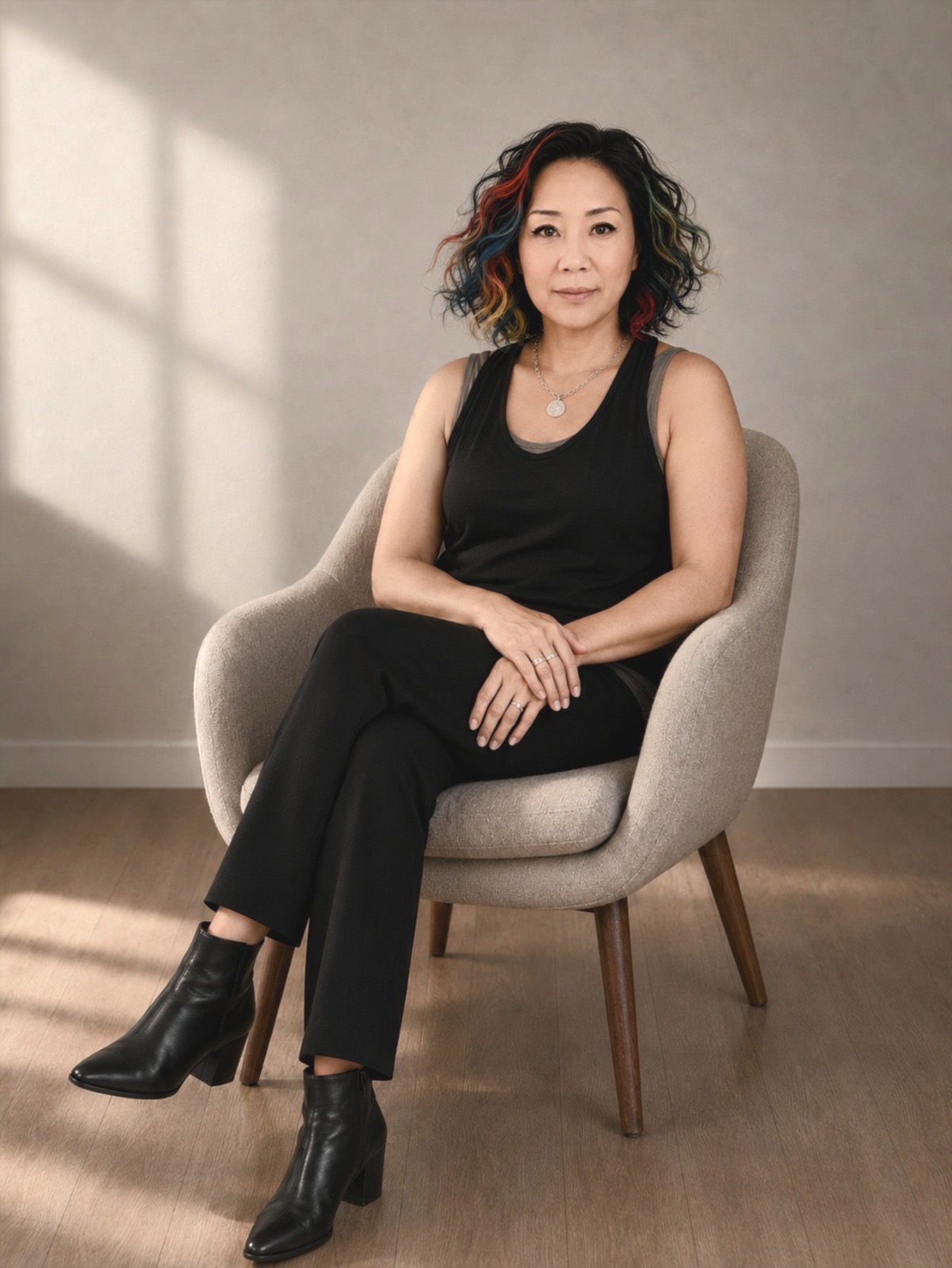
A sincere thank you to Sienná for joining us at DULAXI and sharing the personal experiences, creative philosophies, and ideas behind EMA. Our conversation offered a closer look at the thought processes behind her music, from the influence of natural surroundings and cultural experiences to her belief in the importance of human authenticity.
For listeners who have not yet experienced EMA, the album offers an opportunity to explore electronic music beyond familiar structures and expectations. Its nine tracks reflect different moods, environments, and experiences, leaving room for each listener to form their own interpretations. Whether you are drawn to experimental electronics, cinematic compositions, ambient music, or the meeting of Japanese and Western influences, Sienná’s latest work invites you to approach music with an open mind.
We also encourage readers to continue following Sienná’s artistic journey as she explores new creative possibilities beyond this release. Her commitment to independence and experimentation offers an interesting perspective on what it means to remain true to one’s artistic instincts.
Thank you for spending your time with us here at DULAXI. We appreciate your continued support and invite you to stay connected for more conversations with artists whose stories, ideas, and music deserve to be heard. Until our next interview, keep discovering new music and supporting the artists who bring their own perspectives to the world.