
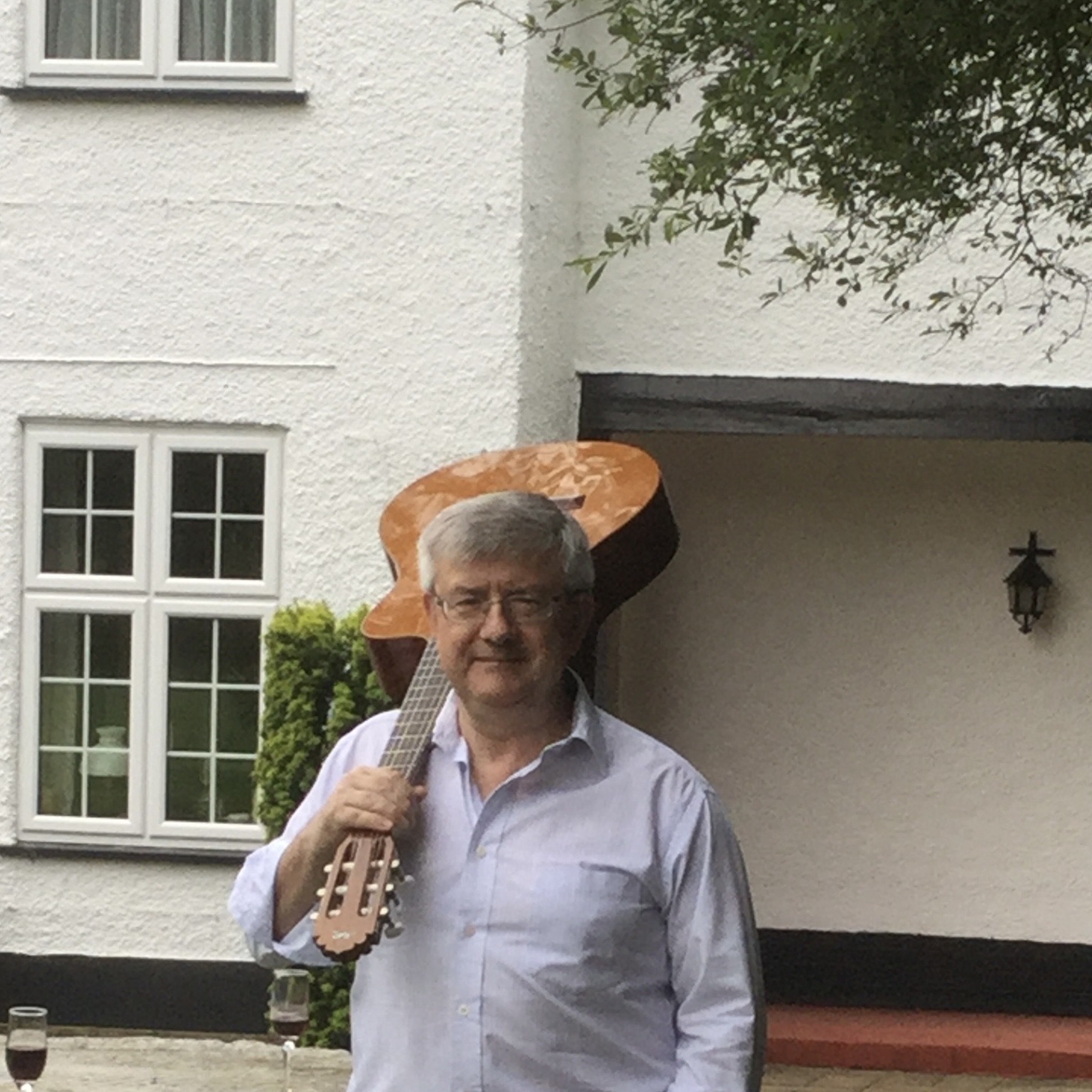
Hello everyone, it’s your host Oliver from DULAXI, and today I’m delighted to be joined by English guitarist and composer Martin Lloyd Howard, based in Reigate, England. Working across classical, folk, blues, and rock traditions, Martin specialises in original instrumental music for acoustic and electric guitars. His latest single, “Surrey Bells,” released on 21st September 2026, is an acoustic folk composition that explores the relationship between music, place, and imagination.
Before we begin our conversation with Martin Lloyd Howard, here’s what you need to know about today’s featured project.
About Martin Lloyd Howard
Martin Lloyd Howard’s musical background brings together the traditions of classical guitar and the more exploratory approaches found in folk and rock music. Originally trained in the classical tradition, he has expanded his playing across acoustic, electric, and slide guitar, developing a style that places considerable importance on tone, texture, and the freedom of performance. His influences include Elizabethan lutenist John Dowland, classical guitarist Julian Bream, folk guitarists Davey Graham and Martin Simpson, and rock guitarists Jimmy Page and Ritchie Blackmore. These varied influences inform a musical approach that values both established traditions and personal experimentation.
Howard’s work centres on original instrumental compositions for solo and ensemble guitars. Rather than relying exclusively on formal musical structures, he often allows a particular atmosphere, image, or feeling to guide his compositions. This interest in translating ideas and surroundings into instrumental music has become an important part of his creative identity, giving his pieces room to communicate through the character of the instruments and the way their sounds interact. His wider musical work also includes collaborations with other artists, notably Mark Johnson, leader of the Kent-based band The Midnight River Crew.
His single, “Surrey Bells,” released on 21st September 2026, continues this exploration through a composition for two guitars. The piece began with a set of arpeggiated chords developed during an ongoing project involving DADGAD tuning. As the music took shape, Howard recognised a resemblance to the sound of church bells and gradually developed the idea into a musical exchange between two sets of bells ringing across a rural valley on a bright winter morning.
Although Surrey provides the title and setting for the imagined scene, Howard’s inspiration was not tied to one specific location. Instead, he drew on a broader image of the English countryside, allowing the music to suggest a landscape without requiring listeners to picture the same place he had in mind. The two guitar parts play an important role in establishing this sense of distance. One remains more prominent, while the other has a more distant, echoing quality, creating the impression of sounds answering one another across open space.
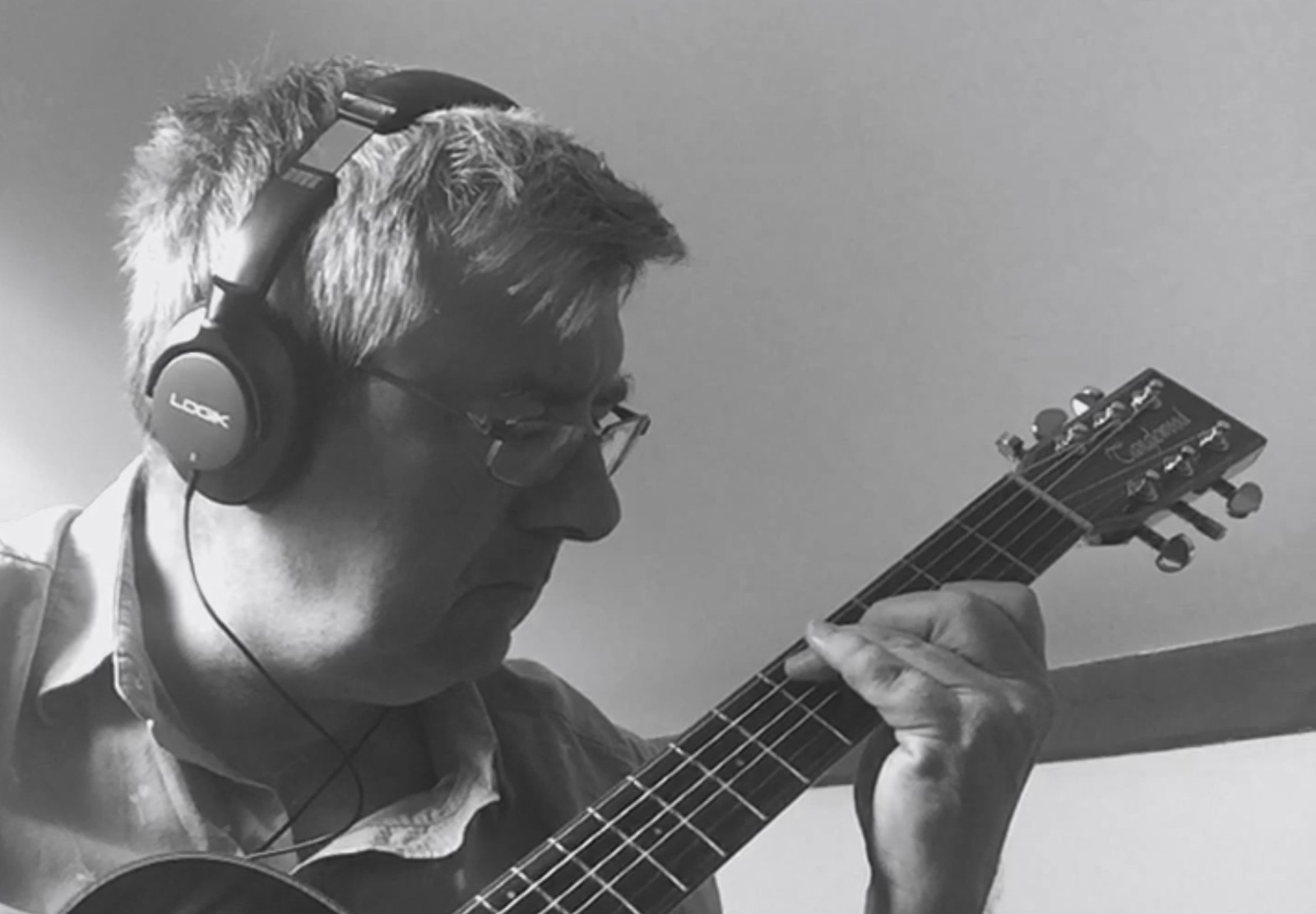
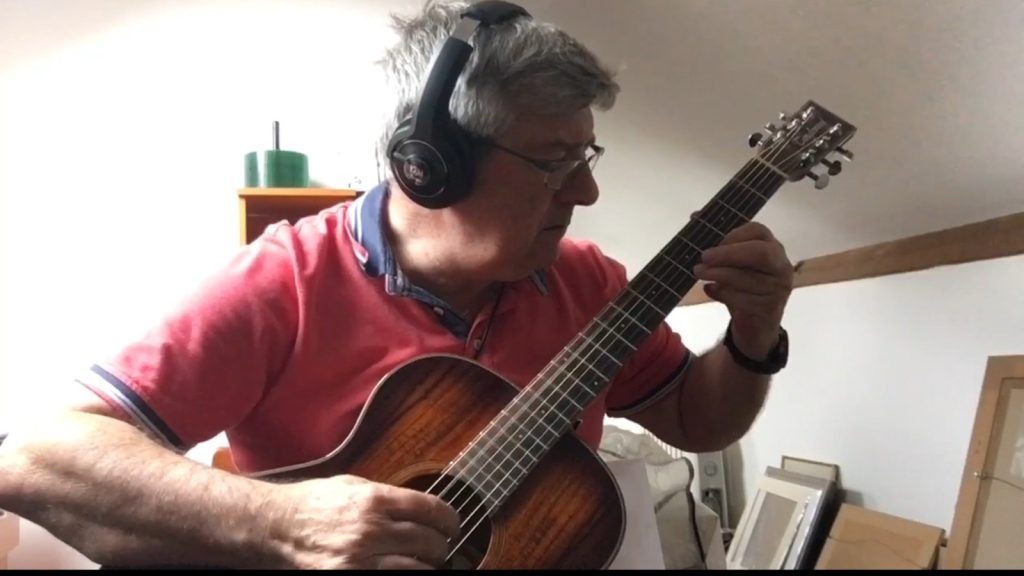
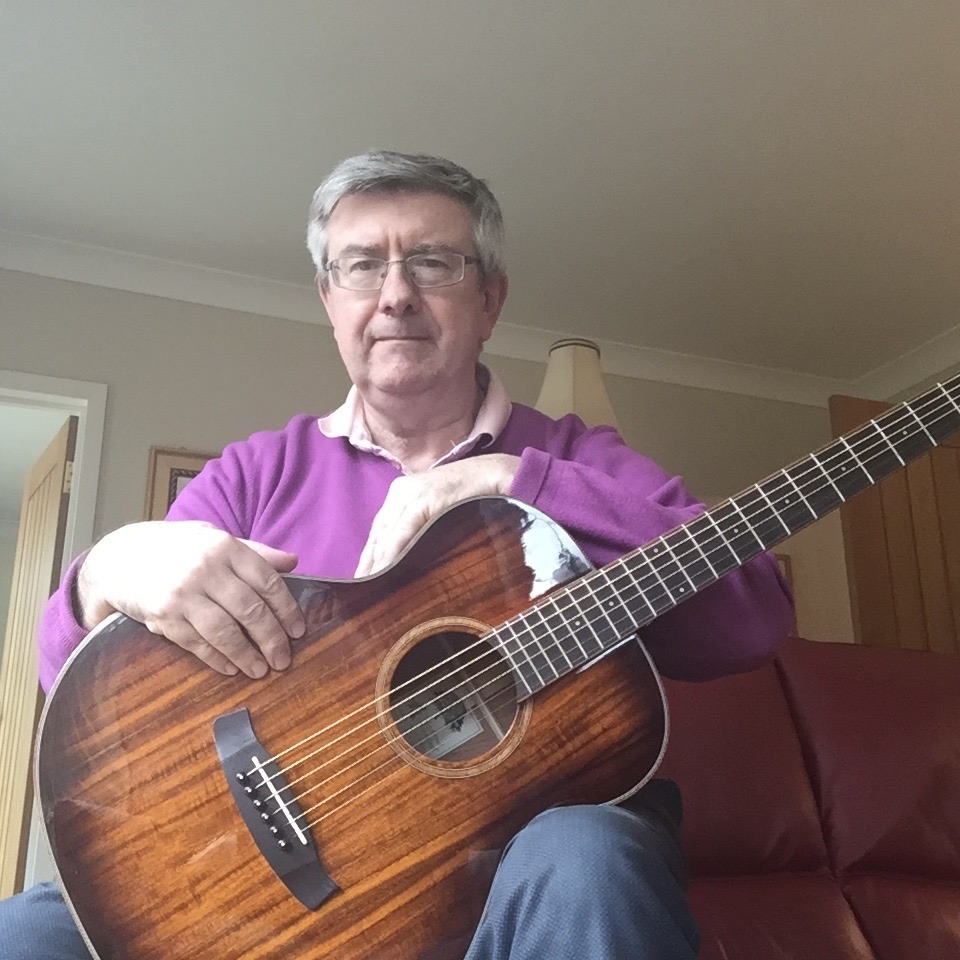
Recorded at home using his Tanglewood steel-string guitar, the composition was built through overdubbing separate performances. Howard initially considered using his approximately fifty-year-old handmade classical guitar for the second part, but the arrangement did not produce the result he wanted. He returned to the Tanglewood, recording both parts in DADGAD tuning and allowing the interplay between them to develop more naturally. During mixing, he used additional reverb and echo on the second guitar to strengthen its sense of distance while retaining the instruments’ natural tones.
Having this introduction to Martin Lloyd Howard and the ideas behind “Surrey Bells,” it is time to hear directly from the composer about the inspiration, decisions, and creative process that shaped the release. So, without further ado, let’s begin today’s interview.
INTERVIEW SESSION
Oliver:
“Surrey Bells” brings to mind two sets of church bells ringing across a rural valley on a bright winter morning. Can you take us back to the first moment that image came to you, and explain what made you want to turn it into a piece of music?
Martin Lloyd Howard:
I have been working on a DADGAD project for some time (it is now complete) and as a sideline came up with the opening set of arpeggiated chords. The sense of ringing bells emerged pretty well straightaway and as I developed the piece, it evolved into something involving two sets of bells and the idea of a kind of call and response between them.
Oliver:
You chose two guitars to represent the exchange between the bells, with one sounding more distant and echoey than the other. How did you decide that two guitar parts were the right way to express this scene, rather than trying to create the effect with a single guitar?
Martin Lloyd Howard:
I felt I could get some of the call and response effect with one guitar, but concluded after a while that a second, tonally distinct, guitar part would reinforce it much more.
Oliver:
The call-and-response idea is central to the composition. When you were writing the piece, how did you shape the musical conversation between the two guitars so that each part had its own presence while still belonging to the same scene?
Martin Lloyd Howard:
To some extent that was a process of trial and error. I had more or less completed the first part before I turned to the second. My first attempt dudn’t work: it was too precise and structured. I started again with the idea of something much more textural and ethereal and that fitted much better in creating two distinct voices that complemented each other.
Oliver:
You composed “Surrey Bells” entirely in DADGAD tuning. What does this tuning allow you to express in this particular piece, and how did it influence the notes, harmonies, and ringing quality you wanted to achieve?
Martin Lloyd Howard:
The great thing about DADGAD musically is that the multiple root notes and perfect fifths reinforce each other to make the guitar ring out. The effect is enhanced by the questioning tone of a suspended fourth. All ideal for a piece that relies on ringing tones.
Oliver:
Your approach favours fluid, organic playing over the strict precision often associated with classical guitar. How did you balance the need to make the two parts sound like church bells with the freedom to let the performance develop naturally?
Martin Lloyd Howard:
As I explained before, I originally got the balance wrong between the two parts. But once I recorded the first part, I was able to try things out by ear and came up with the end product.
Oliver:
You initially considered using your decades-old classical guitar for the second part before deciding to use your DADGAD-tuned Tanglewood steel-string guitar for both. What led you to change that plan, and how did the final choice affect the relationship between the two parts?
Martin Lloyd Howard:
It seemed a good idea and I wrote a second part with that in mind. But it simply didn’t work. Sticking with two steel string DADGAD parts turned out to be a much better option.
Oliver:
You recorded “Surrey Bells” at home by overdubbing the guitar parts. How did working in your own space help you develop the distance and separation between the guitars, and what challenges did you encounter when trying to make them sound as though they were answering one another across a valley?
Martin Lloyd Howard:
I recorded it in much the same way as I normally do. I’m no stranger to overdubbing acoustic or classical guitar parts. You can hear it on some of my other tracks such as Sylvan Spring or High Seas. So once I had the the idea, the recording process was not too difficult.
Oliver:
One guitar is intended to sound more distant and echoey, while the other remains more dominant. How did you approach that contrast during recording, and what did you learn about creating a convincing sense of space with just two acoustic guitar parts?
Martin Lloyd Howard:
Again, I followed my normal practice of recording the guitar parts fairly “dry” through a single mic and then adding reverb and echo in the mixing process – usually I have to say in moderate quantities to enhance rather than change the natural tones of the guitars. I did however add more reverb and echo than I normally would to the second guitar part to give it that sense of distance.
Oliver:
The title connects the music to Surrey, the place where you live. How much did your familiarity with the local countryside influence the details of the composition, and did you have a particular place or landscape in mind as you worked on it?
Martin Lloyd Howard:
Not really. Surrey is a beautiful county and I live in area known as the Mole valley, but the image in my mind was a generic one about the English countryside. It could equally have been set in the neighbouring county of Kent which is also very beautiful and where I was born.
Oliver:
Your influences range from Elizabethan lutenist John Dowland and classical guitarist Julian Bream to folk players Davey Graham and Martin Simpson, as well as Jimmy Page and Ritchie Blackmore. Which aspects of these different musical traditions came into play while composing “Surrey Bells,” and how did you bring them together without losing the identity of the piece?
Martin Lloyd Howard:
I guess in this case it’s more the Simpson/Graham/Page end of the spectrum that influenced me on this track. Ever since I learned to play Black Mountainside from the first Zeppelin album I’ve always enjoyed venturing into DADGAD territory – and indeed other altered tunings, particularly those used by Mr Page.
Oliver:
You describe the interplay between the guitars as the source of the depth and space that allows the composition to ring out. When you listen back to the finished recording, which moment best captures that relationship for you, and what makes it stand out?
Martin Lloyd Howard:
For me it’s the interplay at 1:44 on the track. The second guitar part sounds really ethereal and I love the way the sound just decays away.
Oliver:
Instrumental music leaves listeners to form their own images without lyrics directing their interpretation. What do you hope someone imagines or feels while listening to “Surrey Bells,” and how important is it to you that their interpretation matches the scene you originally pictured?
Martin Lloyd Howard:
This is an important point. The image of church bells calling and responding is my own interpretation. If listeners buy into that and feel the same way, then that’s great. But it’s entirely possible, maybe probable that the track will conjure up something entirely different in the minds of some listeners. That’s totally valid and I am completely fine with it. The key thing is that people enjoy it.
Oliver:
Because the piece is built around a recognisable image of church bells, there is a clear sense of place behind it. How did you decide which musical details were necessary to suggest that scene, and what did you deliberately leave open for the listener to discover?
Martin Lloyd Howard:
I don’t think I’m that clever! The image of church bells, although it germinated quite early in the compositional process, comes from the whole thing. And as I say I am relaxed about whether listeners get that same sense or feel moved in a different way.
Oliver:
“Surrey Bells” is part of your wider series of compositions intended to conjure landscapes, images, and moods. What does this particular piece contribute to that series, and has working on it changed how you approach turning a visual scene into an instrumental composition?
Martin Lloyd Howard:
Not really. I think I have found a bit of a niche in composing and performing pieces that conjure up images of place or reflect moods, but that has emerged from my playing rather than being a deliberate act.
Oliver:
Moving between classical, folk, blues, and rock guitar traditions has given you a broad range of ways to approach your instrument. How has that freedom influenced your decisions on “Surrey Bells,” particularly when choosing between a more formal arrangement and a performance that feels spontaneous?
Martin Lloyd Howard:
I think that the choice of instrument and tuning has a lot of influence on how you play on it. I remember Matt Bellamy, the Muse guitarist, saying that when he picked up a Fender Stratocaster, he ended up playing Hendrix licks. In my case, the choice of the Tanglewood steel string guitar and the DADGAD tuning pointed me towards a more organic approach to composition.
Oliver:
When composing a piece built around a specific image, there can be a difference between what you hear in your imagination and what you can achieve with the instrument. Was there a point during the creation of “Surrey Bells” when the music was not quite conveying the scene you wanted, and how did you work through that?
Martin Lloyd Howard:
Yes. As I mentioned earlier I had composed and scored a second guitar part for my classical instrument. It was a quite complex combination of counter melody and harmony and although it looked OK on paper, it didn’t work sonically. So I started again trying things out by ear and came up with something much simpler and focused on musical texture rather than a specific melody or harmony.
Oliver:
As an instrumental guitarist, you rely on melody, timing, tone, and arrangement to communicate ideas that might otherwise be expressed through words. What did composing “Surrey Bells” teach you about using these elements to tell a story without lyrics?
Martin Lloyd Howard:
Because the bells image came up quite early, that did influence the detail of the composition and the manner of playing. It doesn’t always work like that. Sometimes a piece is more or less musically complete before I can relate it to something non musical and that doesn’t always happen anyway. Several of my pieces are essentially musical statements which hopefully are simply pleasing to the ear. “Nocturne in B” is a good case in point.
Oliver:
Looking ahead to your next compositions, where would you like to take this idea of creating musical pictures of places and moods? Are there other landscapes, sounds, or everyday experiences you would particularly like to explore through your guitar?
Martin Lloyd Howard:
Not really sure. I have several projects on the go at the moment, including a couple of multi instrument collaborations with other musicians. I am working on a new solo guitar piece which at the moment is being driven by some very specific musical ideas. Whether it will add to those pieces which conjure up senses of place or mood remains to be seen.
“Surrey Bells” shows how a musical idea can grow from a simple image into a conversation between instruments, leaving listeners free to discover their own landscapes within the sound.
~ Oliver (DULAXI Team)
EDITORIAL PERSPECTIVE
What makes “Surrey Bells” particularly interesting is the way Martin Lloyd Howard allows the relationship between two guitars to guide the composition. His decision to favour texture over a more complex, carefully scored second part reveals the importance of listening and adapting during the creative process. The use of DADGAD tuning, combined with the carefully adjusted reverb and echo, helps establish a sense of distance without relying on a large arrangement. Equally important is Howard’s willingness to let listeners form their own interpretations, making the image behind the music an invitation rather than a requirement.
~ Oliver (DULAXI Team)
CLOSING
Our sincere thanks to Martin Lloyd Howard for joining us at DULAXI and sharing the ideas, decisions, and experiences behind “Surrey Bells.” His insights offer a closer look at the creative process behind an instrumental composition, from the first musical idea to the choices that give the finished recording its character.
For listeners who appreciate acoustic folk, instrumental guitar, and music that leaves room for personal interpretation, “Surrey Bells” is worth experiencing firsthand. As you listen, consider the exchange between the two guitar parts and the different images their sounds might bring to mind. You may hear the church bells Howard originally imagined, or the music may take you somewhere entirely different.
We thank Martin for his time and openness, and we thank you for spending part of your day with DULAXI. Continue following Martin Lloyd Howard’s musical work through the links below, and stay connected with us for more conversations with artists and musicians from around the world.