
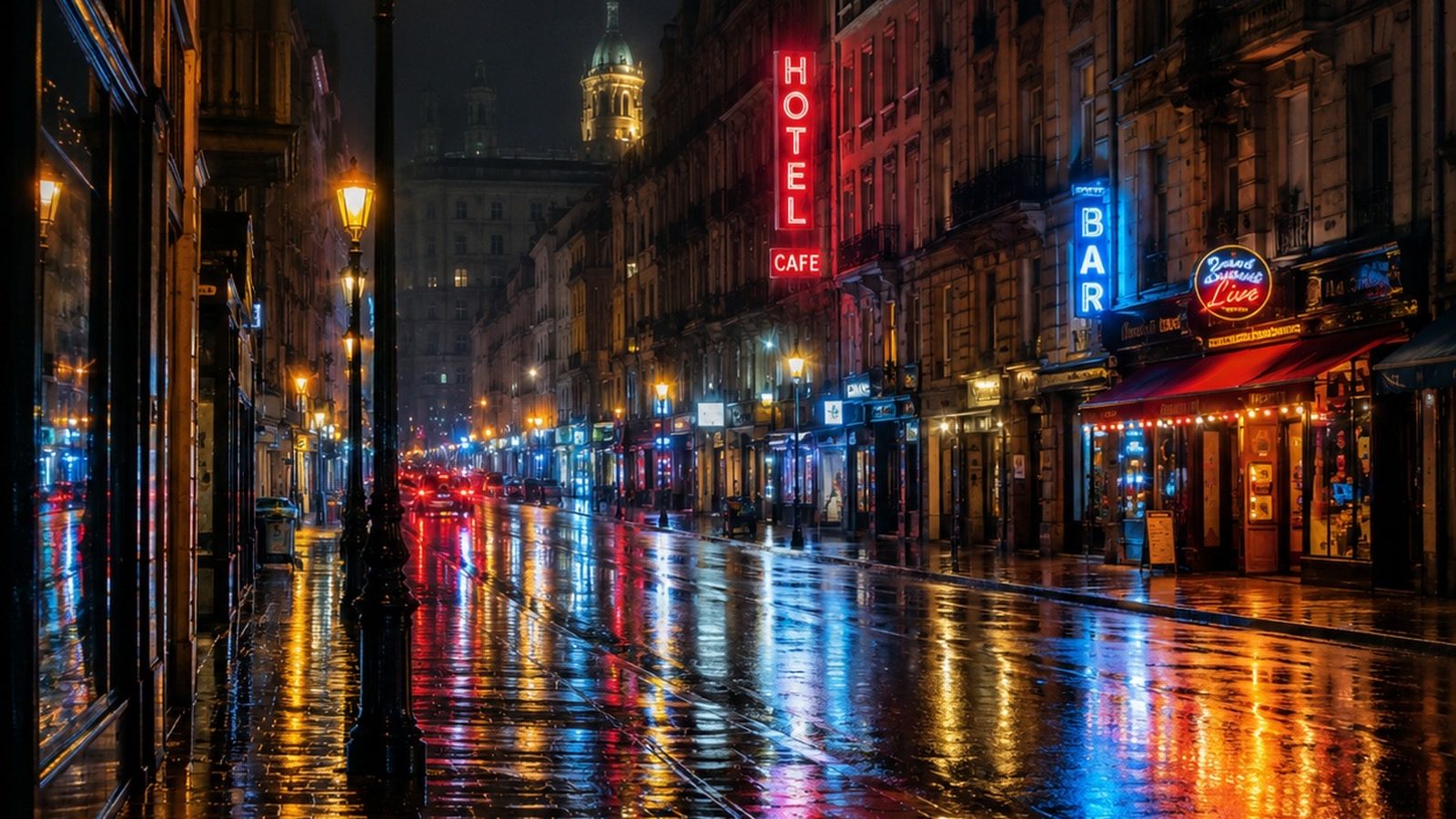
Hello everyone, it’s your host Oliver from DULAXI, and today I’m delighted to be joined by Boabie-DCL, a Glasgow-based electronic music producer whose work explores the atmospheric and cinematic possibilities of electronic sound. Alongside his independent production work, Boabie-DCL performs as a bass player with jazz bands in Glasgow, bringing experience from two different musical environments into his developing catalogue. His latest single, “Rain, Fusion and Light,” released on 5th September 2026, draws on electronic, synth-pop, and experimental influences to create a musical picture of a rainy city at night.
Before we begin our conversation with Boabie-DCL, here’s what you need to know about today’s featured project.
About Boabie-DCL
Based in Glasgow, Scotland, Boabie-DCL is an independent electronic music producer who creates atmospheric compositions from his home studio using a Digital Audio Workstation (DAW). His musical interests extend across electronic, synth-pop, experimental, and leftfield electronic music, with a particular appreciation for compositions that combine distinctive sound design with the storytelling possibilities of cinematic music. Drawing inspiration from Hans Zimmer, Jan Hammer, and Gary Numan, he explores how electronic sounds can communicate a sense of place and feeling without depending on a conventional lyrical narrative.
Music has also taken Boabie-DCL beyond the solitary environment of electronic production. As a bass player performing with jazz bands in Glasgow, he works within a musical setting that involves reading notation, responding to other musicians, and understanding the relationships between melody, harmony, rhythm, and structure.
These experiences offer a different perspective from the independent process of building electronic compositions on a DAW. While jazz performance provides opportunities for collaboration and musical interaction, electronic production allows him to experiment with sounds, develop arrangements, and make creative decisions at his own pace. Rather than committing himself to one musical style, he remains interested in exploring new possibilities and discovering what different approaches can offer.
Released on 5th September 2026, “Rain, Fusion and Light” continues this exploration through a composition inspired by the atmosphere of a city at night. The idea draws partly from Boabie-DCL’s experience of living in London during the 1980s and his enjoyment of walking through urban environments, observing their surroundings and absorbing their character. Glasgow, with its rainy weather and creative identity, also contributes to the thinking behind the title. The words bring together elements of the city’s environment and the variety of influences that shape its character.
Having this brief introduction to today’s featured project, I’m sure both new listeners and longtime followers will be interested in hearing directly from Boabie-DCL about the experiences, ideas, and creative decisions behind his music. So, without further ado, let’s begin today’s interview.
INTERVIEW SESSION
Oliver:
Glasgow has been an important part of your life as a musician, with your work extending from independent electronic production to performing bass with jazz bands. Before exploring the music itself, how did your relationship with music begin, and what experiences first encouraged you to make it such a central part of your life?
Boabie-DCL:
My mother was an excellent singer and got me interested in music – I initially played Trombone at school and read bass clef, so it was easy to move on to Bass.
Oliver:
You occupy two rather different musical environments: the individual, carefully constructed world of electronic production and the collaborative setting of big bands and jazz ensembles. What have these contrasting experiences taught you about yourself, not only as a musician but also as a creative person?
Boabie-DCL:
Good question, I like the solitary nature of electronic music production, I initially thought I would do collaboration with this but have actually preferred doing this on my own. The jazz collective work is brilliant, I have been very lucky to play along side some top Glasgow Jazz musicians and have learned so much melodically and harmonically from them.
Oliver:
Your musical influences include Hans Zimmer, Jan Hammer, and Gary Numan, three artists associated with distinctive approaches to electronic composition and sound. What initially drew you towards their work, and which aspects of their musical thinking have stayed with you as your own identity has developed?
Boabie-DCL:
There are a number of answers to this, firstly growing up in the 70’s & 80’s there was a brilliant music scene with some very different genres – Prog Rock, Heavy Metal, Punk, Indy and the emergence of electronic music. I liked the soundscape produced in electronic music it appeared to me to go beyond the boundaries of so many other genres in a good way and particularly lent itself to television and cinematic music
Oliver:
Your work sits around electronic, synth-pop, experimental, and leftfield electronic music. Rather than being confined to one conventional genre, how do you approach defining your sound, and how important is the freedom to explore different musical territories to your artistic identity?
Boabie-DCL:
I am currently working on a trad jazz piece using the DAW, and not playing a walking bass line on this live feels odd. But I am exploring how this could work and I think it is the musical exploration that interests me, not one genre, not one instrument but something new each time.
Oliver:
You have now released six singles, gradually building a catalogue of electronic compositions. When you look back at the artist you were when you began releasing music compared with where you are today, what has changed most in your confidence, creative instincts, or understanding of the music you want to make?
Boabie-DCL:
Great question and I am asking myself this all the time. I do feel as though I am making progress, partly this is down to understanding the DAW and production techniques but actually more importantly I am getting a better understanding of composition although even saying that feels a bit egotistical.
Oliver:
“Rain, Fusion and Light” begins with a simple but evocative image: rain falling over a city at night. What made you want to translate that particular urban atmosphere into music, and was there a personal experience, visual impression, or moment of inspiration behind the idea?
Boabie-DCL:
I lived in London for a while in the 80’s and always have enjoyed walking through city scapes and taking in the atmosphere, this tune related to that experience.
Oliver:
The title “Rain, Fusion and Light” brings together elements that can suggest movement, atmosphere, contrast, and transformation. How did you arrive at the title, and what relationship do you see between those three ideas and the overall character of the composition?
Boabie-DCL:
Glasgow is a very rainy and wet City so you grow up with this, but it is a very creative and interesting City also the “Fusion” which is Glasgow really appeals to me and the title of the song reflects this.
Oliver:
One of the distinctive qualities of electronic soundscape music is its ability to create a sense of place without necessarily relying on lyrics or a clearly defined narrative. How did you use melody, rhythm, and electronic textures to communicate the feeling of a rainy city at night in this particular track?
Boabie-DCL:
I do think the layering of sounds which is relatively easy to do with electronic music in a DAW helps to make this happen. I also very much focus on Harmony, Melody and Rhythm- as a Jazz Bass player I am often introduced to Harmony first and I like this as a starting point to create my sounds.
Oliver:
You consider “Rain, Fusion and Light” suitable for soundscapes and television use. When you compose music with this kind of cinematic potential, how do you balance creating something that can support a visual scene with making a composition that remains engaging as a standalone listening experience?
Boabie-DCL:
Great question- the Morricone music particularly in the Spaghetti Westerns are a great example of this. The music stands alone but when combined with the cinematic context the combined effort is magnificent.
Oliver:
You mentioned experimenting with some interesting loops for the first time during this recording and particularly enjoying the results. What was it about those loops that caught your attention, and how did incorporating them change the direction, texture, or rhythmic character of the track?
Boabie-DCL:
The loops in my opinion are both good and bad – they can I think reduce some personal creativity but on the other hand they add creativity- so in fact they almost create a “distant collaboration”
Oliver:
You work independently in Glasgow using a Digital Audio Workstation, handling the creative process yourself. What does having that level of control mean to you, and how do you decide when an arrangement has reached the point where it expresses exactly what you intended?
Boabie-DCL:
Great question- I never know when something is completed – I create numerous versions and critique these by listening many times and then focusing on what I like and don’t like- I could easily never finish a tune – so I have had to become quite disciplined in ensuring I have a beginning, middle and end.
Oliver:
You have described becoming deeply immersed in the process of creating music on your DAW, contrasting it with the experience of reading notation in big band and other jazz environments. Can you take us inside that creative experience and explain what happens when you become completely absorbed in building an electronic composition?
Boabie-DCL:
Yes, the solitary nature of sitting with the DAW and its various controls and playing this through a set of speakers in a small room is so different from playing with an 18 piece big band. It requires a very different mindset and thinking process, it requires more creativity and discipline to achieving a final product.
Oliver:
Your experience as a bass player gives you a practical relationship with rhythm, musical timing, and the interaction between instruments. How does that instrumental background influence your decisions when arranging electronic compositions, particularly when deciding how much rhythmic movement a soundscape needs?
Boabie-DCL:
I think the main thing this gives me, is a focus on Form. The overall structure of a musical piece, I probably would not understand if I had not been able to read music etc by playing Jazz Bass.
Oliver:
Working independently can provide considerable creative freedom, but it also means taking responsibility for every stage of a production. What aspects of producing your music alone have challenged you most, and how have those experiences helped you become more confident in your own creative judgement?
Boabie-DCL:
Good question – I suppose this comes down to a bit of musical selfishness, basically I put music together that I like, I am not focused on an audience. I like certain sounds, certain harmonic progressions etc and that is how I generate my tunes.
Oliver:
With six singles now released, each contributing to your growing body of work, you have considered bringing them together into an album. What connections do you recognise between these releases, and what would you want listeners to discover about your development if they experienced them together as one complete project?
Boabie-DCL:
I have considered making an album, but actually at the moment I like the stand alone singles – Whilst I think there is a theme and connectivity between the tunes I am not sure I would want to bring them together as one entity- but maybe in the future I will do.
Oliver:
Electronic soundscapes can leave considerable room for listeners to form their own interpretations. When someone listens to “Rain, Fusion and Light,” would you prefer them to connect with the particular nighttime city atmosphere you had in mind, or do you find it equally rewarding when they create an entirely different picture from the music?
Boabie-DCL:
I would be absolutely happy for any listener to find their own story with this music.
Oliver:
Your involvement in Glasgow’s jazz scene gives you an ongoing connection with live musical performance, while your solo electronic work allows you to develop compositions independently. How would you like these two sides of your musical life to evolve, and are there opportunities for them to come together in a way you have not explored yet?
Boabie-DCL:
I think there are ways to bring these forms together but I think it’s very much down to making the connections with other like minded musicians which is easier said than done. I would like to have a means of doing this and I am actively thinking about it and have some thoughts on this.
Oliver:
As you look towards your next chapter, what creative possibilities are you most interested in exploring, whether through new electronic techniques, more cinematic compositions, your work with jazz musicians, or the potential album? Ultimately, what would you like Boabie-DCL’s music to be recognised for as your catalogue continues to grow?
Boabie-DCL:
I would answer this really simply – I want to like what I do and enjoy what I do, whilst also having people listen to and enjoy the music too.
“Boabie-DCL’s music begins with a personal curiosity about sound, but its greatest invitation is the freedom it gives listeners to discover their own stories. Between the independence of electronic production and the shared language of jazz, his work reflects an artist who values exploration over fixed boundaries.”
~ Oliver (DULAXI Team)
EDITORIAL PERSPECTIVE
What stands out about Boabie-DCL’s approach is the connection he makes between musical structure and creative freedom. His experience as a jazz bassist informs the way he thinks about harmony, rhythm, and form, while working independently on a DAW gives him room to experiment with sounds and arrangements. “Rain, Fusion and Light” reflects his interest in cinematic composition and the ability of electronic music to suggest a setting without dictating exactly what a listener should imagine. His willingness to explore new techniques while maintaining a personal approach gives his growing catalogue a clear sense of purpose.
~ Oliver (DULAXI Team)
CLOSING
A sincere thank you to Boabie-DCL for joining us at DULAXI and sharing the experiences, influences, and creative decisions behind “Rain, Fusion and Light.” Our conversation has offered a closer look at an artist who draws from both electronic production and jazz performance while remaining open to new ways of making music.
For readers who have not yet experienced the single, “Rain, Fusion and Light” offers an opportunity to explore Boabie-DCL’s approach to electronic sound and his interest in the atmosphere of city life after dark. As he continues to develop his catalogue and consider new ways of bringing his musical interests together, it will be interesting to see where his creative exploration leads.
Thank you for spending time with DULAXI and reading this interview. We encourage you to discover the music for yourself, follow Boabie-DCL’s continuing work, and stay connected with us for more conversations with artists whose ideas and experiences deserve to be heard.
Until next time, this is Oliver from the DULAXI Team. Thank you for reading, and we look forward to bringing you more artist interviews soon.