
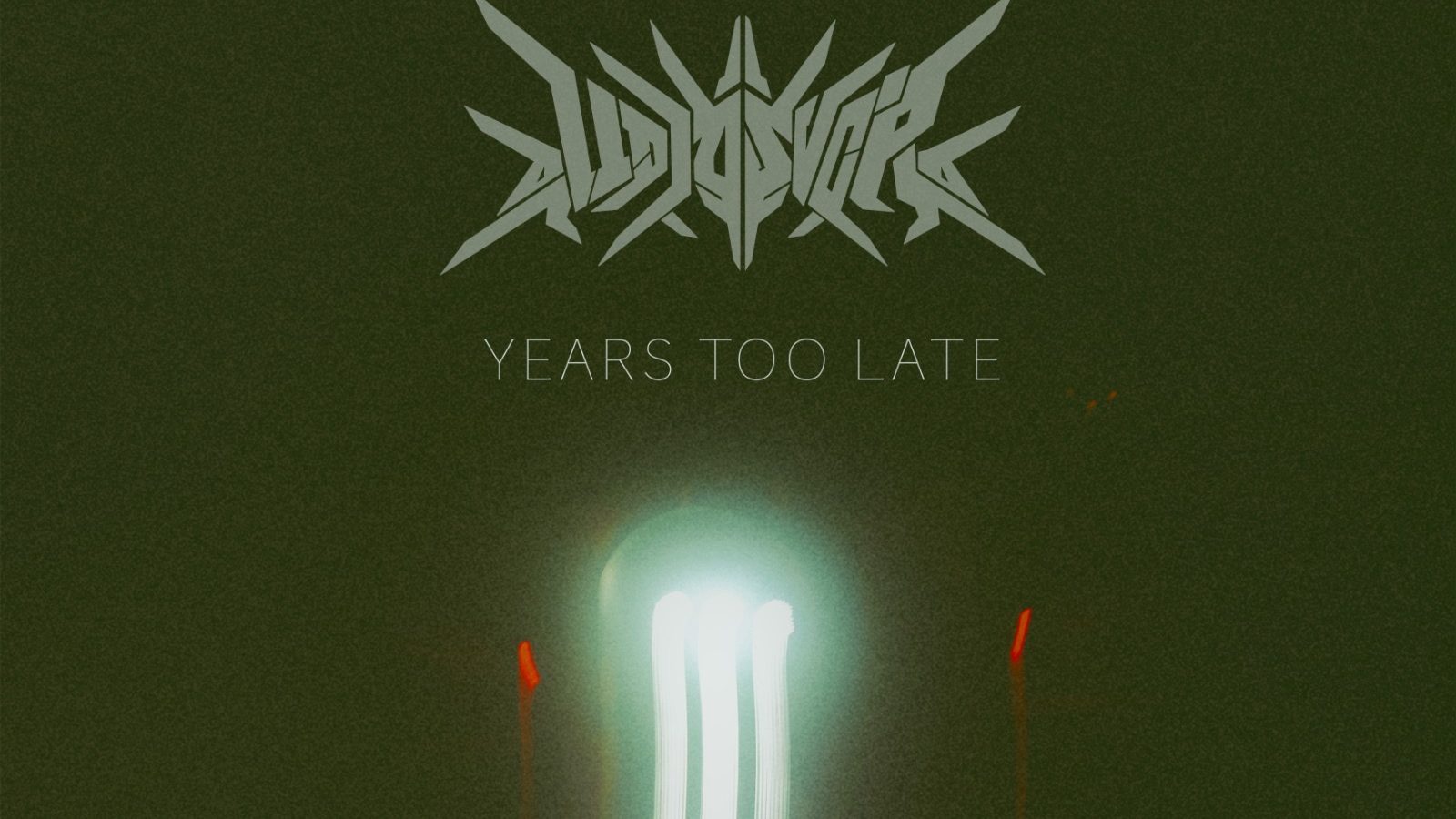
Audiosvora’s “Years Too Late,” released on October 2nd, 2026, arrives as the second single from the Budapest-based metalcore band’s forthcoming EP, “Motion.” At only 1:38, the track makes an immediate impression through its refusal to overstay its emotional welcome. Rather than building around a conventional verse and chorus structure, Audiosvora creates one continuous surge of sound, allowing the music and lyrics to move forward without repetition until the central thought reaches its natural conclusion. The opening declaration, “I am made of memories,” immediately establishes the song’s reflective foundation, introducing a piece concerned with everything time leaves behind. Faded faces, conversations held late at night, promises that were never fulfilled, departing trains, unfamiliar cities, roads that no longer lead home and meetings that can never happen again become fragments of a past that remains embedded within the present.

Musically, “Years Too Late” brings together several elements that give Audiosvora’s sound its distinctive character. Trancecore and electronicore provide the electronic pulse, while modern metalcore contributes the weight and aggression. Beneath this heaviness, spacious high-register guitars carry a post-rock and shoegaze-inspired quality, with extensive reverberation creating an expansive atmosphere around the dense instrumentation. The contrast is particularly effective because the electronic elements do not simply function as decoration. Trance-driven synths actively contribute to the emotional movement of the composition, while the guitars establish a sense of distance and space. Instead of embracing the euphoric side of classic trancecore, the electronics here feel darker and more emotionally charged, giving the track an atmosphere that matches its themes of regret, memory and things that cannot be recovered.
The arrangement is especially compelling because every moment appears to serve the track’s brief emotional journey. The rhythm section establishes a heavy, syncopated foundation, while layered guitars and electronic textures create an increasingly pressurized sonic environment. There is no need for a repeated chorus to reinforce the central idea because the entire composition functions as one accelerating thought. The intensity continues to rise, with the vocals becoming increasingly strained as the emotional weight develops. The extreme vocal delivery carries a rawness that gives the lyrics greater urgency, transforming reflections on loss and missed opportunities into something immediately felt. That escalation reaches a striking emotional peak through a sharp, piercing scream that cuts through the surrounding instrumentation, providing a sudden cathartic release before the song reaches its conclusion.

Lyrically, “Years Too Late” expands beyond any single interpretation. While imagery throughout the song carries traces of migration, its emotional center is broader, focusing on the people, places, relationships, opportunities and words that belong to a past that cannot be revisited. The line “Of words that arrived years too late” gathers these ideas into one final image, capturing the particular sadness of realizing something only after the moment to express it has disappeared. This perspective also creates an interesting connection with “Motion,” whose wider concept explores the need to keep moving. Where that theme looks toward continued movement, “Years Too Late” turns around to consider what movement leaves behind. The song therefore feels like a moment of looking backward without attempting to return, acknowledging that memories can remain part of us even when the circumstances that created them are gone.

The production reinforces that emotional contrast through its balance of density and atmosphere. Heavy instrumentation gives the song physical force, while reverberated guitars and electronic textures leave enough space for its reflective qualities to breathe. The result is a sound that carries the energetic DNA of 2000s and early 2010s trancecore and electronicore while incorporating contemporary metalcore heaviness and a more atmospheric guitar language. The abrupt ending is equally important. Rather than providing a prolonged resolution, the track stops with a sense of finality, leaving its central feeling hanging in the listener’s mind. That sudden conclusion suits a song about words, relationships and opportunities arriving too late, because there is no additional section capable of undoing what has already happened.
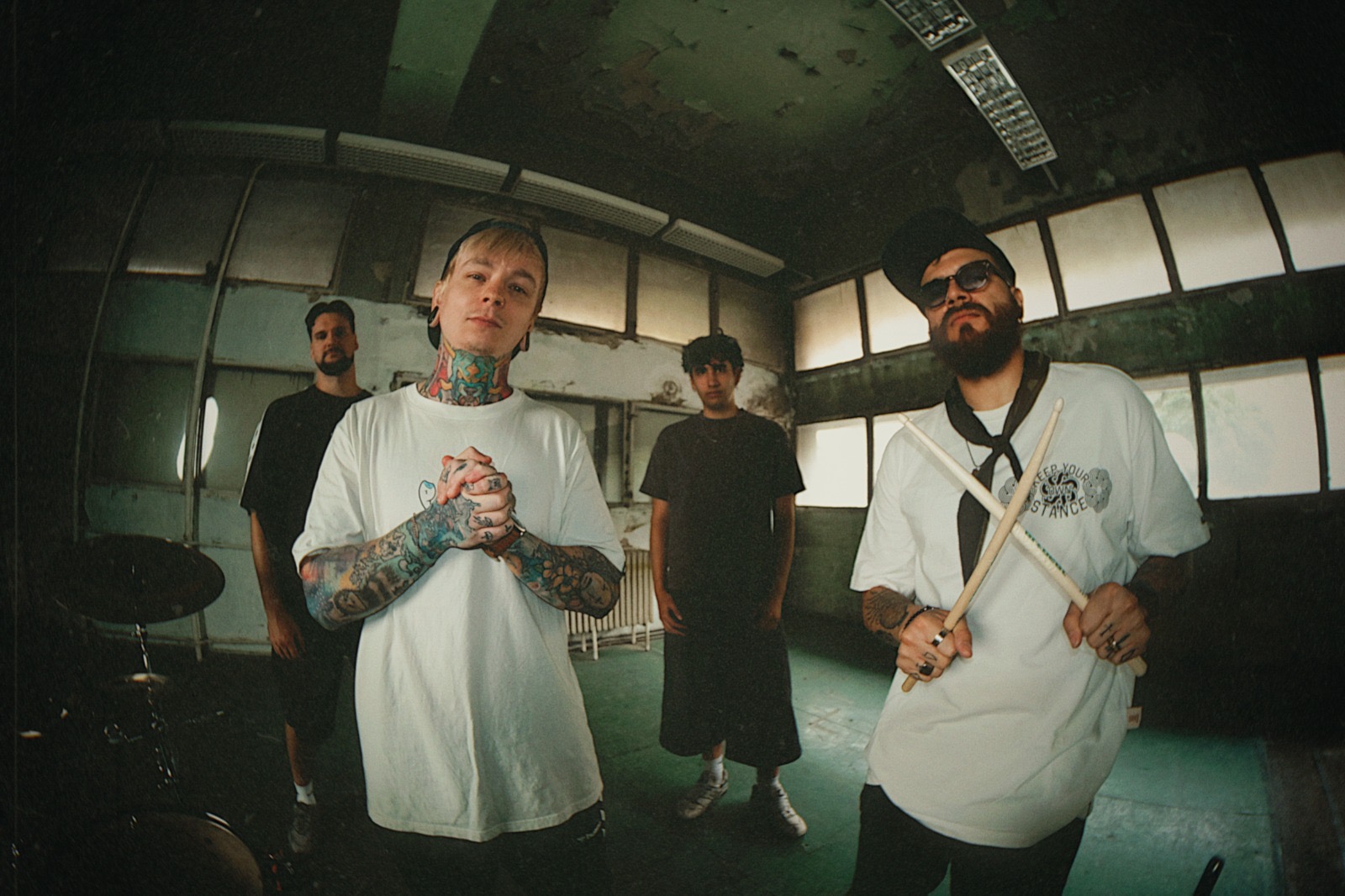
Years Too Late Is A Fierce And Atmospheric Emotional Burst, Blending Metalcore Weight, Electronic Intensity, Desperate Vocals, And Reflective Lyrics Into One Unforgettable Moment Of Memory
~ Faithfulness (Dulaxi Team)
“Years Too Late” also reflects the unusual journey that shaped Audiosvora itself. Originally formed in Saint Petersburg in 2022 from the creative foundations of Fading Distance, the project developed through multiple lineup changes, emigration and periods of remote collaboration before being rebuilt in Budapest. Viktor Smirnov, who began taking vocal lessons simply to improve his karaoke singing, eventually became the project’s vocalist, while the current lineup brings together musicians from Russia, Hungary and Colombia. Their music has consistently connected personal subjects such as migration, home, memory and loss with an intentionally unpredictable combination of metalcore and electronic influences. With “Motion” approaching and Audiosvora preparing for its first live performances in Budapest, “Years Too Late” captures a band turning accumulated experience into a compact, atmospheric and intensely personal burst of sound.
For more information about Audiosvora, click on the icons below.