
Martin Lloyd Howard’s “Surrey Bells,” released on 21st September 2026, draws its appeal from a simple but evocative idea: two sets of church bells answering one another across the English countryside. Rather than attempting to reproduce the sound of bells literally, Howard uses the melodic qualities of two guitars to suggest their exchange. The opening is gentle and unhurried, allowing the melody to establish a peaceful mood before the contrast between the guitar parts becomes more apparent. The result is an instrumental piece that encourages attentive listening without disturbing the tranquillity at its centre.
The imagined setting is a rural Surrey valley on a bright winter morning, and the arrangement gives that image a musical logic. One guitar occupies the foreground, while the other has a more distant, echoing quality, suggesting a reply from further across the landscape. This distinction is important because it gives the music a sense of distance without relying on dramatic changes or an elaborate arrangement. The two parts feel connected but not identical, and their exchange provides the piece with its central point of interest. Even without knowing the inspiration behind it, a listener can appreciate the contrast between the clearer melodic voice and its more remote counterpart.

The guitar playing is melodic and intricate, yet never feels unnecessarily showy. Howard allows the phrases to retain their natural flow, giving individual notes room to register while maintaining an easy listening pace. Both parts were recorded at home using his Tanglewood steel-string guitar, with separate performances layered together. His choice to use DADGAD tuning throughout gives the arrangement a consistent musical foundation, while the overdubbing allows each guitar line to occupy its own place. The warm, intimate recording quality suits this approach, keeping the playing clear while preserving the contrast between the more immediate and more distant sounds.
Howard’s preference for fluid, organic expression is particularly relevant here. With his classical guitar background, he could have approached the piece through strict precision and formal structure, but its appeal comes instead from the relationship between phrasing, melody and tone. The influence of folk guitar is a useful point of context, especially given the emphasis on altered tuning and the expressive possibilities of acoustic playing. Rather than filling every moment with activity, Howard leaves the arrangement steady and lets small variations in the guitar phrases sustain interest. This restraint gives the music room to breathe, although listeners who prefer a pronounced climax or more dramatic changes in intensity may find its consistency less involving.

The absence of vocals is an advantage for this particular idea. With no lyrics directing the listener towards a specific narrative, the guitar parts carry the sense of place through their contrast and melodic exchange. The effect is reflective rather than theatrical, allowing the imagined countryside setting to emerge without becoming overly literal. There is a gentle nostalgia to the music, but it does not insist on a particular memory or emotion. Its steady pacing makes it suitable for quiet listening at home, moments of personal reflection or simply taking a break from busier surroundings. The intricacy of the guitar work also gives attentive listeners something to return to beyond its immediate soothing quality.
What makes “Surrey Bells” memorable is the way its musical idea and arrangement support one another. The call-and-response relationship is not merely a concept explained by the artist; it is the feature that gives the piece its shape and distinguishes the two guitar parts. The echoing sound provides contrast, the melodies keep the music engaging at a gentle pace, and the consistent arrangement preserves the calm that defines the track. Its lack of a dramatic peak is a clear artistic choice, one that favours sustained mood over spectacle. For listeners who value instrumental guitar music, Howard offers a thoughtful piece that finds expression in detail, atmosphere and the measured interplay between two performances.
“In the space between two answering guitars, Martin Lloyd Howard finds the poetry of distance, turning a familiar countryside image into a quiet study of connection, memory and the beauty of leaving some things unheard.”
~ Tehillah (DULAXI Team).
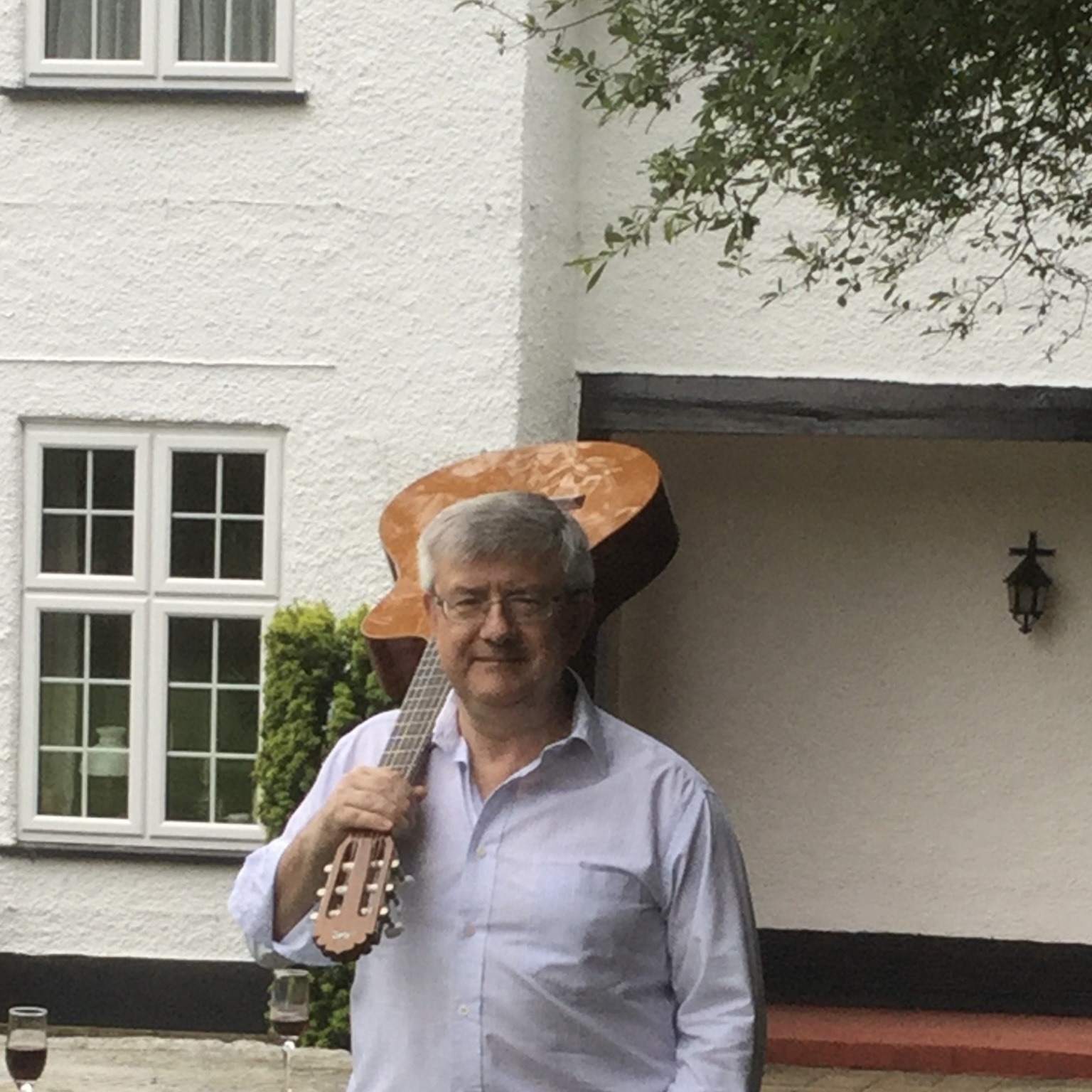
Martin Lloyd Howard is an English composer and guitarist based in Reigate, Surrey. Originally trained in classical guitar, he has broadened his musical interests to include folk, blues and rock, drawing inspiration from figures such as John Dowland, Julian Bream, Davey Graham, Martin Simpson, Jimmy Page and Ritchie Blackmore. His work centres on original instrumental music for acoustic and electric guitars, both solo and in ensemble settings, and explores how tuning, phrasing and tone can evoke particular places, images and moods. Through pieces such as “Surrey Bells,” Howard continues to explore an expressive, organic approach to guitar composition.