
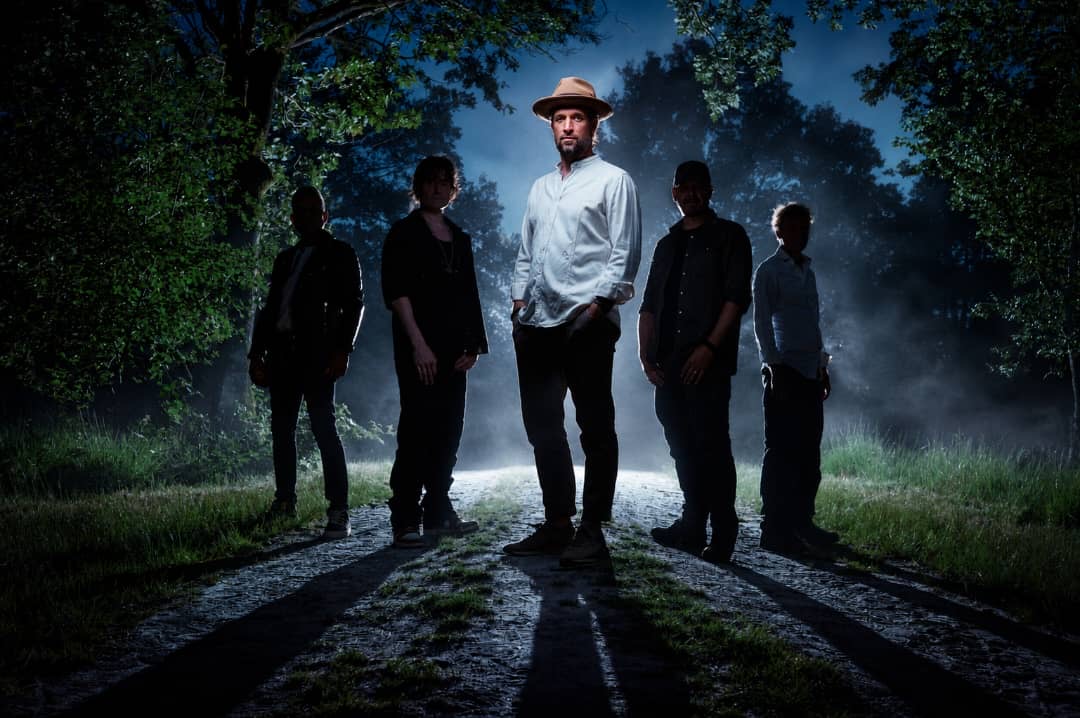
Hello everyone, it’s your host Oliver from DULAXI, and today I’m delighted to be joined by The Meir, a Dutch alternative band whose music moves between alternative rock, indie and alt-pop. Based in the Netherlands, the five-piece brings together Lars Zebregs on vocals, songwriting and piano, Bo Bodewitz on bass guitar and songwriting, Jeroen Kraneveld on guitar, Charl Dijkhoff on drums, and Raf Jansen on keyboards, songwriting and production.
Today, we’re talking about their debut single, FREE, released on 25 September 2026 through Terra Madre. The song introduces The Meir through atmospheric songwriting, melodic detail, dynamic arrangements and an emotionally open approach to alternative music.
Before we begin our conversation with The Meir, here’s what you need to know about today’s featured project.
About The Meir
The Meir emerged from a creative connection between Lars Zebregs, Bo Bodewitz and Raf Jansen, who first met through a mutual acquaintance and quickly discovered that their musical instincts worked naturally together. Their early creative sessions developed around regular Monday meetings at Meirstraat in Oud Gastel, the street that would eventually give the band its name.
Those sessions became more than songwriting appointments. The musicians spent time getting to know one another, discussing life and gradually building the trust that would become central to their creative process. Rather than approaching songs as carefully controlled constructions, they developed a philosophy of allowing musical ideas to breathe and following them wherever they naturally led.
That approach eventually expanded into the full five-member lineup of The Meir, bringing together Lars Zebregs on vocals, piano and songwriting, Bo Bodewitz on bass guitar and songwriting, Jeroen Kraneveld on guitar, Charl Dijkhoff on drums, and Raf Jansen on keyboards, songwriting and production. Across their music, the band combines atmospheric textures, organic instrumentation, melodic songwriting, modern production and arrangements that can move from intimate passages into broader, more expansive moments.
Their debut single, FREE, grew directly from that creative philosophy. Unlike many of their songs, the track required considerable patience before revealing its direction. It began with a piano chord progression that the musicians immediately felt had potential, although the melody and lyrics were initially absent. A change suggested by Bo, involving more space between the first vocal lines, eventually helped unlock the song and allowed its musical and lyrical identity to emerge.
The recording was produced and mixed by Raf Jansen, with mastering handled by Ardie van Beek. The production process was closely connected to the songwriting itself, allowing the arrangement, performance, production and mix to develop as parts of one continuous creative process. At the centre of the recording is Lars’ vocal performance and the emotional message carried by the song, with the surrounding instrumentation designed to support rather than overshadow that core.
The single also provides the first glimpse of INFINITE, The Meir’s forthcoming twelve-track album. While FREE offers an accessible entrance into the band’s sound, the album is expected to explore a broader range of moods, colours and musical directions while continuing to engage with themes including vulnerability, freedom and emotional depth.
Having this brief introduction to today’s featured project, I’m sure both new listeners are excited to hear directly from The Meir. So, without further ado, let’s begin today’s interview.
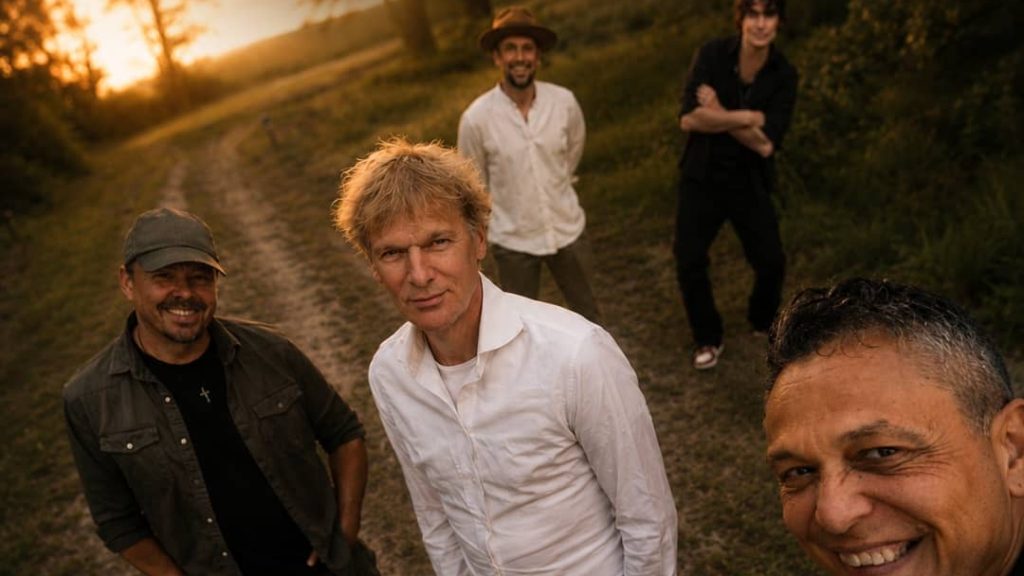
INTERVIEW SESSION
Oliver:
The Meir began when Lars Zebregs, Bo Bodewitz and Raf Jansen met through a mutual acquaintance and quickly discovered a strong musical connection. What was it about those first sessions that made you realise there was something distinctive worth building together as a band?
The Meir:
Actually, it was clear right from the start that we had all the right ingredients. Lars brought a natural gift for melody, storytelling, and piano playing. Many songs started with an idea from him, although just as often something beautiful emerged spontaneously while the three of us were jamming together.
Raf has an exceptional ability to capture creative moments in the studio, arrange them, add the right instrumentation, and quickly turn an idea into a solid demo.
Bo is a true multi-instrumentalist. Whether it’s guitar, bass, drums or something else, he can pick it up and contribute exactly what a song needs.
What made those early sessions special was that nobody was trying to force the music into a particular direction. We gave ideas space to breathe instead of judging them too quickly. That allowed songs to develop naturally and often led us somewhere we hadn’t expected.
After almost every session, we would look at each other and wonder where it had all come from. We’d often say, “Did we really create this?” We have come to believe that music is not something we simply manufacture ourselves, but something that comes to life when people connect creatively with each other and with something greater than themselves.
Oliver:
Almost every Monday, the three of you would meet at Meirstraat in Oud Gastel, which eventually became the inspiration for the band’s name. What do you remember most about those early Monday sessions, and how did that regular creative space shape the identity of The Meir?
The Meir:
What we remember most is not so much the room itself, but the atmosphere that existed there every Monday morning. Before we wrote songs, we got to know each other as people. Especially during those Monday morning sessions, we often spent more time talking about life’s highs and lows than actually making music.
That created a deep sense of trust. Writing songs and sharing creative ideas can be surprisingly vulnerable, and you need to feel safe enough to expose that part of yourself. The bond that developed between us gave us the confidence to take those creative risks.
Another important aspect was that there was very little ego involved. None of us were trying to leave a personal signature on every song. We were all focused on serving the music and discovering what the song itself needed. That mindset became one of the foundations of The Meir.
Looking back, those Monday sessions shaped not only our music, but also our identity as a band. They taught us to listen to one another, to trust the creative process, and to value connection above individual recognition.
Oliver:
The Meir has a very particular approach to songwriting where you describe yourselves as serving the music rather than directing it. When an idea begins to take shape, how do you recognise when you should follow it naturally rather than trying to force it into a particular direction?
The Meir:
Yes, that is closely connected to what we described in the previous answer. For us, songwriting is less about controlling an idea and more about listening to where it wants to go.
When a musical idea begins to take shape, we pay attention to whether it develops naturally. Sometimes a melody, chord progression or lyric seems to open new doors on its own. Those are often the moments when we feel we should follow the song rather than direct it.
We believe it is important to serve the song instead of serving our own ego. The moment you start forcing your personal signature onto every detail, you risk losing some of the honesty and purity that made the idea special in the first place.
Of course, every artist works differently, and we certainly don’t claim to have discovered the only right approach. This is simply the philosophy that has worked for us. The best songs often emerge when we create space for them to reveal themselves rather than trying to control every step of the process.
Oliver:
“FREE” began as a musical theme before any lyrics existed. Can you take us back to that first musical idea and explain what you heard in it that eventually led you to realise it could become the band’s first introduction to the world?
The Meir:
Well, FREE almost didn’t happen at all. Unlike many of our other songs, which seemed to arrive quite naturally from the beginning, this one took a lot more patience.
It started with a piano chord progression that immediately appealed to us. We all felt there was something special in it, but for a long time the song simply refused to reveal itself. The melody wasn’t there yet, the lyrics weren’t there yet, and it felt as though we were missing an essential piece of the puzzle.
At one point, Lars was ready to abandon the idea altogether and move on to something new. Raf, however, felt there was still more hidden inside the song. Then Bo suggested creating more space at the beginning, with longer pauses between the first vocal lines. That seemingly small change turned out to be the breakthrough.
Suddenly everything started to fall into place. The melody found its direction, the lyrics began to emerge, and the song finally revealed what it wanted to become.
As we continued writing and developing more material, FREE gradually stood out as the right introduction to The Meir. It sits close to the centre of our musical identity: melodic, atmospheric, emotionally open, and accessible without losing depth. Looking back, it became the natural choice to introduce ourselves to the world.
Oliver:
Lars eventually found the words for “FREE” after the music had already taken shape. How did the existing musical mood influence the lyrics, and what helped you find the right words for themes such as transition, release and freedom?
The Meir:
Lars: The music of FREE already carried a sense of movement and release. From the very beginning, the chord progression and instrumentation felt uplifting, as though the song was building towards a moment of emotional liberation. That atmosphere became the foundation for the lyrics.
Freedom is a difficult theme to describe because it means something different to everyone. For me personally, it is one of the most important themes in life, but also one of the hardest to fully capture in words. Rather than trying to define it intellectually, I prefer to let the words emerge naturally from the feeling the music creates.
Like many songwriters, I often experience the creative process as a dialogue with something beyond myself. Of course there is craftsmanship involved. You work on phrasing, rhyme, rhythm and meaning. As a non-native English speaker, I also spend time refining the language. But throughout the process, the most important question remains the same: does it feel true?
Does it serve the music? Does it serve the emotion? Does it feel honest?
When the answer becomes yes, the lyrics usually find their place. That was very much the case with FREE.
Oliver:
Freedom can mean something very different depending on what someone is experiencing in their own life. Rather than telling one fixed story, “FREE” leaves space for listeners to find their own meaning. Why was it important to you to leave that room for personal interpretation?
The Meir:
Lars: I personally think it is a beautiful thing when people are free to interpret music and lyrics in their own way.
Over the years, I’ve received many reactions to songs I’ve written, and quite often people described emotions or meanings that I had never consciously put into the song myself. At the same time, when I revisit my own songs at different stages of life, I sometimes discover entirely new meanings in them as well.
That has taught me that every listener brings their own experiences, memories and perspective to a song. There is no right or wrong interpretation. In many ways, that uniqueness is something we should celebrate.
If a songwriter explains every detail and defines exactly what a song is supposed to mean, it can limit that personal connection. It can place boundaries around something that might otherwise remain open and alive.
We wanted FREE to leave room for people to find their own story within it. After all, freedom itself means something different to everyone. In that sense, allowing space for interpretation felt entirely consistent with the message of the song.
Oliver:
The song explores the moment when something changes and a new chapter begins. When you think about that idea personally, what does a transition or new beginning represent to The Meir at this stage of the band’s story?
The Meir:
Phew, yes, that question feels very relevant to us right now.
FREE is our first official release, so in many ways we are living through exactly the kind of transition the song describes. Until now, The Meir has existed mainly in songwriting sessions, studio recordings, rehearsals and conversations about what this project could become. Once a song is released, it no longer belongs only to the band. It starts its own journey in the world.
That makes this a significant moment of transition. From this point onward, everything could change. New listeners may discover our music, new opportunities may arise, and The Meir may become a much bigger part of our lives than it already is.
At the same time, a new beginning always comes with a certain amount of uncertainty. You don’t know exactly where the road will lead. What matters is having the courage to take that first step.
In that sense, FREE is not only a song about transition. It also marks the beginning of a new chapter in the story of The Meir itself.
Oliver:
The three of you have described the early writing process as feeling less like constructing songs and more like allowing them to happen. How does that philosophy affect the way Lars, Bo and Raf respond to one another when a new musical idea appears?
The Meir:
We try to approach both each other and the music with as little judgement as possible. When a new idea appears, our first instinct is not to analyse whether it is good or bad, but to explore where it might lead. That creates a sense of freedom in which everyone feels comfortable contributing ideas, no matter how unfinished or unexpected they may be.
We have also learned that what happens within The Meir is very much a collective process. While each of us brings different strengths to the table, the songs emerge from the interaction between the three of us rather than from any one individual.
There were occasions when one of us couldn’t make a session, and although we still worked on music, something was different. The particular chemistry we experience when all three of us are together simply wasn’t there in the same way. The ideas didn’t seem to flow as naturally.
When that chemistry is present, however, the process often feels remarkably effortless. One person introduces an idea, another develops it, someone else hears a new possibility, and before long the song begins to reveal itself. Those are the moments that reinforce our belief that songwriting is less about constructing something piece by piece and more about creating the conditions for something meaningful to emerge.
Oliver:
With Lars handling vocals and piano, Bo on bass, Raf on keyboards and production, alongside Jeroen Kraneveld on guitar and Charl Dijkhoff on drums, each member brings a different musical role into the band’s sound. How do you make sure those individual contributions remain distinct while still serving the identity of The Meir as a whole?
The Meir:
On the surface, the answer is quite simple: all five of us are committed to serving the song rather than ourselves.
At the same time, each member brings something unique to the music. Lars has a particular sensitivity for melody, lyrics and emotional expression. Bo has a remarkable ability to hear what a song needs musically and can contribute across multiple instruments. Raf brings experience in arrangement, production and shaping the overall sonic landscape. Jeroen adds character, colour and atmosphere through his guitar work, while Charl provides the energy, feel and dynamics that help bring the songs to life.
What makes it work is that nobody feels the need to dominate the music. In our experience, that is actually quite rare. Many bands naturally gravitate towards highlighting individual contributions, which is perfectly valid, but it is not how we approach things.
For us, the question is always: what serves the song best? Ironically, by focusing less on ourselves, our individual personalities often become more visible. Each contribution remains distinct, but together they form something that is recognisably The Meir.
Oliver:
“FREE” sits between alternative rock, indie and alt-pop, combining melodic songwriting with atmospheric guitars, organic instrumentation and dynamic changes. How did you decide where to draw the line between accessibility and the more atmospheric side of the band’s identity?
The Meir:
To be honest, we never sat down and consciously decided where that line should be. It emerged naturally as the songs developed.
In the beginning, there wasn’t even a clear concept of what The Meir was supposed to be. We didn’t have a band name, a visual identity, or a clear idea of genre. We simply followed the songs wherever they wanted to go.
As we wrote more material, patterns started to appear. Some songs immediately felt like The Meir, while others didn’t quite fit. Gradually, we began to recognise certain characteristics that connected the music: strong melodies, emotional depth, atmospheric textures, organic instruments, and a sense of movement within the arrangements.
Interestingly, our sound became a little more rock-oriented than we initially expected. That wasn’t a strategic decision; it was simply where the music led us. Over time, we found a balance between accessibility and atmosphere that felt authentic to who we are.
Right now, that balance feels like the centre of The Meir’s identity. But we don’t see it as a fixed destination. People change, experiences change, and music evolves with them. We expect The Meir to continue evolving as well.
Oliver:
Your music often moves from intimate passages into more expansive sections rather than presenting everything at the same intensity. What role do contrast and gradual development play in the way you arrange a song like “FREE”?
The Meir:
Lars now jokes that this question should be directed to Raf, because he has a natural instinct for arrangement and dynamics. Even in the earliest stages of a song, he often seems to hear where it wants to go and how the story should unfold musically.
Raf: We do discuss those choices together, but one of the guiding principles behind our arrangements is the importance of contrast. In many ways, contrast is one of life’s greatest teachers. Without darkness, you don’t fully appreciate light. Without cold, you don’t understand warmth. Without sadness, happiness carries less meaning.
We feel the same is true in music. A powerful climax only has impact if it is preceded by a quieter moment. An instrument becomes meaningful when it enters at exactly the right time and for the right reason. Even the punchline of a joke only works because of everything that comes before it.
In FREE, the gradual development of the arrangement mirrors the emotional journey within the song itself. The quieter sections create space for reflection, while the larger, more expansive moments provide a sense of release and movement. The contrast between those elements helps tell the story in a way that words alone never could.
For us, dynamics are not simply a production technique. They are part of the storytelling.
Oliver:
Raf Jansen produced and mixed “FREE,” while Ardie van Beek handled the mastering. As someone who is also part of the band’s songwriting and performance, how did being involved in the production shape the final character of the recording?
The Meir:
Raf: Producing and mixing FREE while also being part of the songwriting process was actually a great advantage. From a very early stage, I could already hear where the song wanted to go and what it could become in its final form. That gave me a clear sense of direction throughout the entire process.
Having spent many years producing records for other artists, I have learned to listen from both a creative and technical perspective. That experience helped me translate the initial vision for FREE into a finished recording without losing the emotion that was present from the very first idea.
For me, the most important elements of FREE are Lars’ vocal performance and the message carried by the lyrics. Everything else was built around that. Every arrangement choice, instrument, texture and dynamic movement was there to support the story of the song rather than compete with it.
Because I had been involved from the very first spark of the idea, there was a strong connection between the songwriting, arrangement, production and mix. Rather than treating those as separate stages, they became part of one continuous creative process.
The mastering process with Ardie van Beek was equally enjoyable. Having worked together for many years, there is a level of trust and understanding that makes communication very straightforward. At the same time, it was valuable to have an experienced and independent set of ears listening to the track. Ardie was able to bring fresh perspective and make a number of subtle improvements that helped elevate the final result.
Looking back, the collaboration between songwriting, production, mixing and mastering allowed FREE to become exactly what it was meant to be: an emotionally driven song where the music, performance and message all serve the same purpose.
Oliver:
The emotional vocal performance has already been recognised by early listeners as one of the qualities that gives the band its identity. What does Lars look for when delivering a vocal, particularly when the song is dealing with something as open to interpretation as freedom?
The Meir:
Lars: As a vocalist, I always try to serve the song, but at the same time I try to stay as close to myself as possible.
When I sing, I don’t want the performance to feel manufactured or overly calculated. The melody should feel as though it naturally flows through me rather than being forced into a particular shape. If I start thinking too much about technique, interpretation or what people might expect to hear, something essential can get lost.
Of course, I pay attention to the narrative arc of a song. I think about dynamics, emotion, tension and release, and whether the vocal helps carry the listener from beginning to end. But those choices are always guided by feeling first and analysis second.
With a song like FREE, which is open to personal interpretation, authenticity becomes even more important. Rather than trying to tell people exactly what freedom means, I try to communicate the emotion behind the song as honestly as possible.
Ultimately, I trust the heart more than the head. If the emotion is genuine, listeners will connect with it in their own way.
Oliver:
“FREE” has been chosen as the first introduction to The Meir because it sits close to the centre of the band’s musical spectrum. What does the song reveal about your identity that you felt was important for people to hear first?
The Meir:
We felt that FREE captures many of the qualities that sit at the heart of The Meir.
It reflects a sense of vitality, soul and passion, while also showing that we are not afraid to engage with larger themes such as identity, freedom, purpose and personal growth. At the same time, we never want the message to outweigh the music. The emotional and musical experience always comes first.
What makes FREE a fitting introduction is that it combines those deeper themes with an accessible and inviting sound. It is melodic, atmospheric and easy to connect with, while still leaving room for reflection and interpretation.
In many ways, FREE reveals our desire to create music that is both meaningful and enjoyable – music that can move people emotionally while still simply being a great song to listen to. We felt that was the right place to begin the story of The Meir.
Oliver:
The band has already received early support from media outlets, playlists and radio stations ahead of the release. How has that early response affected the way you view this first step into the wider music world, especially before listeners have had the chance to hear the full album?
The Meir:
We have been genuinely encouraged by the early response. Seeing support from media outlets, playlist curators and radio stations before the official release has given us confidence that the music is connecting with people beyond our immediate circle.
At the same time, we are very aware that this is only the beginning. The real journey starts when listeners discover FREE and begin exploring the music for themselves.
What excites us most is that FREE is only the first chapter. We already know what lies ahead: more songs, more stories and a debut album that explores a much broader emotional and musical landscape. Some of those songs may challenge listeners in different ways and reveal other sides of The Meir.
We see FREE as a welcoming introduction and an open door into our world. The early support has been encouraging, but above all it has made us even more curious about where this journey might lead and how people will connect with the music once the full story of INFINITE begins to unfold.
Oliver:
“FREE” is also the first glimpse of the twelve-track album “INFINITE,” which explores ideas around vulnerability, freedom and emotional depth. How does “FREE” connect with the larger emotional and artistic world you have created across the album?
The Meir:
We think FREE is a good reflection of The Meir as a whole. Not because it contains everything we do, but because it touches many of the qualities that define us.
We deliberately chose it as the first release because it is one of the most welcoming entry points into our music. It connects easily with listeners while still carrying the emotional depth, atmosphere and sense of exploration that can be found throughout INFINITE.
As the album unfolds, listeners will discover other colours, moods and musical directions. We are not afraid to take a few unexpected turns along the way.
But if someone were to listen to the entire album and then return to FREE, I think they would recognise it as a song that already contains the DNA of everything that follows.
Oliver:
Looking beyond the release of “FREE,” what do you hope people will understand about The Meir after spending more time with your music, and what kind of artistic direction do you want the band to continue exploring as you move into the next chapter?
The Meir:
Ultimately, we have a very simple goal: we hope to connect with people.
Through our music, our stories and the emotions behind the songs, we hope listeners find something that resonates with their own lives. We don’t expect everyone to hear the same message or take away the same meaning. In fact, we welcome different interpretations.
If our music can move someone, inspire someone, comfort someone, or simply make them pause and reflect for a moment, then we feel we have achieved something worthwhile.
Of course, we are ambitious and would love to reach as many people as possible. But success is not measured only by numbers. Even if a single listener finds genuine meaning or connection in our music, that already makes the creative journey worthwhile.
Looking ahead, we want to keep exploring whatever feels honest and authentic to us. We don’t see The Meir as a fixed destination or a defined genre. We expect the music to evolve as we evolve, while remaining rooted in the same values that brought us together in the first place: curiosity, authenticity, connection and a desire to create something meaningful.
“FREE captures the fascinating point where a band’s first release becomes both an introduction and a statement of intent, revealing a creative philosophy built on trust, patience, and allowing the music to lead.”
~ Oliver (DULAXI Team)
EDITORIAL PERSPECTIVE
What stands out about The Meir is the close relationship between their creative philosophy and the music itself. FREE grows through patience, space and contrast, while the band’s conversation reveals a similar willingness to let ideas develop without forcing them. The result is a debut that feels connected to the people who created it, while still leaving enough openness for listeners to bring their own experiences to the song. The band’s emphasis on melody, atmosphere and emotional communication gives the project a clear foundation as it moves toward INFINITE.
~ Oliver (DULAXI Team)
CLOSING
Our conversation with The Meir offers an illuminating look at a band entering its first official chapter with a clear sense of where its music comes from, while remaining open to where it may go next. From the Monday sessions that established the band’s creative foundation to the patient development of FREE, their story is closely connected to trust, collaboration and a willingness to let songs reveal themselves.
Thank you to The Meir for taking the time to speak with DULAXI and for sharing such thoughtful insight into the writing, recording and creative philosophy behind FREE. For readers discovering the band for the first time, the single offers an opportunity to experience that philosophy through the music itself, while INFINITE promises to expand the story across a much broader body of work.
We encourage you to spend some time with FREE, explore The Meir’s wider musical world, and follow the band’s journey as this new chapter continues to unfold.
Thank you for spending time with DULAXI. We look forward to bringing you more conversations with artists, bands and creators from around the world.