
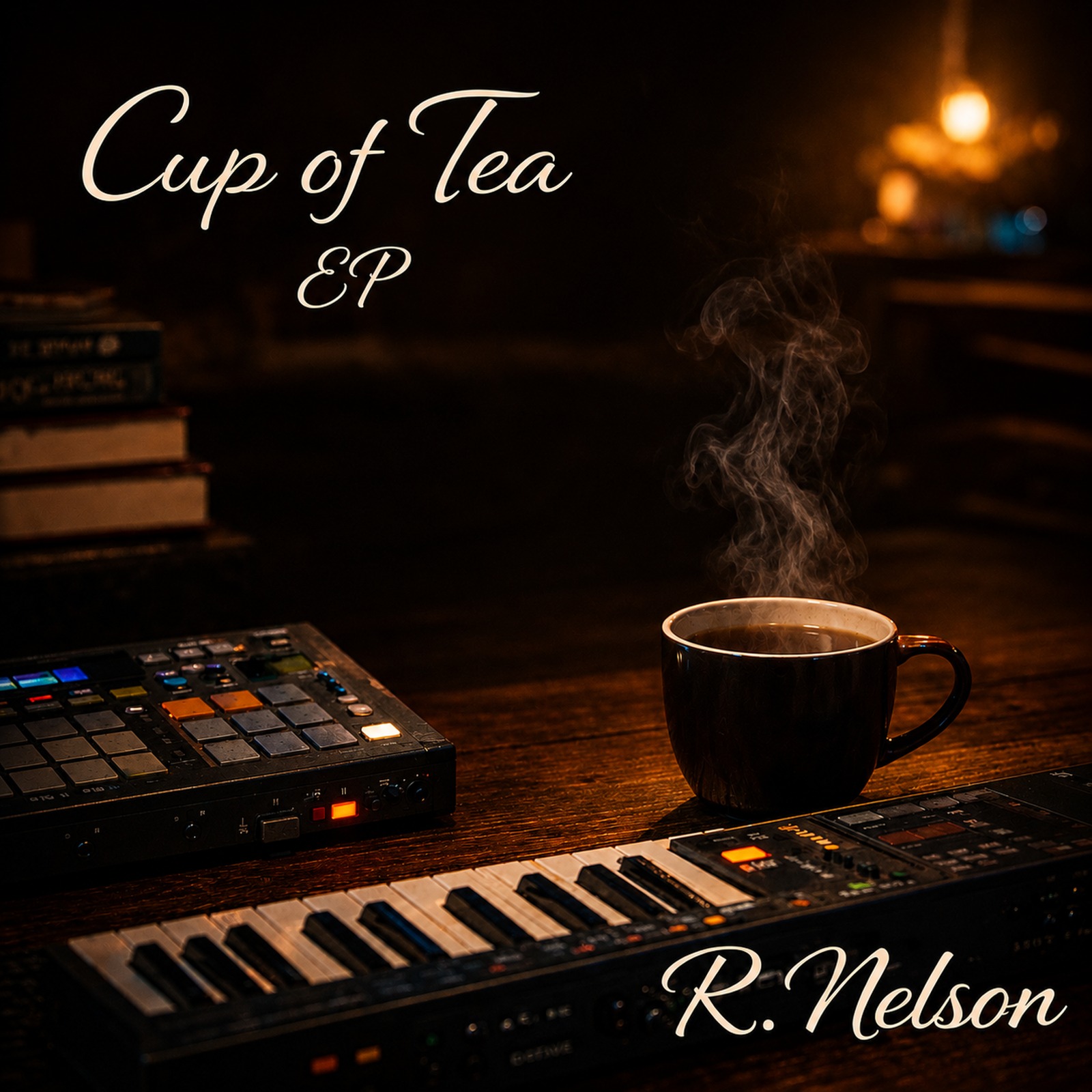
R. Nelson’s “Cup Of Tea EP,” released on August 28, 2026, takes a single song from his album Songs and Music by R. Nelson, Vol. 1: Grown Man Energy and turns it into a six-track study of the same idea from different angles. The Washington, D.C. artist, songwriter and producer built the project around “Cup Of Tea,” then used that original recording as a starting point for alternate versions, an answering voice, an extended relationship narrative and a genre-crossing feature. R. Nelson isn’t simply repackaging one performance under new titles here; he treats “Cup Of Tea” as a premise that can be argued with, answered, and carried into someone else’s musical world without losing what made it recognizable.
Two alternate versions of the original recording open the EP’s tracklist before the project shifts into the four songs examined here: “You’re My Cup Of Tea,” written from the other side of the attraction described in the original; “Perfectly Steeped (Two Cups of Tea),” which follows that response into a fuller account of two people meeting each other halfway; and “I Didn’t Change, I Expanded.,” a closing collaboration with fellow Ashy Knuckle Productions artist Geese Da Goon that carries the EP’s ideas about identity into a different genre altogether. Across these four songs, R. Nelson’s R&B and neo-soul instincts stay recognizable even as the vocal character, arrangement and emotional register shift from one to the next.
Cup Of Tea:
“Cup Of Tea” opens the EP in its most guarded state, built on soft keyboard chords, a simple drum pattern and a prominent bassline that R. Nelson lets settle before his voice enters. The song works through romantic insecurity in real time. It doesn’t treat confidence as a finished state; it questions whether admiration and attraction are enough on their own, and arrives at the idea that being loved doesn’t require becoming a different person. The vocal is warm, rich and full-bodied, delivered in a conversational, storytelling register that stays controlled even as the writing turns reflective. That control matters: the song never raises its voice to prove the feeling is real, so when the vocal opens slightly through the chorus and again in the final chorus, the shift feels like a genuine release of tension, not a rehearsed climax.
The arrangement stays minimal and spacious by design, giving the bass and keyboard room to define the song’s mood instead of competing for attention. The bass itself is deep, warm and melodic, with enough groove to carry a slow, steady pace without needing percussion to drive it. Drums stay tight and controlled, filling in rhythm without pushing the tempo, while the keyboard adds warmth and texture underneath the vocal instead of taking a lead role. The production is clean and warm instead of showy, which suits a song built on self-questioning: nothing in the mix distracts from the admission at its center. Heard on headphones or late at night, “Cup Of Tea” plays less like a pickup line and more like someone thinking out loud about whether they’re enough, a fitting opening statement for an EP about to hand that same question to other voices.
You’re My Cup Of Tea:
Where the original song sits with one person’s doubt, “You’re My Cup Of Tea” answers it. Framed as a response written from the other side of that attraction, the track turns the title’s compliment into a statement, not a question. The writing leans into romantic love, trust and reconciliation, and the vocal performance matches that shift in confidence: still warm, rich and smooth, but now captivating and distinctive, no longer withheld, delivered with a controlled, tender passion that reads as certain instead of searching. The emotional peak again arrives at the chorus and returns in the final chorus, but here it feels like an answer landing, not a confession building.
Instrumentally, “You’re My Cup Of Tea” keeps the bass, drums and keyboard from the original but layers them more richly, with electronic textures widening the arrangement without crowding it. The bass stays deep, warm and groovy, the drums stay controlled and dynamic, and the keyboard now carries melody as well as atmosphere, giving the track a fuller, more spacious feel than its predecessor. The pacing stays relaxed and moderate, never urgent, which keeps the song’s confidence sounding earned instead of performed. Where “Cup Of Tea” left a question hanging, “You’re My Cup Of Tea” answers it inside the same warm, intimate production style, closing the emotional gap the EP opened with its first song.
Perfectly Steeped (Two Cups of Tea):
“Perfectly Steeped (Two Cups of Tea)” is where R. Nelson pushes the EP’s tea metaphor furthest, using it to describe patience, compatibility and timing, not just attraction. Framed as the next step after the original song and its response, the track imagines two people meeting each other emotionally and finding that their differences work in each other’s favor instead of pulling them apart. The lyrics lean on storytelling, imagery and symbolism more than the two songs before it, and the vocal performance follows suit: still smooth and full-bodied, but now paired with acoustic guitar that adds a melodic, textured quality the EP hasn’t used yet. The delivery stays soulful and expressive, with the emotional peak again landing at the chorus and final chorus, but the writing itself covers more ground, touching on reconciliation, forgiveness and acceptance in a way the first two songs only gestured toward.
The arrangement backs that broader scope with the EP’s richest instrumentation so far: guitar, bass, drums and keyboard working together, with the guitar handling melodic phrases while the rhythm section keeps a punchy, driving groove underneath. The bass trades some of the earlier smoothness for more punch, and the drums pick up energy without losing control, giving the song a livelier, more forward pace than the two tracks before it. Structurally, it’s also the first song on the EP built around real contrast and surprise instead of one steady build, which fits a track that’s explicitly about two different people finding a way to fit together. The result is the most fully realized version of the EP’s central idea: two cups, differently steeped, working as a pair, not a repeat.
I Didn’t Change, I Expanded. (feat. Geese Da Goon):
“I Didn’t Change, I Expanded.” closes the EP by taking its ideas about identity somewhere the first three songs don’t go. Also appearing as the closing track on Geese Da Goon’s Outside EP, the song sits inside a hip-hop and rap framework, with RJ Nelson credited for lyrics, composition, drum machine and production alongside R. Nelson’s featured vocal. The title reframes personal growth as addition, not transformation. Becoming more of yourself isn’t the same as becoming someone else, and that message runs through lyrics built on storytelling, word choice and creativity in equal measure. The vocal performance changes accordingly: bright, dark and raspy where the earlier songs stayed warm, delivered with a raw, aggressive edge that has more in common with the source project’s hip-hop setting than with the EP’s earlier R&B-leaning songs.
The production follows the same shift in character, trading the earlier tracks’ warm intimacy for something rawer, more vintage-inspired and more experimental. Acoustic and electric guitar, bass, drums, synths and electronic textures all appear together, with the drums turning aggressive and complex where the rest of the EP stayed controlled, and the pacing shifting between moderate, energetic and fast-paced sections instead of holding one steady tempo. That structural restlessness suits a feature built on collaboration: the song reaches its emotional peak as early as the first verse and again at the chorus and final chorus, giving it more turns than anything else on the EP. As a closing statement, “I Didn’t Change, I Expanded.” argues that identity can travel into someone else’s musical world, and someone else’s genre, without losing what made it recognizable. That, in miniature, is the whole premise of Cup Of Tea.
Cup Of Tea Turns One Guarded Confession Into A Four-Part Conversation About Trust, Timing And What It Means To Expand Without Losing Yourself.
~ Daniel (DULAXI Team).
Operating independently through Ashy Knuckle Productions as part of his wider Nelson Creative Group, R. Nelson built Cup Of Tea on the same instincts that have carried releases like “Gravity,” “Why Are You So Beautiful?” and “Do I Deserve Love?”: reflective storytelling paired with production that leaves space for the emotion to sit instead of rushing past it. What sets this EP apart within that catalog is its structure: four versions of one idea, progressing from private doubt to public reconciliation, then out into a collaboration that tests whether R. Nelson’s musical identity holds up outside his usual genre. By the closing feature with Geese Da Goon, it clearly does. Cup Of Tea doesn’t just repeat a good song four times; it lets that song expand into a fuller, four-sided account of what it takes to be loved as you are.