
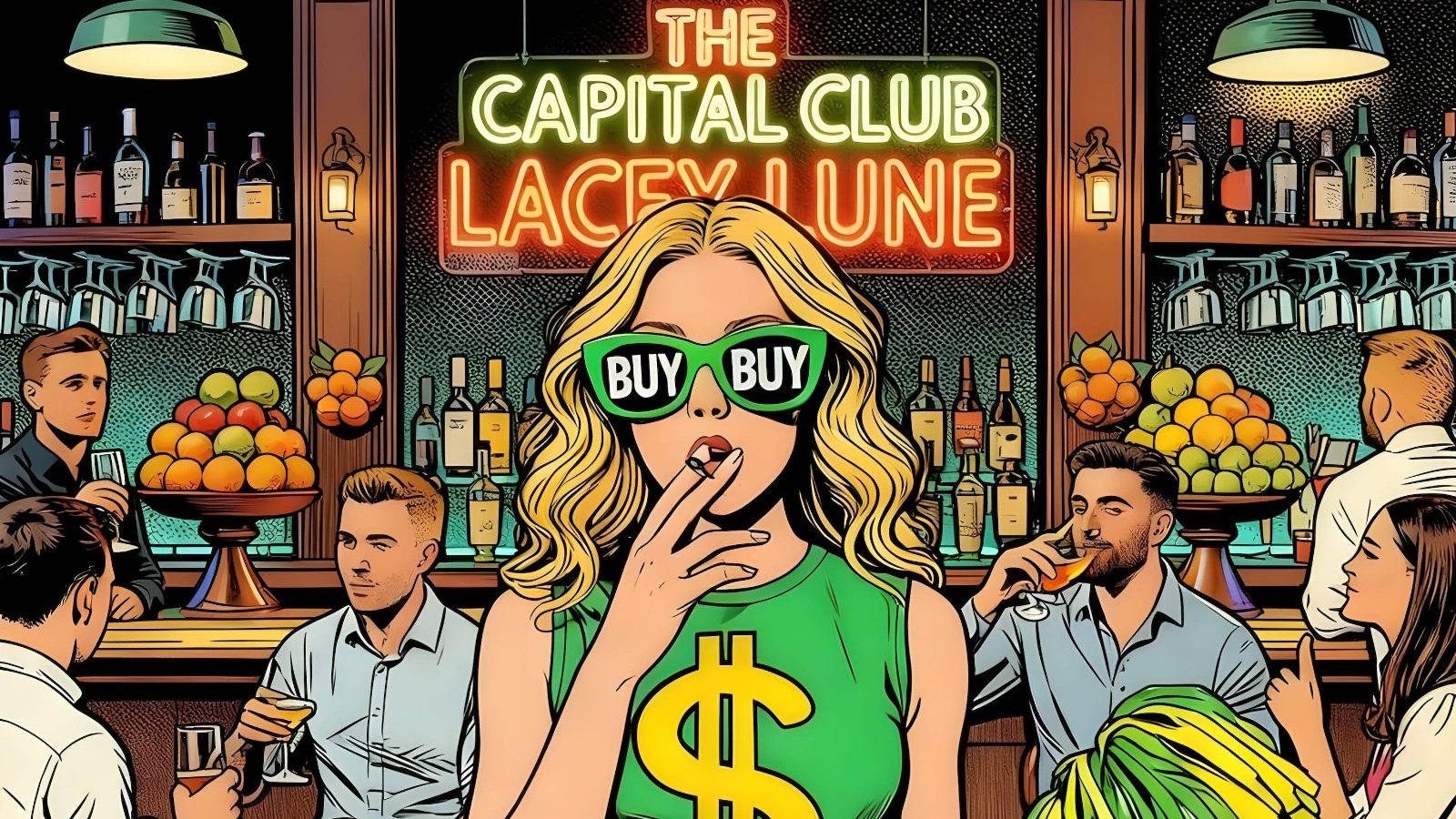
Released on October 1st, 2026, “The Capital Club” is an original album by Los Angeles based artist Lacey Lune, offering a striking exploration of identity, commercial culture, and the growing pressure to make personal experiences publicly consumable. Moving through skewed art pop, noir electronics, bruised balladry, and spoken word satire, the album examines how branding, empowerment, therapy, sexuality, sobriety, and self care have become entangled with the language of modern capitalism. Lune approaches these subjects with humor, melody, and deliberate discomfort, creating a record that challenges listeners to consider the cost of turning private life into a marketable identity.
At the heart of the album is the idea that vulnerability can become a form of currency. Personal struggles, emotional wounds, and moments of self discovery are presented within a culture that constantly encourages people to package their experiences for public consumption. Lune explores this contradiction through a conceptual narrative framed by the three part sequence “Nothing Feels Normal Anymore.” Within this world, grief becomes content, the body becomes a storefront, and even a personal crisis seems capable of attracting commercial interest. The album transforms these observations into an engaging artistic statement about the boundaries between authentic self expression and the pressure to remain marketable.
The Capital Club Album Track Reviews;
Remind Me, How Much Are We Talking About?:
“Remind Me, How Much Are We Talking About?” by Lacey Lune establishes the satirical spirit of “The Capital Club” through a compelling blend of minimalist electronics and deadpan vocal delivery. The track opens with a clinical, looping synth bassline accompanied by sparse metallic percussion, creating a mechanical atmosphere that reflects the cold calculations behind commercializing human experiences. Subtle ambient pads gradually introduce an unsettling undertone, adding emotional tension to the restrained production. Lune delivers her lines through a half spoken, conversational style, using dry, breathy vocals and deliberate inflections to sharpen the song’s biting observations. Rather than relying on powerful belting, she commands attention through measured phrasing and understated expression. As robotic, pitch shifted backing harmonies emerge, the production reinforces the idea that vulnerability can become a commodity. With its witty yet furious commentary on bodies, trauma, empowerment, and profit, the track presents a memorable statement about the price of turning identity into business.
The Girlfriend Experience with Knife Skills:
“The Girlfriend Experience with Knife Skills” finds Lacey Lune exploring the darker, more theatrical side of “The Capital Club,” combining cabaret inspired piano chords with unsettling electronic textures. A plucking upright bass establishes a stark foundation, while jagged synthesizer stabs introduce sharp bursts of tension. Beneath these elements, ticking percussion creates a persistent sense of urgency, reflecting the song’s examination of intimacy shaped by expectations, performance, and commercial exchange. Lune delivers an expressive vocal performance, moving between disarming whispers and a sharper, mocking upper register. Her precise phrasing gives each line theatrical intensity, allowing irony to emerge through subtle changes in tone and delivery. Double tracked harmonies add an eerie dimension, weaving sinister counter melodies beneath the lead vocal. Meanwhile, panning effects shift her voice between the speakers, reinforcing the unsettling feeling of constant observation and evaluation. Through its dramatic instrumentation and carefully controlled vocals, the track presents a captivating portrait of intimacy transformed into a calculated transaction.
What Do I Already Know?:
“What Do I Already Know?” featuring Anton Donovan reveals a more vulnerable dimension of Lacey Lune’s “The Capital Club,” serving as a psychological centerpiece shaped by emotional exhaustion and internal conflict. Its lush, mid-tempo electronic pop production balances shimmering synth arpeggios with a deep, pulsing kick drum, creating an immersive atmosphere that feels both expansive and confining. Delayed electric guitar lines drift through the arrangement, adding a nostalgic indie pop quality that deepens the song’s melancholic character. Lune delivers a bruised, expressive vocal performance, using her rich alto register and fragile phrasing to convey the weight of confronting uncomfortable truths. Her slightly cracking high notes add emotional sincerity, revealing a departure from the album’s sharper satirical approach. Anton Donovan’s warm baritone harmonies complement her voice, creating a compelling contrast between awareness and avoidance. Together, their performances capture the tension between recognizing personal realities and seeking refuge in distractions, making the track a deeply affecting exploration of emotional vulnerability.
Every Cynic’s a Wounded Romantic:
“Every Cynic’s a Wounded Romantic” reveals a deeply tender side of Lacey Lune, shifting away from the direct satire of “The Capital Club” into an emotionally rich electronic ballad. The track opens with a melancholic acoustic melody enveloped in reverb, gradually introducing cinematic synthesizer strings and a slow, echoing drum machine pulse. Spacious production allows sustained chords to linger, emphasizing the weight of unresolved feelings and the persistence of idealism beneath emotional defenses. Lune delivers one of her most moving vocal performances, beginning with an intimate, breathy head voice before rising into a passionate, soaring refrain. Natural vocal breaks and subtle sighs preserve the honesty of her delivery, making the song feel like an unguarded confession. Layered harmonies expand around her voice, creating a choir like atmosphere that intensifies the emotional release. Through its gradual arrangement and vulnerable expression, the track reveals the wounded romantic hidden beneath cynicism, celebrating the tenderness that survives disappointment and emotional self protection.
Musically, “The Capital Club” thrives on contrasts that reflect its complicated subject matter. Skewed electronic pop provides an unconventional foundation, while glam inspired abrasion introduces flashes of theatrical intensity. Bruised balladry brings emotional weight, allowing the more intimate dimensions of the album to emerge alongside its sharper satirical moments. Spoken word passages further expand the record’s expressive range, giving Lune room to question familiar cultural messages through pointed observations and self aware humor. Bright hooks keep the music accessible, even as unstable arrangements and shifting styles prevent it from settling into predictable territory.
Lune’s multifaceted presentation strengthens the album’s conceptual direction. She moves between the roles of chanteuse, labor organizer, commodity, motivational speaker, unreliable narrator, and saboteur, revealing how easily identity can become a performance shaped by external expectations. The result is political without depending on slogans and funny without dismissing the pain beneath its observations. Rather than offering simple answers, the album embraces contradiction, allowing its melodies and theatrical shifts to communicate the tension between personal freedom and commercial influence.
The Capital Club Is A Genre Fluid Pop Album Blending Satire, Noir Electronics, Bruised Balladry, And Vulnerable Storytelling To Explore Identity, Capitalism, And Emotional Freedom
~ Faithfulness (Dulaxi Team)
These qualities reflect the distinctive artistic identity of Lacey Lune, the alter ego of Jessica Rae Lundstrom, a former Mormon foster child from San Diego. Her established blend of retro soul, glam pop, noir electronics, and emotionally exposed songwriting finds a particularly cohesive purpose here. With “The Capital Club,” Lune brings those contrasting influences together to examine what capitalism asks women to sell, while holding space for the parts of themselves that remain beyond its reach. The album ultimately stands as a compelling, genre fluid statement about protecting one’s identity in a world determined to put a price on everything.
For more information about Lacey Lune, click on the icons below.