
Hello everyone, it’s your host Oliver from DULAXI, and today I’m delighted to be joined by Conchis, the Finnish electronic alt-pop artist whose music exists in the space between experimental pop, dense electronics, intimate vocals, and emotionally charged storytelling. Based in Helsinki, Finland, Conchis returns with “Under Your Feathers,” the second single from her forthcoming album Gravity, released on August 21, 2026.
Born from a period of severe physical collapse caused by ME/CFS, “Under Your Feathers” is a deeply personal piece about seeking protection, healing, and reassurance when circumstances become larger than what one person can carry alone. Before we begin our conversation with Conchis, here’s what you need to know about today’s featured project.
About Conchis
Growing up in the Finnish countryside, Conchis developed a private creative world around music and art from an exceptionally young age. She began singing before she could speak, started learning violin at seven, joined a choir shortly afterwards, and later discovered a stronger connection with guitar during her teenage years. Songwriting eventually became a particularly important form of expression after the death of her mother when she was fifteen, giving her a way to process emotions and major experiences that she could not otherwise articulate.
Her journey eventually moved through band work and into her solo project, where she adopted the name Conchis, inspired by the enigmatic character of John Fowles’ The Magus. The choice reflects an artistic identity drawn toward mystery, psychological unease, symbolism, and the feeling that something darker may exist beneath an apparently brighter surface.
That tension has become central to Conchis’ music. Her work combines electronic textures, experimental pop, dark sonic environments, melodic hooks, and intimate vocal lines, often placing contrasting elements beside one another. Beauty can exist beside discomfort, hope beside resignation, complexity beside simplicity, and fragility beside force. Her professional background as an art director also informs this approach, giving her a natural interest in constructing complete artistic worlds rather than treating music as an isolated experience.
Her debut album, Chapters, released through Kieku Records in 2024, explored loss, yearning, and psychological fragmentation and received strong critical attention. Its reception established Conchis as an artist with a distinctive approach to electronic songwriting, while subsequent music, including the single “Streetlights,” continued to develop that identity.
Now she is entering a new chapter with Gravity, a 12-track album due in fall 2026. The circumstances behind its creation are unlike those of a conventional recording project. During a severe ME/CFS crash, Conchis spent months confined to the bathroom floor and was unable to use traditional creative tools. She could not record voice memos, write anything down, or work with instruments in the usual way. Instead, she composed the music entirely inside her mind, constructing lyrics, melodies, basslines, chord progressions, percussion, and even imagined sounds in silence.
“Under Your Feathers” emerged from that extraordinary period. Written both for herself and a musician friend experiencing a similar struggle, the song became a plea for protection and healing. Its emotional centre is rooted in the experience of two people confronting prolonged illness, isolation, disrupted creative lives, and the uncertainty of waiting for circumstances to change.
Having this brief introduction to today’s featured project, I’m sure both new listeners and longtime fans are excited to hear directly from Conchis. So, without further ado, let’s begin today’s interview.
INTERVIEW SESSION
Oliver:
Growing up in the Finnish countryside, you discovered music at a very young age, singing before you could even speak and later learning violin, joining a choir, and writing songs on guitar. Looking back now, which childhood experiences laid the strongest foundation for the artist you have become today?
Conchis:
I think it was the fact that there was always music playing in the background at our house, or something artistic going on, such as Dad painting surreal oil paintings or me and my sisters drawing. Mom and Dad encouraged us to choose an instrument early on, and before that, we attended a music play school. Although I chose the violin, it never really felt like my instrument. I was much happier practising the guitar when my sister got one when I was thirteen. It sounded much better to me and was closer to the kind of music I was interested in. At first, I just played other artists’ songs, but after Mom died when I was fifteen, I found that I had so many emotions inside me that I couldn’t express otherwise, so they came out as a song. After that, songwriting became a kind of coping mechanism and therapeutic process. I would always write a song about some major event that had happened in my life, especially things I had been thinking about a lot.
Oliver:
Before listeners discovered your music, there was a person navigating life, creativity, and personal challenges behind the scenes. What moments in your journey have shaped your outlook the most, both as an individual and as an artist?
Conchis:
The challenges have shaped me the most, for sure. When I was younger, I thought I could manage anything and always kept pushing past my limits, until my body couldn’t take it anymore and I had a burnout. And once I had one burnout, it became easier to get another. I ended up having four burnouts before eventually falling ill with ME/CFS. Those experiences have all forced me to pause, accept that I have limits, and change the way I work. Nowadays, I can’t work for as long as I would like, diving into a project for the whole day. I have to ration my energy, working a few hours here and a few hours there. But it has actually been a blessing for my creative process: I hear things with fresh ears and avoid overworking tracks in the wrong direction.
The other thing that has shaped me is that I’m an art director by profession, so I tend to think about projects from both the visual and the aural side. I like building whole worlds and thinking about them conceptually. I admire artists such as Björk and Fever Ray, who do exactly that. I wish I had a slightly bigger budget in the future so I could go even further in that direction. Not every idea I have now is doable within my budget.
Oliver:
You chose the name “Conchis,” inspired by the mysterious character from The Magus by John Fowles. What drew you to that character, and how does the name reflect the artistic identity and emotional world you continue to build through your music?
Conchis:
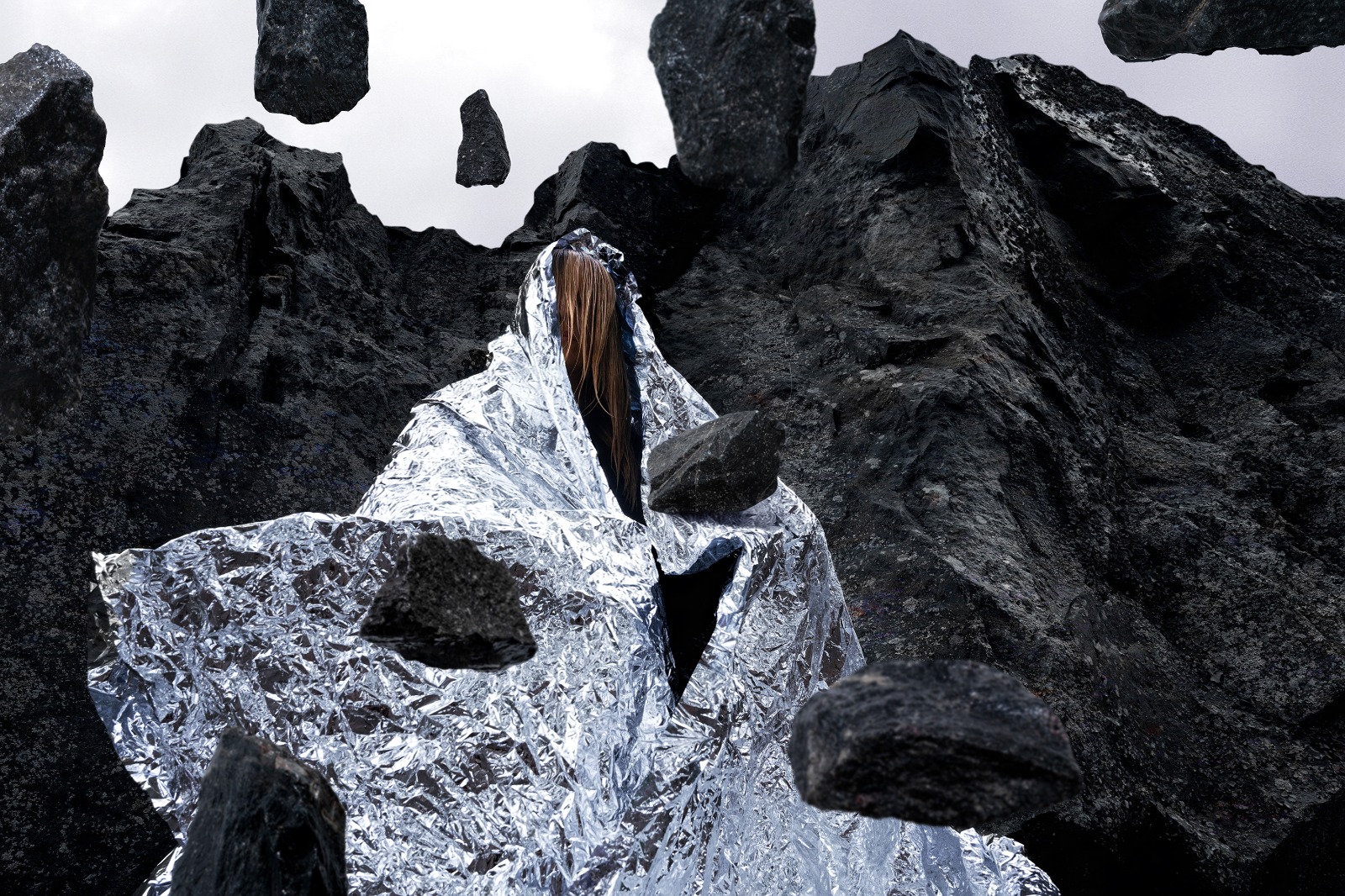
I thought the character Conchis was so intriguing: he was a master manipulator, playing psychological mind games at the expense of other people; he was a wealthy recluse and a mysterious person all in all. He embodied the uneasy feeling I tend to gravitate towards in my music – that something is a bit off, but you can’t really put your finger on it, and that there’s a darkness running underneath it all despite it being disguised as something more uplifting. I also like the mysterious aspect of the character, like not showing my face or revealing my identity.
Oliver:
Your music exists in a space where experimental pop, electronic production, and deeply intimate storytelling meet. Rather than following genre expectations, you seem to create your own emotional landscape. How would you describe the artistic vision that guides every project you release?
Conchis:
When I started making music as Conchis, I decided that I wasn’t going to censor myself at all – that I was just going to make whatever came out of me naturally. So far, that strategy has worked pretty well. I tend to gravitate towards quite bass-heavy material, and I like using more experimental samples and sounds that have character. I like to combine opposites – for example, if the percussion is very complex, then the vocal melody can be quite simple, or if the drums are gritty, then there can be a beautiful synth pad thrown in somewhere.
Oliver:
Across your work, there is a recurring balance between beauty and discomfort, hope and despair, fragility and strength. Why do these opposing emotional forces continue to fascinate you creatively, and what do they allow you to express that a more straightforward approach cannot?
Conchis:
I think that combining opposites creates a kind of tension that isn’t possible if all the elements belong to the same category. That’s exactly the unease you can’t quite put your finger on that I mentioned earlier.
Oliver:
Under Your Feathers carries an incredibly vulnerable emotional core, serving as a plea for protection and healing during one of the most difficult periods of your life. At what point did you realize this deeply personal experience had become a song that others might also find comfort in?
Conchis:
I can only write material that touches me and hope that others find comfort in it as well. When I played this track to my friends and my producer, I noticed that they connected with it too. But I guess it was when I was severely ill, having lived on the bathroom floor for a month and not being able to talk, walk, or do anything at all, that the lyrics and melodies came to me. I felt some sort of solace in the song myself. Usually, when that happens, the music has a better chance of hitting hard for someone else as well.
Oliver:
The upcoming album Gravity was conceived while you were living with severe ME/CFS, during a time when traditional music-making was no longer physically possible. Composing an entire album silently in your mind is an extraordinary creative achievement. How did that experience reshape the way you think about songwriting and creativity itself?
Conchis:
Before this happened, I usually wrote songs by experimenting – playing around with a riff, chords, or percussion, and then letting the melodies and lyrics grow from there. This time, lying on the bathroom floor in silence, the lyrics came to me first. Then the melodies, then the bass lines, chord progressions, and percussion. I even went so far as to imagine which sounds I would use for each element. It was a lot of material to hold strictly in my head, since I couldn’t even record voice memos or write anything down, and I ended up writing two albums like that. I had to run through the songs in my head every day so that I wouldn’t forget them. It taught me that I can compose a song from any starting point, and that my need to create is so strong that I do it regardless of the conditions. It made that whole bathroom-floor episode more bearable, because I could entertain myself in that way.
Oliver:
You have shared that this song was written not only for yourself but also for a close friend who was enduring a similar struggle, with both of you becoming each other’s support system. How did that shared experience influence the emotional honesty and compassion woven throughout Under Your Feathers?
Conchis:
It was a musician friend from another country whom I connected with online. From the start, we were really vulnerable and honest with each other. Since my other friends were busy with work and families, this was a friend who had as much spare time on his hands as I did, so we were able to message each other throughout the day. We shared the pain of not being able to make music in the same way we once had, and of our lives becoming an endless waiting game, hoping something would eventually shift for the better. It was easy to write this song for both of us, since it was something that was on my mind a lot. And because I wasn’t able to keep in touch with him during this period, this was my way of staying connected to him.

Oliver:
The title Under Your Feathers immediately evokes feelings of shelter, warmth, and protection. What does that image symbolize for you personally, and why did it become the perfect representation of the song’s emotional message?
Conchis:
I mostly thought of my mom, who has passed away. That she’s up there somewhere with her angel wings, able to protect me even though she’s not physically here anymore. On my debut album Chapters, I also wrote a song about her passing and referred to her wings, so I guess it’s something I associate with her. Although I don’t believe in God, the angel wings and heaven in this song felt appropriate.
Oliver:
Your lyrics often seem to explore psychological depth rather than offering simple answers, inviting listeners to sit with uncertainty instead of escaping it. When writing this song, how did you decide which emotions should remain subtle and which needed to be expressed with complete openness?
Conchis:
That wasn’t something I thought actively about. Instead, the lyrics came very naturally, and I did very little editing to them. I like it when some lyrical fragments are more poetic and mysterious, while others are almost blunt in their honesty. They reach you in very different ways: the blunt lines cut right through, while the poetic ones create a sense of longing.
Oliver:
Musically, the song unfolds through hopeful arpeggios, celestial synth textures, haunting basslines, and restrained percussion, creating an atmosphere where moments of light constantly coexist with emotional weight. How did you and your collaborators shape these contrasting sonic elements into such a cohesive listening experience?
Conchis:
It was quite easy once the song was ready in my head. When I was well enough to start recording, it all happened very quickly. I just executed my vision, and that was it. My producer Jonas Verwijnen didn’t touch the song’s arrangement, but he made the percussive sounds more experimental and interesting and tied everything together.
Oliver:
Even though the album was imagined entirely in silence, it ultimately became a richly layered and emotionally immersive body of work. What were the biggest challenges in translating the music you heard internally into recordings that accurately reflected your original vision?
Conchis:
It was actually easier than I expected. The biggest challenge was my energy – being able to work for long enough. And then there was finding the right sounds for the synths I had imagined. The rest went surprisingly smoothly. Some small things didn’t work quite as well as I had imagined, but those were minor issues.
Oliver:
Your debut album Chapters received remarkable critical acclaim, with many describing it as groundbreaking and emotionally powerful, while recent releases like Streetlights have continued to strengthen your reputation as a distinctive voice in alternative electronic music. How has that recognition influenced your confidence, expectations, or creative direction as you move into the Gravity era?
Conchis:
It’s always nice to get good feedback, but I’ve learned not to listen to it too much and just keep doing what I do. There’s always an uncertainty that comes with releasing new music: how will people receive it, and will they connect with it? Even if I got a lot of praise, the next album could get bashed. But the songs have come out of me regardless, and I need to get them out before I can continue with the next album. And people like such different material, so it’s impossible to make music based on how others might like it.
I like to think forward, already planning the next release. With Gravity, I feel that it’s an honest expression of what I was going through at the time, and in that sense, I’ve achieved my goal.
Oliver:
Many listeners who discover your music are likely carrying invisible struggles of their own. When someone finishes listening to Under Your Feathers, what emotions or sense of reassurance do you hope they leave with?
Conchis:
That they’re not alone in going through something difficult, and that eventually, something in their situation will change.
Oliver:
Throughout your career, your music has explored themes of emotional entrapment, endurance, transformation, and survival, yet each release seems to reveal a new layer of your artistic evolution. As Gravity prepares to arrive later this year, what do you hope this chapter will ultimately represent in your career, and where do you see your creative journey leading beyond this album?
Conchis:
I hope it will represent the difficult period I was going through, and that it’s honest to that experience. And that it was a turning point, when I transformed something painful into something good. I like doing that – taking something that was a negative experience and turning it into something positive. That makes it all worthwhile somehow.
As for what comes beyond this album, I already have the next albums ready, waiting to be produced and mixed. So as soon as Gravity comes out, we’ll start working on the next one with my producer, and I’ll dive more deeply into the visual concept of it all. I’m also writing a memoir as Conchis about my eventful life, my experience of falling ill, and writing this album. That has been a really rewarding thing to do.
I’m also looking forward to starting work on new music. I’ve got some new gear that I’m dying to try out, so I’m going back to experimenting and seeing where that takes me.
“Under Your Feathers” reveals how an artist can turn enforced stillness into movement, transforming an intensely private period of uncertainty into music that reaches outward with remarkable compassion and a quiet belief in the possibility of change.
~ Oliver (DULAXI Team)
EDITORIAL PERSPECTIVE
What stays with me about “Under Your Feathers” is the way Conchis allows vulnerability and restraint to occupy the same space. The electronic arrangement gives her intimate vocals room to breathe while its shifting textures create a sense of emotional suspension. More than anything, the song feels connected to her larger artistic philosophy: opposing forces do not need to cancel each other out. They can create the tension that gives a piece its identity.
~ Oliver (DULAXI Team)
CLOSING

Our conversation with Conchis offers a revealing look at the person and creative process behind “Under Your Feathers,” from her earliest relationship with music to the unusual circumstances through which Gravity was imagined and eventually brought into physical form. Her reflections also make clear how deeply songwriting has become connected to transformation, allowing difficult experiences to be processed, preserved, and ultimately reshaped into something meaningful.
Thank you to Conchis for taking the time to speak with DULAXI and for sharing such thoughtful insight into her music, her creative world, and the story behind Under Your Feathers. We encourage readers to spend time with the single and discover the emotional world she is building through Gravity.
And to everyone reading, thank you for spending this time with DULAXI. Continue following Conchis as she enters this new chapter, and stay with us for more conversations with artists whose stories and music deserve to be heard.