
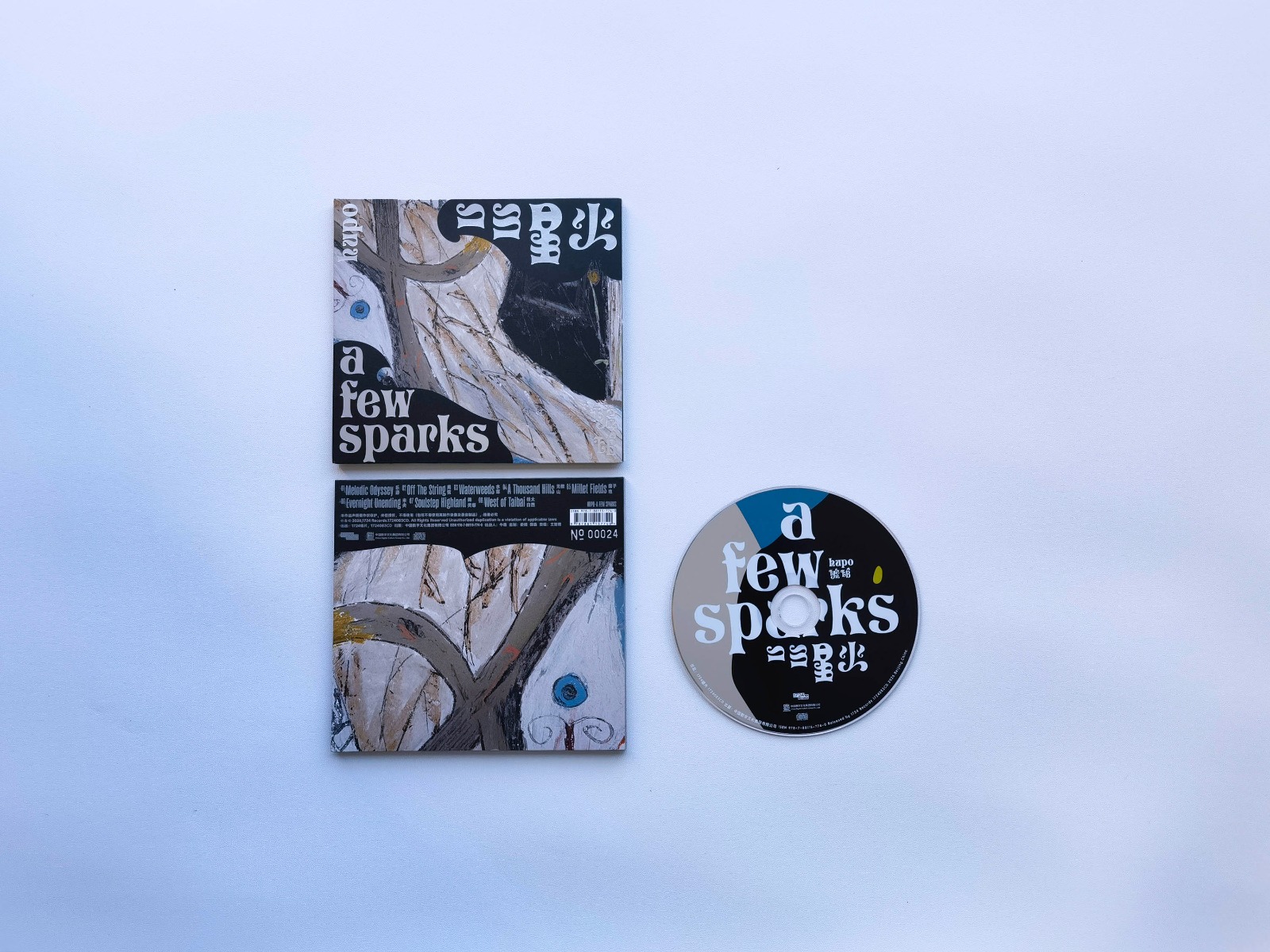
Hello everyone, it’s your host Oliver from DULAXI, and today I’m delighted to be joined by Hupo, the instrumental rock band from Xi’an, China, whose evolving sound has continued to explore the boundaries between post-rock, experimental textures, ambient landscapes, and instrumental storytelling.
Active since 2010, Hupo has built a distinctive identity through immersive compositions that blend cinematic arrangements with influences from different musical worlds. Their latest album, A Few Sparks, released on 14 June 2026, represents a major creative turning point for the band as they step beyond familiar territory and embrace a more open, exploratory approach to songwriting.
Before we begin our conversation with Hupo, here’s what you need to know about today’s featured project.
ABOUT HUPO
Formed in Xi’an, China, in 2010, Hupo has spent more than a decade developing a unique approach to instrumental rock. Across previous releases including The Hangover Star, Tides Within, and The Boundary of Time, the band established a reputation for creating expansive compositions built around atmosphere, dynamic movement, and carefully crafted instrumental narratives.
Rather than remaining within the boundaries of a single genre, Hupo’s music has always reflected curiosity and exploration. Their sound draws from post-rock, krautrock, ambient music, psychedelic influences, experimental approaches, and the cultural landscapes surrounding their home in Northwest China.
With A Few Sparks, the band entered a new creative phase. Instead of continuing the musical direction that had defined their earlier work, Hupo spent two years rebuilding their creative process from the ground up. The album became an opportunity to question old habits, explore unfamiliar sounds, and rediscover the excitement of creating together.
The record was shaped by long rehearsal sessions beside Xi’an’s ancient city wall, where the band experimented with new instruments, shared musical influences, and allowed ideas to develop naturally. The return of Yan Shuai, one of the band’s founding members, became an important part of this renewed creative journey, bringing together years of individual experiences and a shared history within Hupo.
Recorded through live performances rather than traditional layer-by-layer construction, A Few Sparks captures the chemistry and energy of the musicians playing together in real time. The album incorporates a wide range of textures, including synthesizers, traditional Chinese instruments such as the zhongruan, and contributions from guest musicians including Yaofan and others who helped expand the record’s sonic landscape.
Across its eight tracks and hour-long runtime, the album moves through hypnotic grooves, meditative passages, psychedelic textures, folk-inspired moments, and expansive instrumental sections. Inspired by the landscapes, memories, and history of Northwest China, the record reflects themes of movement, transformation, connection, and beginning again.
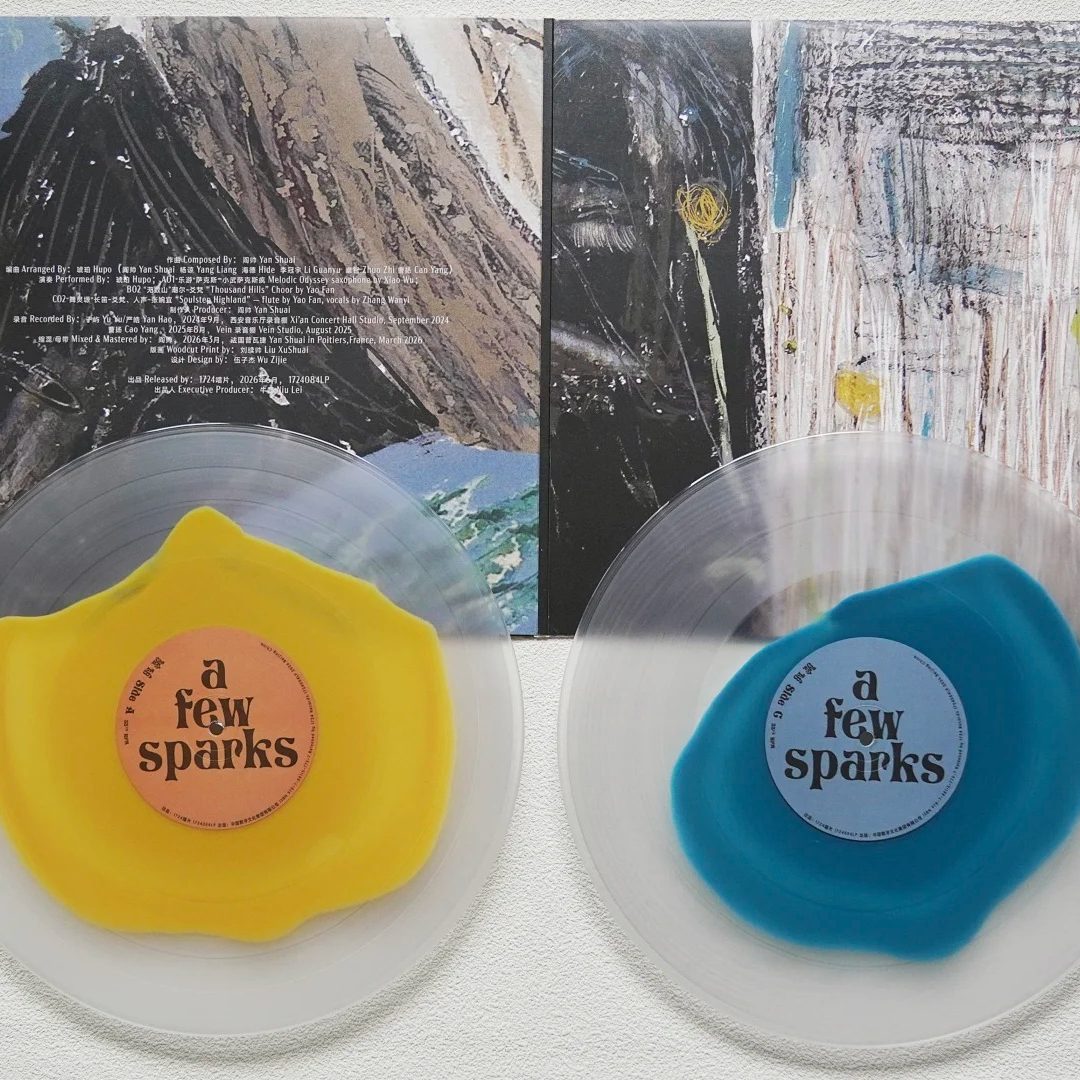
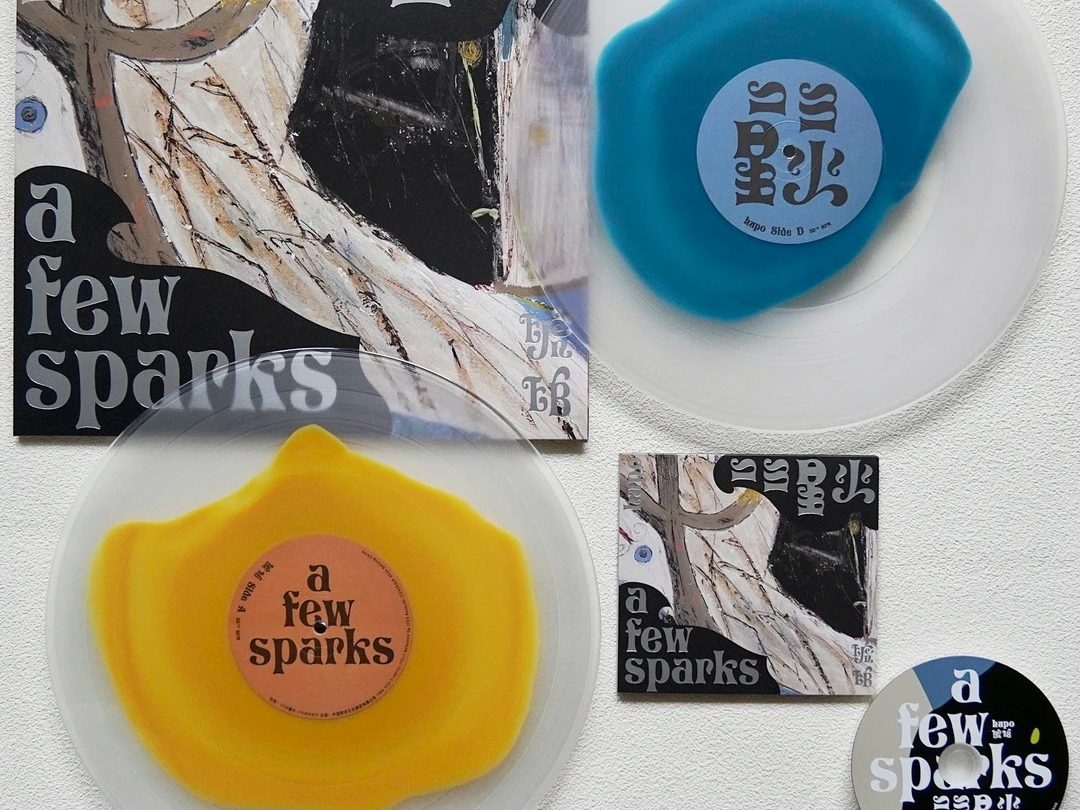
Following the album’s release, Hupo has continued sharing this new chapter with audiences through their 2026 China tour, while physical editions of the album, including limited CD and double vinyl releases, have introduced another way for listeners to experience the project.
Having this brief introduction to today’s featured project, I’m sure both new listeners and longtime fans are excited to hear directly from Hupo. So, without further ado, let’s begin today’s interview.
INTERVIEW SESSION
Oliver:
Hupo has been making music since 2010, evolving through different lineups, creative phases, and personal transformations. Before we dive into A Few Sparks, I’d love to know more about the people behind the band. What early experiences, influences, or moments in life shaped each of you into the musicians you are today?
Hupo:
Before Hupo existed, most of us had already known each other for years. We were involved in different bands and musical projects, exploring different directions, but we shared one important feeling: words sometimes limited expression more than they expanded it. Instead of telling listeners exactly what to think, we wanted to leave room for imagination. That’s one of the reasons instrumental music became such a natural choice for us.
Another thing we shared was a love for warm, bright guitar tones with a strong sense of space. Those sounds became the foundation of our earliest writing. After nearly a year of intensive rehearsals and songwriting in Xi’an, we completed our debut album, The Star of Hangover, and Hupo officially began.
The following years brought lineup changes, personal journeys, and different musical experiences. After Yan Shuai left China, the band continued releasing two more albums while welcoming new members who each brought something unique. When Yan returned to Xi’an in 2024, it felt less like a reunion and more like the beginning of a completely new chapter. With our current five-piece lineup, we probably understand each other better than ever before.
Oliver:
Over the years, Hupo has developed a sound that blends post-rock, experimental textures, ambient elements, and influences from many different musical worlds. How would you describe Hupo’s identity today, and how has it evolved from the band’s earliest years to A Few Sparks?
Hupo:
If we had to describe Hupo today in one phrase, it would probably be remaining open.
We’ve never wanted to define ourselves by a single genre—whether that’s post-rock, psychedelic music, or anything else. To us, these are simply different languages rather than destinations. What really drives our music is the excitement of discovering new sounds, new ideas, and bringing together the different musical backgrounds each member carries.
During the two years we spent creating A Few Sparks, we worked almost every day in our rehearsal room beside Xi’an’s ancient city wall. We shared records, experimented with new instruments, explored unfamiliar sounds, and constantly challenged our own habits. Those creative moments became new shared memories.
What people hear on this album isn’t a stylistic decision—it’s simply the natural result of everything we’ve experienced together. More than hearing a genre, we hope listeners hear a band that continues to grow.
Oliver:
A Few Sparks represents a major creative turning point. What made Hupo realize it was time to abandon familiar methods and search for something completely new?
Hupo:
After Boundary of Time, we never stopped writing. We accumulated plenty of demos, but gradually we all arrived at the same feeling: although those songs were finished, they no longer reflected who we were.
So we made what seemed like a radical decision—we abandoned them all and started again from zero.
When Yan Shuai returned to Xi’an in 2024, we spent almost every day together in the rehearsal room. We shared music, practiced our instruments seriously again, and rediscovered the excitement of simply playing together. Bands like Squid and Le’clair, along with krautrock, psychedelic rock, ambient music, and many older records, became part of our conversations. The goal was never to imitate those artists. We simply wanted to recover our curiosity.
Eventually, we stopped asking ourselves, “What should Hupo sound like?” Instead, we asked a much simpler question:
“What do we genuinely want to play today?”
That single question changed everything.
Every piece on A Few Sparks grew from that freedom. Rather than continuing our past, the album documents the experience of beginning again.
Oliver:
The album feels deeply connected to exploration, movement, and the landscapes of Northwest China. Many songs evoke distance, memory, and discovery. How have the places around Xi’an and the region’s cultural atmosphere shaped the emotions behind A Few Sparks?
Hupo:
We’ve all spent most of our lives in Xi’an, so the place naturally shapes the way we create.
This region carries thousands of years of history, but it’s equally defined by its landscapes—from the Qinling Mountains and the Wei River to the vast open spaces of Northwest China. Those places have always surrounded us, and over time they’ve quietly found their way into our music.
Many of the album’s titles are taken directly from real locations, including Soulstep Highland, Westward to Taibai, and Wuling Plateau. They’re more than geographical references; they carry memories, history, and an emotional connection to the land we come from.
We never consciously set out to incorporate “Chinese elements.” They aren’t concepts we add—they’re simply part of our everyday lives. Naturally, they appear in our melodies, textures, and atmosphere, giving the album its own identity.
We believe every artist is ultimately shaped by the place where they grow.
Where we come from inevitably becomes part of who we are.
Oliver:
After many years, Yan Shuai returned to become an essential part of A Few Sparks. How did reuniting with an old friend and sharing the creative space again change the chemistry within Hupo?
Hupo:
Yan’s return wasn’t simply the return of a former member—it felt like reconnecting a creative relationship that had never completely disappeared.
Over the years, each of us had followed different paths. Some continued touring, some worked in recording studios, others explored new instruments or different ways of writing music. We all came back carrying new experiences.
Once rehearsals began, we realized something interesting. The trust we had built years ago was still there, but the way we communicated had completely changed. Nobody wanted to recreate the band we were ten years ago. Everyone was willing to let go of old habits and genuinely listen to each other’s ideas.
Many of the songs weren’t written by one person. They slowly grew inside the rehearsal room. Someone would introduce a small motif, another person would completely change its rhythm, someone else would add a sound we’d never used before, and eventually the music would find its own shape.
That process of trusting one another and constantly challenging each other became far more important than any original plan. Looking back, A Few Sparks feels like the first Hupo album that truly belongs to all five of us equally.
Oliver:
A Few Sparks feels like an album built around atmosphere and storytelling rather than lyrics. Without words, how do you express memory, emotion, and personal experience through melody, arrangement, and sound?
Hupo:
We’ve never believed instrumental music lacks expressive power.
In fact, we usually begin by imagining the emotional journey of the entire album before thinking about individual tracks. That’s why A Few Sparks, although written in two separate periods—five pieces in 2024 and three more a year later—still feels like one continuous narrative.
As for emotion, we rarely try to manufacture it deliberately. Most of the time, it simply grows out of the instruments themselves.
Sometimes it’s the voice of a traditional instrument. Sometimes it’s a repeating melody. Sometimes it’s just the amount of time a single chord is allowed to breathe. Those elements communicate emotion in much the same way a singer would, except they leave far more room for listeners to create their own interpretations.
We’ve always felt that having no lyrics doesn’t mean saying less.
Sometimes it allows people to discover even more.
Oliver:
Soulstep Highland explores memory, connection, and moving forward while carrying the past. What emotions inspired the piece, and what do you hope listeners discover within it?
Hupo:
Soulstep Highland was really the beginning of everything. It was the first piece we completed after deciding to start over.
Yan Shuai brought in the opening guitar riff during rehearsal, and almost immediately everyone began adding their own voice. There wasn’t much discussion—it simply felt natural, as if we’d rediscovered a shared rhythm after years apart.
For Heide, it also became the first song he created entirely with synthesizers instead of guitar. By shaping LFO movement, reverb, and evolving textures, he created an atmosphere that quietly connected every instrument inside the same sonic space.
The piece isn’t about telling one specific story.
It’s about letting go of the past, trusting each other again, and trusting music itself.
If listeners find a sense of freedom—or perhaps remember a moment in their own lives when they had to begin again—then the song has already fulfilled its purpose.
Oliver:
A Thousand Hills draws inspiration from wandering, courage, solitude, and the landscapes that shaped your imagination. How did combining instruments like the zhongruan and chao’er with rock instrumentation help express those deeper emotions?
Hupo:
A Thousand Hills always occupied a unique place on the album.
The entire composition actually began with the zhongruan. Its warm yet weathered tone immediately suggested something that guitars couldn’t quite express—a feeling of vast landscapes and quiet strength that perfectly matched our image of Northwest China.
The piece was also inspired by Li Bai’s Xia Ke Xing (“The Song of the Gallant”). Rather than portraying a particular hero, we wanted to capture a spirit: courage, solitude, resilience, and the quiet tragedy that often accompanies long journeys.
Once the arrangement was finished, we felt the music needed even more air and distance, so we invited our longtime friend Yaofan to perform the chao’er. The very first rehearsal confirmed it belonged there.
People sometimes ask whether we intentionally set out to blend traditional Chinese music with rock.
The truth is much simpler.
We’re always searching for the sound that best expresses a particular emotion. If that sound happens to come from a traditional instrument, then that’s naturally where the music leads us.

Oliver:
A Few Sparks moves through many musical worlds—from hypnotic grooves and psychedelic textures to ambient passages and expansive post-rock moments. How did you balance experimentation with maintaining a cohesive sixty-minute listening experience?
Hupo:
Before writing began, we made one promise to ourselves: this time, we wouldn’t draw stylistic boundaries.
That’s why the album explores many things we’d never attempted before—krautrock-inspired grooves, psychedelic textures, ambient spaces, improvisation, repetition, and much more.
But those styles were never our destination.
What really connects the album isn’t genre—it’s emotion.
Whether it’s the openness of Soulstep Highland, the quiet resilience of Waterweed, the dreamlike atmosphere of Millet Field, or the gradual momentum of Westward to Taibai, every piece reflects the same underlying theme: change, growth, and beginning again.
When we finally listened back to the completed album, the different influences no longer felt separate.
Perhaps what truly holds the record together isn’t the arrangements themselves, but the two years the five of us spent growing together.
Oliver:
Soulstep Highland explores time, memory, connection, and the feeling of carrying the past while continuing to move forward. What personal emotions or ideas inspired this piece, and what do you hope listeners discover along the way?
Hupo:
Soulstep Highland was actually one of the earliest pieces completed for the album, and in many ways it became an emotional key to everything that followed.
The first guitar motif immediately reminded us of opening a door and stepping into a dream. It carries a very relaxed quality, almost weightless, but beneath that calm surface is a strong sense of memory. During the recording, we intentionally avoided excessive arrangement or dramatic transitions. Every instrument entered naturally, leaving room for silence and breathing, allowing the music to unfold at its own pace.
The title also comes from our connection to Xi’an and the ancient Wulingyuan plateau, where generations of emperors were buried. We changed the Chinese character for “five” into the character for “dance.” We can’t return to the past, but perhaps we can still dance with the memories we carry.
We don’t expect every listener to interpret the piece in the same way. We simply hope it gives people enough space to slow down. Maybe it reminds someone of a place they’ve left behind. Maybe it helps them let go of something. Or maybe it simply offers a quiet moment during an otherwise noisy day.
Oliver:
A Thousand Hills draws inspiration from wandering, courage, solitude, and the landscapes that shaped your imagination. How did combining traditional Chinese instruments like the zhongruan and chao’er with rock instrumentation help express these deeper emotions?
Hupo:
A Thousand Hills is probably the most distinctive piece on the album.
The main melody was written on the zhongruan from the very beginning. Its warm yet weathered tone naturally evokes vast landscapes and long journeys. That sound immediately suggested the feeling of northwestern China—wind, mountains, deserts, distance—and also the spirit of the wandering hero found in classical Chinese literature.
The inspiration also comes from Li Bai’s Xia Ke Xing (The Ballad of the Gallant Knight). Rather than describing martial arts itself, we wanted to express the emotional weight behind courage, solitude, dignity, and perseverance.
After the arrangement was nearly finished, we felt another voice was needed to deepen the atmosphere. Our longtime friend Yaofan plays the chao’er, a traditional Mongolian wind instrument. We invited him into the rehearsal room, played through the song once together, and immediately knew it belonged there. Nothing felt forced—it simply completed the landscape that already existed in our minds.
Oliver:
The album travels through many musical worlds—from hypnotic grooves and psychedelic textures to ambient passages and expansive post-rock moments. How did Hupo balance experimentation with maintaining a cohesive flow across this hour-long record?
Hupo:
When we began writing A Few Sparks, we deliberately challenged ourselves not to repeat anything we had done before.
Each composition started from a different musical idea. Some grew from rhythmic grooves, others from traditional instruments, ambient textures, or repeated guitar patterns. We welcomed all of those possibilities rather than trying to make every song sound similar.
What ultimately holds the album together isn’t genre, but emotion. Throughout the record, there’s a continuous thread of exploration, distance, memory, and movement. Even though the songs were written across two separate creative periods nearly a year apart, they all came from the same mindset.
When we listened to the finished album from beginning to end, we realized those different musical languages had naturally become part of one larger narrative.
Oliver:
The recording sessions captured the band performing together live, creating a very different experience from building songs layer by layer. What did this process reveal about Hupo’s chemistry, communication, and ability to capture genuine moments in the studio?
Hupo:
Recording live together was producer Yan Shuai’s idea, and it completely changed the way we approached the album.
Before entering the studio, we rehearsed intensively for months. Every transition, every dynamic, every tone had already been discussed and refined, because we knew everyone had to perform together in a single take.
The recording took place inside the Xi’an Concert Hall. Because of microphone isolation, each of us stood in a different corner of the large hall. During recording, we could barely see one another, but after every successful take we’d simply look across the room and smile.
It felt as though the music itself connected everyone across the space.
Live recording also captures things that can never be recreated later—the atmosphere of the room, the humidity, the tension, the tiny imperfections, and the energy shared between musicians. Those details became part of the album, and we think listeners can feel that honesty.
Oliver:
Westward to Taibai became one of the most challenging pieces to record because of its structure and emotional complexity. What made this composition such an important creative challenge, and what did the band learn by overcoming it?
Hupo:
Many post-rock songs follow familiar “quiet-loud-quiet” structures. We wanted to move away from that.
Westward to Taibai became our attempt to build a piece through continuous motion instead of dramatic contrast. Individual riffs repeat and gradually overlap, creating momentum through accumulation rather than sudden explosions.
We also experimented with much dirtier guitar tones, intentionally allowing sections to blur together instead of remaining sharply defined.
Near the end, the drummer controls the entire band’s acceleration and deceleration, guiding everyone through tempo changes rather than fixed arrangements. That was something Hupo had never attempted before.
The song itself was largely born during one extended improvisation, and we’ve intentionally preserved that spirit. Even today, every live performance ends a little differently. The drummer decides how long the final passage lasts, while everyone else follows in real time.
That experience taught us to trust one another much more deeply.
Oliver:
Songs like Waterweed and Millet Field reveal another side of Hupo—embracing simplicity, freedom, and allowing ideas to grow naturally. How did learning to let go of expectations influence your songwriting and creativity on this record?
Hupo:
One of the biggest lessons during the making of A Few Sparks was learning to stop forcing ideas.
In the past, we sometimes tried to perfect every arrangement or consciously shape songs into a particular style. This time we allowed ourselves to follow the first instinct much more often.
Waterweed began with a simple guitar riff that immediately reminded us of aquatic plants drifting beneath the surface of a city moat. That single image guided the entire arrangement. Nothing needed to become more complicated than it already was.
Millet Field represents another kind of freedom. It encouraged us to abandon the labels that had followed Hupo for years. Instead of worrying about how listeners might define our music, we focused on making something that genuinely excited us.
Ironically, by letting go of expectations, the music became more honest than ever.
Oliver:
The creation of A Few Sparks involved disagreements, uncertainty, and moments when the band had to rethink its direction. Looking back, how did these challenges ultimately shape both the album and Hupo’s growth as artists?
Hupo:
Disagreement was an important part of this album.
Whenever someone introduced a new idea, there were debates, misunderstandings, even arguments. That was inevitable because everyone was trying to move beyond familiar territory.
Looking back, those moments weren’t obstacles—they became catalysts.
Every discussion forced us to understand each other’s perspectives more deeply. Every compromise strengthened our trust. The emotional tension inside the rehearsal room eventually found its way into the music itself.
If everything had been easy, the album probably wouldn’t sound the way it does today.
“A Few Sparks feels like a conversation between memory and discovery, where every instrument carries a fragment of Hupo’s journey and every composition opens a space for listeners to create their own meaning.”
~ Oliver (DULAXI Team)
MY EDITORIAL PERSPECTIVE
A Few Sparks represents the rare kind of artistic reinvention that comes from curiosity rather than necessity. Through its shifting textures, carefully considered arrangements, and fearless exploration of sound, Hupo creates a world where atmosphere becomes the storyteller. The album reflects a deep connection between place, memory, and collaboration, revealing a band willing to challenge itself while remaining emotionally grounded.
CLOSING
Thank you to Hupo for sharing the story behind A Few Sparks and giving us insight into the creative journey, challenges, and experiences that shaped this remarkable chapter of the band’s evolution.
Through this conversation, listeners can discover not only the ideas behind the music but also the passion, trust, and curiosity that continue to drive Hupo forward.
We encourage readers to experience A Few Sparks and explore the many layers within its instrumental landscapes. As Hupo continues their journey and brings these compositions to audiences through live performances, we look forward to seeing where their creativity leads next.
Thank you for spending time with DULAXI. Stay connected as we continue bringing you more conversations with inspiring artists from around the world.