
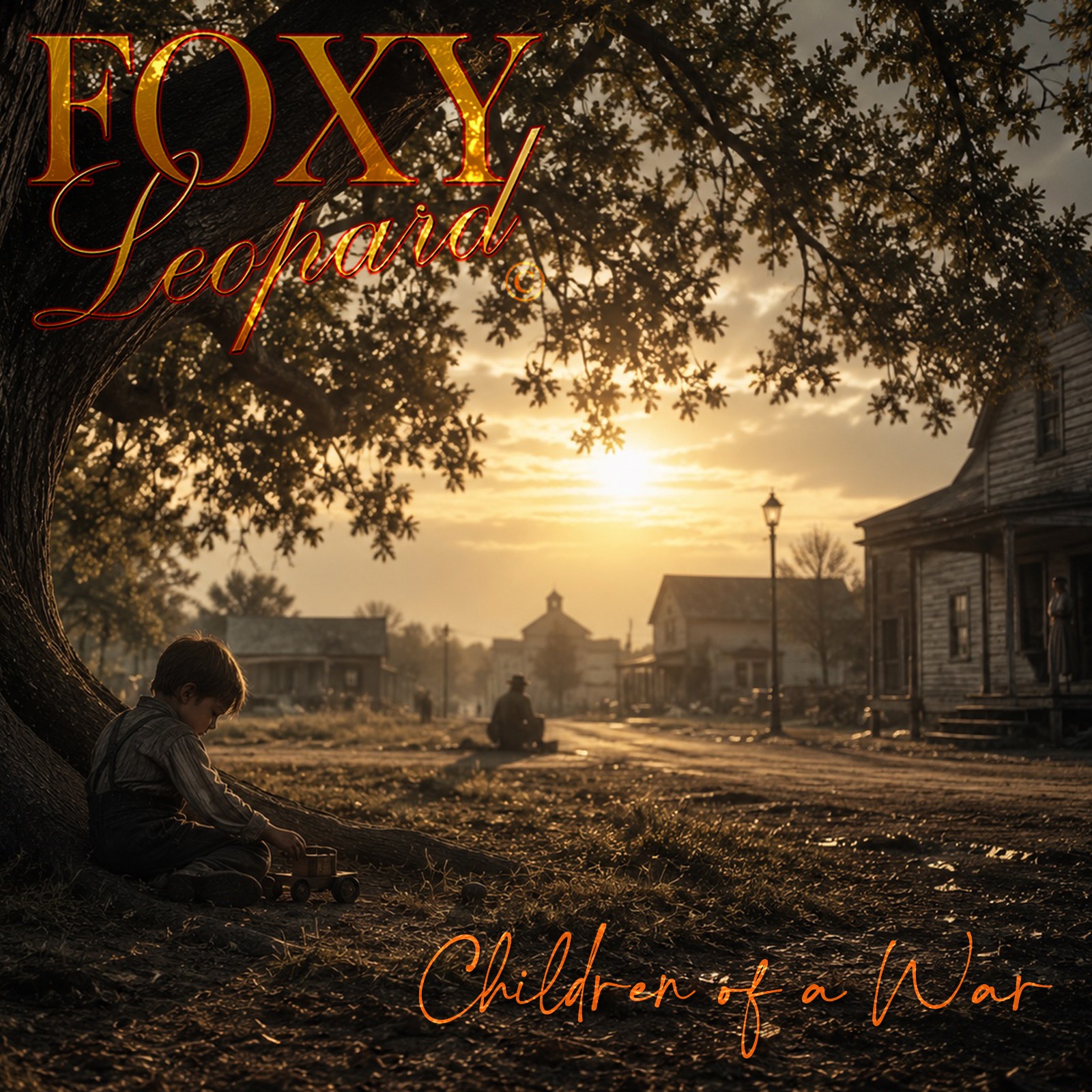
Hello everyone, it’s your host Oliver from DULAXI, and today I’m delighted to be joined by Foxy Leopard, the cinematic alt-country project from Quebec, Canada, for a conversation surrounding “Children of the War,” the flagship single from the upcoming album After, released on September 5, 2026.
Built around stripped-back storytelling, raw resonator guitar, intimate vocals and a distinctive use of AI-driven composition, Foxy Leopard creates music that looks beyond the battlefield and into the lives shaped by conflict. With a creative background that reaches back to the 90s dance club scene, the project brings together a very different musical vocabulary with a strong interest in historical storytelling and the emotional consequences of war.
Before we begin our conversation with Foxy Leopard, here’s what you need to know about today’s featured project.
About Foxy Leopard
Foxy Leopard is a cinematic alt-country project from Quebec, Canada, built around a narrative approach to music that treats each release as part of a larger world. Rather than approaching the American Civil War through battles, military figures or familiar historical milestones, the project focuses on the people who were left to live with the consequences. Farmers, families, children, soldiers and ordinary people become the centre of stories concerned with the gradual fracture of human connection and the things people inherit from conflicts they did not necessarily choose.
That perspective is at the heart of After, the upcoming album for which “Children of the War” serves as a defining piece. The song begins after the fighting has ended, asking what happens when the armies have gone home, the flags have been folded and society expects life to continue. Its central question, “Who are the children of the war?”, gradually expands beyond the literal generation born after conflict. The song considers anyone whose life has been shaped by poverty, trauma, prejudice, broken families, inherited divisions or other consequences originating in a conflict they did not start.
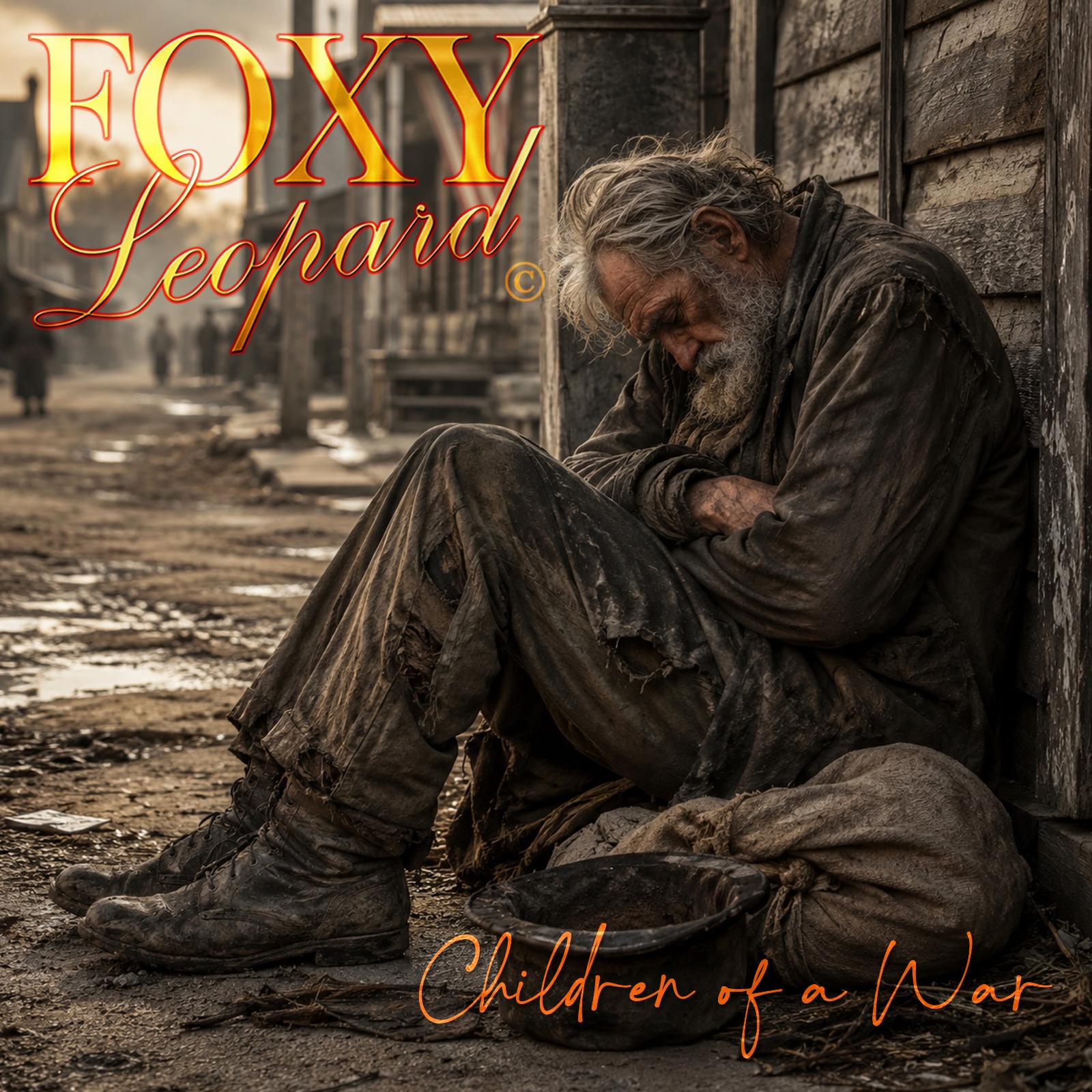
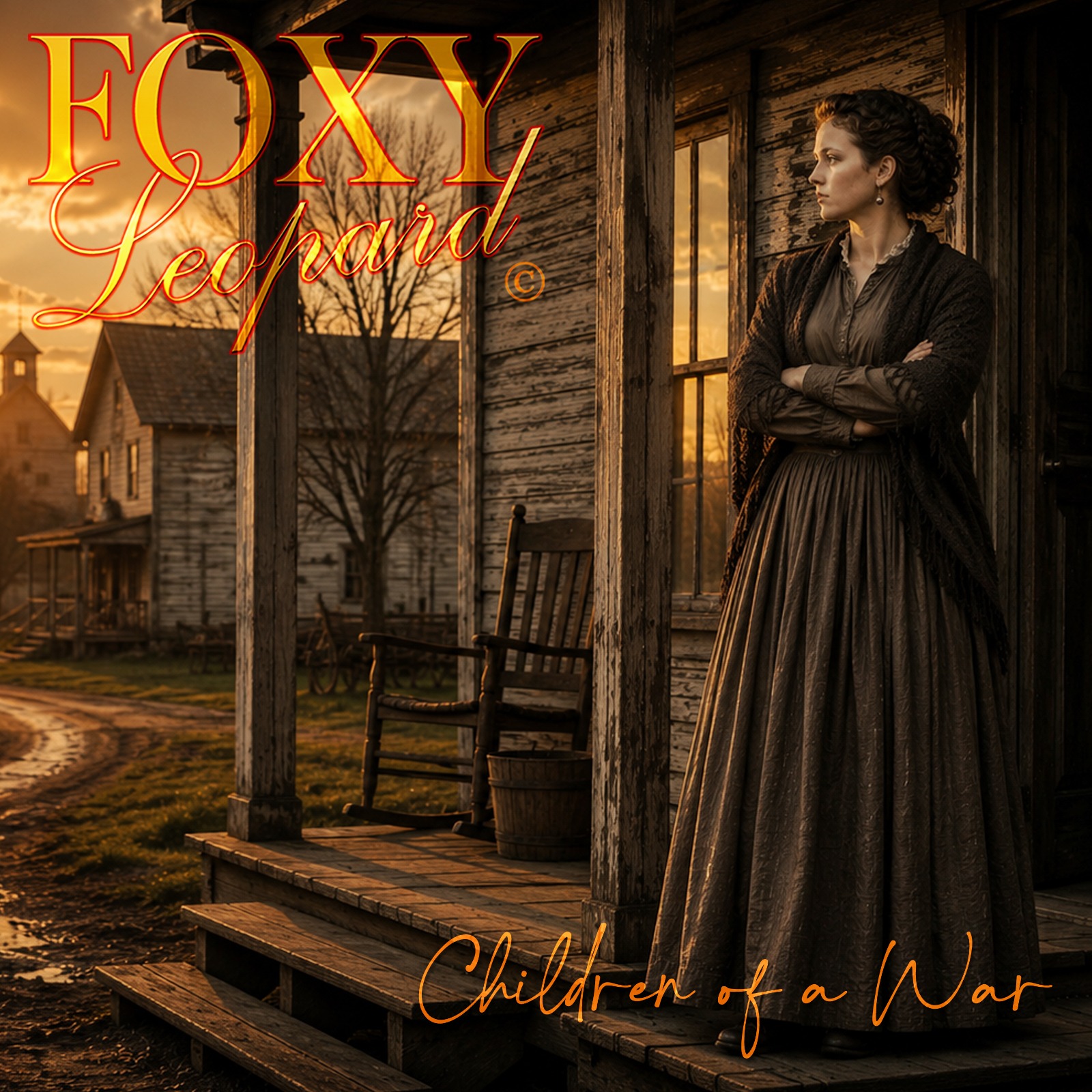
The story moves through several perspectives. An old man appears without a definitive explanation for the personal war he is fighting. A woman is left to raise her children with “one less set of helpin’ hands,” offering a quieter picture of how the aftermath of violence can reshape ordinary domestic life. The historical story of Zerelda “Zee” Mimms James also became an emotional reference during the development of the wider After narrative, particularly through the connection with “The Outlaws of Peace.” Her story helped inform the idea of women carrying families forward after violence takes the person who once stood beside them, without turning the song into a literal account of her life.
The finished recording is notably restrained considering the enormous creative process behind it. More than 40,000 words were exchanged during development, while more than 1,250 generations, iterations, extensions, edits and remixes were explored. Individual words, breaths, vocal changes, instrumental passages, children’s responses and moments of silence were repeatedly reconsidered. Rather than allowing that extensive process to produce an oversized arrangement, Foxy Leopard ultimately moved in the opposite direction.
“Children of the War” ultimately returns to the same old man introduced at the beginning. The difference is not that his struggle has disappeared. It is that the response to his struggle has changed. What begins as an adult question becomes a hope expressed by the children, leaving the listener with an uncomplicated choice: whether to walk away from somebody carrying a war that may have ended long ago.
Having this brief introduction to today’s featured project, I’m sure both new listeners and longtime fans are excited to hear directly from Foxy Leopard. So, without further ado, let’s begin today’s interview.
INTERVIEW SESSION
Oliver:
Before we focus on “Children of the War,” I’d like to understand the person and creative mind behind Foxy Leopard. You have described the project as a narrative world shaped by your long-standing passion for music and your background as a 90s dance club DJ. How have those experiences influenced the way you approach storytelling, sound, and the emotional worlds you create today?
Foxy Leopard:
Music has always been part of my life, but probably in a strange way compared with a traditional musician. I was a dance club DJ in the 90s, so I learned very early that music is not only about notes or technical perfection. It is about what happens to people when a certain sound arrives at exactly the right moment.
As a DJ, you are constantly reading emotion. You learn when to build something, when to hold it back, when people need energy and when a simple transition can be more powerful than throwing everything at them. I think I still work that way today, even though Foxy Leopard is almost the complete opposite musically from what I was playing in clubs.
I also think visually. When I work on a song, I normally see a place, a person, sometimes even a camera angle. I don’t really think of Foxy Leopard as a collection of individual songs anymore. It has slowly become a world where characters live, disappear, come back, grow older and carry things from one album into another.
Oliver:
Foxy Leopard has developed a distinctive identity around stories connected to the American Civil War, but your interest is less about battles and more about the human consequences surrounding them. What first drew you towards exploring this period of history, and what do you find particularly powerful about telling stories from the perspective of ordinary people?
Foxy Leopard:
The Civil War has been documented incredibly well if you want battles, generals, dates and military movements. But eventually I became much more interested in everybody else.
What happens to the farmer whose field becomes a battlefield? What happens to the woman waiting for somebody who isn’t coming home? What happens to children growing up surrounded by things they never chose? What happens to a soldier after everybody tells him the war is finished?
Those questions became much more interesting to me than trying to retell Gettysburg.
That is really where Foxy Leopard found its identity. History remembers the people who changed history. I became interested in the people history changed.
And once you start looking at the Civil War that way, it becomes surprisingly modern. The uniforms change. The flags change. The names of the wars change. Human consequences don’t change nearly as much.
Oliver:
“Children of the War” began with a simple question: who are the children of a war? What started as an idea about a generation growing up after conflict eventually expanded into something much broader. What did you discover about that question as you developed the song, and when did you realise that being a “child of a war” could describe far more people than you initially imagined?
Foxy Leopard:
Originally, “children of the war” was almost literal. I was thinking about children growing up after the American Civil War and inheriting a country that adults had just torn apart.
But the more I worked on it, the less satisfied I became with that definition.
A child of a war doesn’t necessarily have to be a child, and the war doesn’t necessarily have to involve soldiers.
You can inherit poverty. You can inherit hatred. You can inherit prejudice, trauma, broken families, borders, beliefs and arguments that started before you were born. Sometimes you spend your entire life carrying consequences from a fight you never participated in.
That was the moment the song became much bigger for me.
“We’re all the children of a war” stopped being a historical statement. It became a human one.
Oliver:
The old man in the first verse is never given a definitive explanation for what his personal war is. It could relate to the Civil War, poverty, trauma, memory, age, or something entirely different. Why was it important to leave his struggle open to interpretation rather than telling the listener exactly what happened to him?
Foxy Leopard:
Because I don’t know what his war is either.
And I like that.
I can see him. I know where he is. I know somebody is walking through town and notices him. But I never wanted to give him a convenient biography explaining why he ended up there.
That’s also how life works. You pass somebody on a street and you get maybe three seconds of their story. You don’t know what happened twenty years earlier. You don’t know what they lost, what mistakes they made, what happened to them, or what they are fighting today.
If I told the listener exactly what his war was, he would become one particular man.
By not explaining it, he can be many people.
Oliver:
The question “Can we just help him win his war?” gives the first verse a sense of human responsibility. What does that line mean to you, particularly in the context of how easily people can pass someone in difficulty without knowing what they are carrying?
Foxy Leopard:
That line may actually contain the whole song.
We spend a lot of time deciding why somebody is in trouble before deciding whether they deserve our help. Sometimes we want the complete story first. Was it their fault? Did they make bad decisions? Did somebody do this to them?
But maybe we don’t always need to understand somebody’s war before helping them fight it.
The word “just” is important to me too. “Can we just help him win his war?”
For a moment, forget everything else. There is a human being struggling in front of us. Maybe that should be enough.
Oliver:
The second verse approaches the aftermath of conflict through a woman left to raise her children with “one less set of helpin’ hands.” What interested you about exploring the consequences of war from the perspective of someone who has to continue building a life after someone else’s conflict has taken something from her?
Foxy Leopard:
Because wars don’t end when somebody signs a piece of paper.
For the person who lost a husband, a father, a son, a home or a future, there isn’t suddenly an “after.” Monday morning still comes. Children still need food. Work still has to be done. Somebody has to repair the house, plant the field, make money and somehow continue living.
“One less set of helpin’ hands” is deliberately ordinary language. I didn’t want a dramatic line about death. I wanted to describe what absence actually feels like in everyday life.
There were two sets of hands yesterday.
Now there is one.
And everything still needs to be done.
Oliver:
The story of Zerelda “Zee” Mimms James became an emotional reference for that part of the song without being intended as a literal biography of her life. What did learning about her experience contribute to your understanding of the wider idea behind “Children of the War,” particularly the different forms of struggle that can begin after violence has ended?
Foxy Leopard:
Zee entered my thinking while I was developing another song for After, “The Outlaws of Peace,” about Jesse and Frank James and what happens when men shaped by war return to a society that expects the war to simply be finished.
Her story made me look at the other side of that equation.
When violence follows somebody home, it doesn’t only follow that person. It enters marriages, families and the lives of children. The people around them inherit consequences from experiences they didn’t necessarily choose or create.
So the woman in “Children of the War” is not supposed to be Zee. That is important. It isn’t her biography.
She was simply one of the historical references that helped me understand something larger: sometimes the end of one person’s war is the beginning of somebody else’s.
Oliver:
The children’s section is striking because the language becomes extremely simple: “Different men, different roads, different minds, different goals.” Why did you feel that these observations were best expressed through children, and what did their simplicity allow you to say that a more sophisticated adult perspective might not have achieved?
Foxy Leopard:
Adults are very good at making simple things complicated.
We create ideologies, explanations, flags, sides and a thousand reasons why our differences are more important than what we share.
Then the children come in and basically say: different people want different things.
That’s it.
“Different men. Different roads. Different minds. Different goals.”
There is something almost uncomfortable about hearing children reduce all of our complicated adult conflicts to four very simple observations.
I didn’t want them to explain the song. I wanted them to see something that the adults had somehow forgotten.
Oliver:
The central line, “We’re all the children of a war,” takes the song beyond the American Civil War and turns it into something much more universal. What does that statement mean to you personally, and how do you hope listeners interpret the different kinds of conflict they may have inherited from previous generations?
Foxy Leopard:
For me it means that none of us really starts at zero.
We are born into stories already in progress.
Countries inherit wars. Families inherit arguments. Communities inherit divisions. People inherit economic circumstances, traditions, fears, opportunities and sometimes wounds that began generations earlier.
That doesn’t mean we are condemned to repeat them. Actually, I think the opposite is more interesting.
If we understand that we inherited some of these things, maybe we can decide which ones we don’t want to pass to the next generation.
I don’t want to tell listeners what their “war” is. I would rather they hear the line and ask themselves that question.
Oliver:
The song has gone through more than 1,250 generations, iterations, extensions, edits, and remixes, with more than 40,000 words exchanged during its development. What kept you going through such an unusually long creative process, and how did you know when another version was genuinely improving the song rather than simply becoming another version of it?
Foxy Leopard:
Insanity might be the easiest answer. [Laughs]
But seriously, I knew there was something inside this song very early. The problem was that I could hear what it could be, and every time I got close, something wasn’t right.
Sometimes version 200 had a better vocal than version 500. Version 700 might have the right guitar but the wrong children. Another version would have ten beautiful seconds surrounded by three minutes I didn’t want.
AI can generate enormous numbers of possibilities, but that creates a different problem: you have to make decisions.
Eventually I stopped asking, “Is this version good?”
The question became, “Does this make me feel what the song is supposed to make me feel?”
That eliminated a lot of technically good versions.
And after all those generations, the final result wasn’t the biggest or most impressive version.
It was the one that finally stopped getting in the way of the song.
Oliver:
You have described situations where an individual word, a breath, a vocal change, a child’s response, an instrumental passage, or even a few seconds of silence could cause a version to be rejected. What does that level of attention reveal about the way you listen to your own work, and what are the smallest details that you believe can fundamentally change the emotional effect of a song?
Foxy Leopard:
I’m probably terrible to work with. [Laughs]
But once I hear something wrong, I can’t unhear it.
With this song especially, very small things changed everything. If the singer suddenly became too powerful near the end, I stopped believing him. If the children sounded like a professional Hollywood choir, I stopped believing them. If the harmonica played too much, it started telling me how to feel. If the silence disappeared, the song couldn’t breathe.
A breath before a sentence can make somebody sound uncertain. A rough note can make them sound tired. Half a second of silence can make the next line hurt more.
Those things aren’t defects to me. They’re storytelling.
Oliver:
Artificial intelligence played a significant role throughout the creation of “Children of the War,” but you describe the process as one of writing, listening, rejecting, rewriting, directing, comparing, and rebuilding rather than simply asking AI to produce a finished song. How has working with AI changed your creative process, and what do you believe still has to come from the human side of that relationship?
Foxy Leopard:
AI gave me access to something I couldn’t do before.
I have ideas for songs, stories, characters, sounds and images, but I am not the guy who can walk into a studio and play every instrument, sing every voice and arrange an entire record myself. AI gave me a way to translate what was in my head into something people could actually hear.
But it didn’t remove the creative decisions. If anything, it multiplied them.
AI can give me twenty possibilities. It cannot tell me which one belongs to Foxy Leopard.
It doesn’t know why one word matters to me. It doesn’t know why a character should sound tired instead of angry. It doesn’t know why I might reject something technically beautiful because it doesn’t feel honest.
The human side still has to provide the intention, the judgment, the taste, the story and, most importantly, the reason for making the song in the first place.
For me AI isn’t the creative destination. It’s an instrument—an incredibly powerful and sometimes incredibly frustrating one.
“Foxy Leopard turns the aftermath of conflict into something intimate, using the smallest human details to ask a question that reaches far beyond history: what do we choose to do with the struggles we inherit?”
~ Oliver (DULAXI Team)
EDITORIAL PERSPECTIVE
“Children of the War” works through restraint. Its sparse guitar, weathered vocal presence and children’s voices create a strong contrast between experience and innocence, while the arrangement leaves enough space for the song’s central ideas to breathe. What stayed with me most was the way Foxy Leopard allows imperfection to become part of the storytelling rather than treating it as something to hide. The result feels less like a polished historical recreation and more like a personal reflection on what people carry after conflict has passed.
~ Oliver (DULAXI Team)
CLOSING
Our conversation with Foxy Leopard offers a deeper understanding of the thinking behind “Children of the War” and the wider world being developed through After. From the project’s historical perspective to its highly iterative approach to AI-assisted composition, the discussion reveals a creative process built around careful listening, storytelling and an insistence that every musical detail should serve the emotional purpose of the song.
Thank you to Foxy Leopard for taking the time to speak with DULAXI and for sharing the ideas, decisions and creative experiences behind the release. “Children of the War” is a song that asks listeners to look beyond the point where a conflict is officially declared over and consider the people who continue carrying its consequences.
We encourage you to experience the release for yourself and spend time with the wider world Foxy Leopard is building through its music. There is clearly more to come from this ongoing narrative, and we look forward to following where that journey leads next.
Thank you for spending time with DULAXI and for joining Oliver for another conversation with the artists and creative projects shaping today’s music. Until the next interview, keep listening, keep discovering and keep looking beyond the surface of the stories we think we already know.