
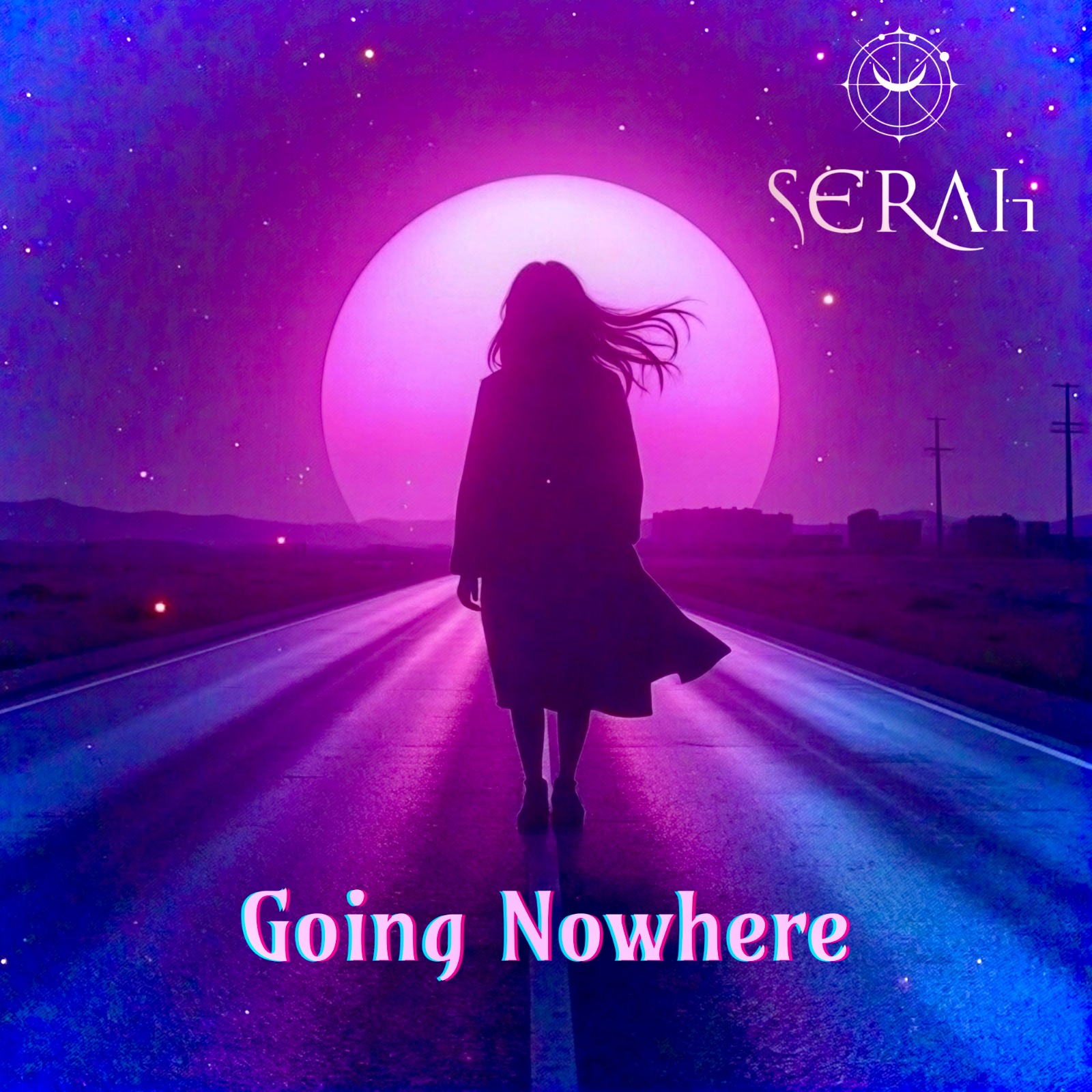
Hello everyone, it’s your host Oliver from DULAXI, and today I’m delighted to be joined by Natalie Demary, the Los Angeles-based artist behind SERAh, a dark cinematic melodic bass project operating through Lyra Records. Based in the United States, SERAh brings together melodic dubstep, melodic trap, cinematic scoring, and electronic production, creating music that explores emotional depth through both intimate songwriting and expansive sound design.
Natalie joins us to discuss SERAh’s debut single, “Going Nowhere,” released on September 9, 2026. Built around themes of emotional stagnation, surrender, uncertainty, and the feeling of reaching toward something that remains just beyond reach, the single introduces the creative world behind SERAh while also establishing the foundation for a much larger artistic project.
Before we begin our conversation with Natalie Demary, here’s what you need to know about today’s featured project.
About SERAh
SERAh is the dark cinematic melodic bass project of Los Angeles-based artist, electronic music producer, DJ, and Lyra Records founder Natalie Demary. The project brings together melodic bass, trap, and cinematic sound design, creating a musical identity that is deliberately interested in the spaces where emotional uncertainty has not yet developed into a neat conclusion.
That idea is central to “Going Nowhere,” SERAh’s debut single. Released on September 9, 2026, the track explores the familiar experience of feeling caught inside a loop, where frustration and comfort can exist at the same time. Rather than presenting stagnation as something that must immediately be overcome, the song examines the strange stillness that can exist when someone knows they are not moving forward but is not yet ready, or able, to move elsewhere.
The production reflects that tension through a combination of melodic bass movement, electronic sound design, and cinematic textures. Created in Ableton Live using Serum synthesis and recordings of real orchestral instruments, “Going Nowhere” brings together highly controlled electronic elements with the organic character of live instrumentation. That combination gives the track a sense of both precision and human imperfection, matching its exploration of the tension between control and uncertainty.
The single also marks the first public expression of the SERAh Cinematic Universe, or SCU, a 20-chapter sci-fi narrative that forms the creative backbone of the project. Through this larger fictional world, SERAh’s music exists not only as individual releases but as part of an evolving narrative involving characters, visual concepts, and interconnected chapters. The project is also connected to the wider Lyra’s World saga, with music videos and visual storytelling designed to expand the world surrounding the music.
Natalie’s work also comes from an established background within electronic music and the independent music space. Before the release of “Going Nowhere,” SERAh had already earned a Bass Euphoria mainstage slot and a Camp Elements set, alongside coverage from music and regional publications. As the founder of Lyra Records, Natalie has also spent time building systems and strategies to support other artists, an experience that ultimately became part of the reason she created SERAh as a space for expressing something more personally.
Having this brief introduction to today’s featured project, I’m sure both new listeners and longtime followers of Natalie’s work are excited to hear directly from her. So, without further ado, let’s begin today’s interview.
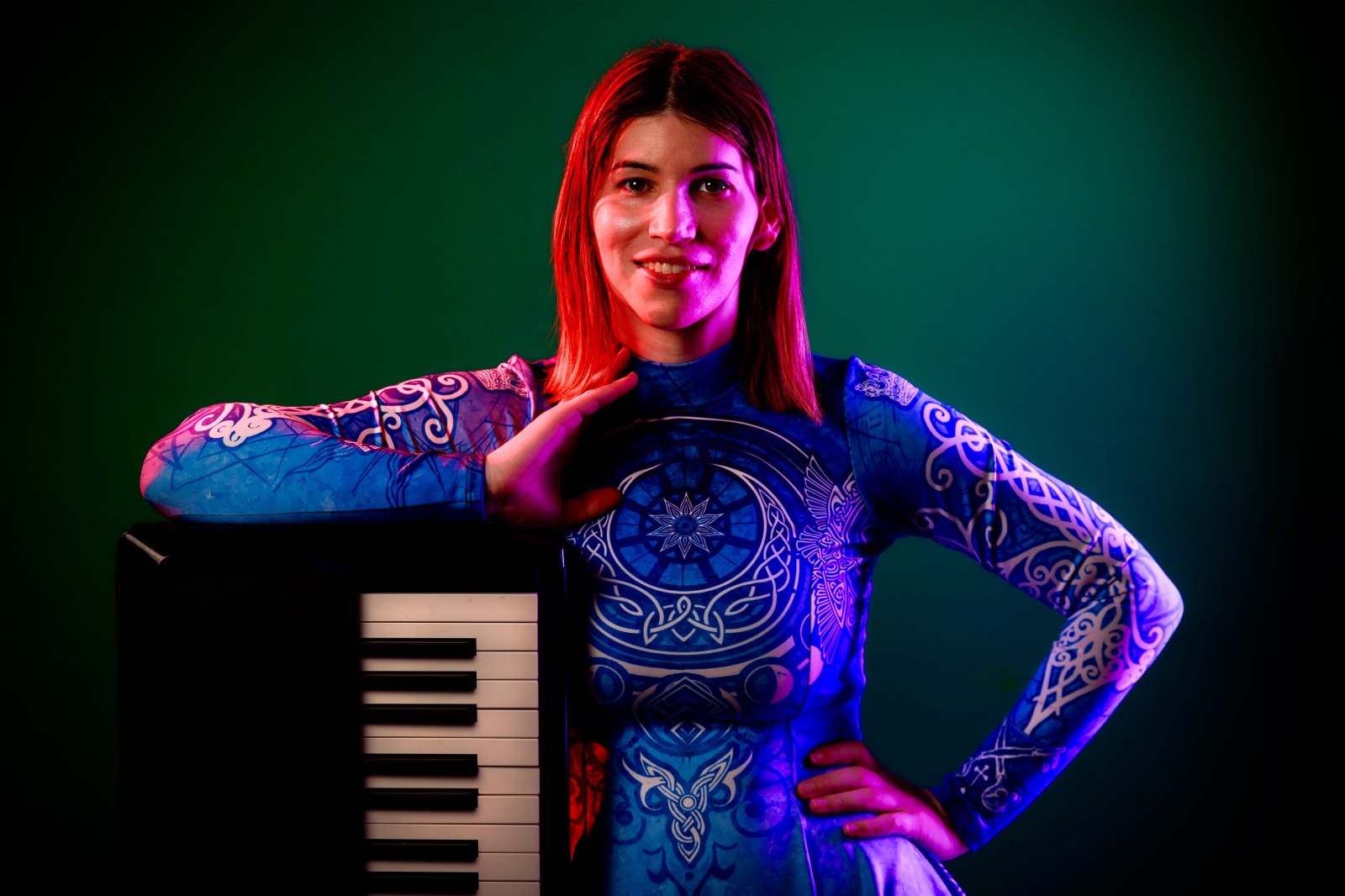
INTERVIEW SESSION
Oliver:
Before SERAh became a dark cinematic melodic bass project, you were already building a career as an electronic music producer, DJ, and founder of Lyra Records. What personal experiences, creative questions, or changes in your own artistic life led you toward the world that SERAh represents today?
Natalie Demary:
Lyra Records started as a way to help other artists get heard: building systems, thinking about strategy, staying useful to other people’s careers. I’m good at that work and I like it. But I got to a point where I realized I hadn’t built anything that let me say something for myself. SERAh started as an answer to that: what do I want to say if I stop being useful for a minute and just get honest.
Oliver:
SERAh exists at the intersection of melodic bass, trap, cinematic scoring, and electronic production, but there is also a strong emotional philosophy behind the project. What did you feel was missing from the electronic music you were hearing that made you want to build an identity around darkness, transformation, and emotional honesty?
Natalie Demary:
A lot of the genre is built around the payoff: tension into release, buildup into drop, dark into euphoric. I love that, genuinely. But there’s so little room left for the part in between, the part where you’re not okay yet and don’t know when you will be. I wanted a project that could actually sit in that middle space instead of rushing through it to get to the big moment.
Oliver:
You have described SERAh as a project that rejects false resolution and chooses to meet listeners inside difficult emotional spaces rather than immediately offering triumph or catharsis. Where did that philosophy come from, and what does it mean to you as both an artist and a person?
Natalie Demary:
Clean resolution always felt a little dishonest to me. Real change doesn’t happen on a switch: it’s slow, it backslides, it doesn’t announce itself. I spent a long stretch of my life inside a very structured, disciplined world, then stepped out of it, and I learned firsthand that you don’t just arrive at your next chapter. You live in the unresolved part for a while first. SERAh is me trying to stay honest about that instead of performing a neatness I hadn’t earned yet.
Oliver:
“Going Nowhere” is your debut single under SERAh and explores emotional stagnation, the feeling of being trapped in a familiar loop, and the strange peace that can come from surrendering to inertia. Was there a particular emotional experience or period of reflection that helped you understand what this song needed to express?
Natalie Demary:
Yes: this one came directly out of a major life transition, stepping away from an identity I’d held for a long time without knowing what the next one looked like yet. There’s a specific kind of stillness in that gap; not depression, not peace either, just loop. Familiar days that don’t add up to forward motion. “Going Nowhere” is me trying to be precise about that feeling instead of skipping past it.
Oliver:
The title “Going Nowhere” is direct, but the emotional idea behind it is more complicated because stagnation can contain both frustration and a kind of reluctant comfort. What did you want to communicate about that contradiction through the track?
Natalie Demary:
That both are true at the same time and neither cancels the other out. There’s real frustration in feeling stuck. There’s also a kind of safety in the loop: you know its shape, it doesn’t ask anything new of you. I wanted the song to hold both honestly instead of picking a side, because that’s what it actually felt like.
Oliver:
The idea of something remaining just out of reach is another important part of the song’s emotional identity. How did you translate that feeling of distance, uncertainty, and incompleteness into the musical choices you made?
Natalie Demary:
A lot of it comes down to withholding. Melodic lines that rise like they’re about to resolve, then don’t quite land where you’d expect. Harmonic choices that stay unsettled instead of snapping into an easy conclusion. Structurally too: I was careful about where I let the track actually open up versus where I kept it coiled. That restraint is the “just out of reach” feeling, built into the architecture instead of just the lyric.
Oliver:
You produced “Going Nowhere” in Ableton Live using Serum synthesis alongside recordings of real orchestral instruments. What attracted you to combining highly controlled electronic sound design with the organic character of orchestral performance for this particular piece?
Natalie Demary:
The electronic side is where I have total control: every parameter, every curve, exactly the tension I want. The orchestral instruments bring in something I can’t fully control, breath, imperfection, human timing. That contrast maps onto the song’s actual subject: the tightly controlled loop versus the messy, real feeling underneath trying to get out.
Oliver:
Melodic bass can carry enormous energy, yet “Going Nowhere” is rooted in a much more inward emotional state. How did you approach the balance between melodic bass intensity and the vulnerability or restraint required by the subject of the song?
Natalie Demary:
I had to actively push back on the genre’s instinct to explode. Any time a section started pulling toward a big cathartic moment, I asked whether that was honest to the song or just habit. Most of the time the more honest choice was to hold back and let the energy tighten instead of release, since that’s what stagnation actually feels like. There’s still intensity in the track; it’s just internal pressure instead of a release valve.
Oliver:
The Magician archetype is central to the SERAh identity, particularly the idea of transforming pain into beauty rather than treating darkness as something that simply needs to be overcome. What does the Magician represent in your own creative philosophy, and how do you see that archetype influencing the music you make?
Natalie Demary:
The Magician isn’t about defeating darkness. It’s about having the skill to work with it directly, the way an alchemist works with raw material: nothing gets thrown away, pain becomes an ingredient instead of an enemy. That’s the whole premise of SERAh for me. I’m not writing songs about escaping the dark; I’m writing songs about learning to shape it into something with form.
Oliver:
“Beauty from Darkness” is a powerful statement for a project built around emotional depth. How do you distinguish between creating art from pain and simply reproducing pain, and where do you believe the transformative part of the process actually happens?
Natalie Demary:
Reproducing pain is just venting: it’s real, but it doesn’t do anything with the feeling. Making art from it takes craft; you’re choosing structure, restraint, where to place a melody versus where to leave silence. The transformation happens in that shaping. Think of the difference between a wound and a scar: one’s still open, the other actually became something.
Oliver:
SERAh is connected to a 20-chapter sci-fi narrative through the SERAh Cinematic Universe. When did you realise that the music needed a larger fictional world around it, and how did developing that universe change the way you think about individual songs?
Natalie Demary:
Once I had characters like Lyra and Nymeia in my head, songs stopped feeling like standalone drops and started feeling like chapters; each one needed narrative weight, not just a hook. It changed my whole approach to sequencing and to what a single even means for this project. Every release has two jobs now: work as a song, and move the story forward.
Oliver:
“Going Nowhere” is the first public expression of that larger world. Without giving away stories that listeners will discover later, what part does this song play within the emotional or narrative foundation of the SERAh Cinematic Universe?
Natalie Demary:
I’ll keep this vague on purpose, but here’s what I’ll say: every long story needs a moment right before it begins, the stillness before something gets set in motion. “Going Nowhere” lives in that moment. It’s the emotional ground the rest of the universe grows out of.
Oliver:
You have also made every SERAh release part of a broader visual storytelling concept through music videos and the Lyra’s World saga. What does visual storytelling allow you to communicate that the music alone cannot, and how closely do you work between the musical and visual sides of the project?
Natalie Demary:
Music gives you the feeling; visuals give you the world that feeling lives in. Seeing Lyra and Nymeia, the aesthetic of their world, the physical space of the story: that grounds the emotion in something concrete a listener can hold onto. I work on both sides at the same time, not one after the other. The visual concepts and the music shape each other from the earliest stages.
Oliver:
Before this debut release, you had already performed at events including Bass Euphoria and Camp Elements. How did those live experiences shape your understanding of what SERAh needs to communicate on a festival stage compared with what you can express through a more intimate recording like “Going Nowhere”?
Natalie Demary:
A festival crowd needs music to land immediately and physically; that’s a different contract with the audience than someone alone with headphones on a hard night. Playing those sets taught me how to write for impact. But by contrast, it also clarified what a track like “Going Nowhere” is for: it doesn’t need to move a crowd, it needs to sit with one person. Both are honest expressions of the project, just at very different volumes.
Oliver:
As the founder of Lyra Records, you are building both an artistic project and an independent platform around your work. How has being responsible for the label side of your career influenced the way you approach SERAh creatively, particularly when deciding what deserves to become part of this larger world?
Natalie Demary:
Running the business side made me more disciplined about what actually earns a place in the SCU versus what’s just a good idea. Not everything I make needs narrative weight; some things are just songs. Thinking strategically about releases forced me to be more intentional about which ideas are strong enough to become chapters in something bigger.
Oliver:
Your debut single introduces a very specific emotional and aesthetic philosophy, while Lyra Records is already developing the debut SERAh EP. How are you thinking about expanding the ideas introduced by “Going Nowhere” across a longer project without losing the emotional honesty that makes the single distinctive?
Natalie Demary:
The plan is to let the arc build the way it actually would emotionally, no forcing a resolution before it’s earned. Each track can explore a different angle of that same honesty instead of trying to top the last one with more intensity. The EP’s job is to deepen the emotional world, not escalate it for its own sake.
Oliver:
Looking at your own development as a producer and artist, what have you learned from creating SERAh that has changed the way you understand your relationship with electronic music, storytelling, and your own creative identity?
Natalie Demary:
I’ve learned vulnerability is a technical asset, not a liability. The moments I was most afraid to be honest in turned out to be the ones that end up mattering most to people. It’s changed how I write completely: I’m not trying to impress anymore, I’m trying to be accurate.
Oliver:
There is a tension in SERAh between music designed for high-energy environments such as festival stages and music that sits with listeners during more solitary moments, such as a long drive or a difficult night. How important is that duality to the project, and how do you make music that can hold both experiences?
Natalie Demary:
It’s central to the project, honestly. Both are the same emotional truth at different intensities: one’s the feeling shouted, the other’s the feeling whispered. I try to write from the same honest place regardless of which version I’m building, so they still feel connected even when the energy is completely different.
Oliver:
Finally, as “Going Nowhere” opens the door to the SERAh Cinematic Universe and the next chapter of your work, what do you hope listeners discover about themselves, or perhaps become more comfortable confronting, as they follow SERAh into the stories and music that come next?
Natalie Demary:
I hope people give themselves permission to sit in their own “going nowhere” moments without treating them as failure. Stillness isn’t the opposite of progress; sometimes it’s where the real work happens quietly, underneath. If someone feels a little less alone in that loop because of this song, that’s what I was going for.
“SERAh turns an unresolved emotional moment into a world of its own, using sound, story, and restraint to make uncertainty feel like a place listeners can actually enter.”
~ Oliver (DULAXI Team)
EDITORIAL PERSPECTIVE
“Going Nowhere” establishes SERAh through a careful balance of intimacy and scale. The production gives electronic and orchestral elements room to interact, while the songwriting remains focused on an emotional state that refuses an easy conclusion. What makes the project particularly interesting is how the music, fictional universe, and visual storytelling are being developed together. Natalie’s perspective on restraint also gives the single a clear creative purpose, making the track feel like the opening scene of a much larger artistic world rather than simply an introduction to a new release.
~ Oliver (DULAXI Team)
CLOSING
Our conversation with Natalie Demary offers a thoughtful introduction to the ideas behind SERAh and the world surrounding “Going Nowhere.” From the decision to create music that remains within unresolved emotional spaces to the development of the SERAh Cinematic Universe, Natalie has shared how production, storytelling, and personal experience intersect within the project.
Thank you to Natalie for taking the time to speak with DULAXI and for sharing such an honest insight into the creative thinking behind SERAh. We encourage readers to spend time with “Going Nowhere” and explore the world that is beginning to take shape around the music.
As SERAh moves forward with the development of its debut EP and the continuing expansion of its cinematic universe, there is much more of this story still to unfold. Thank you for spending time with DULAXI, and as always, stay with us for more conversations with artists, producers, and creative voices from across the music world.