
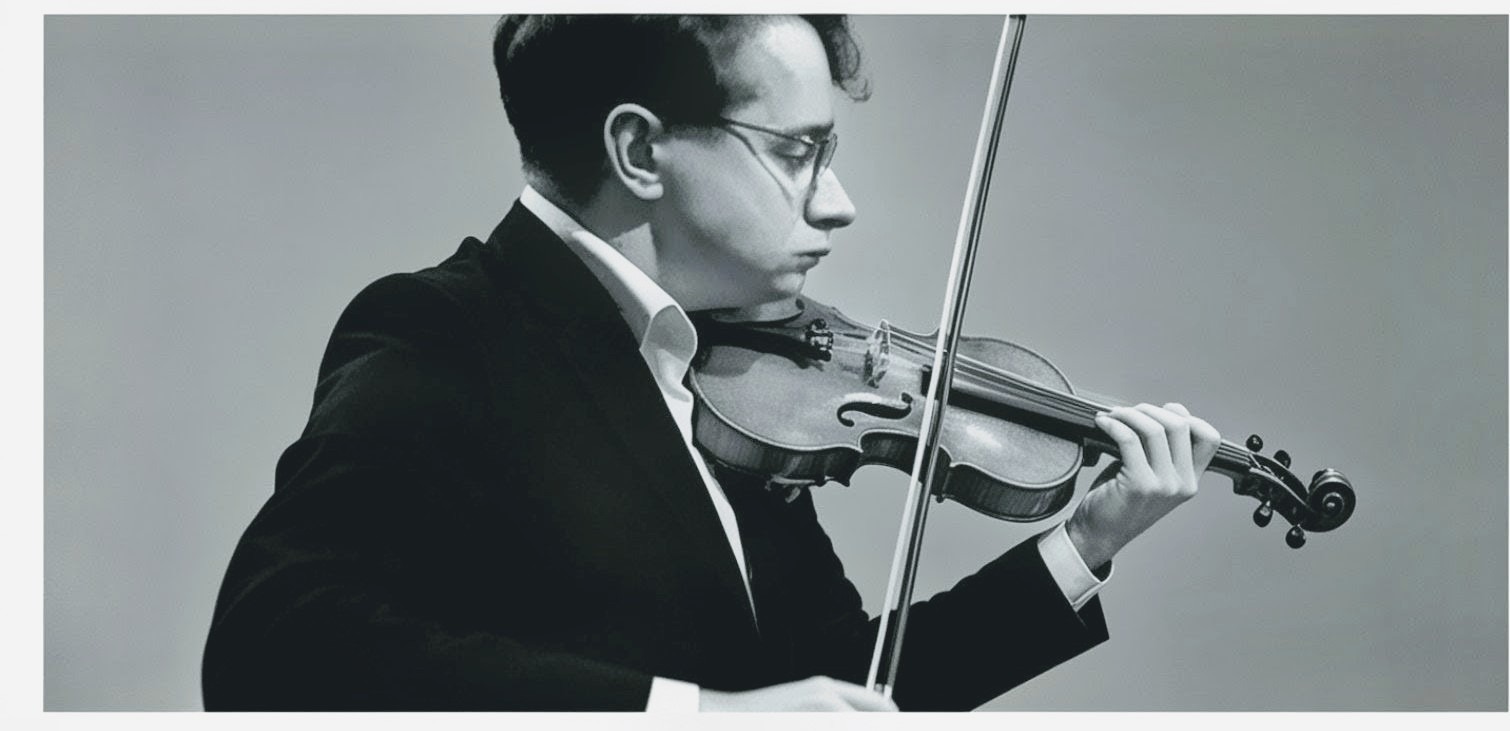
Hello everyone, it’s your host Oliver from DULAXI, and today I’m delighted to be joined by Ukrainian-born concert violinist and composer Sergiy Bolotny, whose international career has taken him from his early musical education in Ukraine to the Netherlands, where he serves as Assistant Second Concertmaster with the Noord Nederlands Orkest. With a background spanning orchestral performance, chamber music, solo violin, composition, and contemporary work, Sergiy brings together European musical traditions and his own perspective as both a performer and composer.
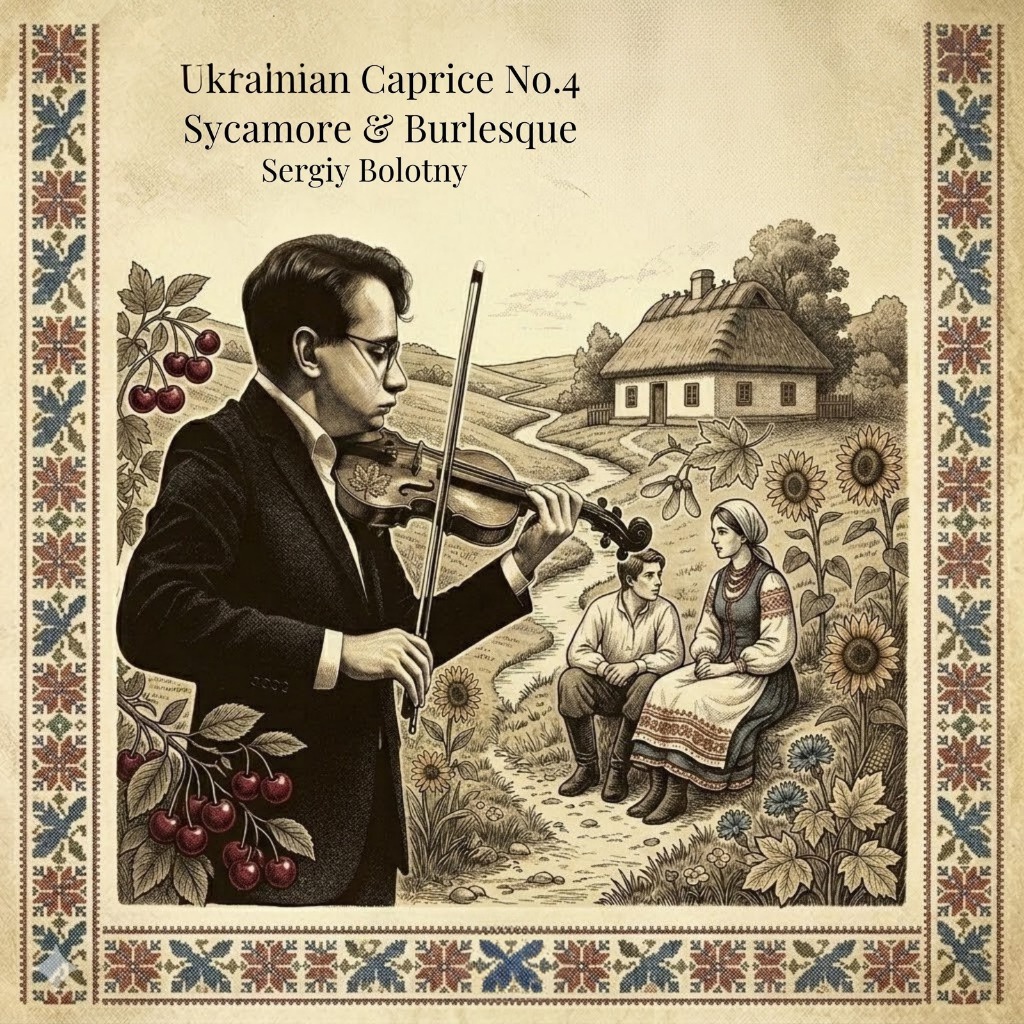
Based in Groningen, Netherlands, Sergiy works across classical, contemporary, and world-rooted musical traditions, with his Ukrainian heritage forming an important part of his compositional voice. His latest solo release, Ukrainian Caprice No. 4: Sycamore & Burlesque, was released on 21 August 2026 and presents a highly personal meeting between Ukrainian folklore, poetry, and virtuosic solo violin writing.
Before we begin our conversation with Sergiy, here’s what you need to know about today’s featured project.
About Sergiy Bolotny
Sergiy Bolotny’s Ukrainian Caprice No. 4: Sycamore & Burlesque brings together two contrasting musical worlds within a single solo violin work. The composition draws from the melancholic poetry of Ukrainian literary figure Taras Shevchenko, particularly “Teche voda z-pid yavora,” translated as “Water flows from under the sycamore,” while also drawing on the energy and character of traditional festive folk dances. The result is a work that connects cultural memory with the physical and expressive possibilities of the concert violin.
The piece is divided into two contrasting sections. Sycamore establishes a reflective atmosphere through an intimate, singing melody, Slavic lyricism, and a darker harmonic character. Its relationship with Shevchenko’s poetry gives the opening a strong sense of emotional memory, while the violin becomes the voice through which those ideas are expressed without words. Burlesque, by contrast, introduces a much more animated personality, using rapid spiccato, demanding string crossings, rhythmic movement, and playful virtuosity to transform the mood.
Sergiy’s own background gives him a particularly broad perspective from which to approach this work. His musical education includes studies at academies in Lviv, Kyiv, and Vienna, exposing him to different regional traditions and artistic philosophies. His career in the Netherlands has subsequently added another cultural dimension, both through his orchestral work with the Noord Nederlands Orkest and through his separate compositional exploration of Dutch folklore in his Little Dutch Rhapsodies.
As both composer and performer, Sergiy also approaches the technical demands of his music from a practical perspective. His experience with the violin allows him to test difficult passages directly on the instrument, ensuring that technical complexity has a musical reason for existing. In Ukrainian Caprice No. 4, virtuosic passages are therefore connected to character and movement rather than existing simply as demonstrations of technique.
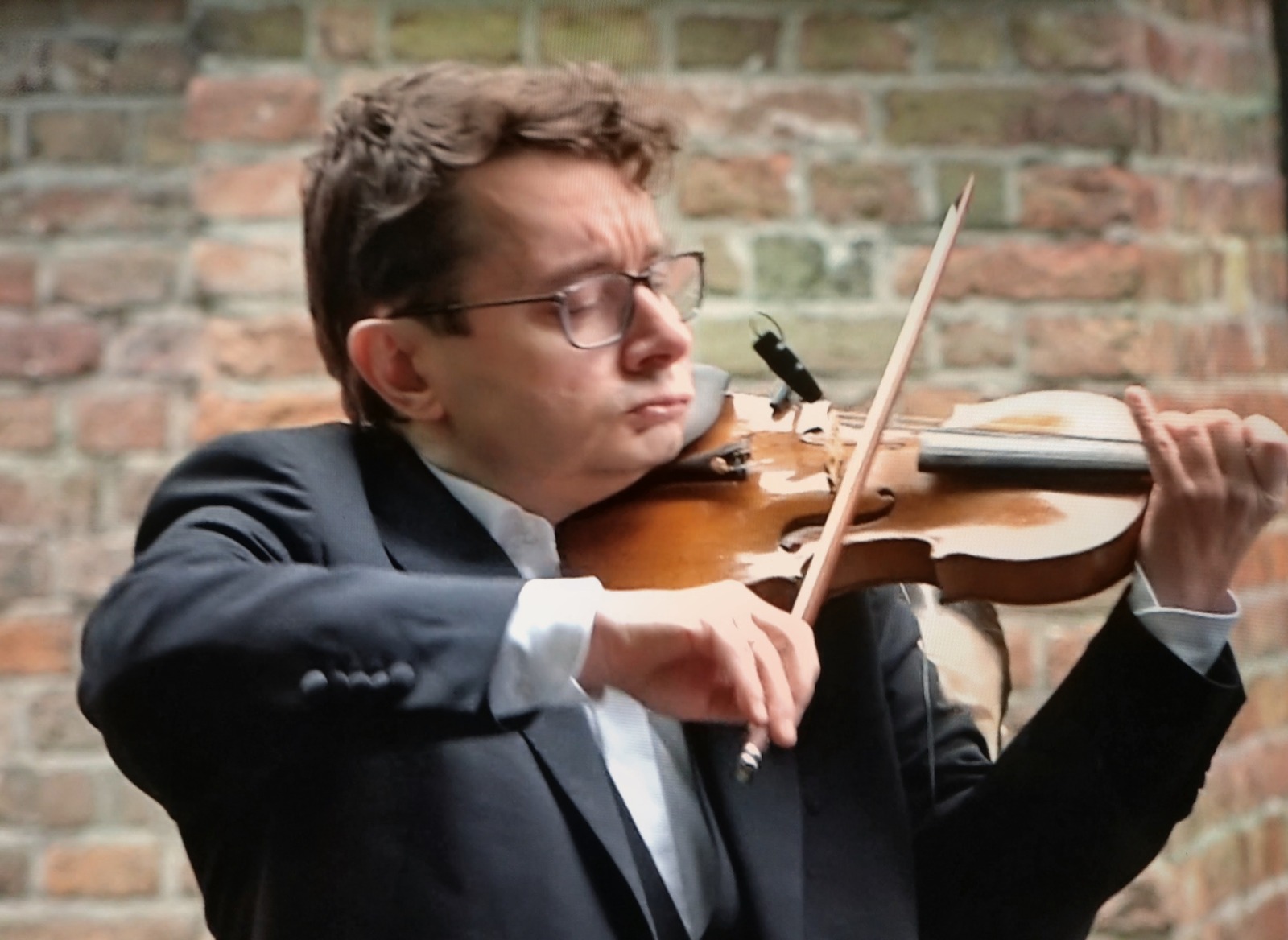
The recording itself was approached with a strong preference for natural acoustic presence. Rather than relying on an artificial or heavily processed sound, the performance preserves the room around the violin and allows the acoustic qualities of the instrument to remain audible. This approach places greater attention on details such as bow movement, vibrato, resonance, silence, and the subtle changes in articulation that shape the performance.
Having this brief introduction to today’s featured project, I’m sure both new listeners and longtime fans are excited to hear directly from Sergiy. So, without further ado, let’s begin today’s interview.
INTERVIEW SESSION
Oliver:
Before we explore Ukrainian Caprice No. 4: Sycamore & Burlesque, I’d like to begin with your journey as a musician. You were born in Ukraine, studied in Lviv, Kyiv, and Vienna, and have built an international career as a concert violinist and composer in the Netherlands. What experiences from those different stages of your life have had the greatest influence on the musician and person you have become?
Sergiy Bolotny:
Much like the great traveling violinists of the golden age—Kreisler, Enescu, or Carl Flesch—I drew wisdom from very different regional traditions and artistic philosophies. Lviv gave me discipline and strong foundational roots, Kyiv opened up broad Slavic lyrical expression, and Vienna immersed me in aristocratic elegance, style, and chamber music dialogue.
Yet, over decades of performing on stage, I realized that at the highest level, there is fundamentally only one true violin school: the relentless pursuit of pure, unforced musical beauty. Whether you are in Vienna, Tokyo, New York, or Amsterdam, the true goal of an artist never changes. Every stage of my life simply reinforced that music must speak directly from heart to heart.
Oliver:
Your career spans orchestral performance, chamber music, solo violin, composition, and contemporary work. How have these different musical roles shaped your artistic identity, and what do you feel each one has taught you about the expressive possibilities of the violin?
Sergiy Bolotny:
Each role feeds the others. Sitting in a major orchestra like the Noord Nederlands Orkest is an ongoing masterclass in architectural balance, color, and dynamic tension. Chamber music teaches you deep listening, flexibility, and humility.
When I step onto the stage alone with just a violin, or sit down to compose, I carry that entire collective experience with me. Playing solo violin is completely addictive because you have total responsibility. You have to be the soloist, the bass line, the inner harmony, and the rhythm section all at once. It forces you to discover that the violin is not just a melody instrument—it is an entire orchestra packed into a single wooden box.
Oliver:
Ukrainian heritage is at the centre of your Ukrainian Caprices, but you are presenting that heritage through your own contemporary voice. What does Ukrainian musical heritage mean to you personally, and what responsibility do you feel when reinterpreting traditional material for a modern audience?
Sergiy Bolotny:
Folklore is honest, innocent, and pure. It doesn’t pretend to be something it isn’t, which is why it goes straight into the listener’s heart. For me, Ukrainian folk heritage is part of my emotional DNA.
My responsibility is not to treat our folklore like an untouchable museum artifact locked behind glass. Tradition survives when it is alive, breathing, and relevant today. Following the path of masters like Myroslav Skoryk, I want to take authentic folk intonations and give them a 21st-century concert life through progressive violin technique, without ever sacrificing their emotional soul.
Oliver:
Ukrainian Caprice No. 4 draws inspiration from Taras Shevchenko’s poetry, particularly “Teche voda z-pid yavora” or “Water flows from under the sycamore.” What was it about this particular poem and its emotional character that inspired you to build part of the composition around it?
Sergiy Bolotny:
Shevchenko’s poetry carries an immense, almost sacred emotional resonance for Ukrainians. In “Teche voda z-pid yavora”, there is a profound, quiet melancholy and a deep connection to nature and home.
The poem speaks about youth, longing, and the sorrow of the Cossack. That timeless imagery felt so naturally melodic to me. It carried an atmosphere that immediately called for the dark, singing warmth of the violin’s lower strings.
Oliver:
The first movement, Sycamore, is described through an intimate cantabile melody, Slavic lyricism, and brooding harmonic depth. When you were shaping this section, what emotional world did you want the violin to communicate, and how did you translate the feeling of the poetry into instrumental music without words?
Sergiy Bolotny:
The opening measures answer that question directly. Rather than playing the melody in an unbroken, predictable flow, I placed a fermata at the end of each four-bar phrase.
These pauses act like an open question: Why is the Cossack sorrowful? Without words, the violin must use silence, breath, and lingering room resonance to convey unspoken grief. By setting Sycamore in F minor, I wanted to create a reflective, intimate space where the listener feels the weight of Slavic contemplation before any virtuosic fireworks begin.
Oliver:
The composition then makes a dramatic transition into Burlesque, where the character becomes fiery, playful, and technically demanding. What inspired such a strong contrast between the two sections, and what does that change reveal about the wider emotional character of the piece?
Sergiy Bolotny:
Interestingly, Sycamore and Burlesque were originally written as two completely separate pieces! But shortly before recording, I realized that Burlesque was too abrupt on its own, and Sycamore needed a resolution.
I reworked the bridge, modulating from F minor into F major to join them together. To me, that dramatic contrast reflects the Ukrainian spirit: we are contemplative, sensitive, and can grieve deeply, but that sadness never completely paralyzes us. It inevitably yields to resilience, humor, vibrant energy, and a determination to keep dancing and moving forward. The listener needed that moment of shadow before stepping into the celebration.
Oliver:
As a concert violinist, you have access to an enormous technical vocabulary, from rapid spiccato to complex string crossings and highly controlled articulation. When composing a work like this, how do you balance the technical demands of the performance with the musical and emotional purpose behind each passage?
Sergiy Bolotny:
I think of composing a solo caprice like crafting a fine chocolate bonbon: every element must be concentrated, high quality, and balanced, without unnecessary filler.
I have immersed myself in Paganini’s caprices for decades, and his writing opened up incredible physical pathways for my own hands. But when I write difficult passages, I constantly test them on the fingerboard. I ask myself: is this difficulty musically ergonomic and acoustically effective, or is it just complex for the sake of showing off? If a technique does not serve the emotional narrative, I cut it.
Oliver:
The Burlesque section has been described as an athletic display of the violin’s expressive range, but virtuosity can sometimes become an end in itself. How do you make sure that technical difficulty continues to serve the musical story rather than simply demonstrating what the instrument can do?
Sergiy Bolotny:
Virtuosity must always have humor, character, or dance behind it. In Burlesque, the rapid spiccato and wide string crossings are not mechanical exercises; they represent the mischievous, spirited verve of a village festival.
I often test short performance excerpts—even posting snippets on social media and YouTube Shorts—to observe real listener reactions to specific bow strokes and rhythmic pulses before finalizing a score. If people only hear “speed” instead of the infectious dance rhythm, the passage needs refining.
Oliver:
You are both the composer and performer of this work, which gives you an unusually direct relationship with every detail of the composition. How does performing your own music change the way you compose, and are there things you discover about a piece only after you physically play it?
Sergiy Bolotny:
It is an intimate, continuous conversation between the pen and the bow. When I compose, it sometimes feels as though the music is being dictated to me, and my job is simply to write it down. But once the ink is dry, the piece must “cook” and simmer on the instrument.
Like many composers, I am rarely 100% satisfied immediately. Playing a piece with my own hands reveals acoustic truths you can never predict on paper—how a double-stop rings in a hall, or where the instrument naturally asks for a breath.
Oliver:
Your work connects Ukrainian folklore with European classical traditions and contemporary composition. How do you approach that balance between preserving the identity of the source material and allowing yourself enough freedom to transform it into something new?
Sergiy Bolotny:
I look at variation as an organic, living development rather than a strict textbook exercise.
My approach is to keep the essential emotional contour of the folk melody recognizable, but build around it with progressive variations, modern harmonic shifts, and virtuosic counterpoint—almost like an intricate Rondo structure. You preserve the melody’s authentic soul, but give it the freedom to travel into modern concert halls.
Oliver:
You have also developed the Ukrainian Caprices alongside your Little Dutch Rhapsodies. What connects these bodies of work for you, and how does living and working in the Netherlands influence the way you approach music rooted in your Ukrainian background?
Sergiy Bolotny:
The common thread is cultural storytelling through the violin. The Netherlands has been my home for many years, and exploring Dutch folklore—like the humorous tale of the farmer with one shoe in Rhapsody No. 1, or “Aan de Amsterdamse grachten” in Rhapsody No. 3—felt like a natural musical tribute to the country that welcomed me.
Living between these cultural worlds made me realize how universal human folklore is. Dutch humor and Ukrainian lyricism may use different scales and rhythms, but both speak about lived human experience, community, and memory.
Oliver:
Your position as Assistant Second Concertmaster with the Noord Nederlands Orkest places you within a major orchestral environment, while your solo work gives you complete individual responsibility for the musical interpretation. How do those two sides of your career influence one another?
Sergiy Bolotny:
They maintain my artistic balance. In the orchestra, you learn the art of collective discipline, blending sound, and understanding great symphonic masterworks from the inside out.
When I return to solo playing and composing, that orchestral palette remains in my ears. It prevents my solo writing from becoming thin or purely linear. At the same time, maintaining my solo virtuosity ensures that my orchestral leadership remains sharp, confident, and expressive.
Oliver:
The recording of Ukrainian Caprice No. 4 deliberately preserves natural room presence and authentic acoustic resonance rather than relying on heavy production. What does that natural acoustic quality contribute to the character of the violin, and why was it important for you to preserve that sense of physical space?
Sergiy Bolotny:
Artistic honesty is everything to me. Today, so much commercial music is over-compressed, artificial, and sterile.
The violin is an acoustic instrument made of wood and varnish; it needs room air to breathe, bloom, and resonate. Capturing the natural acoustic space preserves the subtle decay of a quiet fermata, the scratch of the bow hair on a dramatic accent, and the warmth of the wood. I want the listener to feel as if they are sitting in the room with me, hearing an unvarnished concert performance.
Oliver:
The violin can communicate extremely subtle changes through articulation, bow pressure, vibrato, dynamics, and tone colour. When recording a solo work of this kind, which details do you pay the closest attention to when trying to make the performance communicate exactly what you hear internally?
Sergiy Bolotny:
I listen obsessively to the transition points: the moment sound emerges from silence, the change of bow direction, and the speed of vibrato.
In Sycamore, the vibrato must be vocal, warm, and restrained, mirroring Slavic song. In Burlesque, the bow stroke must suddenly become crisp, dry, and springy to make the dance jump. The magic of the violin lives in those microscopic shades of color. If you capture those nuances truthfully, the instrument speaks directly to the soul without needing words.
“Ukrainian Caprice No. 4 is a conversation between memory and movement, allowing the violin to carry both the weight of cultural remembrance and the freedom of contemporary virtuosity.”
~ Oliver (DULAXI Team)
EDITORIAL PERSPECTIVE
Sergiy Bolotny’s approach to Ukrainian Caprice No. 4: Sycamore & Burlesque is particularly compelling because technique is never separated from meaning. The contrast between its reflective and energetic sides becomes more significant after hearing Sergiy explain the cultural and emotional thinking behind the composition. His attention to resonance, articulation, silence, and physical movement also gives the work a strong sense of intimacy, allowing the violin to function not simply as an instrument but as the voice of the story.
~ Oliver (DULAXI Team)
CLOSING
Our conversation with Sergiy Bolotny offers a closer look at the ideas, traditions, and technical decisions behind Ukrainian Caprice No. 4: Sycamore & Burlesque. From his musical education across Lviv, Kyiv, and Vienna to his life and work in the Netherlands, his journey has brought together several cultural and musical perspectives that continue to shape his work as a performer and composer.
We would like to thank Sergiy for taking the time to speak with DULAXI and for sharing such thoughtful insight into his creative process, his relationship with Ukrainian heritage, and the many details that shape his approach to the violin. His reflections also offer a valuable reminder that technical virtuosity can carry far greater meaning when it remains connected to character, emotion, memory, and storytelling.
We encourage readers to experience Ukrainian Caprice No. 4: Sycamore & Burlesque and discover the contrast between its contemplative opening and its spirited second half for themselves. For those discovering Sergiy’s work for the first time, his Ukrainian Caprices and Little Dutch Rhapsodies provide a wider view of an artistic journey built around cultural storytelling and the expressive possibilities of the violin.
Thank you for spending time with DULAXI. This has been Oliver, and we look forward to bringing you more conversations with artists, composers, and musicians from around the world.