
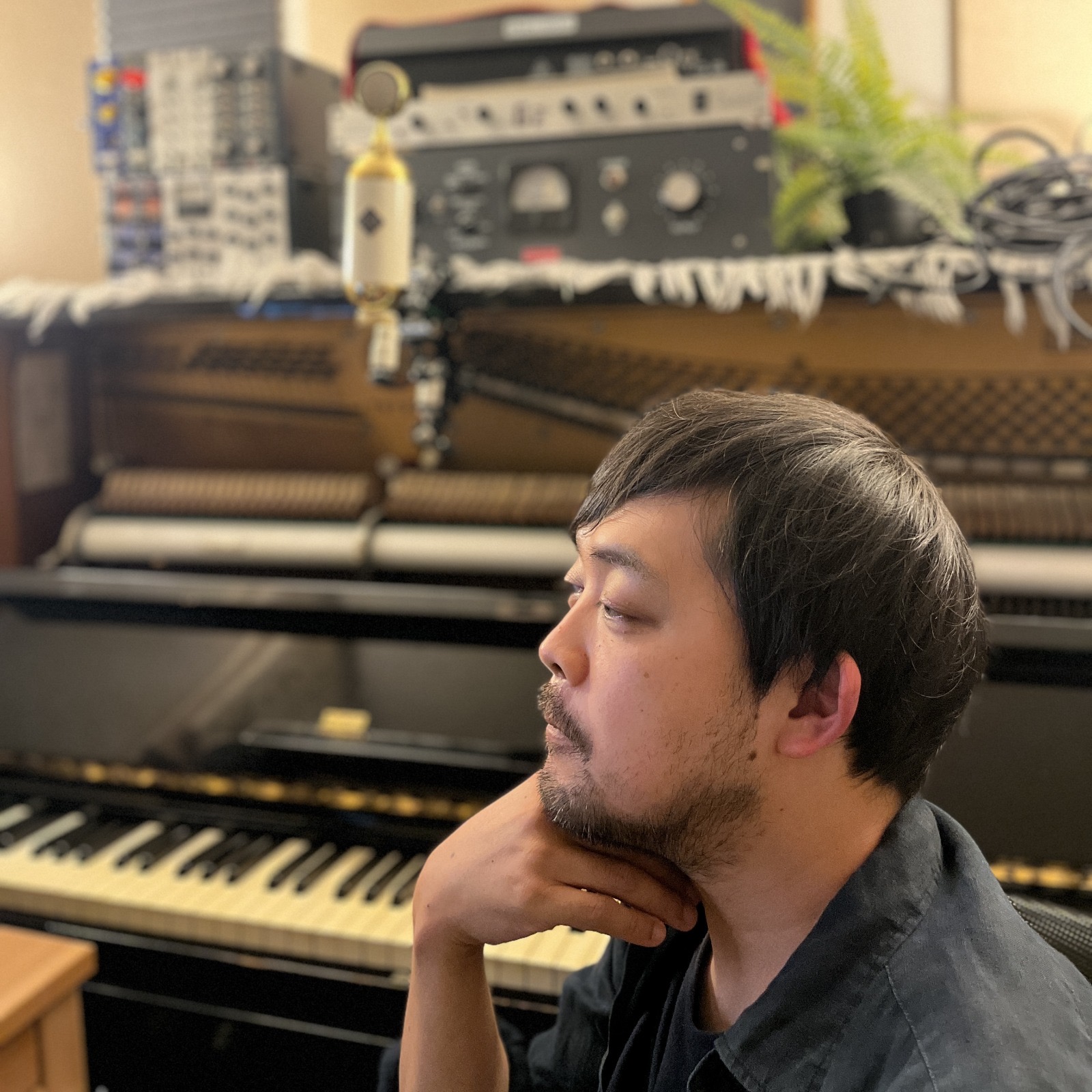
Hello everyone, it’s your host Oliver from DULAXI, and today I’m delighted to be joined by Mitsuo Kabuki, the Japanese pianist, composer, and producer behind EPICH, a contemporary jazz project based in Yokohama City, Japan. Blending contemporary jazz, fusion, and electronic elements, EPICH explores the relationship between musical composition, rhythmic experimentation, and storytelling through sound. His latest single, “YAKUMO,” released on 29 July 2026, brings together acoustic and electric piano textures, modern grooves, changing time signatures, and guest scat vocals to create a composition that moves beyond conventional musical boundaries.
About EPICH
EPICH is a contemporary jazz project led by Japanese pianist, composer, and producer Mitsuo Kabuki. Launched in 2023, the project takes its name from two words, “EPIC,” representing grand stories, and “ECHO,” representing resonance. Together, they express Kabuki’s artistic intention to preserve the experiences of ordinary people and communicate their stories through music. Rather than relying on conventional lyrics to explain a narrative, he builds musical worlds through melody, harmony, instrumentation, and the interaction between different sounds.
Kabuki’s musical journey began with The Beatles, whose music first inspired him to perform as part of a cover band during his student years. His discovery of jazz pianist Bill Evans later encouraged him to pursue jazz piano, while the work of composer and saxophonist Wayne Shorter became another important influence on his understanding of musical development. Shorter’s willingness to evolve throughout his career particularly resonates with Kabuki, who believes that composition should determine the direction of a piece rather than forcing every idea into a single musical style.
His musical education also played an important role in shaping his approach to rhythm and harmony. Under the guidance of Akihiko Matsui, one of Japan’s leading progressive jazz musicians, Kabuki studied contemporary harmony and odd time signatures for nearly ten years. This foundation continues to inform his compositions, although he is careful not to let technical complexity overshadow the melody or the emotions he wants listeners to experience. His recognition as a semi-finalist in the International Songwriting Competition in 2017 for his composition “AKITA” provided further encouragement to pursue a distinctive musical direction rather than simply follow mainstream expectations.
Released on 29 July 2026, “YAKUMO” represents another expression of this creative philosophy. The composition originally began as an instrumental piano trio piece in 2016, inspired by the atmosphere of Yakumo-dori, a street in Tokyo. As Kabuki continued performing it live, the piece gradually developed a deeper emotional meaning centred on reunion within eternity. He began imagining two beams of light crossing paths somewhere in the universe, an image associated with nostalgia and joy. Although the title remained connected to its original inspiration, the musical narrative expanded into something more universal.
The new version reimagines the composition through an electric sound, bringing together a Wurlitzer electric piano, Fender Rhodes, programmed bass and drums, electronic rhythm parts, guest scat vocals from Aya Kurosawa, and ocarina contributions from Miruto. The Wurlitzer provides a strong rhythmic attack, while the Rhodes adds organic richness and depth to the arrangement. Kurosawa’s voice introduces another dimension to the composition, with layered vocal harmonies broadening its expressive possibilities. Miruto’s ocarina playing adds a further musical colour to the arrangement, complementing Kabuki’s vision for the piece.
Beyond the technical details, “YAKUMO” reflects the personal motivation behind EPICH. Kabuki creates music out of gratitude to his mentor and a desire to preserve the stories of people who have found the courage to overcome hardship through inspiration and encouragement. This philosophy also informs his second album, Uncrowned, which reflects his wish to preserve the stories of unsung heroes who may never receive public recognition. For Kabuki, the lasting value of music lies not necessarily in personal fame, but in its ability to carry these stories across generations and reach listeners around the world.
With a new single that brings together rhythmic experimentation, electronic production, and a deeply personal artistic philosophy, EPICH continues to explore how instrumental music can communicate experiences that words alone may not fully express. Having this introduction to Mitsuo Kabuki and the world he is building through EPICH, we’re sure both new listeners and longtime followers will be interested in hearing more about the ideas behind his music. So, without further ado, let’s begin today’s interview.
INTERVIEW SESSION
Oliver:
You are a Japanese pianist and composer based in Yokohama, and your work through EPICH brings together contemporary jazz, composition, electronics and modern production. Before we get into “YAKUMO,” what experiences in your life first made music feel like a language through which you could tell stories and express ideas?
Mitsuo Kabuki:
My mentor helped me find the inspiration and strength to overcome many of life’s difficulties. All of my compositions are born from a desire to tell the stories of my mentor and of people who have found the courage to overcome their own struggles through that inspiration.
My life has been filled with hardship since I was young. I have personally experienced things that seem to exist only in books: struggling, enduring, and eventually finding a way to overcome adversity.
When I began to think about what my mission in life might be, I realized that I wanted to express these experiences through music and leave them behind as something that could last forever.
Oliver:
The name EPICH combines “EPIC,” representing grand stories, and “ECHO,” representing resonance. When you created that identity in 2023, what kind of artistic world did you imagine EPICH would become, and how closely does the project today reflect the vision you had at the beginning?
Mitsuo Kabuki:
As I mentioned earlier, I think of my compositions as epic stories of ordinary people. Another defining characteristic of my music is its harmony and resonance.
EPICH combines these two ideas, “EPIC” and “ECHO,” making it the perfect name for the project. I chose it because I wanted to create a musical world in which epic stories could be expressed through sound and resonance.
Today’s EPICH is a direct reflection of that original vision. Every piece I create is rooted in this idea.
Oliver:
Your background as a pianist and composer sits at the meeting point of several musical traditions, while EPICH moves between jazz, classical influences, world music, electronics and modern grooves. What have you learned about yourself as a musician by allowing these different influences to exist within the same project rather than choosing one musical language?
Mitsuo Kabuki:
My musical journey began with The Beatles. When I was a student, I played in a Beatles cover band. Later, I discovered Bill Evans and decided to pursue jazz piano.
Many jazz musicians focus primarily on live performance, but my greatest passion is creating music.
One of the composers I respect most is Wayne Shorter. Like The Beatles, he continued to transform his musical language throughout his career. That willingness to evolve has always inspired me.
For me, everything begins with the composition itself. I choose the instruments, voices, electronic sounds, and beats according to what each piece calls for.
Oliver:
You were named an International Songwriting Competition Semi-Finalist for “AKITA” in 2017, several years before EPICH officially launched. Looking back at that earlier recognition, what did that experience teach you about your strengths as a composer, and how did it influence the direction you eventually took with EPICH?
Mitsuo Kabuki:
Being selected as a semifinalist in an international songwriting competition gave me tremendous confidence in my abilities as a composer.
I know that writing music that appeals to the mainstream is not easy for me. Rather than chasing that kind of success, I decided to continue writing music with a unique sound that only I could create, drawing inspiration from the world around me throughout my life.
That belief has remained central to the direction I have taken with EPICH.
Oliver:
“YAKUMO” is built around acoustic piano, Rhodes, modern grooves, subtle electronics and changing time signatures, yet you describe the piece as having a narrative dimension as well as technical sophistication. What story or emotional idea were you trying to communicate through the composition, and where did that story begin?
Mitsuo Kabuki:
I originally began writing the piece inspired by the atmosphere of a street called Yakumo-dori in Tokyo.
As I continued performing the piece live, however, I gradually began to feel a deeper theme emerging: reunion within eternity.
I imagine two beams of light crossing paths somewhere in the universe. The emotions I associate with this image are nostalgia and joy.
Oliver:
The title “YAKUMO” carries a distinctive Japanese identity, while the music itself reaches across contemporary jazz, fusion and electronic territory. What does the title mean to you, and how does its meaning connect with the character or narrative you wanted the composition to convey?
Mitsuo Kabuki:
The title originally came from the name of Yakumo-dori, a street in Tokyo. I gave the piece its title at the beginning of the creative process, before its deeper meaning had fully developed.
As I continued working on the music, the image that emerged was of two beams of light crossing paths in the vastness of the universe.
For me, the piece ultimately evokes nostalgia and joy. The title remained, while the emotional world of the composition gradually expanded beyond its original inspiration.
Oliver:
One of the defining features of the track is its odd-meter groove and dynamic movement through different time signatures. What attracts you to irregular rhythmic structures, and how do you make those technical choices serve the musical expression rather than simply demonstrating complexity?
Mitsuo Kabuki:
My mentor is Akihiko Matsui, one of Japan’s leading progressive jazz musicians. I studied with him for nearly ten years, learning contemporary harmony and odd time signatures.
As a result, rhythms in seven or five beats often come naturally to me. Many contemporary jazz musicians also perform in odd meters so naturally that I don’t particularly think of them as unusual.
What I dislike most is the idea that my music might be perceived as difficult or overly complicated. I want people to be able to hum my melodies.
In fact, I compose all my music by first singing the melodies to myself and then playing them on the piano.
Oliver:
The combination of Rhodes and acoustic piano gives “YAKUMO” two different piano colours within the same composition. What did each instrument bring to the piece, and how did you decide where their individual voices should sit within the arrangement?
Mitsuo Kabuki:
For YAKUMO, I used a Wurlitzer electric piano and a Fender Rhodes.
The Wurlitzer has a strong attack, which makes it effective for maintaining the rhythmic pulse. I placed the Rhodes on the left channel to bring out the organic richness and depth of the actual instrument.
The Rhodes was not part of the original arrangement. I kept searching for an instrument that could fill a particular space in the music, trying several possibilities until I found that the Rhodes fit perfectly.
Oliver:
Bassist Keisuke Furuki and drummer Kaoru Suzuki play an important role in creating the rhythmic foundation of “YAKUMO.” When working with musicians of that calibre, how do you balance your original compositional ideas with the individual instincts and musical personalities they bring into the performance?
Mitsuo Kabuki:
First, I would like to clarify one important detail: the bass and drums on this version of YAKUMO are programmed, and neither Keisuke Furuki nor Kaoru Suzuki participated in this recording.
The musicians featured on this version are myself, scat vocalist Aya Kurosawa, and Miruto on ocarina.
The piece originally appeared as an instrumental piano trio composition in 2016. For this new version, I was captivated by Aya’s voice and Miruto’s ocarina playing, and I wanted to reimagine the piece with a new, electric sound.
Aya can manipulate her voice with extraordinary freedom, in a way that reminds me of Tatyana Parra. Miruto is also highly skilled in odd meters and brings an almost cosmic quality to the ocarina.
When I reworked the composition, I could already hear their sounds in my mind. Their musical identities were part of the creative vision from the very beginning.
Oliver:
Aya Kurosawa’s guest scat vocals add another human voice to an otherwise instrumental composition. What made scat the right form of vocal expression for “YAKUMO,” and how did Aya’s contribution change or expand the emotional and narrative possibilities of the track?
Mitsuo Kabuki:
I have always loved the human voice. My musical journey began with The Beatles, and vocals have remained an important part of my musical world ever since.
In contemporary jazz today, I feel that the boundaries between the voice and instruments have become increasingly fluid. Artists such as Pat Metheny, Gretchen Parlato, Tatyana Parra, Robert Glasper, and Antonio Loureiro have all inspired me in this respect.
Rather than specifically deciding to use scat, I simply knew that I wanted Aya’s voice to be part of the piece.
By layering vocal harmonies, her contribution expanded the dynamic possibilities of the music enormously, giving the composition a much broader emotional range.
Oliver:
You handled the entire production process yourself, from recording through mixing and mastering, in your own studio. What does having that level of control allow you to achieve creatively, and were there any moments during the production where you had to step away from being the composer and think more like an engineer?
Mitsuo Kabuki:
Having complete control over the production process suits my personality very well.
I can change sounds repeatedly, return to an earlier recording stage during mixing, or record something again whenever necessary. I can keep working until I am completely satisfied. Even during mastering, I can return to the mix and make further adjustments if needed.
Mastering requires a very different mindset. I have to listen primarily as an engineer, comparing the music with reference tracks and evaluating it from a technical perspective. It requires a completely different way of thinking from the one I use when composing.
Oliver:
Self-producing a technically detailed contemporary jazz recording can require very careful decisions about performance, sound, space and balance. What was the most demanding part of bringing “YAKUMO” from the initial composition to its finished master, and what did you learn from solving that challenge?
Mitsuo Kabuki:
The musicians’ performances were excellent, so I had no complaints about their playing.
The biggest challenge was programming the electronic rhythm parts so that they would blend naturally with the expressive, organic performances of the musicians. I did not want the result to sound like a backing track or karaoke accompaniment.
I listened to the music repeatedly, carefully evaluating what was missing or excessive in the programming, harmony, and use of space. I made numerous revisions until everything felt balanced and the programmed elements became an organic part of the music.
Oliver:
Since EPICH launched, every single release has been featured on official Apple Music playlists, which is a remarkable response to a project that is still relatively young. How has that recognition affected your confidence as a composer, and has it changed the way you think about the audience you are creating this music for?
Mitsuo Kabuki:
Since launching EPICH, every single I have released has been featured on an official Apple Music playlist. This has given me confidence that the musical direction I believed in was not misguided.
Unlike performing live, streaming does not allow me to see or directly feel the audience’s reactions, so this recognition has been particularly encouraging.
I may not be able to write mainstream pop songs, but I have come to realize that there are listeners around the world who appreciate niche music with fresh harmonies and rhythms. That knowledge has encouraged me to continue composing in this direction.
Oliver:
Your music places considerable emphasis on narrative, even when there are no conventional lyrics telling the listener what to feel. How do you approach storytelling through harmony, rhythm, instrumentation and changes in musical tension, and what do you think an instrumental composition can communicate that words sometimes cannot?
Mitsuo Kabuki:
From the very beginning of the composition process, I try to build an epic narrative into the melody and harmony.
I share the story and the imagery behind each piece with the musicians who perform it. Once we have a shared understanding of the musical world, I leave the interpretation to them.
They consistently create sounds and performances that exceed my expectations.
I also write songs with lyrics, but I believe that even an instrumental composition can communicate a powerful story when its underlying spirit is understood by the musicians performing it.
Oliver:
Coming from a background that includes composition as well as contemporary jazz performance and production, how has your understanding of the relationship between technical musicianship and emotional communication changed throughout your career?
Mitsuo Kabuki:
There was a period when my music became so progressive and complex that I lost sight of the listener.
However, when I thought about the early Beatles, I realized that music could have sophisticated harmonies while still being something people could sing. Bill Evans achieved this in his own way as well.
Great musicians often do not rely on technique for its own sake. When recording, I tend to talk with musicians about emotional expression rather than technical details. I find that this approach brings the music to life.
Oliver:
“YAKUMO” brings together sophisticated rhythmic writing, improvisational elements, electronic detail and a collaborative rhythm section while still aiming to communicate something emotionally. How do you know when a composition has reached the point where its technical ideas are serving the story rather than becoming the story themselves?
Mitsuo Kabuki:
For me, the answer lies in the melody and harmony.
The seven-beat meter in YAKUMO emerged naturally as I composed the piece. I was not deliberately trying to make the music technically complicated.
The musicians delivered wonderful performances without focusing on technical complexity. For me, the most important thing is that the musical ideas and emotions come through naturally, regardless of the techniques involved.
Oliver:
EPICH has already established a recognisable approach, but your description of the project suggests that experimentation remains central to its identity. As you look beyond “YAKUMO,” what areas of composition, instrumentation or production are you most interested in exploring next, and where would you like to take the EPICH sound from here?
Mitsuo Kabuki:
My next single will feature a string quartet.
I never decide on the instrumentation in advance. Instead, I allow each composition to determine what kind of sounds and instruments it needs.
I feel that I am not simply writing music through my own will. Rather, I am being inspired by my mentor and by the courage and emotions of those who have been inspired by him.
In that sense, I see myself as a channel through which these compositions emerge.
Oliver:
When you think about the larger story you want EPICH to tell over the course of your career, what do you hope listeners will eventually understand about Mitsuo Kabuki the composer and the musical world you are building through this project?
Mitsuo Kabuki:
As I mentioned in my first answer, I create music out of gratitude to my mentor and a desire to preserve the stories, atmosphere, and inspiration of people who have risen above hardship through his encouragement.
I want these stories to remain even after I am gone.
My second album was titled Uncrowned. It reflects my desire to preserve, through music, the stories of unsung heroes who may never receive recognition or acclaim.
I do not need to become famous myself. My greatest wish is for my music to travel around the world and reach people everywhere, even long after I am gone.
“Through EPICH, Mitsuo Kabuki gives musical form to the stories of people whose strength might otherwise go unnoticed. ‘YAKUMO’ reveals a composer who sees music not simply as a personal achievement, but as a way to preserve human experiences, connect distant lives, and allow meaningful stories to outlast their tellers.”
~ Oliver (DULAXI Team)
EDITORIAL PERSPECTIVE
What stands out about “YAKUMO” is the intention behind its construction. Kabuki approaches rhythm, instrumentation, and electronic production as elements that should support a larger idea rather than demonstrate technical ability for its own sake. The combination of Wurlitzer, Fender Rhodes, programmed rhythms, scat vocals, and ocarina reflects his willingness to let a composition determine its own musical language. More importantly, his explanation of the piece’s developing narrative reveals the personal purpose behind EPICH: preserving the experiences of people whose courage deserves to be remembered.
~ Oliver (DULAXI Team)
CLOSING
A sincere thank you to Mitsuo Kabuki for sharing the experiences, inspirations, and creative decisions behind EPICH and its latest single, “YAKUMO.” This conversation has offered a closer look at the ideas that shape his music, from his early influences and years of studying jazz to his commitment to telling stories through composition. His reflections also remind us that music can serve a purpose beyond entertainment, preserving the experiences of people whose strength and influence might otherwise go unrecognised.
We encourage readers to experience “YAKUMO” with its story in mind and discover how its combination of contemporary jazz, electronic textures, and expressive instrumentation brings Kabuki’s vision to life. Those interested in his wider musical world can also explore EPICH’s earlier releases and follow the project’s continuing development, including the forthcoming single featuring a string quartet.
Thank you for spending time with DULAXI and joining us for this conversation. I’m Oliver, and we look forward to bringing you more thoughtful interviews with musicians, composers, and creative voices from around the world. Until next time, keep listening, keep discovering, and keep making room for music that has a story to tell.