
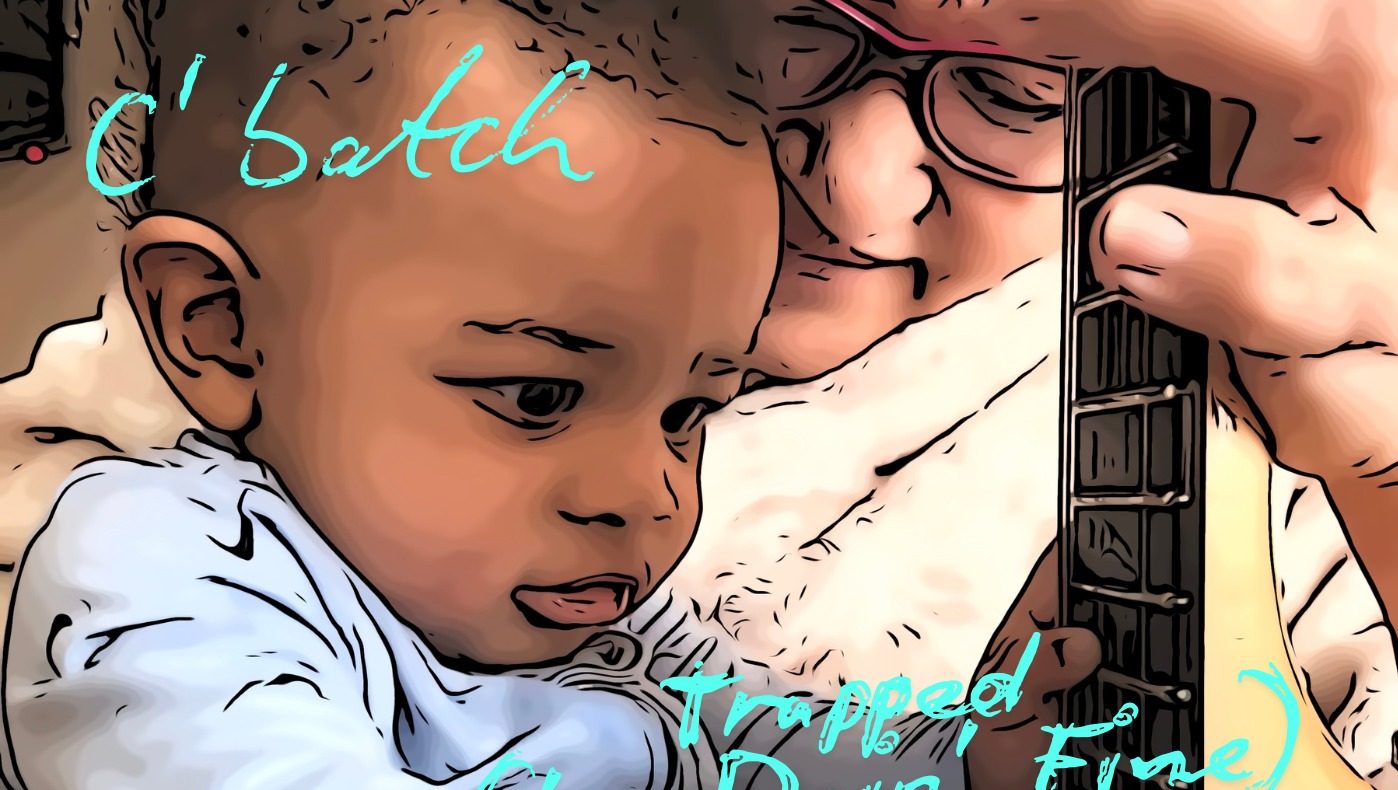
Hello everyone it’s your host Daniel from Dulaxi, and today I have with me the exceptional, C’batch from White Plains, New York, United States. And C’batch is here to discuss his recent enduring single “Trapped (I’m Doing Fine) ” which was released on March 15th, 2026. So, welcome, C’batch!. But before we begin our interview, to our audience; here is what you need to know about this artist.
Stephen H. Cumberbatch, professionally known as C’batch, is a composer, author, producer, and musician (guitarist) from White Plains, New York, United States, who also works as a keyboard, synthesizer, and sampler programmer and is a member of ASCAP, with experience collaborating with a wide range of music professionals across multiple creative roles. His catalog includes notable collaborative works such as “I Need You Now” by Sinnamon, “Let Me Do You” by NV, “Playgirls” by Kreamsicle, and “Geisha Love” by Eleanore Mills, alongside projects released through his independent company Stevette Music, Inc., established in 1984 by Stephen and Yvette Cumberbatch as a music publishing, production, and record label platform, with credited works including “I Need You Now (Moplen Edit)” by Luca Locatelli, the album “Unfinished Business” by Cbatch & Herring, and EPs such as “Send You My Love” and “Found What’s Right For Me (Back In Control Of My Life),” while continuing to develop new collections that reflect his long-term musical journey and influences; his 2026 single “Trapped (I’m Doing Fine),” released on 15th March 2026, is a reworking of his original instrumental “Trapped,” now expanded with lyrics and soulful vocals, enhanced through modern production technology to increase depth and clarity while preserving its emotional core, blending genres through a hypnotic groove and expressive vocal delivery that explores the tension between inner struggle and outward strength, designed as a mood-driven, groove-forward track suited for both reflective listening and late-night, dance-oriented playlists.
Having this brief Introduction about C’batch, I’m sure new and current fans must be excited about our Interview today.
INTERVIEW SESSION
Daniel: C’batch has had a remarkable journey spanning composition, production, musicianship, and publishing. Looking back, what moments do you feel truly defined your artistic identity and shaped the sound you create today?
C’batch: There have been several moments in my life that led me down this musical journey. My dad was a terrific drummer who introduced and exposed me to jazz from a very young age. By the time I was born, he no longer had a drum set, but he would use spoons, knives, and a windowsill in the apartment we lived in, along with his 78 rpm jazz records, to simulate playing drums.
Another early recollection that had a significant impact on my musical journey was seeing The Beatles perform on The Ed Sullivan Show when they first came to the States. That left a lasting and indelible impression on me. Later on, I was introduced to the sounds of soul, R&B, rock, and funk music. These experiences, along with many others, helped shape my musical identity.
Daniel: Your catalog connects with legendary eras of New York club culture and dance music history. How has growing up and working within that creative environment in White Plains and the wider New York music scene influenced your musical vision?
C’batch: I actually grew up in the Queensbridge Houses, a housing project in Long Island City, Queens, New York. During that time, it was a place filled with creative and talented musicians. Many of us from that era played a significant role in New York’s club culture and dance music scene, and even paved the way for several individuals from later generations to become well-known rap and hip-hop artists.
Moving to, and living for several decades in, White Plains, New York, actually insulated and isolated me somewhat from that wonderful musical environment.
Daniel: Stevette Music, Inc. has existed since 1984 and continues to evolve decades later. What has kept your passion for independent music creation and publishing alive throughout all these years?
C’batch: The ability to create music without having to conform or be constrained by the types of music being released.The decision-making, starts and stops, are entirely up to us.
Daniel: “Trapped (I’m Doing Fine)” explores the tension between inner struggle and outward strength. What personal or emotional experiences inspired the story behind the song?
C’batch: Just the fact that life isn’t easy, but people can sometimes find the ability to cope. Also, at the time, my granddaughter was dealing with a boss who was not very nice to her and made the work environment so unpleasant that she wanted to leave.
Daniel: The title itself feels deeply layered because “I’m Doing Fine” almost sounds like a mask hiding deeper emotions. What message were you hoping listeners would take from that contrast?
C’batch: Resilience, inner strength, and perseverance.
Daniel: The song carries a hypnotic groove while still feeling emotionally vulnerable and reflective. How important was it for you to balance dance-floor energy with emotional storytelling?
C’batch: It’s actually something I never consciously think about during the creative process.
Daniel: Since “Trapped (I’m Doing Fine)” began as an instrumental track before evolving into a vocal record, how did adding lyrics change the emotional meaning of the song for you?
C’batch: The original instrumental version of the song was called “Trapped (Mental Telepathy Is),” and when it was written, it was never intended to be anything other than an instrumental piece. Initially, I think it had more of a trap vibe to it. Adding lyrics definitely took the composition in another direction, changing the overall emotional mood and meaning of the song.
Daniel: There’s a haunting emotional undertone throughout the record that lingers even after the music fades. Were there any particular lyrics or vocal moments that you personally feel capture the heart of the song most powerfully?
C’batch: I suppose the lines, “I’m doing fine in this space of mine, everything is gonna be alright,” stand out to me. Also, lines like, “I missed the bus and now I’m late for work, my boss is acting like a total jerk,” really resonate with me as well.
Daniel: The production blends soulful vocals, groove-driven rhythms, and modern enhancement technology while still preserving the original emotion of the track. What was the creative process behind rebuilding the song into its current form?
C’batch: Purely accidental and experimental.
Daniel: Your background as a guitarist, keyboardist, synthesizer programmer, and producer gives you a very broad musical palette. How do those different musical skills influence the way you structure and arrange a track like “Trapped (I’m Doing Fine)”?
C’batch: I’m really not sure how to answer that. I suppose that in anything I create, there is a common thread linking all of those abilities to what eventually gets created.
Daniel: The song feels immersive and cinematic while remaining deeply rhythmic. When creating the instrumental atmosphere, what elements were most important in achieving that hypnotic and emotionally resonant sound?
C’batch: I usually start with a drum track, followed by bass or, in many instances, the harmony track. My melodies are always derived from and/or dictated by the harmony.
Daniel: Having contributed to influential records like “I Need You Now” and “Let Me Do You,” what lessons from those earlier eras of music still guide your creativity today?
C’batch: Song arrangement, production techniques, and, in some instances, collaboration.
Daniel: Your music has continued to evolve across multiple decades and changing musical landscapes. How have you managed to stay creatively inspired while adapting to new technology and modern production techniques?
C’batch: It all begins with the ability to create, which is the most important element in writing music. Technology, when used as a tool, is useful and essential in achieving a polished and great-sounding musical end product.
Daniel: Many artists struggle to maintain authenticity over time, especially in an industry driven by trends. How do you protect the emotional honesty and originality in your music?
is useful
C’batch: I have never struggled with maintaining who I am musically. Although I always try to stay connected to industry trends, they have never dictated the way I create music. If that were the case, I probably would never have written anything.
That’s not to say I haven’t attempted to write within a particular style or space. It’s just that whenever I try to do so, it always comes out sounding like me. When I set out to compose, I’m not really thinking about any particular genre.
For example, my wife, Yvette, who is from Jamaica, West Indies, has tried for years to get me to write a reggae piece, and I was never able to do it because it would, again, always come out sounding like me. Only recently have I finally been able to accomplish that.
Daniel: “Trapped (I’m Doing Fine)” feels like a very reflective and mature body of work emotionally. Do you think this release represents a new chapter in your artistic journey?
C’batch: Perhaps, but I’m sure there will be other chapters that follow.
Daniel: You’ve spoken about releasing future collections that reflect your lifelong musical influences. What excites you most about revisiting and sharing different phases of your musical evolution with listeners?
C’batch: The fact that the music remains meaningful and viable. I’m thrilled to now be in a position to share that music with the world.
Daniel: Because the song speaks to hidden struggles and resilience, have you received any reactions from listeners that deeply moved or surprised you since the release?
C’batch: Only what I’ve read about the song. I find the different views and opinions interesting, not only regarding this piece, but also the other recent releases.
Some might find it surprising, but I don’t analyze or delve too deeply into the meaning or storyline of any particular tune. I do, however, enjoy reading other people’s interpretations of those songs.
Daniel: Your music seems capable of connecting both with listeners looking for introspective experiences and audiences drawn to groove-heavy dance records. What does it mean to you when your music resonates across such different emotional spaces?
C’batch: I think it’s great! It’s wonderful when one’s work has the ability to reach and connect with an audience in different ways. After all, I think that’s what most songwriters try to achieve. At least, that has always been my intention.
Daniel: With “Trapped (I’m Doing Fine)” now reaching listeners worldwide, what do you hope this release ultimately represents within your overall legacy as an artist and producer?
C’batch: I’m thrilled to hear that the song has global reach. I write and compose music for people to enjoy and never really think in terms of legacy. I’m simply happy knowing that my compositions are enjoyed by others.
Daniel: Looking ahead, what upcoming releases, collaborations, or creative plans can fans expect next from C’batch and Stevette Music, Inc.?
C’batch: Well, Stevette Music has recently released “The Vault 2”, which showcases the diversity of musical styles I draw from. It’s more of a vocal-oriented album, as opposed to “The Vault 1”, which leaned more heavily toward instrumental smooth jazz and easy listening styles.There is also a tune called “Fluorescent Buzz,” which is derived from a song I composed titled “Next Time (I Won’t Be Falling).” That song has recently been released as an EP featuring several variations, including two cinematic versions. In addition,The Vault 3, which continues to explore many of the musical genres I enjoy and naturally find myself writing in, is scheduled for release later this month.
Having Had A Close Listen To This Enduring Piece of Art, Here’s My Thought.
“Trapped (I’m Doing Fine)” by C’batch, is an immersive alternative-indie record that I experience as a deeply reflective blend of emotional restraint, atmospheric production, and psychological honesty, where the reworked instrumental foundation of the original “Trapped” is expanded through modern enhancement while preserving its raw emotional core. The production leans into minimalist but textured layering, built on a steady, looping rhythmic backbone that creates a sense of repetition mirroring emotional cycles, while reverberant electric guitars drift through the mix with both warmth and isolation, shaping a spacious, late-night atmosphere that feels both intimate and distant at once. Vocally, C’batch delivers a controlled, weary performance that avoids excess but communicates everything through subtle phrasing, carrying the weight of emotional fatigue, quiet resilience, and internal tension without ever breaking composure, which makes the honesty in his delivery feel lived-in rather than performed. Lyrically, the song resonates through its transformation of ordinary frustrations into emotional symbolism, where simple imagery reflects mental exhaustion and the strain of maintaining outward stability, and the central contradiction between feeling trapped and still insisting “I’m doing fine” becomes a grounding psychological theme rather than a dramatic conflict. Thematically, I find its greatest strength in how it treats emotional survival as routine rather than exception, using repetition, restraint, and understated reassurance as coping mechanisms rather than declarations of resolution, while the groove-forward structure reinforces this cyclical emotional state without forcing resolution or climax. Overall, the song feels like a carefully constructed emotional space where vulnerability, discipline, and quiet endurance coexist, and it leaves me with the impression of a deeply human portrait of modern emotional life that is not about breaking free from struggle, but learning how to remain steady within it.
~ Daniel (Dulaxi Team).
Finally to our audience, I urge to listen to “Trapped (I’m Doing Fine)”, add it to your playlist and be inspired by it and on behalf of Dulaxi I like to appreciate you all by saying thank you everyone, See you on our next interview.
For more information about C’batch, click on the icons below.