
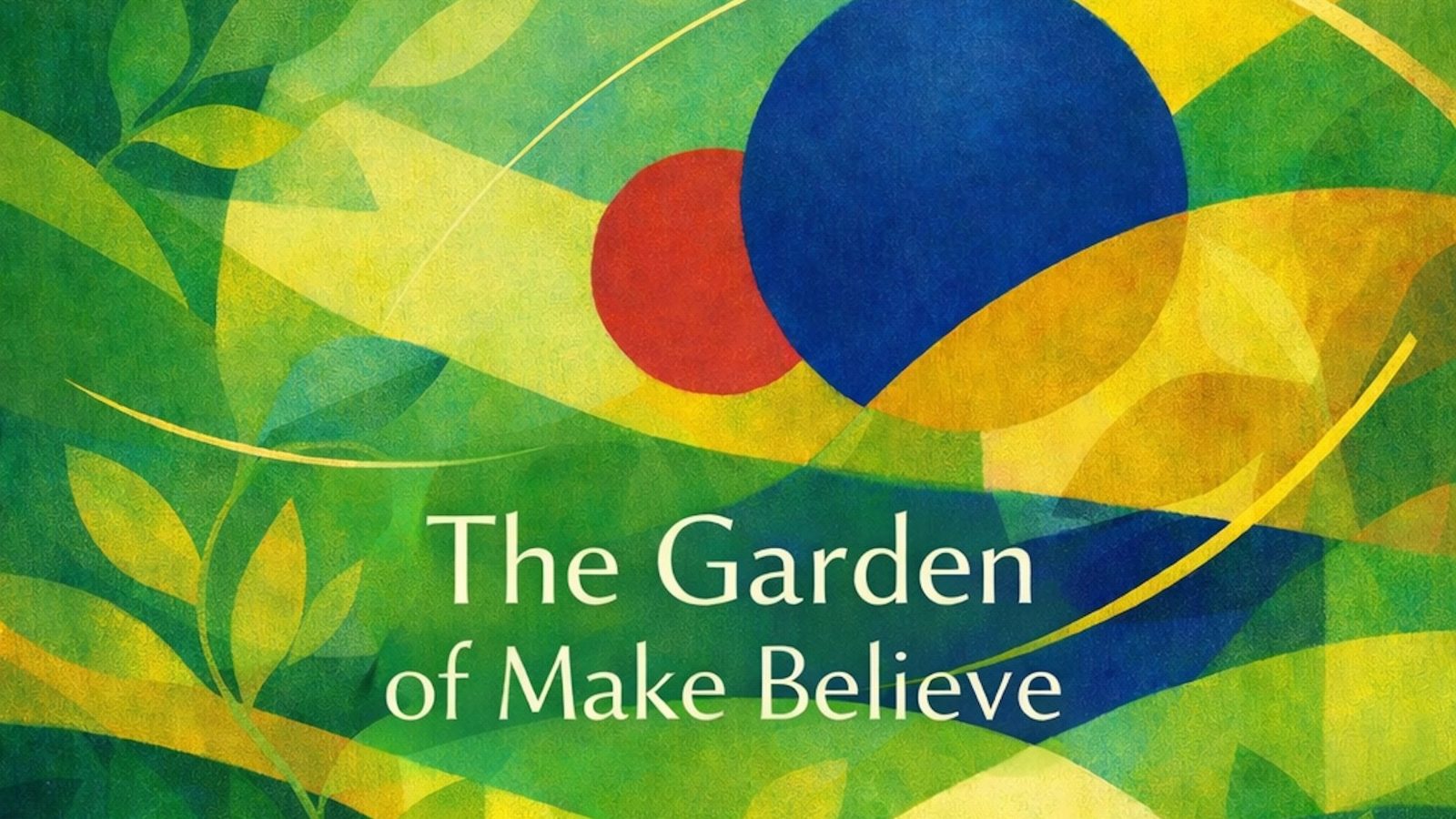
Magdi Aboul-Kheir’s “The Garden of Make Believe” emerges as a deeply expressive neo-classical experience rooted in emotional storytelling, orchestral elegance, and cinematic intimacy. Released on May 8th, 2026, the album unfolds like a carefully preserved memory, guiding listeners through landscapes shaped by longing, tenderness, wonder, and quiet introspection. Rather than pursuing overwhelming grandeur, the project thrives through restraint, allowing subtle melodic shifts, spacious piano passages, and gently layered orchestral textures to communicate emotional depth with remarkable sincerity. Every composition feels interconnected, as though each piece belongs to a larger emotional narrative where imagination and reality gradually dissolve into one another.
One of the album’s most compelling qualities lies in its pacing and atmosphere. “The Garden of Make Believe” understands the emotional power of silence just as much as the impact of orchestral crescendos. Harmonic suspension, delicate transitions, and patient development give the music a breathing quality that feels almost cinematic in motion. The piano often acts as the emotional anchor, carrying vulnerability and reflection at the center of the arrangements, while strings and ambient textures expand the emotional landscape without ever overpowering it. The production remains consistently warm and organic, preserving intimacy even during its most symphonic moments. This balance between minimalism and orchestral richness allows the album to feel immersive without becoming emotionally excessive.

The Garden of Make Believe Album Track Reviews:
On the Meadow:
“On the Meadow” stands as one of the most emotionally delicate moments on “The Garden of Make Believe,” capturing intimacy through restraint rather than orchestral grandeur. Built around soft, naturally unfolding piano phrasing, the composition feels less performed than remembered, creating the sensation of drifting through distant memories and quiet reflection. Every note is given room to breathe, allowing silence and space to become just as emotionally significant as the melody itself. The orchestration remains subtle yet deeply immersive, surrounding the piano with warm cinematic textures that never overpower its fragile beauty, while carefully controlled reverb gives the track a dreamlike atmosphere suspended between reality and imagination. Harmonically, the piece balances tenderness with understated melancholy, preserving emotional sincerity without becoming overly sentimental. What makes “On the Meadow” especially compelling is its emotional openness, inviting listeners to place their own memories and reflections within its beautifully understated soundscape, ultimately making the composition resonate through honesty, vulnerability, and quiet emotional depth.
If I Could Freeze Time:
“If I Could Freeze Time” is one of the most emotionally resonant compositions on “The Garden of Make Believe,” capturing nostalgia, vulnerability, and the fragile beauty of passing moments with remarkable elegance. The track opens with solitary piano motifs that immediately establish a deeply reflective atmosphere, drawing the listener into a world shaped by memory and emotional longing. As the composition unfolds, subtle orchestral textures gradually emerge, adding emotional depth without disrupting the intimacy at the heart of the piece. Rather than relying on dramatic crescendos, Magdi Aboul-Kheir builds emotional tension through delicate harmonic resolution and evolving melodic phrasing, giving the music a suspended, almost timeless quality. The piano performance feels profoundly human, with each note carrying clear emotional intention and sincerity. Warm, intimate production choices further strengthen the track’s emotional realism, allowing the composition to resonate through subtlety rather than spectacle. Ultimately, “If I Could Freeze Time” beautifully expresses the painful desire to preserve fleeting emotions, memories, and moments before they disappear forever.
Tears and Smiles:
“Tears and Smiles” is one of the most emotionally layered compositions on “The Garden of Make Believe,” masterfully balancing warmth and melancholy within a single cinematic experience. The track unfolds through expressive piano melodies and gradually expanding orchestral textures that constantly shift between emotional comfort and introspection. Strings evolve from atmospheric accompaniment into emotional counterpoint, adding depth and movement while allowing the piano to remain the emotional core of the composition. Repeating melodic phrases rise with moments of fragile hope before gently falling back into reflective sadness, creating a continuous emotional dialogue throughout the piece. The production remains rich and immersive without sacrificing intimacy, preserving clarity within every orchestral layer. Major and minor tonalities coexist naturally, reinforcing the emotional duality suggested by the title itself. Rather than presenting happiness and sadness as opposing emotions, Magdi Aboul-Kheir portrays them as deeply interconnected experiences. This emotional complexity gives “Tears and Smiles” a mature, reflective character that lingers long after the music fades.
The Garden of Make Believe:
“The Garden of Make Believe” stands as the emotional and conceptual centerpiece of the album, uniting orchestral richness with intimate melodic storytelling in a way that feels both cinematic and deeply personal. The composition opens with a gentle piano motif that immediately evokes innocence, wonder, and emotional openness, while subtle harmonic tension beneath the surface hints at deeper emotional complexity. As the piece unfolds, strings and delicate woodwind textures gradually expand the sonic landscape, transforming the track into a wide, immersive atmosphere that still retains its intimacy. One of its most compelling qualities is its thematic development, as the central melody evolves organically alongside the growing orchestration, shifting in emotional weight without losing its original sense of fragility. The production balances acoustic warmth with a dreamlike ambience, reinforcing the album’s overarching themes of imagination, memory, and emotional refuge. Rather than functioning as simple escapism, “The Garden of Make Believe” treats fantasy as a meaningful emotional space, resulting in a composition that feels both artistically ambitious and profoundly vulnerable.
The emotional intelligence behind the record is equally impressive. Throughout the album, Magdi Aboul-Kheir explores contrasts between innocence and melancholy, fantasy and realism, hope and uncertainty. These emotional dualities give the music a reflective quality that lingers long after the listening experience ends. His orchestration demonstrates refined control, not through technical exhibitionism, but through sensitivity and emotional precision. The harmonic language remains sophisticated yet accessible, ensuring the music resonates emotionally while maintaining artistic depth. Rather than functioning as a simple collection of instrumental works, the album creates an entire emotional world shaped by memory, imagination, and human vulnerability.
The Garden Of Make Believe Is A Cinematic Neo-Classical Journey Blending Piano Intimacy, Orchestral Elegance, And Emotional Storytelling Into A Dreamlike Reflective World Experience
~ Faithfulness (Dulaxi Team)
That emotional authenticity becomes even more meaningful when viewed through Magdi Aboul-Kheir’s broader artistic identity. A Germany-based composer and trained pianist, he draws inspiration from musical traditions spanning centuries, ranging from baroque and romantic classical music to ambient, trance, synth-driven electronica, and metal. Across releases like Into the Retroverse, Nubes Sonorae (Ambient Cloudscapes), The Mirror of Truth, Soft Heat, and The Piano Has Been Dreaming, he has continuously explored different sonic worlds while remaining committed to melody, accessibility, and emotional honesty. “The Garden of Make Believe” feels like a culmination of those artistic sensibilities, blending cinematic orchestration with deeply personal expression into a work that feels timeless, intimate, and profoundly human.
For more information about Magdi Aboul-Kheir, click on the icons below.