
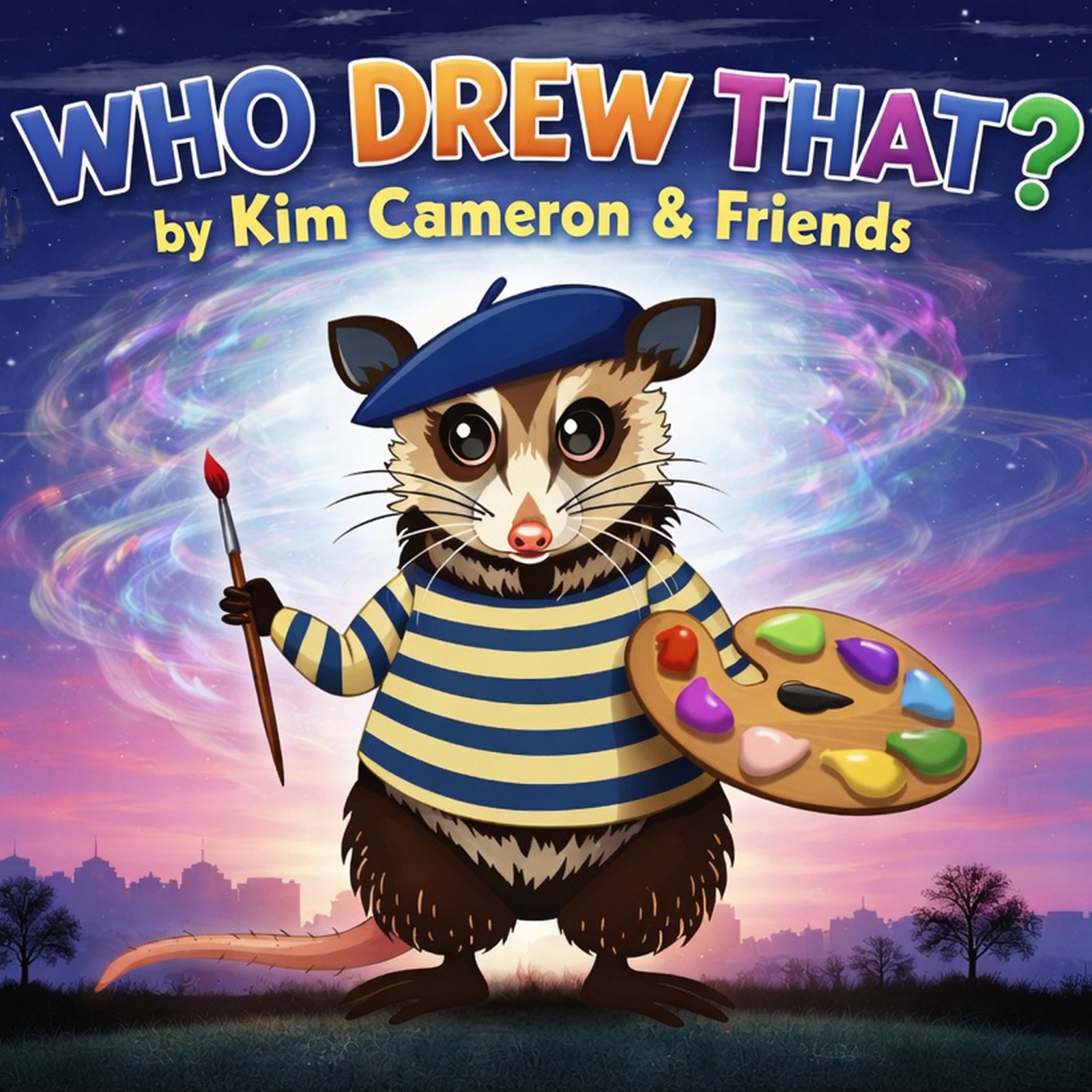
Kim Cameron’s “Who Drew That?,” released on July 1, 2026, is her first full-length children’s album, and it treats art history the way a party treats a guest list: as something to invite in and move around, not something confined to a lecture. Across eight tracks, Cameron builds each song around a different electronic dance subgenre and lets that rhythm carry the lesson, so a listener meets Salvador Dalí, Pablo Picasso, Henri Matisse, Charles M. Schulz, Barbara 62, and other visual artists through tempo and groove as much as through lyric. The pairing is unusual enough to be its own idea: a record built for festival stages and car rides that also happens to be a way of encountering painters, cartoonists, and one graffiti pioneer for the first time.
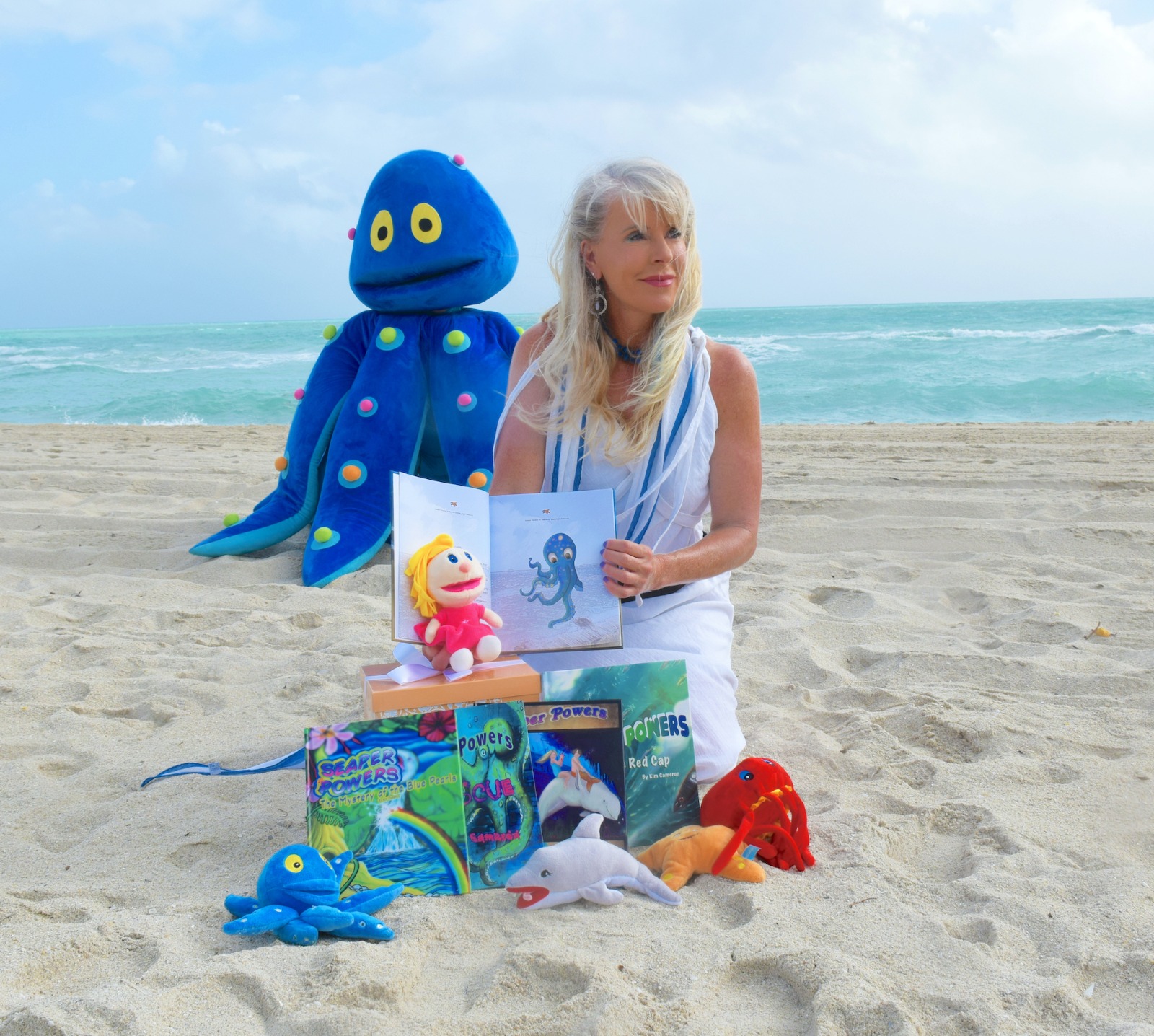
That same instinct extends past the audio. Cameron paired every song on “Who Drew That?” with its own animated video, giving teachers, homeschoolers, and caregivers a way to bring the album into a classroom setting so it works as more than background music. The album sits inside her wider “Seaper Powers” catalog of adventure-driven, educational content for children, and that lineage shows in how naturally the record treats art history as physical, something to dance through instead of sitting still and absorbing.
Cameron’s own touring and production history explains the confidence behind the record. Based in Miami Beach, she is a three-time Billboard-charting and 25-time iTunes-charting artist whose touring history includes festival dates as far-flung as Xiamen, China, and Dubrovnik, Croatia, and whose songs have found placement on television outlets from Disney to Fox. She is also an award-winning filmmaker and children’s author, having written and directed three animated Seaper Powers features, which is likely why “Who Drew That?” arrives with a full visual companion piece instead of treating video as an afterthought. Four of the album’s eight songs are examined here: “Barbara’s Color Splash Day,” “Toon Time,” “Color Me Pink,” and “Life in a Cartoon.”
Who Drew That? Album Tracklist
Barbara’s Color Splash Day:
The song opens on solo piano before the rest of the arrangement enters, an unexpected choice for a track built around Drum & Bass, and it works because it gives Cameron’s vocal a settled place to land before the tempo takes hold. The song honors Barbara 62, one of the first female graffiti artists, and its lyrics lean on imagery instead of a straightforward biography, a natural way to introduce a graffiti pioneer to a young listener, through color and motion instead of a timeline of facts. Cameron’s vocal is gentle soft and controlled, delivered with a controlled, tender quality that treats the subject with curiosity, and Suzanne Grzanna’s supporting vocals thicken that same warmth without pulling focus from the lead line. The chorus is where the performance opens up, gaining confidence without losing the softness that defines the verses around it.
That contrast between softness and speed carries through the arrangement. Michelle Wade Jones’s violin and viola sit against a quick, controlled percussion pulse without blending them together, so the track keeps two different senses of time running at once: fast, energetic drumming underneath melodic string lines that move with more patience, while the bass itself stays deliberately subtle instead of pushing forward. It’s an unusual pairing for the genre, and it’s also what keeps the song legible as a piece about color and motion instead of only a display of rhythm. The production leans warm and intimate even at speed, keeping piano, strings, and rhythm section separately audible while preserving separation between them, which is likely why the song reads as suited to a drive or a relaxed morning as easily as a party.
Toon Time:
An instrumental figure, strings and synth arriving together, opens the track before Cameron’s voice enters, and the introduction immediately grabs attention with an immediate entrance. Where “Barbara’s Color Splash Day” leans on imagery, “Toon Time” is built around message: it functions as a direct celebration of cartoon art and the creative process behind it, aimed at making that world feel inviting instead of distant. Karen Olson’s string playing gives the song a recurring melodic thread, and Cameron delivers the vocal conversationally, closer to a storyteller narrating than a singer performing to the back row, with an expressive quality that keeps the lyric feeling spoken-to instead of sung-at.
Musically, “Toon Time” settles into a moderate, balanced tempo with a moderate pace that gives it a balanced feel. The arrangement is dense in a controlled way, bass, percussion, strings, synth, and electronic texture all present at once, but the mix keeps each part distinguishable, with the rhythm section driving underneath while the surrounding instrumentation is used to shape the storytelling and build contrast while leaving space for the vocal. That balance supports the song’s aim directly: nothing demands attention so forcefully that the listener loses the thread of what the song is describing, which matters for a track whose entire job is introducing an unfamiliar subject without overwhelming a young audience.
Color Me Pink:
Where the two previous tracks ease into their arrangements, “Color Me Pink” starts with vocals and instruments together, an immediate opening that matches its Latin-inflected dance foundation. The song’s themes run toward self-discovery, healing, and change, and its lyric’s strongest asset is storytelling instead of direct message, it works through a sense of transformation instead of stating a lesson outright, tracing a path from personal struggle toward growth over the course of the song. Cameron’s vocal performance stays confident and energetic throughout, matching the song’s rhythm without losing the conversational, storytelling delivery that runs across the album.
The instrumental choices reinforce that assertiveness. A deep, punchy bassline anchors the track, paired with rhythmic, driving guitar and tight, groovy drums that stay dynamic across the song with movement and variation throughout, while the synth work leans toward broadening the atmosphere and heightening intensity to broaden the atmosphere and heighten intensity, giving the arrangement its lift underneath Cameron’s vocal. That combination keeps “Color Me Pink” energetic throughout while maintaining movement throughout, which fits its purpose: using an accessible, danceable foundation to make the idea of creative transformation feel physical, letting children connect with the message through movement as much as through lyric.

Life in a Cartoon:
The most direct tribute among the four tracks examined here, “Life in a Cartoon” is built specifically around Charles M. Schulz and the world of Peanuts, using dance music as the vehicle for introducing children to both the artist and his creation. Vivian Fang Liu joins Cameron’s lead vocal, and the two voices share a bright, crisp, storytelling delivery that stays conversational even as the arrangement pushes toward a house-driven energy underneath them. The lyric’s throughline follows identity and self-discovery, and the vocal performance reaches its most expressive point at the chorus, where the storytelling opens into something closer to a shared declaration between the two singers.
Structurally, the song reads as a dynamic progression filled with contrast and surprises, and the arrangement backs that up: bass, drums, percussion, synth, and electronic texture combine into a richly layered, house-oriented production that stays energetic from start to finish while maintaining energy throughout. The rhythm section stays punchy and driving throughout, while the synth work is used to fill space around the vocal interplay while supporting it, keeping Cameron and Fang Liu’s voices at the center of the mix even as the track builds. It’s a fitting closing statement for the four songs gathered here, an unabashedly danceable arrangement built in service of a specific piece of art history, treating Schulz’s work as something worth celebrating loudly instead of presenting it quietly.
Who Drew That? Turns Art History Into Something Kids Can Dance To, Without Ever Slowing Down To Lecture Them About It.
~ Daniel (DULAXI Team).
Across “Barbara’s Color Splash Day,” “Toon Time,” “Color Me Pink,” and “Life in a Cartoon,” the throughline holds even as the genres shift underneath it: Kim Cameron treats visual art as something physical, something a listener can respond to before necessarily understanding the history behind it. The specifics change from song to song, a graffiti pioneer honored through piano and strings, a joyful nod to cartoon art carried by strings and rhythm, a message about transformation carried by Latin-tinged rhythm, a beloved cartoonist’s world rendered in house-driven bass and synth, but the underlying idea holds across all four: curiosity about art can be taught through motion as easily as through explanation. It’s a distinct entry point into music for children, built by someone with the production and songwriting background to make the education feel incidental to the fun with the fun leading the experience.
For more information about Kim Cameron, click on the links below.