
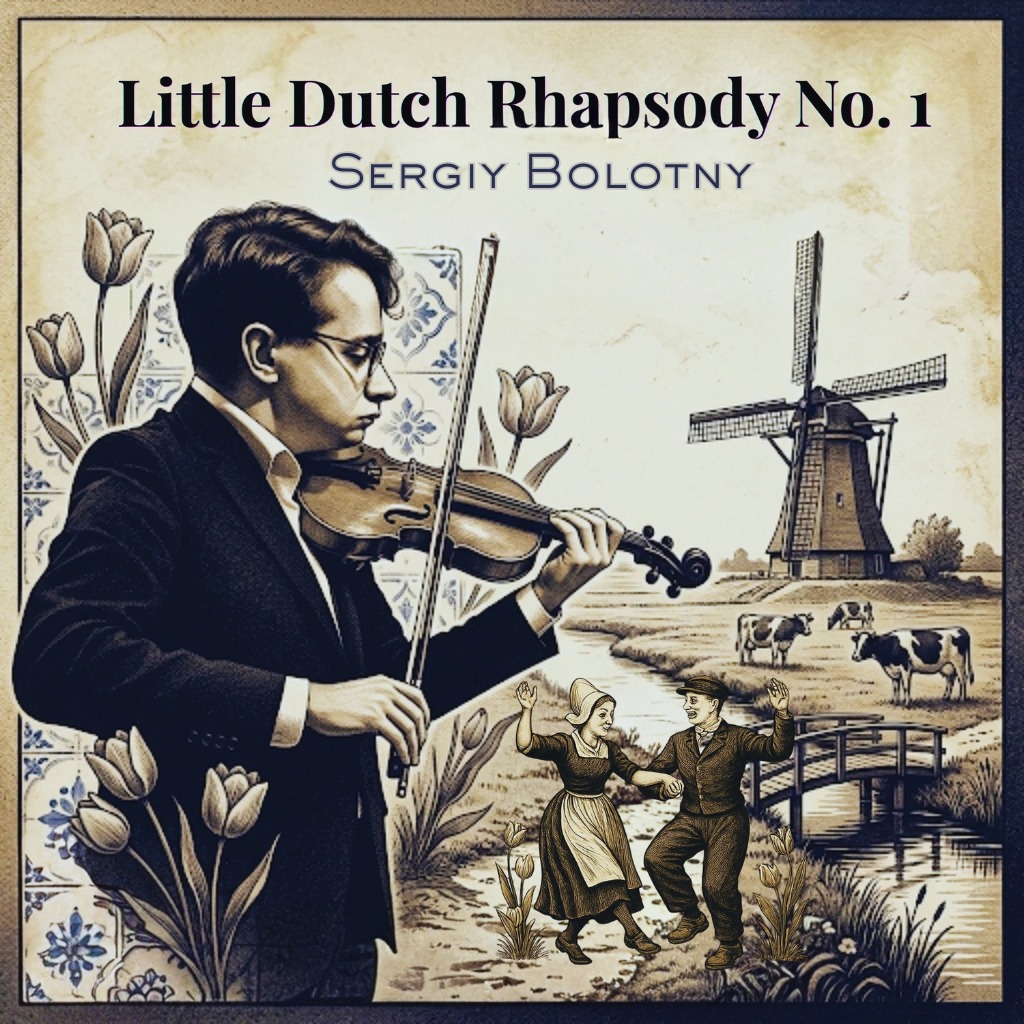
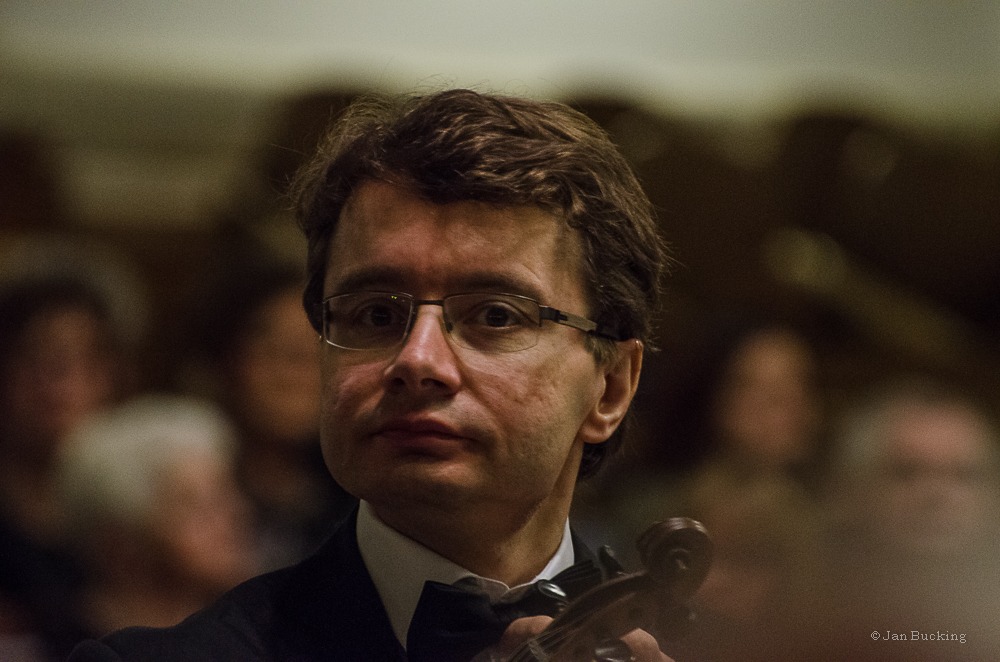
Hello everyone, it’s your host Oliver from DULAXI, and today I’m delighted to be joined by Sergiy Bolotny, a Ukrainian-born concert violinist and composer based in Groningen, Netherlands. Known for his work as Assistant Second Concertmaster with the Noord Nederlands Orkest, as well as his work as a solo artist and composer, Sergiy brings together classical performance, contemporary composition, and European folk heritage in his music. His latest release, Little Dutch Rhapsody No. 1, is an original solo violin composition released on 31 July 2026, drawing on Dutch and Groningen folk tradition through a classical, contemporary instrumental approach.
Before we begin our conversation with Sergiy Bolotny, here’s what you need to know about today’s featured project.
About Sergiy Bolotny
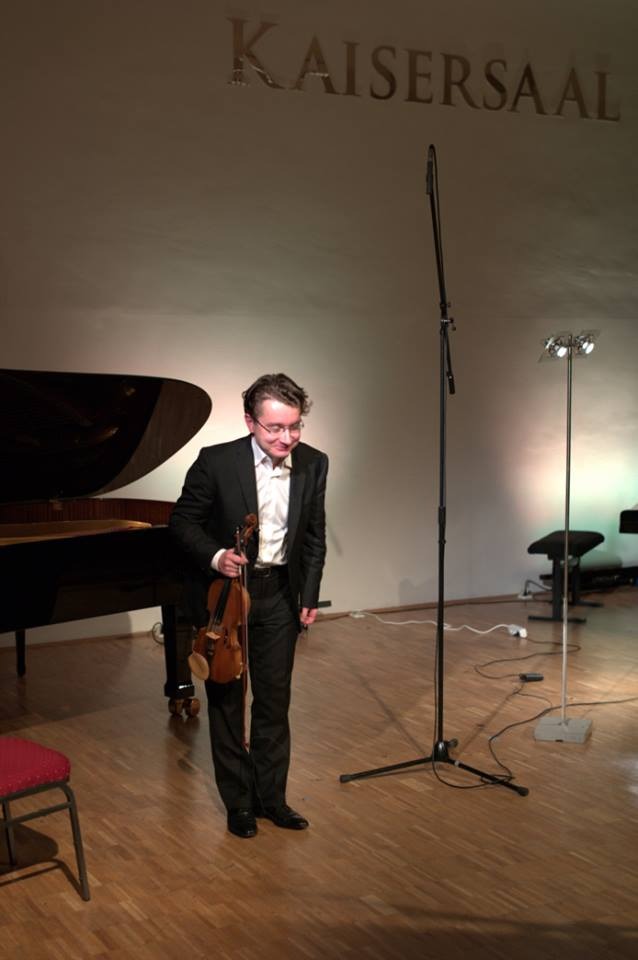
Sergiy Bolotny’s musical journey has been shaped by several distinct European traditions. Born in Ukraine, he studied at music academies in Lviv, Kyiv, and Vienna before building his professional life in the Netherlands. These environments have contributed different perspectives to his development as a violinist and composer, from the discipline of his early musical education to the lyrical qualities of the Slavic tradition and the stylistic awareness associated with Vienna. His career now spans orchestral performance, chamber music, solo playing, and original composition.
That orchestral experience has also informed his approach to composition. Rather than treating the violin simply as a vehicle for melody, Bolotny approaches the instrument with an awareness of its ability to suggest rhythm, harmony, contrasting voices, and different layers of musical expression. His original works reflect this relationship between performer and composer, allowing the technical possibilities of the instrument to become part of the storytelling.
Little Dutch Rhapsody No. 1 grew from his interest in the musical heritage of the country he now calls home. The composition takes inspiration from the historic Groningen folk tune “Ain boer wol noar zien noaber tou,” a humorous traditional story about a farmer travelling to his neighbour with only one shoe or clog. Rather than reproduce the folk melody in its traditional form, Bolotny uses it as the starting point for a new solo violin work built around progressive variation, rhythmic energy, lyrical contrast, and technically demanding writing.
The idea emerged unexpectedly. After deciding to explore Dutch folklore, Bolotny encountered the Groningen tune and immediately began experimenting with it on the violin. The playful rhythm and rustic character quickly suggested a larger musical possibility, leading to the central idea of the composition within a very short period. What began as an encounter with a traditional melody consequently became part of a broader artistic exploration of how cultural memory can continue to evolve through performance and composition.
Through the solo violin, Bolotny explores how an apparently simple folk idea can support sophisticated musical development while retaining its original personality. The contrast between rustic storytelling, demanding violin technique, lyrical passages, and energetic rhythmic writing gives the composition room to operate both as a tribute to Dutch cultural memory and as an independent work of contemporary concert music.
His approach is also rooted in a broader belief that cultural traditions remain most meaningful when they are allowed to develop. Rather than treating folklore as something permanently fixed in the past, Bolotny sees renewal as part of preservation. That philosophy connects the Groningen material in Little Dutch Rhapsody No. 1 with his exploration of Ukrainian heritage and points toward the next stage of his compositional journey, which he says will take him toward Japanese traditional aesthetics, folk song, and philosophical minimalism.
Having this brief introduction to today’s featured project, I’m sure both new listeners and longtime followers of Sergiy Bolotny will be interested to hear more about the ideas, experiences, and musical philosophy behind Little Dutch Rhapsody No. 1. So, without further ado, let’s begin today’s interview.
INTERVIEW SESSION
Oliver:
You were born in Ukraine, studied at music academies in Lviv, Kyiv, and Vienna, and have since built a life and career in the Netherlands. How has moving between these different cultural and musical environments shaped the way you understand yourself as a violinist, composer, and person?
Sergiy Bolotny:
Each city gave me a distinct perspective, much like the great traveling concert violinists of the late 19th and early 20th centuries. Lviv gave me rigorous discipline, Kyiv opened up wide Slavic lyrical emotion, and Vienna taught me style, aristocratic sound, and chamber music dialogue.
Over time, I discovered that across all traditions—from Lviv and Vienna to Tokyo or New York—there is fundamentally only one true violin school: the pursuit of pure, unforced musical beauty. Living in the Netherlands has given me a calm, open environment to synthesize all these influences into a personal voice that speaks directly from the heart.
Oliver:
Your career includes performing as Assistant Second Concertmaster with the Noord Nederlands Orkest alongside your work as a composer and solo artist. How has working within an orchestra at that level influenced the way you listen, perform, and make creative decisions when you step away from the orchestral setting and write music of your own?
Sergiy Bolotny:
Performing masterworks by Beethoven, Brahms, or Mozart from the concertmaster chair is thrilling, but it is also an ongoing masterclass in musical architecture.
Sitting inside an eighty-piece orchestra lets you feel how master composers balance inner voices, dynamic tension, and structural timing. When I step away to write for solo violin, I carry that entire symphonic palette in my ears. I strive to compress that orchestral depth—the bass foundation, the counter-melodies, and the solo voice—into a single acoustic instrument.
Oliver:
Coming from Ukraine and making your home in the Netherlands has placed you in close contact with two distinct cultural traditions. How did living in the Netherlands change your relationship with Dutch musical and cultural heritage, and what made you want to explore that heritage through your own Ukrainian perspective?
Sergiy Bolotny:
The Netherlands has been my home for many years now. About a year ago, an idea sparked: why not explore the traditional music of the country where I live and bring it into my solo violin world?
Ukrainian and Dutch cultural temperaments are very different on the surface, but folklore touches universal human instincts everywhere. Approaching Dutch heritage with my Slavic string background felt like a natural, loving musical dialogue with the country that welcomed me.
Oliver:
The Little Dutch Rhapsodies and your Ukrainian Caprices both draw on cultural heritage while placing it within a concert-level solo violin setting. What attracts you to taking traditional musical ideas and giving them a new life through technically demanding contemporary composition?
Sergiy Bolotny:
Folklore is honest, innocent, and unpretentious; it goes straight to the heart. Classical masters like Haydn, Bartók, and Gershwin never viewed folk melodies as museum pieces; folklore was the very foundation of their artistic voices.
I am drawn to taking an authentic, unadorned tune and exploring how far it can travel on the concert stage when paired with modern violin techniques, double-stops, and harmonic color without losing its original soul.
Oliver:
“Little Dutch Rhapsody No. 1” is built around the Groningen folk tune “Ain boer wol noar zien noaber tou,” whose story follows a farmer heading out with only one shoe or clog. What was it about this humorous and slightly absurd story that captured your imagination strongly enough to become the foundation for a concert rhapsody?
Sergiy Bolotny:
It was pure accident. When I first decided to look into Dutch folklore, this humorous Groningen tune was the very first piece I encountered.
I picked up my violin, played through the tune for a couple of minutes, and started improvising. Suddenly a rush of musical ideas arrived—the rhythm, the playful hopping character, the comedic rustic spirit. The core of the piece was born in about ten minutes. It was like love at first sight.
Oliver:
Rather than preserving the folk tune exactly as it might have been heard traditionally, you transform it through progressive variation and neo-romantic solo violin writing. What were you hoping to reveal about the original melody by allowing it to pass through your own compositional language?
Sergiy Bolotny:
I wanted to show that a simple rustic tune carries unexpected concert possibilities.
Instead of merely repeating the melody from start to finish, I gave the theme freedom through progressive variations, shifting textures, and unexpected harmonies. By framing it with romantic violin writing in the spirit of Fritz Kreisler, the humor gains elegance while remaining completely down-to-earth.
Oliver:
There is a fascinating contrast between the rustic simplicity of a folk story about a farmer with one shoe and the sophisticated technical demands of solo concert violin. How did you approach preserving the humour and character of the original tale while giving the composition the scale and complexity of a rhapsody?
Sergiy Bolotny:
Rhythm was the anchor. The story is funny because the farmer keeps trudging forward with only one shoe, creating an asymmetrical, hopping momentum.
Even when the violin writing shifts into rapid string crossings or demanding double-stops, I made sure the dance pulse remained lively underneath. The virtuosity never turns academic; it mirrors the rustic comedy of the narrative.
Oliver:
The piece incorporates spirited dance rhythms, rapid string crossings, and lyrical contrasts, creating several different demands on the violin within a single composition. How did you decide where to push the instrument technically and where to allow the music to become more lyrical and reflective?
Sergiy Bolotny:
It is a matter of pacing and intuition. Creating a solo piece is like making a fine chocolate bonbon: every layer must have a purpose, with no empty filler.
If a piece only displays continuous fast notes, the audience becomes fatigued. By pausing the motoric drive and opening into a singing cantabile passage, the lyricism gives depth to the humor, and the return to the dance feels twice as energetic.
Oliver:
As an experienced concert violinist, you already understand the instrument at an extremely detailed level, but composing specifically for solo violin gives you the opportunity to explore its full acoustic and technical vocabulary. Which aspects of the violin were you most excited to challenge while writing “Little Dutch Rhapsody No. 1”?
Sergiy Bolotny:
I wanted to test the agility of rapid string crossings combined with crisp, springy spiccato bowings.
The violin has an extraordinary ability to suggest multiple voices simultaneously through register leaps. Drawing on the traditions of Paganini and Kreisler, I enjoyed seeing how much rhythmic drive, polyphonic richness, and comedic color I could extract from one instrument.
Oliver:
You chose to record the piece with natural acoustic resonance rather than relying heavily on production techniques, allowing the unvarnished sound of the violin to remain central. What does that natural approach reveal about the instrument and the composition that you felt was important for listeners to hear?
Sergiy Bolotny:
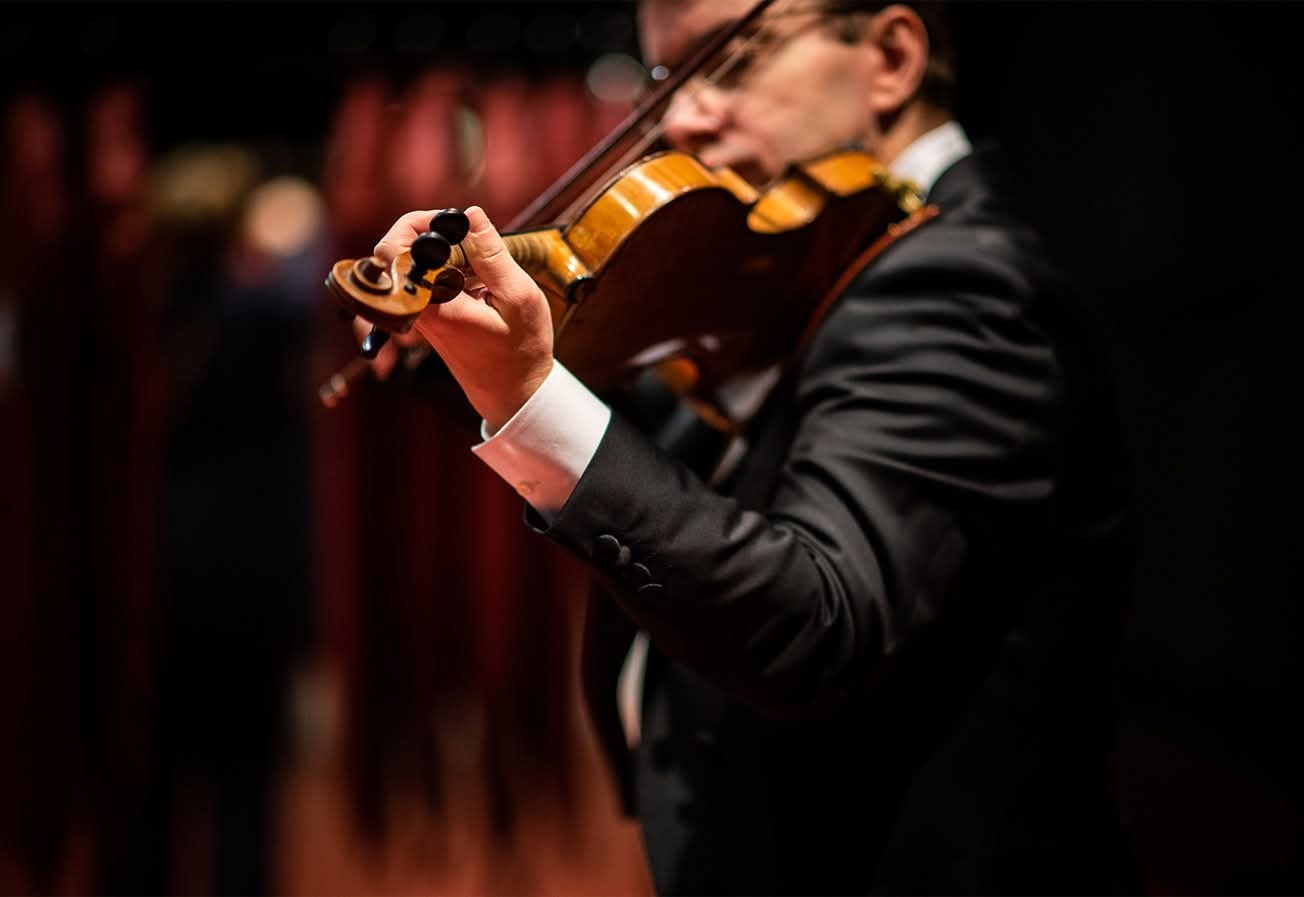
The violin is an acoustic instrument built from aged wood and varnish; it requires physical room air to bloom.
Over-compressed modern production strips away the delicate dynamic range and physical presence of the player. I wanted listeners to hear the authentic resonance of the room—the air moving, the bite of the bow hair, and the transparent transitions between whispering cantabile and brilliant dance figures.
Oliver:
Folk music often carries the memory of a particular place, language, community, and period of history. When you reinterpret a Dutch folk tune as a Ukrainian-born musician living in the Netherlands, how do you think your own identity changes the way that cultural memory is expressed?
Sergiy Bolotny:
My performance naturally brings Slavic warmth, vocal rubato, and romantic intensity to the Dutch melody.
I don’t try to imitate an archival recording from a century ago. I filter the tune through my lived experience as an artist who bridges two worlds. That cross-pollination gives regional folklore a wider, universal voice that listeners in Mexico, Brazil, or Germany can connect with immediately without needing translation.
Oliver:
The idea of dialogue between centuries-old folklore and modern concert technique is central to this piece. What interests you most about placing historical musical traditions in conversation with contemporary classical performance, and what do you believe each side can reveal about the other?
Sergiy Bolotny:
Folklore brings grounding, honesty, and memorable melodic innocence; contemporary concert technique brings structural freedom, harmonic color, and virtuosity.
When you put them together, folklore proves that it is durable enough to stand alongside concert literature, while classical virtuosity is reminded that technique exists to tell a human story.
Oliver:
Your work as a concert violinist involves interpreting compositions written by others, while your original music requires you to make the compositional decisions yourself. How has moving between those two roles changed the way you think about interpretation, expression, and artistic ownership?
Sergiy Bolotny:
When you perform masterworks by other composers, you are a humble servant of the score. But when you compose your own works, you experience the vulnerability of making every single artistic choice yourself.
Moving between the two roles makes me a more perceptive performer of classical repertoire because I understand the composer’s struggle, while my performing career keeps my composing grounded in what works on stage.
Oliver:
“Little Dutch Rhapsody No. 1” carries humour and rhythmic energy, but your wider work also includes the Ukrainian Caprices and an ongoing exploration of European folk heritage. What connects these different projects for you personally, and what larger idea about cultural memory are you trying to explore through them?
Sergiy Bolotny:
The common thread is cultural memory carried through the solo violin.
Whether I am working with Taras Shevchenko’s poetry in Ukrainian Caprice No. 4, or a humorous clog-dance tale from Groningen, the underlying search is the same: honoring where we come from while speaking a musical language that unites people across borders today.
Oliver:
There is a sense of resilience in taking an old folk melody and allowing it to continue evolving rather than leaving it fixed in its historical form. Given your own Ukrainian background and international career, how important is the preservation and renewal of cultural heritage to your artistic philosophy?
Sergiy Bolotny:
Preservation through renewal is essential. If you treat culture like an antique under glass, it gradually loses its audience and becomes a relic.
True preservation means keeping the spirit alive by allowing it to sing, adapt, and speak to new generations. For Ukrainians especially, cultural expression has always been an act of survival and resilience, choosing life, humor, and creative forward motion.
Oliver:
As a performer who regularly works within an orchestra, what did creating a completely solo composition teach you about musical space and responsibility? How different was it to know that every musical idea, rhythm, contrast, and expressive detail ultimately had to be carried by one violin?
Sergiy Bolotny:
Solo playing is a high-wire act with no safety net. In an orchestra, eighty musicians share the acoustic space.
On a solo violin, you are entirely on your own. You cannot rely on percussion for rhythm or brass for volume; your bow arm must establish the groove, the harmony, and the melody simultaneously. It requires absolute clarity of thought and complete physical engagement.
Oliver:
Your career has taken you through music academies in three European cities and into professional orchestral performance, chamber music, and original composition. Looking back at that progression, which experiences have most significantly changed your understanding of what you want your own artistic voice to represent?
Sergiy Bolotny:
The most profound shift was realizing that technical perfection without emotional sincerity is hollow.
Early in your training, you focus intensely on violin mechanics. But as you mature through thousands of hours on stage, you realize audiences do not remember finger speed; they remember how the sound made them feel. My artistic voice is dedicated to that unforced, singing beauty that cuts through the noise of daily life.
Oliver:
For listeners encountering “Little Dutch Rhapsody No. 1” without knowing the original Groningen folk story, what would you like them to discover through the music itself, and how important is it to you that they eventually become curious about the tradition and story behind the piece?
Sergiy Bolotny:
First and foremost, I want them to smile and feel the infectious energy of the violin.
Music must function as a compelling piece of art on its own terms. If a listener enjoys the rhythmic hop and the sweet lyrical moments, and that leads them to look up the story of the farmer with one shoe, that is wonderful! But the emotional joy of the music comes first.
Oliver:
Finally, with the Little Dutch Rhapsodies continuing alongside your Ukrainian Caprices and your work as an orchestral violinist, where do you see your compositional path heading next, and what other pieces of cultural memory or musical heritage would you like to bring into the world of the solo violin?
Sergiy Bolotny:
My next artistic horizon is Japan! Japanese traditional aesthetic discipline, folk song intonations, and philosophical minimalism fascinate me deeply.
I am eager to explore how Japanese traditional material can be translated through European solo violin virtuosity. An artist’s duty is to venture into uncharted territory and simply try. That is my philosophy.
“Little Dutch Rhapsody No. 1 shows how a seemingly simple folk story can become a much larger conversation about memory, identity, movement, and the possibilities of a single instrument.”
~ Oliver (DULAXI Team)
EDITORIAL PERSPECTIVE
What stayed with me after experiencing Sergiy Bolotny’s work and hearing the ideas behind it is the sense of purpose behind his approach to the solo violin. Little Dutch Rhapsody No. 1 is not simply an exercise in virtuosity. Its rhythmic character, lyrical contrasts, and natural acoustic presentation serve a clear artistic idea: allowing inherited musical memory to remain alive through new interpretation. Sergiy’s perspective as both performer and composer gives that process an especially personal dimension.
~ Oliver (DULAXI Team)
CLOSING
Our conversation with Sergiy Bolotny offers a thoughtful look at what can happen when cultural heritage is approached not as something fixed in the past, but as material that can continue to grow through artistic interpretation. From his musical education across Lviv, Kyiv, and Vienna to his professional life in the Netherlands, his experiences have shaped an approach that places emotional sincerity alongside technical discipline.
Little Dutch Rhapsody No. 1 brings that philosophy into focus through a single violin and a traditional Groningen story. Whether listeners encounter the piece knowing its folk origins or simply respond to its rhythmic movement and lyrical character, the work stands as part of Sergiy’s wider exploration of how music can carry cultural memory across generations and borders.
A sincere thank you to Sergiy for sharing his time, experiences, and creative perspective with DULAXI. We encourage readers to experience Little Dutch Rhapsody No. 1 for themselves and to continue following his developing work across the Little Dutch Rhapsodies, Ukrainian Caprices, orchestral performance, and his upcoming exploration of Japanese musical heritage.
Thank you for spending time with DULAXI. I’m Oliver, and we look forward to bringing you more conversations with artists whose music, ideas, and creative journeys continue to shape the world around them.