
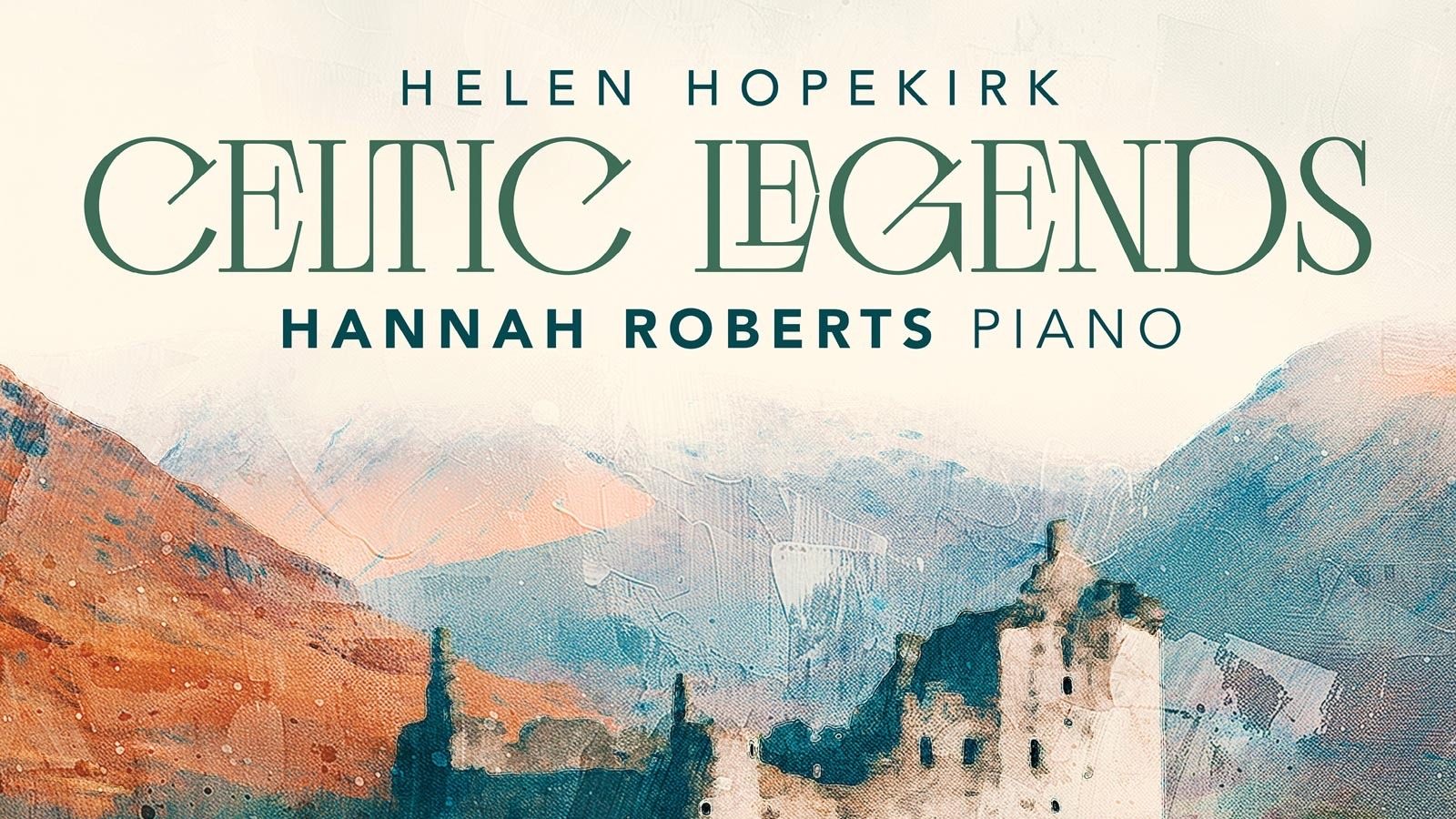
Hannah Roberts’ “CELTIC LEGENDS: THE PIANO MUSIC OF HELEN HOPEKIRK,” released on September 4, 2026, presents a thoughtful exploration of Scottish musical heritage through the expressive possibilities of solo piano. The album challenges the familiar association of Celtic music with pipes and fiddles by highlighting the genre’s equally powerful connection to melody, storytelling, atmosphere, and cultural memory. Roberts approaches Helen Hopekirk’s repertoire with crisp clarity and buoyant energy, creating performances that allow the music to communicate its character while retaining the elegance of its classical foundations. The result is an engaging collection that brings together Scottish identity, late Romantic expression, and the intimate storytelling capabilities of the piano.
At the center of the project is the music of Helen Hopekirk, a Scottish composer and pianist whose artistic career stretched across six decades. Born in Edinburgh in 1856, Hopekirk received musical training in Scotland and later studied at the Leipzig Conservatory before continuing her studies in Vienna with Theodor Leschetizky. Her professional life encompassed performance, composition, and teaching, with appearances at important venues including Steinway Hall in New York, the Crystal Palace in London, and the Salle Pleyel in Paris. Despite spending much of her later life in the United States, she maintained a strong connection to Scotland and its Celtic heritage. That connection became an important part of her creative identity, giving her compositions a distinctive relationship with Scottish landscapes, legends, and folk traditions.
CELTIC LEGENDS: THE PIANO MUSIC OF HELEN HOPEKIRK Album Track Reviews:
Romance in A Minor:
“Romance in A Minor” presents Helen Hopekirk’s late Romantic writing through an expressive piano setting that emphasizes melody, atmosphere, and elegant harmonic movement. The piece opens with wide arpeggiated figures that create an airy foundation beneath a soaring principal melody. Sustained notes and expansive melodic leaps give the writing a graceful, singing quality, while the fluid rhythmic movement allows the performance to breathe naturally through gentle changes in tempo. The middle section introduces greater harmonic and textural density, bringing richer chords and contrapuntal lines into the tenor register. This creates an engaging conversation between the hands and gives the music increased depth as it moves toward its emotional high point. Broader dynamics and fuller chord voicings intensify the expressive character before the opening material returns with renewed warmth. The closing cascading arpeggios provide a delicate sense of release, leading to a soft major chord that leaves the piece with a polished and peaceful finish.
Iona Memories: II. Cronan (A Hushing Song):
“Iona Memories: II. Cronan (A Hushing Song)” creates an intimate atmosphere through the gentle character of a traditional Hebridean lullaby. From its opening, the soft swaying rhythm and delicate piano touch establish a sense of calm, while modal harmonies, open fifths, and lowered sevenths bring a distinctive connection to Gaelic musical traditions. The melody unfolds gracefully in the mid-register, supported by undulating arpeggios that create a flowing sense of movement. The restrained dynamics keep the performance close and nocturnal, allowing every phrase to retain its tenderness. As the piece develops, subtle chromatic changes and light upper-voice counter-melodies introduce additional harmonic color without disturbing its peaceful character. Rubato phrasing gives the melody natural breathing space, enhancing its expressive quality. The closing chords gradually decay beneath the sustained resonance of the piano, leaving a warm and lingering impression as the music gently disappears into silence.
Iona Memories: III. In the Ruins:
“Iona Memories: III. In the Ruins” creates a strikingly somber atmosphere through its slow, stately character and carefully shaped piano textures. Deep bass octaves and minor-key harmonies establish a sense of weight and reflection, while clean articulation brings clarity to the austere contrapuntal writing. Descending scalar patterns contribute to the elegiac quality, giving the music a contemplative sense of movement. Its late Romantic harmonic language remains spacious, allowing each chordal progression to carry expressive significance without overwhelming the texture. As the piece develops, the dynamic range expands from a restrained low rumble into a powerful full-keyboard climax. A climbing right-hand motif reaches the upper register with bell-like clarity, creating a compelling contrast against the grounded bass chords. Carefully sustained harmonic suspensions heighten the emotional intensity before the opening material returns. The closing sequence of measured chords gradually settles into a quiet minor cadence, leaving the piece with a deeply reflective and lingering atmosphere.
Five Scottish Folk-Songs: No. 1, The Land o’ the Leal:
“Five Scottish Folk-Songs: No. 1, The Land o’ the Leal” transforms a traditional Scottish melody into an expressive piano setting centered on warmth, lyrical phrasing, and clear melodic expression. The principal theme is presented in the upper register with a gentle cantabile quality, allowing the folk melody to remain the emotional focus. Simple, hymn-like chordal accompaniment provides a graceful foundation, while modal inflections and delicate appoggiaturas add ornamental detail inspired by traditional vocal expression. As the piece develops, flowing arpeggiated figures move across the middle register, giving the melody a lighter and more buoyant character. Brief movement through related key areas introduces additional harmonic color before the music returns naturally to its home key. A broad crescendo gradually elevates the expressive intensity, emphasizing the anthem-like character of the melody while maintaining its warmth. The closing passage then settles into a peaceful, hymn-like coda, bringing the arrangement to a serene and beautifully measured conclusion.
Roberts’ interpretation of this repertoire also highlights the range of Hopekirk’s compositional language. Her early works demonstrate the influence of the late Romantic tradition, with melodic writing, expressive harmonies, and richly developed piano textures forming an important part of the musical foundation. As Hopekirk’s interest in Scottish folk music deepened, her compositions increasingly reflected her cultural heritage and experiences of Scotland. The album brings these different dimensions together, presenting music that moves between intimate reflection, lyrical beauty, dramatic expression, and evocative storytelling. The inclusion of previously unpublished compositions adds another significant dimension to the project, giving contemporary listeners access to music that had remained outside the established repertoire.
The album’s connection to Scottish legends and landscapes is particularly important to its overall identity. Works associated with “Iona Memories” reflect Hopekirk’s fascination with the Hebrides and the cultural history surrounding the Isle of Iona, where she and her husband spent several summers. Rather than treating Celtic influence as merely a stylistic decoration, the collection demonstrates how cultural memory could become part of the musical language itself. The titles “Wandering,” “Cronan: A Hushing Song,” “In the Ruins,” and “A Twilight Tale” contribute to the album’s narrative atmosphere, while Roberts’ performances give the repertoire a clear and expressive presence. Across the collection, the piano becomes a vehicle for connecting historical experience, Scottish identity, and classical composition.
Celtic Legends: The Piano Music Of Helen Hopekirk Is A Captivating Collection Celebrating Scottish Heritage, Romantic Expression, Historical Discovery, And Hannah Roberts’ Elegant Pianistic Voice
~ Faithfulness (Dulaxi Team)
Ultimately, “CELTIC LEGENDS: THE PIANO MUSIC OF HELEN HOPEKIRK” represents both a musical recording and an act of rediscovery. Hannah Roberts has built much of her artistic and scholarly work around bringing overlooked female composers into greater recognition, with particular attention to Hopekirk’s contribution to piano music. Her career has encompassed performances throughout the United States and internationally, alongside research, teaching, lectures, publications, and work in piano pedagogy. As Assistant Professor of Piano at the University of Alabama, she continues to combine performance with education and scholarship. That combination gives “CELTIC LEGENDS” its deeper significance: Roberts is not simply performing historical repertoire, but creating a renewed space for Hopekirk’s music to be heard, studied, and appreciated, allowing this distinctive Scottish voice to become part of the contemporary piano conversation.
For more information about Hannah Roberts, click on the icons below.