
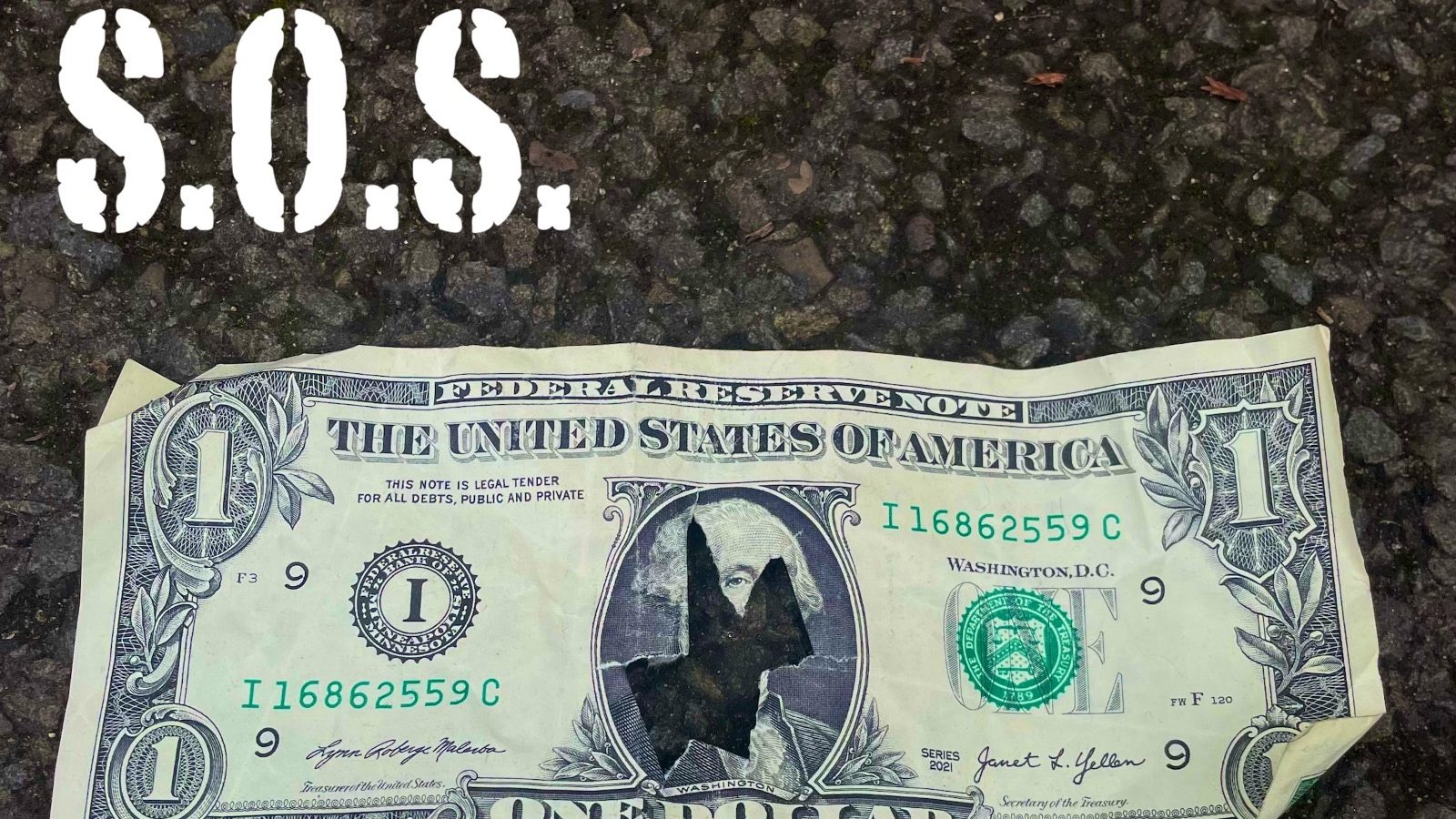
Hello everyone, it’s your host Oliver from DULAXI, and today I’m delighted to be joined by Ken Woods, the guitarist, singer and songwriter behind Ken Woods and the Electrick Reckoning. Working across rock and electric guitar-based music while drawing on funk, blues, jazz and classical influences, Woods brings a wide musical background and a strong interest in history, society and culture to his songwriting. Today, we’re talking about “S.O.S. (Same Old Shit),” the latest single from the forthcoming album American Catastrophe, released on September 18, 2026.
Before we begin our conversation with Ken Woods, here’s what you need to know about today’s featured project.
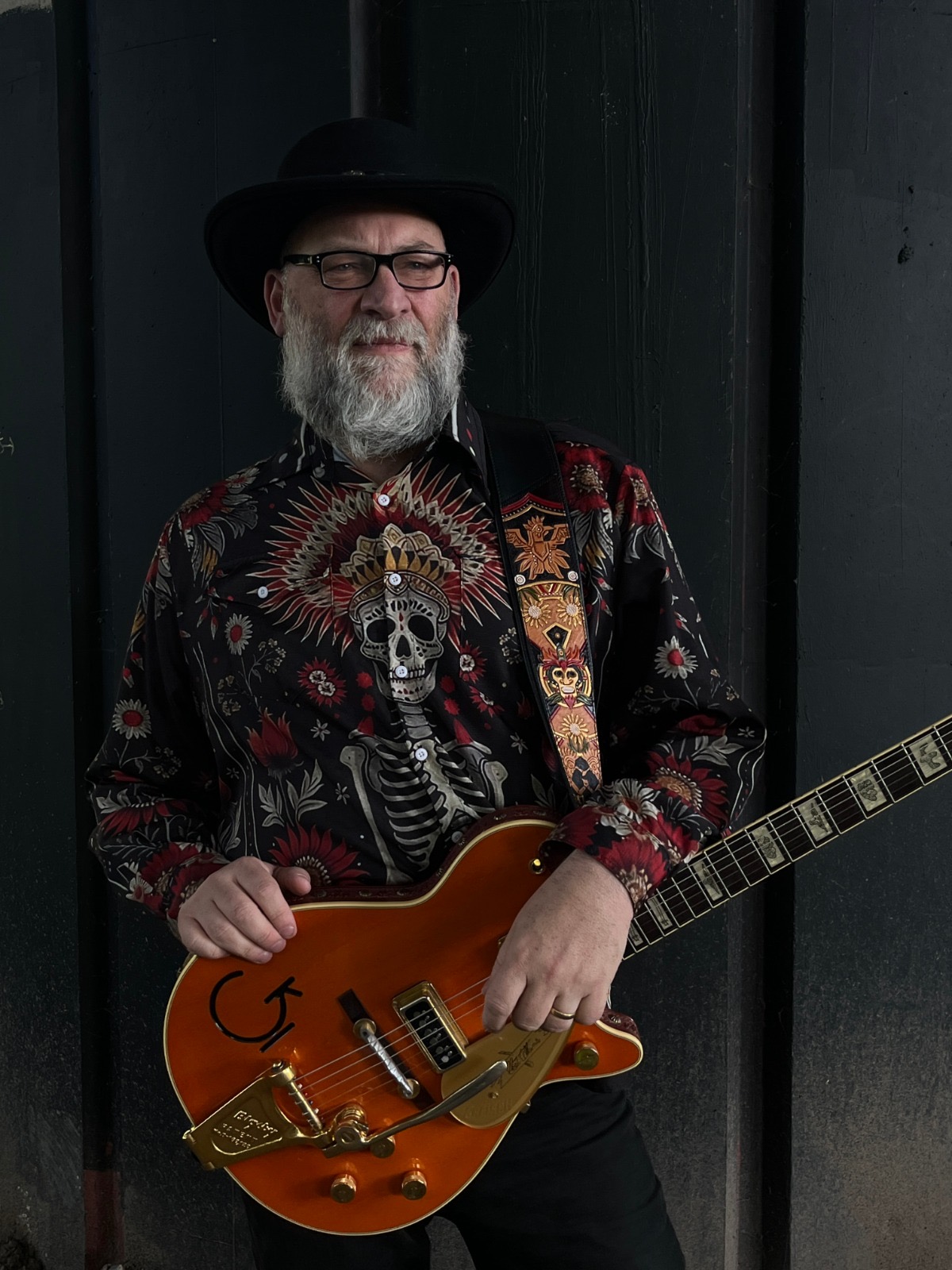
About Ken Woods and the Electrick Reckoning
Ken Woods’ musical journey has taken him through several distinct chapters, with classical music, cello playing, conducting, guitar, songwriting and rock all forming part of a remarkably broad creative life. After stepping away from guitar and songwriting in his early twenties to concentrate on classical music, particularly cello playing and conducting, Woods eventually returned to the guitar and began developing a body of work that allowed him to approach music from a different perspective.
That return eventually produced Silent Spike, his 2025 rock album with The Old Blue Gang. The project explored the history and experiences surrounding Chinese migrant workers involved in the construction of the first Transcontinental Railways, combining historical research with music to create a work concerned with memory, injustice and the stories that can disappear from public attention. The album received strong critical recognition, with HypeHub Magazine describing it as “one of the most critically acclaimed concept albums of 2025” and “one of the most important projects of the year.” Apricot Magazine similarly praised the project for its ability to turn history and memory into a powerful musical statement.
With The Electrick Reckoning, Woods turns his attention toward a different landscape. The forthcoming American Catastrophe moves from the historical subject matter of Silent Spike into contemporary American political and social life, examining themes of inequality, political disappointment, social instability and the consequences of prolonged inaction. While the two projects approach their subjects differently, both emerge from Woods’ desire to follow an idea that captures his imagination and to use music as a way of exploring stories he believes deserve greater attention.
The latest chapter begins with “S.O.S. (Same Old Shit),” a song that Woods originally wrote in 2012. More than a decade later, the track has found its way into a full recording, bringing together Woods on guitars and vocals with Joe Hoskin on bass, Steve Roberts on drums and Sam Woods on backing vocals. The song gives listeners a direct introduction to the musical identity of The Electrick Reckoning, combining funky grooves, sophisticated harmonies, expressive electric guitars, rapidfire wordplay and a deliberately provocative lyrical approach.
The song’s title captures its attitude. “S.O.S.” also stands for “Same Old Shit,” turning an expression of urgency into something deliberately blunt and humorous. Beneath that humour, however, is a song concerned with political promises, economic hardship, accountability and the consequences of allowing familiar patterns to continue unchecked. Woods connects the song’s ideas to the 2008 financial crisis and the political expectations surrounding that period, while also reflecting on the wider direction of American society.
The track was recorded with basic tracking at Fieldgate Studios in Wales, with additional recording and mixing taking place at Andrew Road Music Room. Woods and Andrew Smillie handled production, editing, engineering and mixing. The process retained the live chemistry of the trio, with the principal rhythm guitar, bass and drum performances coming from a single take before additional guitar, vocal and keyboard overdubs were developed during the later stages of production.
“S.O.S.” is ultimately part of a larger creative direction. American Catastrophe is scheduled for release in early 2027, and the project represents another stage in Woods’ continuing exploration of music as a way to engage with history, politics, culture and the uncertainties of the present. At the same time, Woods is already looking beyond the forthcoming album, revealing that he is writing a rock opera for The Electrick Reckoning titled The God Complex.
Having this brief introduction to today’s featured project, I’m sure both new listeners and longtime followers of Ken Woods are interested in hearing more about the ideas, experiences and musical decisions behind “S.O.S.” So, without further ado, let’s begin today’s interview.
INTERVIEW SESSION
Oliver:
Before we get into “S.O.S.” and the political ideas running through the song, I’d like to start with you as a person. You spent a significant period away from guitar playing and songwriting before returning to music, and that return eventually led to projects such as Silent Spike and The Electrick Reckoning. What happened during those years away from music that changed the way you understood your relationship with songwriting and performance?
Ken Woods:
In my early twenties, I decided that if I was going to make a life and a career in music, I needed to really focus my efforts. Although my interests have always been wide-ranging, I chose to put all my efforts into classical music, in particular cello playing (especially chamber music) and conducting. This decision took me on the most amazing of life journeys. I found my soulmate, worked with many of my heroes, got to perform some of the greatest music ever written, and went to work and performed in countless iconic locations.
As my children grew up a bit and life was entering a new chapter, I think I was ready to get the guitar out of the case again. I suppose the surprise was discovering how much I had missed it. In particular, the self-contained nature of songwriting and improvisation has been a wonderful counterbalance to the massive team efforts required to put on orchestra concerts. And I feel like it also gives me the outlet to say a lot of things I’ve been wanting to for all my adult life but felt I couldn’t because of my responsibility as an orchestral leader
Oliver:
Your work brings together electric guitar, rock, blues, jazz, classical influences, history, humour and socially conscious songwriting. When you look across those different parts of your musical identity, what do you think has remained constant in your approach even as the projects and subject matter have changed?
Ken Woods:
In my parents’ house, the turntable was always spinning, and the next record could be anything. We might play a Beethoven symphony, then Louis Armstrong, then the Limelighters or Tom Lehrer. I listened to all of that with the same young ears and processed it all with the same young brain. In a sense, that formed the frame of the musician I wanted to become. Part of the journey of life is finding the pathways that allow your work to encompass the broadest and best of what you want to achieve, and I feel like that’s more important to me than making a lot of money.
Oliver:
You have described The Electrick Reckoning as a project that allows you to explore a funkier, heavier and more contemporary musical language than your work with The Old Blue Gang. What was missing from your existing musical outlets that made you feel you needed to create this particular project?
Ken Woods:
The music of the Reckoning is the kind of stuff I was playing in my last full-time band, but obviously informed by a lot of life experience and musical growth since then. That project ended abruptly and with a lot of acrimony, but I always felt there was musical unfinished work to be done on those ideas and those songs. I’m not sure the line between OBG and ER is really necessary – I’ve been thinking a lot about the great Cassandra Wilson, who we just lost. The M-Base movement, which she was very much a part of, was a huge influence on me and the kind of music you hear coming from Electrick Reckoning. Urban, funky, tough, unsentimental. But then, in the 90s, she branched out into Hank Williams, Neil Young, Delta blues. It’s all interconnected and all part of what it means to be an American musician.
Oliver:
“S.O.S.” was originally written in 2012, with the first ideas arriving quickly as lyrics and guitar riffs before the song eventually found its way into a full recording more than a decade later. What do you remember about the person you were when you wrote it, and what surprised you most when you returned to the song years later?
Ken Woods:
I hadn’t written a song in ages. The kids were young – my daughter was only 2 years old. The song just dropped into my brain as I was climbing the stairs to our loft, where I used to do my cello practice. It was so out of context with everything that I was doing at that moment in life, but somehow, my instinct was that this was not something to let slip away, as so many creative ideas do if we don’t capture them. So I wrote it down, and there it stayed for 10 years before I started the work of bringing it to life.
Oliver:
The title “S.O.S.” carries an obvious sense of urgency, but you have also used it as an acronym for “Same Old Shit,” giving the song a deliberately humorous edge. What made that combination of seriousness and irreverence important to the way you wanted to communicate the song’s message?
Ken Woods:
I think that, in art of any kind, you’ve got to say what you really mean. The bluntness of that three-word phrase – that’s the song.
Oliver:
The song looks back toward the 2008 financial crisis and the political expectations surrounding that period, while connecting those events to your wider concerns about inequality, political responsibility and the direction of American society. Why did you feel that particular period of history was important enough to revisit through a rock song more than a decade after you originally wrote it?
Ken Woods:
Well, first, I like the song! I like the groove, I like the words. A decent song doesn’t have an expiration date, even one that is topical in nature. But also, we’re at a moment where we, as a society, have to really think about ‘what’s next.’ Change is coming – it could be bad, as in a worsening of current trends. It could be transformationally good if people are willing to make meaningful changes in power structures. But what it can’t be is more of the same old shit, because we’ve seen where that leads, and we won’t get a third chance.
Oliver:
You have spent considerable time researching music and art from the 1930s, and that historical interest appears to influence the way you think about periods of economic and social instability. How has studying that era changed the way you interpret contemporary events, and how does historical research influence the subjects you choose to write about?
Ken Woods:
Well, it certainly sharpens my sense of urgency. The two things people should understand about the 1930s are: First: what happened in Germany almost happened here then. Germany was the most developed, affluent, powerful nation in the history of the world at that time. Second, modern-day despots have tools of control and surveillance that no 20th C. dictator even dreamed of. Obama and Biden, nice guys both, handed Trump the most powerful surveillance state in the history of humanity and ICE.
Oliver:
One of the striking things about “S.O.S.” is that its criticism is not limited to one political side or one individual. The song questions promises of change and the consequences that can follow when expectations are not met. What does independent political thinking mean to you, and how important is it for a songwriter to be willing to question people or movements they may once have supported?
Ken Woods:
Tribalism will be the end of us if we don’t challenge it. Some sports fans will never question their favourite team, but many of us will be first to say ‘we lost that game because…..’
But, perhaps more than that, it’s become clear to me that without accountability, leaders will get elected with the votes of one group and do the bidding of another. Bill Clinton was hailed, ironically, as ‘the first Black president’ when he was elected because of his strong connection to Black America. But his policies on ‘crime’ left a generation of young Black men in prison, a generation of Black communities left behind, and a generation of Black families incomplete. Starmer and Blair both turned their back on the people that elected them.
Oliver:
The lyrics move between specific political references and broader questions about justice, economic opportunity and the American Dream. How did you decide which real-world events and political ideas belonged directly in the lyrics, and which were better left for the listener to interpret?
Ken Woods:
You’ve described my intention beautifully. If you make these things too specific, they fail as art.
Oliver:
Writing about contemporary politics can easily turn a song into a straightforward statement, yet “S.O.S.” is built around funk grooves, wordplay, humour and a strong rock arrangement. How did you use those musical elements to make the song function as a piece of music first while still carrying such a detailed political argument?
Ken Woods:
The main groove is intentionally simple – the same old shit, over and over again. When you get to the chorus, it’s more of the same old shit. It’s the same riff, but only half of it. And then the post-chorus and the guitar solos are like explosions of rage, with mixed time signatures and a much heavier sound.
Oliver:
You have described some of the musical thinking behind The Electrick Reckoning in terms of bringing together influences such as Jimi Hendrix, George Clinton, modern jazz and Olivier Messiaen. How did those very different musical ideas come together when you were developing the instrumental language of “S.O.S.”?
Ken Woods:
The jazz is really in the way I play ‘out’ in the solos, something I wish more guitar players would do. When Vernon Reid from Living Colour came on the scene, all my friends were telling me, ‘Hey Ken, there’s this guy out there who sounds just like you.’ Well, back then he probably sounded like I wish I sounded, albeit with a much more 80s aesthetic, but I wish more players had followed his lead.
Oliver:
The track features you on guitars and vocals alongside Joe Hoskin on bass, Steve Roberts on drums and Sam Woods on backing vocals. What did each musician bring to the recording, and how did the chemistry between the players affect the final arrangement?
Ken Woods:
These three guys are my closest collaborators, and all were involved with Silent Spike. They’re all musicians who have an incredibly broad musical palette, love to improvise and take risks, and have the ability to sound at home in a wide variety of styles. Steve sounds like the funkiest drummer this side of Clyde Stubblefield (who I actually played with!), but he’s also on the greatest prog drummers around. Joe lays down such a fat, greasy bassline here, but he’s also great at the jam band stuff.
Oliver:
“S.O.S.” was tracked at Fieldgate Studios in Wales before additional recording and mixing took place at Andrew Road Music Room, with you and Andrew Smillie handling production, editing, engineering and mixing. How did the recording process evolve between those stages, and what were you listening for when deciding that the final version was ready?
Ken Woods:
Typically we track the trio live in one room at Fieldgate with Andrew producing and engineering. SOS is a single take, and the main rhythm guitar, bass, and drum tracks remain those performances. Then I bring it back to Andrew Road and do whatever guitar, vocal or keyboard overdubs are needed here, and do as much as I can in the editing, mixing and automation. Then it goes back to Andrew, who brings a much-needed bit of objectivity and a technical skill I lack to the final mix
Oliver:
Your previous album, Silent Spike, approached history through a concept built around the experiences of Chinese migrant workers involved in the construction of the first Transcontinental Railways. With American Catastrophe, you are turning toward more contemporary American life. What did moving from historical storytelling into present-day political and social commentary change about the way you approached songwriting?
Ken Woods:
It’s led by the idea you fall in love with, which is something David Lynch, one of my heroes, always talked about. Silent Spike didn’t start as ‘what can I do for a record.’ I went down the rabbit hole of studying the history of where I used to live. What I discovered was so upsetting, powerful, and interesting that I knew I wanted to tell the world, and eventually I decided that music was the way to do it.
American Catastrophe is a little different, in that it started with songs. But it also reflects my frustration of being pressured to be apolitical for most of my life because of my public-facing job as a conductor and a spokesman for music in the community.
Oliver:
Your lyrics often use humour alongside subjects that are otherwise serious or uncomfortable. What role does humour play in your songwriting, particularly when you are dealing with subjects such as economic hardship, political disappointment, social division or historical injustice?
Ken Woods:
I’m not big on preachy stuff. It strikes me as artistically simplistic and lazy. You’ve either got to humanise your outrage through storytelling, which I hope is what we did on Spike, or sharpen the knives of satire a la Voltaire or Zappa.
Oliver:
There is a recurring idea in your work that music can ask audiences to confront parts of history or society that are easy to ignore. When you write a song like “S.O.S.,” what responsibility, if any, do you believe a songwriter has when addressing real events and public issues?
Ken Woods:
Our first job is to make engaging music – stuff that’s rewarding to listen to even if you don’t speak the language. Our second job is to tell the truth, without fear or favour.
Oliver:
“American Catastrophe” is planned as a larger project, with “S.O.S.” offering a different side of the Electrick Reckoning sound from the earlier “Eyes Shut.” How does “S.O.S.” fit into the wider narrative of the album, and what does it reveal about the musical and thematic territory you are exploring across the project?
Ken Woods:
There are so many stories we can and should be telling, but the other thing is finding a way to get this music in front of lots more live audiences. It’s such a monumental challenge these days, but when you see a breakthrough like Angine de Poutrine, you realise you just have to keep working at your craft and that, sooner or later, the audiences will awaken.
Oliver:
After returning to songwriting following your long break from music, you have moved through ambitious projects, historical storytelling and now a contemporary political record. When you reflect on this second chapter of your musical life, what have you learned about yourself as a songwriter that you could not have understood when you were younger?
Ken Woods:
Perhaps a bit of the value and empowerment of self-sufficiency. I was a very shy kid and always loved the camaraderie and validation of being in a band. I would never have put my own name on a project. When the OBG did our first gig, the presenter put “Ken Woods and the Old Blue Gang” on the backdrop. I was mortified – and I assumed my bandmates and the audience would all think I was some kind of narcissist. But, on reflection, I realised that there is value in having the courage to chart your own creative course
Oliver:
As you look beyond “S.O.S.” and toward the release of “American Catastrophe,” what do you hope this next phase of The Electrick Reckoning allows you to explore musically, lyrically and creatively that you have not yet been able to express?
Ken Woods:
I’m writing a rock opera for Electrick Reckoning called “The God Complex”. Watch this space!
“S.O.S. finds Ken Woods turning frustration into something restless, rhythmic and sharply human, using humour, guitar-driven intensity and an unwillingness to accept easy answers to push its questions beyond the boundaries of a conventional protest song.”
~ Oliver (DULAXI Team)
EDITORIAL PERSPECTIVE
“S.O.S.” is compelling because its musical identity never feels secondary to its subject matter. The groove gives the song an immediate physical energy, while the guitar work and changing intensity create room for Woods’ frustration to become more expressive. What stands out most is the relationship between the song’s blunt humour and its serious concerns. Woods approaches difficult political and social questions without stripping the music of character, allowing the track to remain engaging while carrying considerable weight.
~ Oliver (DULAXI Team)
CLOSING
Our conversation with Ken Woods offers a revealing look at the ideas and experiences behind “S.O.S.” and the wider world of The Electrick Reckoning. From a song first written in 2012 to its eventual recording more than a decade later, the track carries both the perspective of its original moment and the experience of the years that followed.
We would like to thank Ken Woods for taking the time to speak with DULAXI and for sharing such thoughtful insight into his songwriting, musical influences, creative process and the ideas shaping American Catastrophe. His reflections also offer a useful window into the broader journey that has taken him from classical music and conducting back to guitar-driven songwriting.
For listeners discovering The Electrick Reckoning for the first time, “S.O.S. (Same Old Shit)” provides an immediate introduction to a project built around groove, electric guitar, improvisation, humour and socially engaged songwriting. With American Catastrophe scheduled for release in early 2027, there is clearly more of this musical and creative story still to unfold.
Thank you for spending time with DULAXI. We hope you will experience “S.O.S.” for yourself and continue following Ken Woods and The Electrick Reckoning as this next chapter develops.
Until our next DULAXI interview, keep listening, keep discovering, and keep making room for music that has something to say.