

Hello everyone, it’s your host Oliver from DULAXI, and today I’m delighted to be joined by French composer, keyboardist and producer Nadjib Krim, based in the Austin, Texas area. Working across pop, rock, soul, funk, jazz and electronic music, Nadjib has developed an eclectic musical identity built around melody, harmony and a willingness to let each composition find its own character. Today, we’re speaking with him about his latest single, “Without You,” a disco, pop and funk-infused release arriving on 16 September 2026.
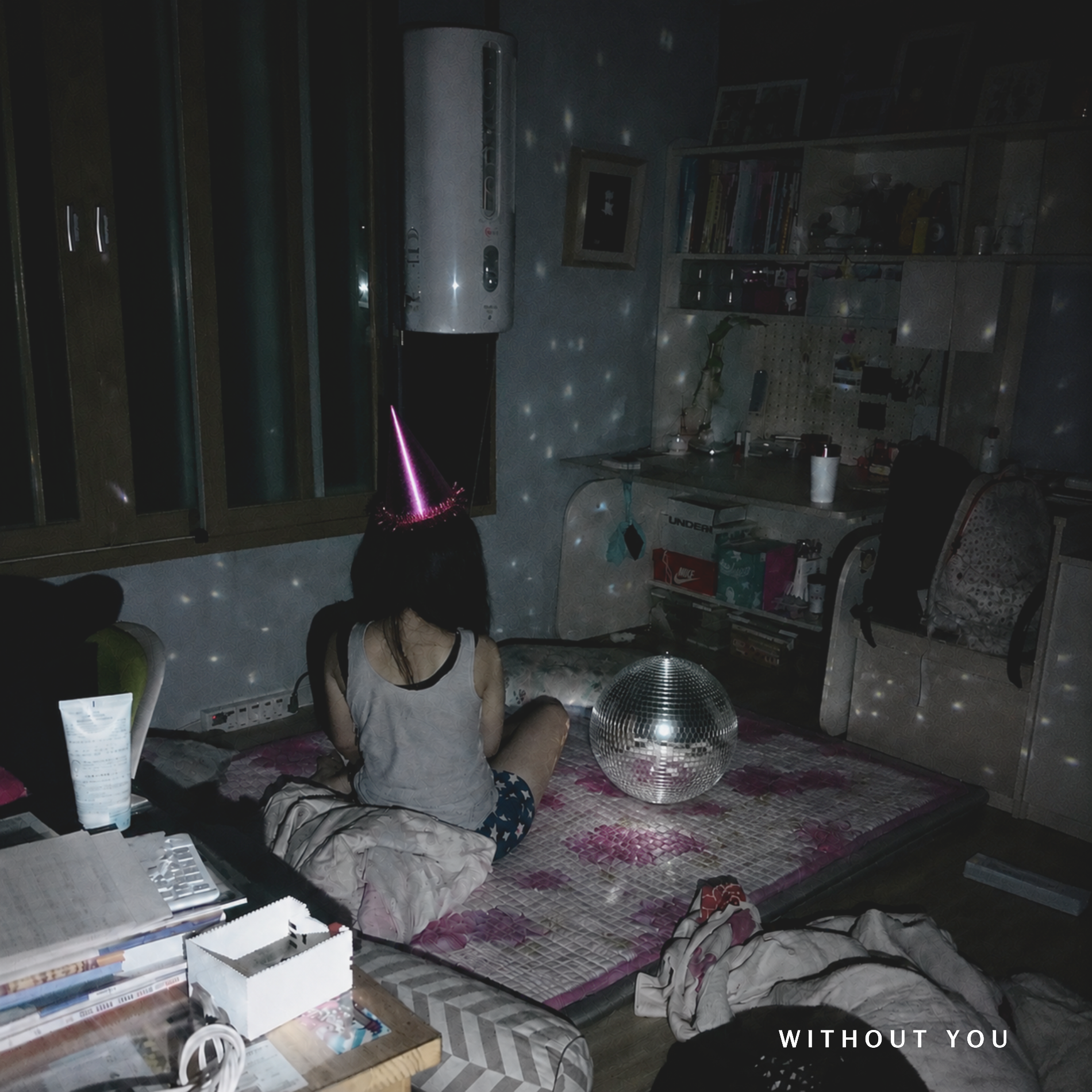
Written and produced by Nadjib Krim, “Without You” pairs an upbeat dance-oriented foundation with a much more uncertain emotional story, exploring love, vulnerability, longing and the difficult question of where genuine affection ends and emotional dependence begins.
Before we begin our conversation with Nadjib Krim, here’s what you need to know about today’s featured project.
About Nadjib Krim
Nadjib Krim’s musical journey stretches back to an early relationship with music that began long before his current work as a composer, keyboardist and producer. Originally from France and now based in the Austin, Texas area, Krim did not move to the United States as part of a deliberate musical transition. Instead, his musical identity had already been developing for many years through playing, songwriting and performing across different settings.
His experience as a pianist, particularly through years of playing piano bars and performing with different bands, exposed him to a broad range of musical styles and musicians. Those experiences gradually expanded his musical vocabulary, allowing influences from pop, rock, soul, funk, jazz and electronic music to coexist naturally within his work. Rather than treating genre as a fixed identity, Krim approaches each composition according to what the musical idea itself seems to require.
That philosophy is particularly clear in “Without You.” The single began as a rhythmic, dance-oriented piece, with the musical character taking shape before the complete lyrical story emerged. Drawing from the disco sounds that surrounded Krim during his formative years, as well as later influences such as Jamiroquai, the track is built around a strong dance pulse, melodic bass movement, keyboards, strings and a groove designed to carry the song forward.
Yet underneath that lively musical setting is a more complicated emotional situation. “Without You” follows a woman questioning the nature of her feelings and wondering whether what she experiences as love might also contain a deeper dependence on another person. The central question, “Is that real love?”, does not arrive with a simple answer. Instead, the song allows uncertainty to remain part of the story.
This approach reflects Krim’s broader philosophy as a musician. He does not want every release to sound the same, nor does he feel restricted by the expectations that can come with working across different genres. Instead, he embraces the freedom to allow each composition to become its own musical world.
As Krim continues developing his work, he is also looking toward collaboration and further refinement of his production skills, particularly in mixing and the small details that make a recording feel complete. He describes himself as still being at the beginning of his journey as a producer, and rather than deciding exactly what his next chapter should sound like, he is interested in discovering musical possibilities he has not yet explored.
Having this brief introduction to today’s featured project, I’m sure both new listeners and longtime fans are excited to hear directly from Nadjib. So, without further ado, let’s begin today’s interview.
INTERVIEW SESSION
Oliver:
Nadjib, before we explore “Without You,” could you tell us about your journey from France to the Austin area and how your experiences across those two environments have shaped you as a composer, keyboardist, producer, and songwriter?
Nadjib Krim:
I originally moved from France to the Austin area for professional reasons, rather than as part of a musical journey, so I wouldn’t say that changing countries suddenly changed the way I make music.
Music has actually been with me for much longer. I started playing at a very young age, and quite early on I began writing songs and instrumental pieces of my own. For many years, though, they remained mostly private. I would write, record ideas and build arrangements, but I never really had the confidence, or perhaps the need, to finish them properly and put them out into the world.
What’s changed more recently is not so much where I live, but my decision to finally finish those ideas and share them.
Oliver:
You have worked across pop, rock, soul, funk, jazz, and electronic music rather than defining yourself through one genre. What has always attracted you to exploring such different musical languages?
Nadjib Krim:
I think a lot of it comes from my years playing piano bars and performing with different bands. I played many live shows, and that naturally meant adapting to very different styles of music and to different musicians.
For a long time, my own musical tastes and writing were actually more confined to a particular style. But with time, and through all those encounters with different kinds of music and musicians, my musical world became much broader.
At the end of the day, I’m simply someone who deeply loves music. I’ve come to believe that almost any kind of music can be interesting and moving when it’s done well. So today I don’t really feel the need to choose between rock, soul, funk, jazz, pop or electronic music. They’re all part of the vocabulary I’ve accumulated over the years.
Oliver:
You approach each song as its own musical world, allowing the writing and emotion to determine the production. How do you know when a song is asking for a particular sound, arrangement, or style?
Nadjib Krim:
It really depends on how the song begins. Sometimes I’ll sit at the piano and find a groove or a harmonic idea that catches my attention. Other times, simply going through synthesizer sounds can trigger something unexpected. But my best ideas usually come much more naturally. A melody, a rhythm or a musical phrase will simply appear in my head.
The sound and style usually come with the idea. I don’t really write a song first and then decide what genre or production to apply to it. The groove, the rhythm and the overall musical character already seem to belong to the idea from the beginning. I don’t think I’ve ever started writing a piece in one style and ended up finishing it in a completely different one.
I’ve never had a very formal songwriting process either. I’m actually quite bad at writing ideas down, and I rely a lot on my memory. If an idea stays with me, I’ll eventually come back to it and develop it.
Oliver:
As a longtime pianist and songwriter, how has your relationship with melody and harmony developed over the years, and how important are those two elements when you first begin building a song?
Nadjib Krim:
Melody is really at the heart of music for me. It’s usually what people remember, and I’ve always felt that I need to be able to sing a tune. Nobody has ever walked around singing a chord progression! [laughs]
Of course, as a pianist, harmony is very important to me, and sometimes the chords actually come first. But even then, I immediately need to find something I can sing over them. The harmony can give a song its color, tension and emotion, but ultimately I’m always looking for the melody that brings it to life.
Oliver:
“Without You” immediately creates an interesting contrast between its disco-infused energy and the uncertainty underneath the lyrics. Where did the idea of placing such an uncomfortable emotional question inside an upbeat song come from?
Nadjib Krim:
It’s actually both very simple and quite complicated. I’m a musician first, not really a lyricist. I knew from the beginning that “Without You” had to be rhythmic, dance-oriented and quite pop. I even had certain vocal sounds and fragments that seemed to belong naturally in particular places in the melody, things like “I know you told me,” “my heart,” or “real love,” before I really knew what the story was going to be.
So the theme of love, which is probably the most overused subject in songwriting, almost imposed itself on me. But I don’t particularly like simple stories, so if I was going to write another love song, I needed to complicate it somehow.
In the end, I think that ambiguity fits the music very naturally. There’s something about dancing, nightclubs and relationships that perhaps begin as a flirtation without much seriousness, and then suddenly wanting to believe that what you’re experiencing is something real. That’s where a question like “Is that real love?” belongs.
Oliver:
The central question, “Is that real love?”, challenges the idea that emotional dependence and genuine love are always easy to distinguish. What personal observation or idea made you want to explore that distinction?
Nadjib Krim:
I think it’s something that can resonate with a lot of people. How often do we develop feelings that aren’t quite reciprocated, or at least not in the way we would like them to be? It would be much easier if love were always perfectly mutual and perfectly clear.
Being in love also comes with a sense of longing, wanting the other person, missing them, and that inevitably puts you in a vulnerable position. Sometimes that vulnerability makes you question your own feelings. You start trying to understand them, justify them, perhaps even convince yourself that what you’re feeling really is love.
And there isn’t necessarily an answer. That’s what interested me in “Is that real love?” It’s genuinely a question, not a conclusion.
Oliver:
The song is written from the perspective of someone beginning to wonder who she is without the person she loves. What interested you about exploring identity through the experience of a relationship?
Nadjib Krim:
When I was writing the lyrics, I found it interesting that she wasn’t only questioning herself. She was also questioning the person she loves.
There’s a strange mixture of things happening at the same time. She’s stating what she feels, almost making an inventory of it, but she’s also looking for confirmation from him. It’s both a realization and a question: this is what I feel when you’re not here, this is what you do to me… so what does that mean? Is this love? Do you feel it too?
As the song progresses, that need for reassurance becomes almost a plea. She’s no longer only asking what the relationship is. She’s beginning to ask what remains of herself without it.
Oliver:
There is a gradual shift in the story from believing in the relationship to questioning what has happened to the person’s sense of self. How did you approach capturing that internal change through the lyrics?
Nadjib Krim:
Yes, there is definitely a progression. At the beginning, she’s almost apologizing for being in love. She’s trying to remain restrained, but at the same time she can’t really hide what she feels.
I approached that progression almost as I would approach music: an introduction, a development, and then a climax. The tension gradually builds. By the end, she’s no longer simply describing her feelings. She’s asking for them to be reciprocated, almost as if love were something you could ask someone to give you.
Of course, she knows perfectly well that it doesn’t work that way, and that’s what interested me. There’s something very bittersweet about love in that contradiction. She begins by holding herself back, and eventually all that restraint gives way to these almost endearing pleas for the other person to love her back.
Oliver:
Why was disco the right musical language for “Without You”? What did the genre give you that a darker or more obviously emotional production might not have achieved?
Nadjib Krim:
For me, the music always comes first. I was born in the 1970s, so disco was part of the musical environment I grew up with: the Bee Gees, Chic, Donna Summer, and many others. Later on, I also became a big fan of Jamiroquai, who brought that kind of groove back into a more contemporary context.
So I didn’t choose disco as a way of contrasting with the lyrics. “Without You” was already a dance track in my mind before the story was fully formed. For me, a good dance song starts with a strong, grounded drum groove and a bass line that really moves.
The subject and the lyrics came during the writing process. They simply found their place inside a musical language that was already there.
Oliver:
The production combines a steady dance pulse with warm keyboards, strings, and funk-inspired bass. How did you decide on those particular elements, and what role did each play in establishing the song’s character?
Nadjib Krim:
Some of that comes naturally from the disco and nu-disco vocabulary. You start with a full, solid four-on-the-floor rhythm, and then the bass has to do its job, not only adding to the groove, but also singing in its own way. I like bass lines that have a melodic personality rather than simply supporting the chords.
Once that foundation is working, you can bring in some of the classic disco colors: the string ensemble, rhythmic guitar, keyboards and so on.
I’m fairly old-school when it comes to production. I’m not particularly interested in adding layers of tricks and effects just for the sake of it. If the groove and the melody are strong, everything else should serve them. It’s a little like cooking: when you have really good ingredients to begin with, you don’t need to do too much to them.
Oliver:
You wrote and produced the entire track yourself. How did moving between songwriter, keyboardist, arranger, and producer affect the way the song developed from its initial idea into the finished recording?
Nadjib Krim:
I don’t really think of myself as switching between different roles. I don’t sit down and think, now I’m the songwriter, now I’m the keyboard player, and now I’m the producer or arranger. To me, it’s all part of the same process.
I play something that I like, and if it sounds good to me, I’m bold enough to think that perhaps someone else might enjoy it too. Then I try to capture it, on a score, on individual tracks, through different instruments, and gradually shape all of those pieces into a whole.
I don’t work from a very formal method or a lot of rules. Much of what I do is instinctive. I listen, I add something, I take something away, and eventually it reaches a point where the different parts feel like they belong together.
Oliver:
Your catalogue moves freely between very different influences, yet songwriting remains at the centre. When production becomes more detailed or stylistically ambitious, how do you make sure the original emotional idea remains intact?
Nadjib Krim:
I don’t like repeating myself. I want each composition to have something of its own, to feel distinct from the one before it. That can sometimes mean exploring a different style or making the arrangement more sophisticated, but the sophistication should always serve the original idea.
For me, a good arrangement isn’t there to demonstrate how clever or complex it can be. Its job is to reveal what I was already hearing or feeling in the initial idea. There’s usually a moment during the process when something falls into place and I think, “Boom, that’s it. That’s what I wanted!”
That’s probably my best test. If the production makes the original idea feel clearer and stronger rather than burying it, then it’s doing its job.
Oliver:
“Without You” uses a bright musical setting to tell a story that is actually quite vulnerable. Do you think contrast can sometimes communicate difficult emotions more effectively than making the music directly reflect the sadness of the subject?
Nadjib Krim:
Yes, I think contrast can make an emotion more interesting. I actually did something similar with another song of mine, “Burn It Down.” It’s about a man who’s completely worn down by his working life and fantasizes about throwing everything away and starting again. Yet the song is energetic, rhythmic, and there’s still a strong sense of groove even though it’s essentially a rock song.
I think there’s something in my personality that doesn’t want to take things too seriously, even when the subject itself is serious. There’s usually an escape somewhere, something that reminds us that life is bigger than whatever we’re going through at that moment.
So in a song like “Without You,” the energy and brightness of the music don’t deny the vulnerability of the lyrics. In a way, they represent the possibility of getting through it. There’s still hope underneath it all.
Oliver:
The song raises the possibility that someone can become so emotionally connected to another person that they begin losing their own identity. What do you think the song says about the difference between loving someone and needing them to define who you are?
Nadjib Krim:
I wouldn’t necessarily say that she’s losing her identity. She still knows who she is and where she lives! [laughs] But being in love puts us in a vulnerable state. It reveals another side of our personality, almost like an altered state, and it’s very easy for feelings to become exaggerated or idealized.
She’s not necessarily falling apart without him. It’s more that without him, nothing tastes quite the same anymore. The world is still there, but her experience of it has changed.
And perhaps that’s where the question becomes more interesting to me. Love is part of what defines us as human beings, as creatures of flesh and blood who need connection with others. So rather than asking whether another person should define who we are, I would turn the question around: without love in some form, what does define us?
Oliver:
Your music often balances accessible melodies and grooves with themes that invite deeper thought. How important is it to you that listeners can enjoy a song immediately while still discovering something different when they pay closer attention to the lyrics?
Nadjib Krim:
One of the things I’ve always loved about the artists I admire is being able to return to their songs and discover something I hadn’t noticed before. A song can initially seem very simple, sometimes almost naive, but when you really pay attention, you begin to hear details and subtleties that weren’t obvious on the first listen.
I’m a huge Mark Knopfler fan, for example. He could write songs that were incredibly sophisticated without making them feel complicated, and his lyrics could be very thoughtful, subtle, and sometimes wonderfully funny.
I certainly wouldn’t be bold enough to claim that I achieve the same thing! [laughs] But it’s definitely something that inspires me. I like the idea that a song can work immediately as a melody or a groove, while still leaving little things for the listener to discover if they decide to come back and listen more closely.
Oliver:
As a French artist now based in the Austin area, you have developed a catalogue that crosses several musical traditions. Has living in a different cultural environment changed the way you hear or approach genres such as soul, funk, pop, and rock?
Nadjib Krim:
Not really, to be honest. Long before I moved to the United States, I had already grown up surrounded by British and American music. I loved disco when I was young, then the music of the ’80s, and over the years I listened to artists as different as Dire Straits, Toto, Pink Floyd, Jamiroquai, Maxwell, Sade, Phil Collins, Tears for Fears, and I’m leaving out far too many.
So I don’t think moving to the Austin area fundamentally changed the way I hear soul, funk, pop or rock. Those musical languages had already been part of my life for a very long time.
If anything explains my eclecticism, it’s probably much simpler than geography: I just love music.
Oliver:
When you listen back to “Without You” now that it is finished, what part of the song feels most representative of where you are creatively at this point in your career?
Nadjib Krim:
I’m not sure there’s one particular part of “Without You” that represents me more than another. What I’m proud of is the song as a whole, because it doesn’t rely only on having a good groove. The groove matters, of course, but there’s also a melody I care about, and a subject that isn’t simply there to fill the space between musical phrases.
I think it’s the combination of those things that represents where I am creatively right now.
More importantly, I don’t feel that I’m finished exploring. If anything, completing “Without You” has made me want to keep going and discover other sides of my own musical culture, all those influences I’ve accumulated over the years and haven’t necessarily expressed yet.
Oliver:
You continue to build an eclectic catalogue without restricting yourself to a single genre. Do you see that freedom as a deliberate part of your artistic identity, and is there still a musical direction you have not explored yet?
Nadjib Krim:
Yes and no. I don’t know if I would call it a deliberate artistic strategy, but it’s definitely something I’ve come to embrace.
I’m not particularly worried about confusing my audience or making the algorithms wonder what to do with me. [laughs] I make the music I enjoy making, and there’s a real sense of freedom in that. I don’t feel that because I’ve released a disco-influenced song, the next one somehow has to belong to the same world.
Honestly, I have no idea yet what the next one will sound like. And that’s part of the fun.
Oliver:
Looking beyond “Without You,” what are you currently most interested in developing as a songwriter and producer, and what would you like the next chapter of your music to reveal about you?
Nadjib Krim:
Right now, I’d like to keep refining my sound, especially the mixing side of things, and pay even more attention to the small details that can make a recording feel truly finished.
I’d also like to collaborate more with other artists and musicians. I’ve spent a lot of time making music on my own, and I think there’s a whole new dimension to explore when you let other people’s ideas and personalities into the process.
In many ways, I’m only at the beginning of this journey as a producer, and I still have an enormous amount to learn. I find that exciting rather than intimidating. I don’t necessarily want the next chapter to reveal one particular thing about me. I’d rather it reveal things I don’t know about myself yet.
“‘Without You’ is fascinating because Nadjib Krim never treats uncertainty as something that needs to be resolved. He gives it a groove, a melody and room to breathe, allowing the song to ask its difficult questions without losing its sense of movement or hope.”
~ Oliver (DULAXI Team)
EDITORIAL PERSPECTIVE
What stayed with me after speaking with Nadjib is how naturally his instinctive approach to music connects with the ideas inside “Without You.” The track’s disco vocabulary is carefully shaped around melody, movement and restraint, while the lyrical perspective leaves space for uncertainty rather than forcing a conclusion. Krim’s reflections also reveal an artist who values exploration over predictability, allowing each composition to develop according to its own character.
~ Oliver (DULAXI Team)
CLOSING
Our conversation with Nadjib Krim offers an insightful look into the ideas, instincts and musical experiences behind “Without You.” From his early relationship with music and years of performing to his approach to melody, harmony, arrangement and production, Nadjib’s perspective makes it clear that his eclecticism comes from a genuine love of music rather than a desire to fit within a particular category.
“Without You” gives that philosophy a distinctive setting, bringing together a dance-oriented musical foundation and a story filled with emotional questions about love, vulnerability and the way relationships can change our experience of ourselves. We encourage readers to spend some time with the single and discover the different layers of the song for themselves.
A sincere thank you to Nadjib Krim for joining us and for sharing such thoughtful and candid insights throughout this conversation. We appreciate the openness with which he discussed both the making of “Without You” and the creative journey that continues beyond it.
And to everyone reading, thank you for spending time with DULAXI. Keep listening, keep discovering, and stay with us for more conversations with artists from around the world.