
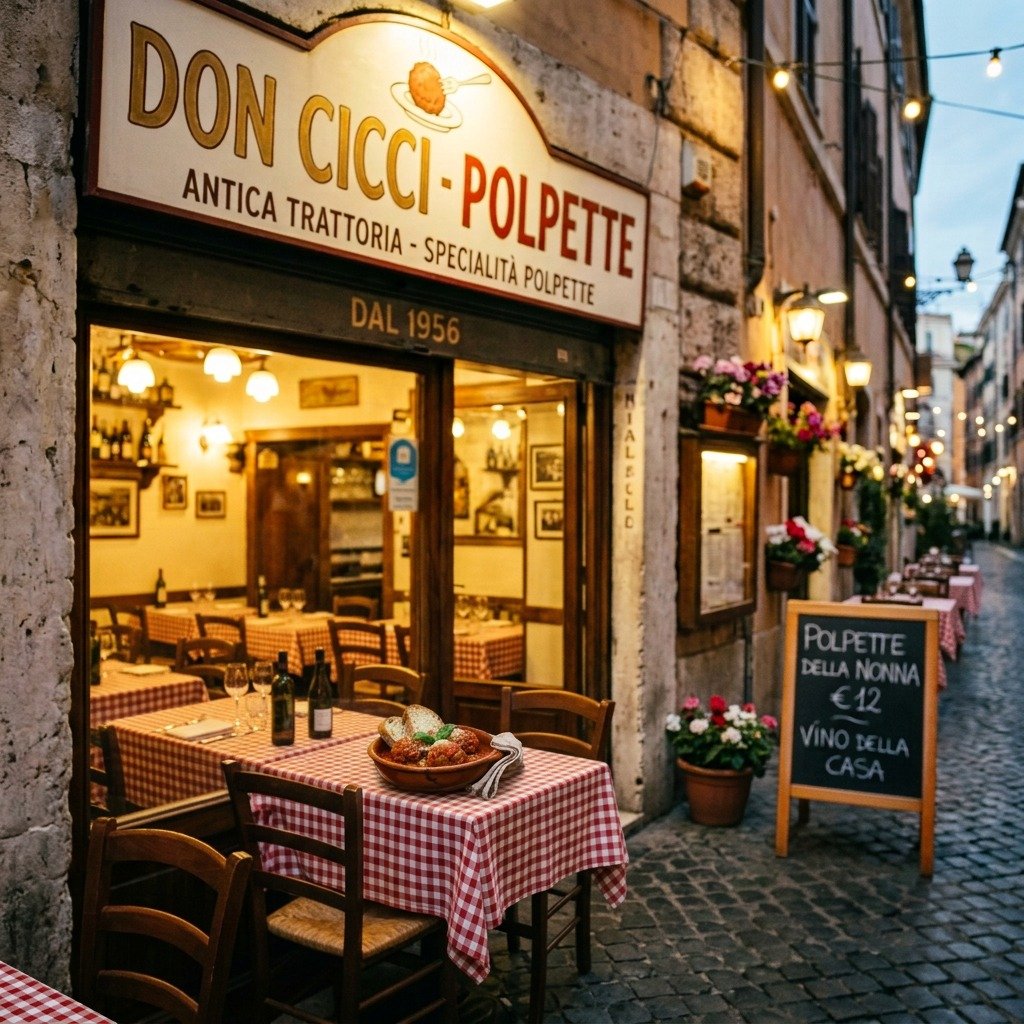
Hello everyone, it’s your host Oliver from DULAXI, and today I’m delighted to be joined by London-based producer and artist Don Cicci to discuss his latest instrumental single, “Polpette.” Hailing from London, England, Don Cicci works across R&B, hip-hop, soul, boom bap, lo-fi hip-hop and instrumental production, with a particular interest in combining contemporary urban production with the influence of 1970s Italian compositions. “Polpette” was released on 12th March 2026 and represents an important milestone in his development as a producer.
Before we begin our conversation with Don Cicci, here’s what you need to know about today’s featured project.
About Don Cicci
Don Cicci is a London-based producer and artist whose music is shaped by an interest in bringing together different periods, styles and musical traditions. His approach is rooted in contemporary urban production, while his admiration for 1970s Italian compositions has become an important part of the sound and atmosphere surrounding much of his work. Rather than treating those older influences as a fixed formula, he uses them as a creative reference point within a wider practice that remains open to boom bap, R&B, trap, soul and lo-fi hip-hop.
His relationship with music began with DJing before developing further into production, and his experiences growing up in London exposed him to a wide range of genres and cultural influences. The city’s diverse musical environment has played a role in shaping the way he listens to rhythm, sampling and contemporary urban music. His studies at Point Blank Music School in London also gave him an opportunity to explore the industry from a broader perspective. While studying Music Management, he took part in live events and creative projects, including Point Fusion at The Jago in Shoreditch, while also building relationships within the music community.
That combination of creative and industry experience has informed the way Don Cicci approaches his work. His production practice places particular attention on sampling, beat chopping, layered loops, programming and chord progressions. He works from a home-based studio in London, where he has developed a production process that gives him the freedom to experiment with sounds and arrangements without the restrictions of a conventional studio schedule. At the same time, he recognises the value that professional studio environments can bring to a project.
“Polpette,” released on 12th March 2026, grew from an immediate creative reaction to TY’s “Fine Wine.” Don Cicci heard something in the source material that sparked a clear idea for how it could be developed through boom bap programming. The resulting instrumental became one of his favourite pieces of work and, in his own view, a milestone within his development as a producer. It was created while he was completing university and other commitments, making it closely connected to a significant period of personal and creative development.
At the centre of the project is Don Cicci’s belief in trusting his instincts while continuing to learn. He describes production as an ongoing process in which experience gradually makes certain techniques second nature, while new challenges continue to push a producer beyond familiar territory. That mindset is particularly relevant to “Polpette,” which he sees not simply as another release, but as a blueprint for the kind of production he wants to create and take into the wider market.
Having this brief introduction to today’s featured project, I’m sure both new listeners and longtime fans are excited to hear directly from Don Cicci. So, without further ado, let’s begin today’s interview.

INTERVIEW SESSION
Oliver:
Don Cicci, before we get into “Polpette,” tell us about the person behind the producer and artist. Growing up and developing your craft in London, what experiences first made you feel that music production was something you wanted to take seriously?
Don Cicci:
Thanks, Oliver, for your invitation to this interview. Well, I think it all boils down to how you grew up and who your influences were. To start, the person behind the craft of producer and artist isn’t much different. I like to produce music that creates a positive listening experience for the listener. Growing up, I was heavily influenced by the 90s Golden Era, and, you know, to me, good music is good music; there’s no actual genre or so-called group. If a track sounds good, it is good. I had a few mentors in the past who pointed me in this direction; I started as a DJ and eventually got motivated to build my craft in production, and yes, some of the experiences I have had have played a part in how my productions express themselves.
Oliver:
You studied Music Management at Point Blank Music School while also developing yourself creatively as a producer. How did learning about the industry alongside developing your own sound influence the way you think about music, both as an art form and as something you want to build a career around?
Don Cicci:
Point Blank in itself was an immersive experience. Not many people get to actually party or have a ball as part of the Uni itself, which is based around music. My classmates and I took part in a live event as part of our project, which was held at The Jago in Shoreditch called Point Fusion. We worked as a group, and not many educational courses can actually cover your own creative material as part of the learning experience. And yes, there were a lot of Great people I got to network and build interesting conversations with over the term of this course. A lot of networking events and live gigs, being a part of that community made the whole experience worthwhile. Music is in itself an expression of art and goes back many centuries, there is a lot of history and evolution based on that and it really doesn’t matter where you are from or what you hold beliefs in music brings the masses together and can be done for leisure or for business, in terms of building a career around music, the one thing that separates it from other industries is the intrigue, the wait the drop and suspense of creating something new, unlike other industries there is no actual payroll predicting of income for an artist, it all depends on creative control, pr, radio, performance which hopefully lead to a few healthy cheques here and there, that is what makes this craft more worthwhile and rewarding.
Oliver:
Your music has a particularly strong connection to 1970s Italian compositions, which is an influence that gives your production a very specific cultural and musical reference point. What first drew you so deeply toward that era and style of Italian music?
Don Cicci:
It is out of personal preference that I choose to use influences from 1970s Italian compositions. Although it is a reference point, I want to make it clear that it is not the only type of music I create or work on; I am open to other genres. What draws me to this style can include influences from other producers, and the whole concept of dramatic and cinematic music combined with boom bap or Lo-Fi productions is what appeals to me and what sort of listener I may direct a track at. I look back at some Italian films I have watched with friends, and the tracks in these sound so emotional and touching that it draws me in; I am influenced by the legendary Ennio Morricone, whose work I have nothing to say about but inspirational.
Oliver:
There is an interesting contrast in your work between those vintage Italian compositions and contemporary boom bap, trap, R&B, and lo-fi hip-hop. What do you hear in those older compositions that you feel can still speak naturally through modern urban production?
Don Cicci:
The way you project a sound is what defines itself; adding old sounds to modern production has always been and always will be a part of a producer’s craft.
Oliver:
You have developed a reputation around sampling, beat chopping, layered loops, and detailed programming. What is it about taking existing sounds apart and rebuilding them that appeals to you creatively?
Don Cicci:
Well, it all helps the craft as a producer. I, to start with, am not a big fan of AI, but if it contributes towards a project, why not, personally as of now, I choose not to use AI in production. In terms of programming, a detailed approach is required when choosing samples and structuring them into your own track helps increase the creative appeal of a production; getting the chord progression correct is also important. This applies to a lot of producers out there.
Oliver:
“Polpette” uses carefully selected sampled elements, including material from TY’s “Fine Wine,” alongside your own programming. When you discovered the elements that eventually became part of this track, what made you feel they could form the foundation of something special?
Don Cicci:
Unlike other tracks, when I listened to Fine Wine by TY, something drew me to it and inspired me like no other. I had an immediate picture of how the track would sound in my mind, how emotional the track was, and I applied the boom bap programming to the track. It all shaped the whole production. I actually managed to actually think to myself that bettering this track is probably a long way off.
Oliver:
You describe “Polpette” as one of your favourite works at the moment and potentially one of your strongest boom bap productions. What do you hear in the finished track that makes you feel it represents such an important point in your development as a producer?
Don Cicci:
I would definitely say it is a milestone track. It was produced when I was finishing off university and other things; it is a blueprint for what sort of productions I create and how to execute them into the market. Being one of my first with a campaign, this track will always be a good piece of work for me.
Oliver:
The instrumental does not impose one fixed interpretation of its emotion. Instead, you describe it as something that can be perceived differently depending on the listener. How intentional was that openness, and why is it important to you that people can bring their own experiences to an instrumental?
Don Cicci:
To me, as I have said before, it is always important to put yourself in the listener’s shoes. If you are creating a piece of work you want the audience to immerse in, it is crucial that the listener/consumer can relate to that work. Polpette is a track that you yourself perceive the way you want, and let this track aid you in any sort of mood or situation you’re in and apply it.
Oliver:
You describe “Polpette” as moving between beauty and street grit, with drama and emotion existing alongside each other. When you were producing it, were you consciously trying to create that contrast, or did those opposing qualities emerge naturally from the samples and arrangement?
Don Cicci:
I would say both; hand in hand, it worked out. All I can say is that the idea was like from nowhere. I thought to myself, yes, this is a really good one here and listened to it over and over again after completion. The arrangement of the sample from Fine Wine was how I managed to form it into an actual production.
Oliver:
Because there are no vocals telling the listener exactly what the story is, how do you use sampling, rhythm, arrangement, and texture to communicate emotions that might normally be expressed through lyrics?
Don Cicci:
The track, as I said before, is probably a whole journey into actual storytelling without lyrics, whether it be expressing a romantic moment or something as real as something that may have happened somewhere; each listener can apply his or her experience and put it into the production itself. Each part of a production plays its role, and to use all different parts such as melody, arrangement and beats, blend it all in and conceptualise it is what makes the product itself.
Oliver:
The track was produced in your home-based studio in London, where you have developed your own detailed production process. What does working in your own space allow you to experiment with that might be harder to achieve in a more conventional studio?
Don Cicci:
Working from home, you have all the resources at your fingertips and have no time limit; also, a quiet space to work on your creative projects is important a lot of the time. Although I don’t actually think that working in a more conventional studio would make things harder; it can only improve a project.
Oliver:
You describe the sampling and programming on “Polpette” as some of your most carefully crafted work. How much time and experimentation goes into deciding when a beat is finally finished, especially when you are working with multiple layers and chopped samples?
Don Cicci:
I myself use Ableton Live. There are a lot of things still to learn on that and production as an art form itself; the rate of progression is unlimited, but the more you produce, the more it becomes second nature. Obviously, for my sole purpose as a producer, I wouldn’t want to delve too much into that, but production is always about finding your comfort zones and learning to create something new outside of your comfort zones at the same time. It takes a lot of years and craft to perfect your sound, and I am still learning new things every time I sit down on a project.
Oliver:
Your production sits between nostalgic warmth and a contemporary edge. How do you approach preserving the character of older sounds while making sure the final production still feels connected to the present?
Don Cicci:
Drawing inspiration from something, it always has to be that: what made you produce this? Or what do you hope to achieve from it? What sort of listeners do you want them to feel a connection towards you?

Oliver:
Your background in music management means you understand both the creative and business sides of the industry. Has that knowledge changed the way you approach releasing your own music, particularly when it comes to protecting your artistic identity in a crowded urban music landscape?
Don Cicci:
The art itself may be the main part, but a lot of things and driving factors are included, things such as content, content and more content is what counts, campaigns, pr radio runs; it’s all part of the process. In an overcrowded market, trusting yourself in the progress and work you put in from time to time, putting in effort and dedication, being motivated, it’s all part of the trade. The knowledge I gained from my Degree is to learn how to evolve as a person in terms of character, skills and what input you can put into the product rather than being self-centred in your own world; we all make something but need people; that is a game-changing factor. Networking is crucial to move to that next spotlight or position we want or need to get to.
Oliver:
Looking at your development so far, what have you learned about yourself as a producer from creating tracks like “Polpette,” and what has the process taught you about trusting your own instincts?
Don Cicci:
As a producer, I like to trust any sound I may want to work with; I like to keep an ear out for current tracks that are out there. I like to say that, because I may not agree with or like what I may be listening to, but solely for analysis purposes- what the market has to offer and what the market demands- tuning in from time to time is helpful. When you draw back to it, everyone is inspired by something, and it is that inspiration that creates something. I like to empower the listener and use empathy as to how one would perceive a production.
Oliver:
London has a huge range of musical cultures and scenes, from underground hip-hop and electronic music to R&B, soul, and experimental production. How has being based in London influenced the way you hear rhythm, sampling, and contemporary urban music?
Don Cicci:
Yes, definitely. Being born and bred in London, which is the capital of the world, I like to say, I’ve learned many things about music I wouldn’t have learned anywhere else in the world. From early childhood, I have been exposed to all sorts of music from different cultures and genres, which actually shaped the way I look at, listen to, and create music. There is no denying the fact that a lot of the world’s top stars and leaders in the music industry are from this capital.
Oliver:
Your production combines influences that come from very different places and periods, yet the result remains recognisably connected to your own identity. What do you think is the quality or instinct that ties all of those different influences together in your music?
Don Cicci:
Trust your own intuition, go with the flow, the sound you want to put across to the listener. Make a listening worthwhile with all the required elements of a production, which makes a track unpredictable and landing different samples and one-shots increase the depth and quality while keeping it simple.
Oliver:
When listeners discover “Polpette,” what do you hope they notice beyond the immediate beat and groove, particularly in the smaller production decisions that might only become apparent after repeated listens?
Don Cicci:
I just hope listeners will enjoy the track and continue to enjoy listening to the track; there’s not much to say about that. Engage in the chord progression, I like to say.
Oliver:
As “Polpette” becomes part of your wider catalogue, what areas of production are you most interested in exploring next, and how do you see your sound evolving while keeping the sampling and compositional influences that have become such an important part of your identity?
Don Cicci:
I like to keep it real with myself, the listeners and the market. I am open to exploring anything next. There are a lot of styles I look forward to experimenting with and working with, and I am open to any future collaborations; therefore, I keep an open mind about the market and its consumer trends. The way I see my sound evolving is down to the core practice of my production style and applying or incorporating it into a new track; there is still a lot of work to be done.
“Polpette” captures the point where Don Cicci’s love for vintage composition, instinctive sampling and modern boom bap production meet, but what makes the track particularly interesting is the space he leaves for the listener to decide what the music means to them.
~ Oliver (DULAXI Team)
EDITORIAL PERSPECTIVE
Speaking with Don Cicci reveals a producer who sees music as both a personal expression and an ongoing process of discovery. “Polpette” is especially interesting in the way its instrumental construction carries the emotional weight without relying on a vocal narrative. The meeting of sampled material, boom bap rhythm and cinematic influence gives the track a distinct identity, while Don Cicci’s comments show an artist still willing to question, learn and experiment. His emphasis on intuition and listener connection adds another dimension to a release that is deliberately open to interpretation.
~ Oliver (DULAXI Team)
CLOSING
Our conversation with Don Cicci offers a closer look at the creative thinking behind “Polpette” and the experiences that have shaped his development as a producer. From his early connection with the 90s Golden Era and his beginnings as a DJ to his studies at Point Blank Music School and his continued exploration of sampling, programming and composition, his journey reflects an artist who remains committed to learning while trusting his own instincts.
Thank you to Don Cicci for taking the time to speak with DULAXI and for sharing his thoughts on his creative process, his influences, his experiences in London and the ideas behind “Polpette.” For listeners discovering the single for the first time, the release offers an opportunity to experience the music on their own terms and find their own meaning within its instrumental world.
Thank you as well to everyone spending time with DULAXI. We hope you continue to discover new artists, new releases and new stories through our interviews. This is Oliver, and we look forward to bringing you another DULAXI conversation soon.