
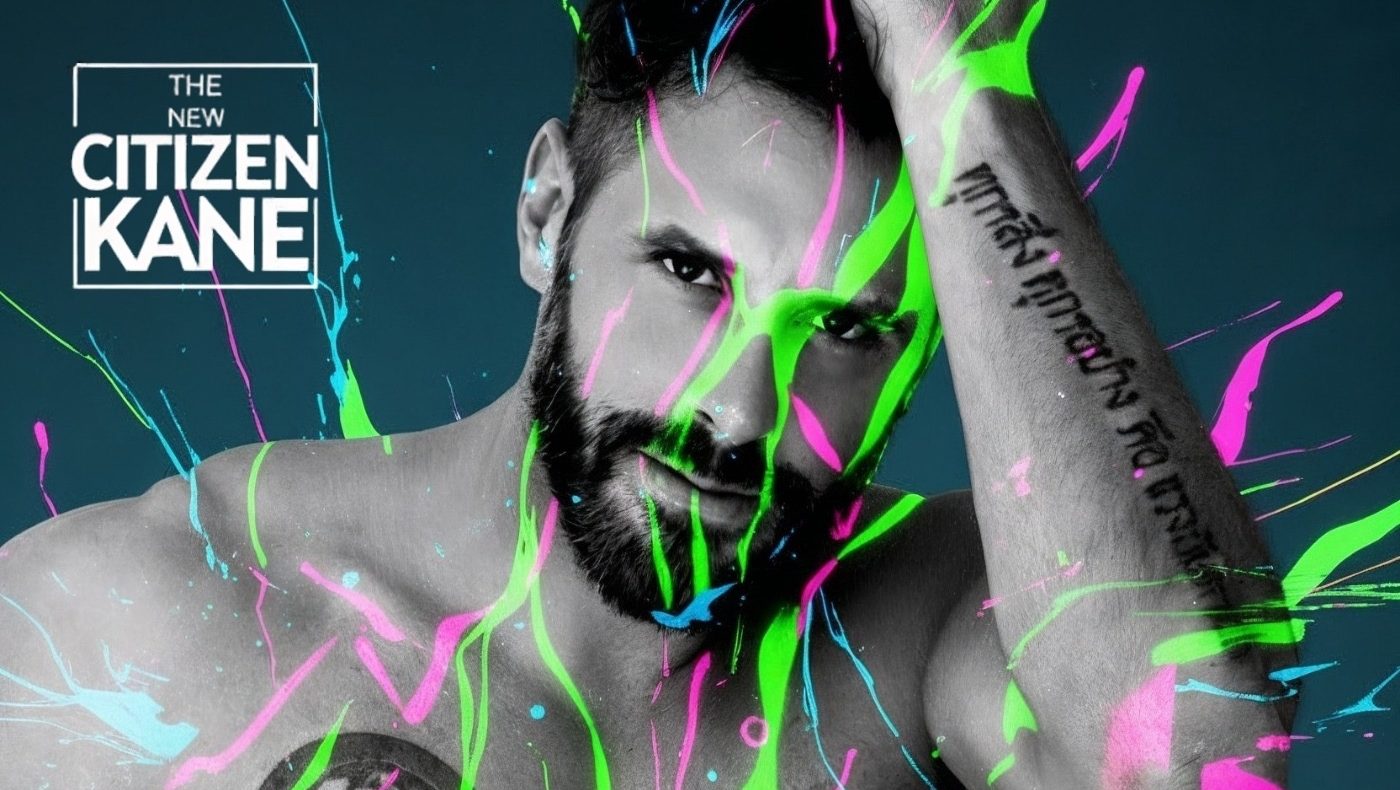
Hello everyone, it’s your host Oliver from DULAXI, and today I’m delighted to be joined by The New Citizen Kane, the London-based independent artist behind the electronic, synth-pop and experimental single “interTWINE,” released on October 2nd, 2026. The latest release opens the Desire chapter of Psychedelika Pt.2, a developing body of work that continues to explore emotion, identity, instinct, intimacy and the contradictions of modern life.
Before we begin our conversation with The New Citizen Kane, here’s what you need to know about today’s featured project.
About The New Citizen Kane
The New Citizen Kane has developed an artistic world where music, theatre, visual storytelling and performance exist as connected parts of a larger narrative. Working independently, the London-based artist approaches each project as an opportunity to build a complete universe rather than simply release a collection of songs. His creative identity brings together synth-pop, electronic textures and cinematic storytelling while examining the complicated spaces between desire and restraint, connection and isolation, chaos and control.
That approach has evolved considerably over the course of his work. From the emotional and instinctive ideas explored in It’s Not Science… It’s A Feeling, through the dreamlike world of The Tales of Morpheus and the kaleidoscopic awakening of Psychedelika Pt.1, each project has contributed another part of the wider creative picture. His background in theatre and multidisciplinary art has also influenced the way he constructs these worlds, with music, imagery, performance and visual concepts operating as different expressions of the same creative vision.
At the centre of that vision is what The New Citizen Kane describes as “rhythm & synth,” a creative approach that connects physical movement with emotional and imaginative expression. It allows the music to remain electronic and rhythmically driven while still giving space to questions about identity, feeling, instinct and human behaviour.
“interTWINE” introduces the next stage of that evolution by opening the Desire chapter of Psychedelika Pt.2, titled DO YOU TRUST INSTINCT? Released on October 2nd, the single turns its attention toward attraction, curiosity and the strange moment when two people begin to sense a connection before either of them fully understands where it might lead.
The song also places that intimate experience against the realities of contemporary digital life. Its use of technological language creates a contrast between data, screens, algorithms and the instinctive nature of human attraction. Rather than allowing technology to define connection, “interTWINE” looks toward the physical and emotional experience that exists beyond it, encouraging a return to presence, curiosity and real-world interaction.
The Desire chapter follows the earlier FREE TO FEEL and Awakening chapter, moving from the experience of becoming emotionally and mentally aware toward the more complicated question of what happens once we begin to recognise what we actually want. For The New Citizen Kane, that means exploring instinct, attraction, pleasure, ambition, temptation and risk without reducing them to simple answers.
With “interTWINE” acting as the doorway into Desire, the story is only beginning. The next chapter, DO YOU TRUST INSTINCT?, follows on November 6th, promising to take the ideas introduced by the single into more complicated territory.
Having this introduction to today’s featured project, it is clear that interTWINE is not simply another release within The New Citizen Kane’s catalogue, but another step in a much larger exploration of instinct, connection, identity and the freedom to follow an idea wherever it leads. So, without further ado, let’s begin today’s interview.
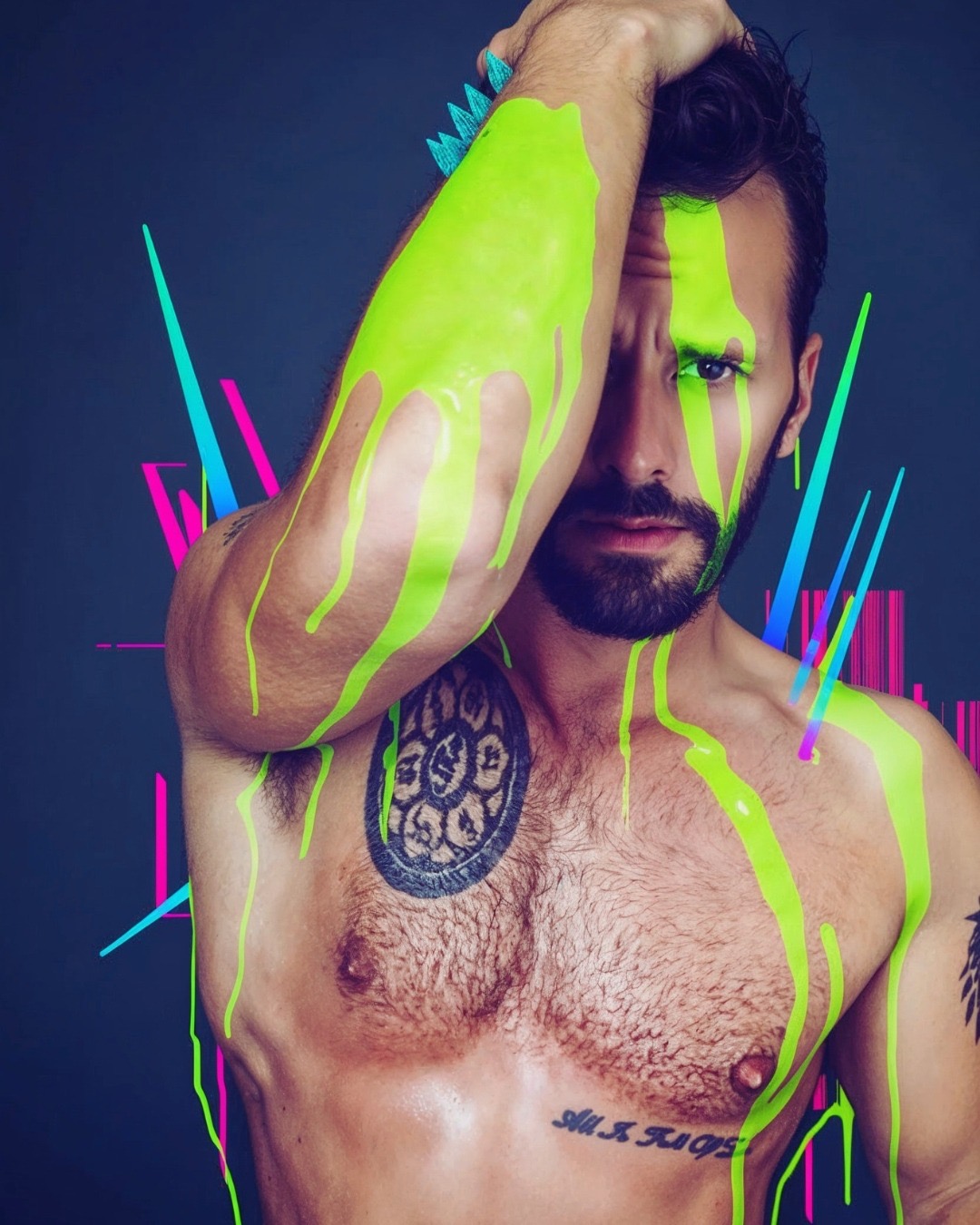
INTERVIEW SESSION
Oliver:
Your work brings together music, theatre, multidisciplinary art, visuals, and performance, while the identity of The New Citizen Kane has gradually moved from something constructed into something much more personal. Looking back at that evolution, what parts of yourself did you originally feel you needed the persona to express, and what has changed as you have become more comfortable allowing the person behind it to be seen?
The New Citizen Kane:
I think mainly it comes down to confidence – thinking a persona, something slightly mysterious with an iconic pop culture reference would make me more interesting – but as I’ve grown I realise that what people really connect with in an artist is their true human essence, so it was a natural uncovering of myself, allowing those flawed, human sides of me show to connect with my audience.
Oliver:
You describe your creative world as a place where emotion, identity, and instinct collide, with your work often exploring contradictions such as desire and restraint or connection and isolation. Where do those contradictions come from for you personally, and why have they become such an important part of the stories you want to tell?
The New Citizen Kane:
Life itself is full of contradictions. Almost every emotion or experience can trigger completely opposing feelings and perspectives, both within us and around us.
But in modern life, media and even a lot of pop music, everything often gets distilled into its simplest form — black or white, good or bad, right or wrong. I’m much more interested in the messy middle: the contradictions, uncertainty and complexity that make us human.
I think that’s also why my audience tends to connect with those themes. As we get older, we realise that very few things in life are ever quite as simple as they first appear.
Oliver:
Your background in theatre and multidisciplinary art seems to have given you a very different relationship with music, particularly in the way you think about projects as complete worlds rather than simply collections of songs. How did theatre and visual storytelling change the way you approach songwriting, performance, and the identity of a release?
The New Citizen Kane:
I think part of my approach to world building comes from the fact that I started making music in the pre-streaming age. Of course, there were always singles artists, but albums were generally treated as complete bodies of work — they had an identity, an era, a visual language and a journey.
I’ve probably taken that idea a little further, because my albums tend to lead into one another and every visual becomes another piece of the bigger picture. But ultimately, each release follows the course of my life in some way, so it naturally becomes connected.
My theatre and visual arts background also influences the way I write. I tend to write very situationally. I don’t necessarily describe a feeling or experience directly; I like to paint scenes with words and let the story reflect the emotion underneath.
I think that’s why music, visuals and performance have always felt like different parts of the same world to me.
Oliver:
You have described your sound as “rhythm & synth,” where physical movement and emotional intelligence exist together. When you are creating, what does that phrase mean to you beyond genre, and how do you know when a piece of music has achieved that balance between something the body responds to and something the mind or emotions can connect with?
The New Citizen Kane:
For me, rhythm & synth is really about the two sides of what I want music to do. The rhythm is the physical — something that makes you move, whether that’s dancing or just feeling the pulse of a song. The synth represents the emotional and imaginative side; it can create an entire landscape around that rhythm.
I know I’ve got the balance right when the music makes you want to move before you’ve necessarily figured out why it’s making you feel something. I’ve never believed electronic or dance music has to be emotionally superficial. You can give someone escapism and something to think about at the same time.
Oliver:
“interTWINE” captures the very early stage of attraction, when two people may not know where a connection is going yet but there is already a sense that something is happening. What interests you about that uncertain space between curiosity, chemistry, and genuine connection?
The New Citizen Kane:
What fascinates me is that so much of it is subconscious and intuitive. You can walk into a room and, within seconds of being in the same space as someone, sense whether there’s chemistry there — often without being able to explain why.
All the things we think we want on paper, the checklist, the “type”, can suddenly go out the window. Attraction becomes something much more primal, animal and subliminal. Before the mind has had a chance to analyse it, the body has already made a decision. I think that mysterious space between instinct and conscious understanding is where a lot of the excitement lives.
Oliver:
There is an interesting tension in the way “interTWINE” uses the language of technology, with ideas such as blocks, data, uploading, and mainframes, while ultimately asking people to step away from technology and experience another person directly. What made technological language the right way to explore something as instinctive and human as attraction?
The New Citizen Kane:
Because we’re surrounded by technology every day. It’s been incredible in terms of connecting us and advancing so many aspects of our lives, but it also comes with a cost.
Dating is a good example. There’s now a whole generation that has never known connecting romantically without dating apps or social media. We walk around with our heads down looking at screens rather than looking at the world around us, and we’re missing some of the thrill of chance encounters — an exchange of glances across a room, building up the courage to approach someone, that feeling of not knowing what might happen next.
And there’s something ironic about trying to reduce attraction to data and algorithms, because human chemistry is the one thing you can’t really quantify. Your phone can show you a thousand potential matches, but it can’t replicate what happens when you’re standing in front of someone and suddenly feel that spark.
That contrast felt like the perfect language for the song.
Oliver:
The question “Can we collide? Do you trust instinct / Aren’t you curious how we’d intertwine?” feels less like a declaration and more like an invitation. When you wrote those words, were you thinking about instinct as something that can guide us toward another person, or were you also questioning how much modern life has taught us to distrust our own instincts?
The New Citizen Kane:
A bit of both. The chorus is almost like a mantra — an invitation to trust that instinct, follow your curiosity and allow yourself to connect without needing to know exactly where it’s going.
I think we’ve become very good at overthinking attraction and connection, especially in a world where so much of dating happens through screens, profiles and algorithms. INTERtwine is partly about stepping outside of that analysis and allowing yourself to experience another person instinctively. Sometimes you don’t need to understand why you’re drawn to someone — you just need to be curious enough to see where that feeling takes you.
Oliver:
The idea of putting down the phone, stepping away from notifications and discovering what happens when two people simply give each other their attention feels especially relevant to modern relationships. What have you observed about the way digital culture affects intimacy and genuine human connection, and how did those observations find their way into this song?
The New Citizen Kane:
Phones, apps and algorithms are all competing for our attention, and dating is a really interesting example of that. When you have this seemingly infinite pool of potential connections available at any moment, there’s always the temptation to wonder if there’s someone “better” just one swipe away. Commitment can start to feel like a risk when you’re constantly presented with another option.
interTWINE is really an invitation to step away from that. To take your attention away from the endless stream of possibilities and give it to the person actually standing in front of you.
Because ultimately, another notification might give you a little dopamine hit, but it’s not going to have the power to turn a bad day around in the way a genuine human connection can.
Oliver:
Musically, “interTWINE” moves further into the physical side of your rhythm & synth identity, with sensual, psychedelic, and euphoric qualities shaping the track. What were you trying to achieve through the production and arrangement that would allow the listener to feel the attraction physically as well as understand its emotional meaning?
The New Citizen Kane:
I always want the production to reflect the emotion of the song, rather than simply sit underneath it. With INTERtwine, the feeling is very sensual and almost mystical, so I wanted the music to embody that physical attraction as much as the lyrics explore its emotional meaning.
The BPM creates a sense of forward momentum, while the contrast between the soft, hazy pads in the chorus and the gritty, distorted bass and high synths in the instrumental hook creates this kind of “bump & grind” push and pull. There’s a tension between softness and intensity, restraint and release, which mirrors the chemistry between two people when attraction takes over. I wanted you to feel that tension in your body as much as you hear it in the song.
Oliver:
Your previous work has moved through very different creative spaces, from the emotional electricity of “It’s Not Science… It’s A Feeling” to the dreamlike world of The Tales of Morpheus and the kaleidoscopic awakening of Psychedelika Pt.1. What did you learn from those earlier chapters that gave you the confidence to approach “interTWINE” and this new phase with greater freedom and directness?
The New Citizen Kane:
I think I’ve gradually stopped worrying about whether I’m supposed to sound like myself in some fixed way.
Every project has taught me that the most interesting work happens when I follow the idea rather than trying to protect a particular identity or sound. The Tales Of Morpheus was a huge turning point because I stopped making the songs I thought people might want from me and started making the music I actually wanted to hear.
By the time I got to Psychedelika, I’d realised that the freedom to experiment was actually part of the identity. So interTWINE can be sensual, psychedelic, electronic and unapologetically pop without me needing to justify why it belongs in the same universe.
Oliver:
Psychedelika Pt.2 moves from awakening into a chapter called “Desire,” asking what happens when someone stops analysing and starts listening to the part of themselves that wants to feel, connect, and explore. What does desire represent to you at this point in your artistic life, and why did it feel like the natural subject for the next stage of this universe?
The New Citizen Kane:
Desire is what happens after you wake up.
FREE TO FEEL is about questioning the things you’ve been conditioned to believe, looking at your life with fresh eyes and allowing yourself to actually feel it. But once you’ve done that, another question naturally appears: okay, so what do I actually want?
Desire, for me, is instinct, curiosity, attraction, ambition, pleasure — all the things we can sometimes suppress because they feel inconvenient or risky. I think there’s something really liberating about admitting what you want without immediately judging yourself for wanting it.
Oliver:
Creating an entire conceptual world independently, while also developing visual albums, conceptual rollouts, and a direct digital relationship with your audience, requires you to think beyond the role of a traditional recording artist. What has been the most difficult part of carrying so many creative responsibilities yourself, and what has that independence taught you about your own strengths and limitations?
The New Citizen Kane:
The hardest part is probably that there is nobody else to blame!
When you’re independent, you’re the artist, producer, label, creative director, marketing department, strategist and sometimes the person wondering why the printer has decided to hate you that day.
But the freedom is worth it. I get to follow an idea all the way through without waiting for someone else to approve it. It’s also taught me that I’m capable of much more than I thought, while also reminding me that I can’t do everything perfectly.
I’d rather build something slowly that feels completely mine than succeed quickly inside a structure that doesn’t feel right for me.
Oliver:
As the Psychedelika story has developed, your work seems to have become increasingly willing to place vulnerability alongside confidence rather than treating them as opposites. Has becoming more open about your own emotions changed the way you write or perform, and is there anything about yourself that music has helped you understand more clearly?
The New Citizen Kane:
Definitely. I think I used to see vulnerability as something you had to overcome before you could be confident. Now I see them as things that can exist together.
The more honest I’ve become in the writing, the less interested I am in hiding behind the persona. Music has helped me understand that I don’t actually need to have everything figured out before I express it.
I think that’s one of the reasons FREE TO FEEL became such an important foundation for Psychedelika Pt.2. Sometimes freedom isn’t about escaping an emotion — it’s about giving yourself permission to experience it.
Oliver:
“interTWINE” ultimately asks whether two individual worlds can fit together, rather than presenting attraction as something that already has all the answers. What do you hope listeners recognise about themselves when they hear that idea, particularly people who may be navigating relationships and connection in a world where so much interaction now happens through screens?
The New Citizen Kane:
I hope it reminds people to trust that little spark of curiosity.
We’re surrounded by so much information now that we can end up analysing people before we’ve even met them. Profiles, photos, algorithms, compatibility scores — we’re trying to turn attraction into data when some of the most exciting things about human connection are completely irrational.
You don’t need to know where a connection is going before you explore it. Sometimes you just need to put the phone down, look up and see what happens.
Oliver:
You have built your career outside traditional industry frameworks and developed your audience through a world that combines music, imagery, concepts, performance, and digital storytelling. What has the response from your audience taught you about the kind of artist and creative universe they want to experience from you?
The New Citizen Kane:
More than anything, it’s taught me that people connect with honesty.
I used to think I needed to make everything bigger, more impressive or more polished to keep people interested. What I’ve discovered is that the moments where I’m most open, strange, vulnerable or ridiculous are often the moments people respond to most.
I think the audience I’ve built wants to come inside the world rather than simply consume a song. They like the music, but they also want the stories, the characters, the visuals and the conversations around it.
That’s really encouraging because it means I don’t have to simplify the world I’m creating. I can keep making it stranger.
Oliver:
With “interTWINE” opening the Desire chapter and “DO YOU TRUST INSTINCT?” continuing on November 6th, what can you reveal about where this chapter is taking the story next, and how might the ideas of instinct, intimacy, and desire continue to evolve as the wider Psychedelika Pt.2 project unfolds?
The New Citizen Kane:
interTWINE is really the doorway into Desire. It starts with that first spark — the chemistry, curiosity and possibility between two people — but the chapter gets much more complicated from there.
As it unfolds, desire becomes less about attraction to another person and more about understanding what drives us. Instinct, pleasure, ambition, temptation, risk — all the things we want and sometimes talk ourselves out of.
The question running through the chapter is essentially: now that you’re awake, what do you really want?
And I don’t think the answer is necessarily going to be the one you expected.
Oliver:
When you look beyond this particular chapter and think about the larger body of work you are building as The New Citizen Kane, what do you want people to remember about the world you created, the emotions you explored, and the freedom you gave yourself to make music outside conventional boundaries?
The New Citizen Kane:
I’d like people to remember that I never stopped exploring.
I’m less interested in leaving behind a particular sound or image than I am in creating something that makes people feel less alone, gives them permission to question things, embrace their contradictions and maybe see themselves a little differently.
The New Citizen Kane started as a character that gave me permission to experiment. Now the project gives me permission to be completely myself.
If people look back at the work and think, “He really followed his curiosity,” I’d be pretty happy with that.
“interTWINE” captures a fascinating point where digital language, physical attraction and human uncertainty meet. What stayed with me most was the confidence to let curiosity remain unresolved, allowing instinct to become the beginning of the story rather than something that needs an immediate explanation.
~ Oliver (DULAXI Team)
EDITORIAL PERSPECTIVE
There is a strong sense of continuity in the way The New Citizen Kane approaches “interTWINE,” but the track also feels willing to let contradiction become part of its identity. Its electronic framework supports a song concerned with physical attraction, while the writing looks closely at how technology has changed the way people approach intimacy. The result is a piece that feels connected to the wider Psychedelika world without being restricted by it, reflecting an artist increasingly comfortable allowing experimentation, vulnerability and instinct to shape the work.
~ Oliver (DULAXI Team)
CLOSING
A sincere thank you to The New Citizen Kane for taking the time to speak with DULAXI and for sharing such thoughtful insight into the creative ideas, personal evolution and wider world behind “interTWINE.” The conversation offers a closer look at an artist who continues to build his work around curiosity, contradiction and the freedom to follow an idea without forcing it into a predetermined shape.
For readers discovering The New Citizen Kane for the first time, “interTWINE” provides an intriguing entry point into the Desire chapter of Psychedelika Pt.2. The release explores attraction, instinct and modern connection while opening the door to a much larger story that will continue with DO YOU TRUST INSTINCT? on November 6th.
We encourage you to experience the release for yourself and follow the continuing evolution of The New Citizen Kane as the Psychedelika universe develops. Thank you for spending time with DULAXI, and we look forward to bringing you more conversations with artists, musicians and creative voices from around the world.