
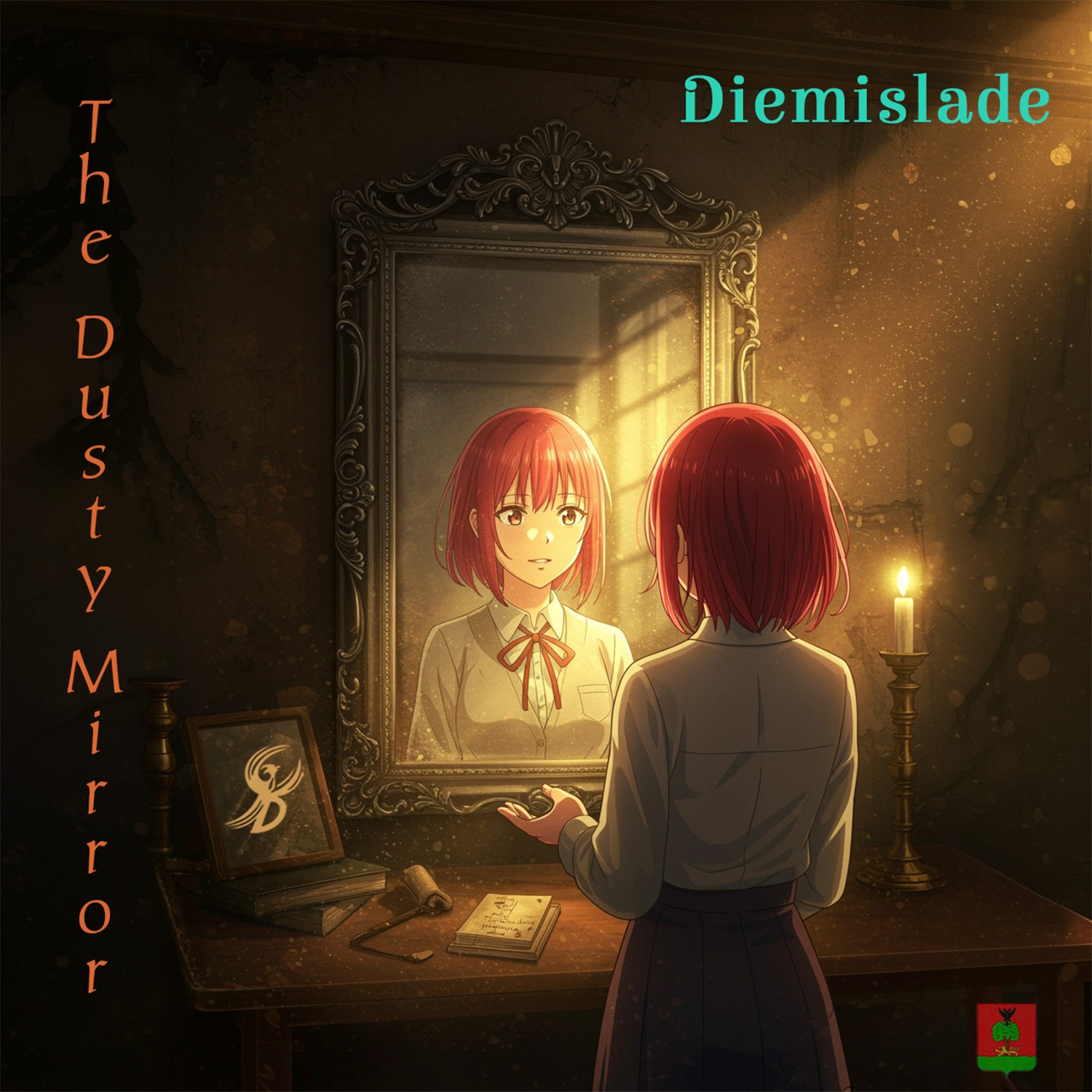
Hello everyone, it’s your host Oliver from DULAXI, and today I’m delighted to be joined by Raffaele Maggioli, the multi-instrumentalist, songwriter and creative force behind Diemislade, an alternative music project based in Rome, Italy. Blending alternative rock, pop-rock, modern metal influences and narrative songwriting, Diemislade explores a range of musical and emotional themes through a distinctive creative approach. Today, we’re discussing the project’s latest single, “The Dusty Mirror”, released on 6 November 2026.
Before we begin our conversation with Raffaele, here’s what you need to know about today’s featured project.
About Diemislade
Founded in Rome by multi-instrumentalist and songwriter Raffaele Maggioli, Diemislade is an alternative music project built around a combination of heavy guitar riffs, melodic hooks and narrative storytelling. Drawing inspiration from a wide range of musical styles, the project also incorporates creative influences from anime, video games and wider pop culture. Its musical identity reflects an interest in exploring different sounds while maintaining an energetic rock foundation and a strong emphasis on storytelling.
With “The Dusty Mirror”, Diemislade turns its attention towards existential burnout, emotional isolation and the difficulty of recognising when an apparently comfortable life has become restrictive. The song follows someone caught in the repetition of everyday responsibilities and familiar habits, gradually reaching the realisation that security does not always translate into personal fulfilment. Moving from emotional numbness towards renewed determination, the track explores the importance of stepping outside familiar surroundings, rediscovering personal ambitions and finding the courage to pursue a more meaningful existence.
The story behind the single also carries a deeply personal dimension for Maggioli. Initially developed around a different concept, the composition eventually evolved into a reflection on putting personal ambitions and aspirations aside because of family responsibilities. This change in direction gave the song a more introspective foundation, allowing its central imagery of a dusty mirror to represent the process of rediscovering one’s identity after a prolonged period of emotional and personal stagnation. The accompanying visualizer draws inspiration from the anime The Ancient Magus’ Bride, particularly the development of its protagonist, Chise Hatori, whose experiences of isolation, vulnerability and eventual self-discovery closely connect with the song’s central themes.
Musically, “The Dusty Mirror” brings together melodic guitar work, energetic percussion and a strong vocal-led arrangement to support its progression from reflection to liberation. Its composition also has a lengthy creative history, with the original musical idea dating back to 2009 before undergoing further development through additional instrumental arrangements. Beyond this release, Maggioli hopes to establish Diemislade as a recognised creative project within the anime and video game music space, while remaining open to different musical influences and opportunities to perform live. His approach to songwriting continues to prioritise experimentation, personal expression and the freedom to explore different musical directions.
Having this brief introduction to today’s featured project, I’m sure both new listeners and longtime followers of Diemislade will be interested in hearing more about the experiences, creative decisions and personal reflections behind “The Dusty Mirror”. So, without further ado, let’s begin today’s interview.
INTERVIEW SESSION
Oliver:
Diemislade is an alternative music project founded in Rome by multi-instrumentalist and songwriter Raffaele Maggioli. How would you describe the identity of Diemislade today, and what personal vision or creative ambition first led you to establish the project?
Raffaele Maggioli:
Diemislade is still a niche project struggling to find its footing in a music world full of traps and sharks ready to drain you financially without tangible results. The goal is to get recognized as composers of anime and video game themes and turn that into an actual job. There is also a desire to play live, but for now I will keep investing resources to try to reach as many parts of the globe as possible.
Oliver:
Your music brings together alternative rock, modern metal, melodic hooks and narrative storytelling. How did these different musical elements become part of your artistic identity, and how do you maintain a recognisable sound while exploring different influences?
Raffaele Maggioli:
My roots start with Michael Jackson and then move on to Antonello Venditti, Ligabue, Raf, Litfiba, Radiohead, Depeche Mode, Korn, Limp Bizkit, Linkin Park, Metallica, Guns N’ Roses, and finally the band I love most artistically, Iron Maiden. I listen to everything because anything could come in handy at certain stages of life; maybe you have a mood that needs to be dealt with using a Balkan melody and knowing it allows me to use it, whereas if I had ignored that kind of music I wouldn’t have been able to face and exorcise that mood—that’s why you have to listen to everything. Georgian singing has its own charm, African rhythms, Middle Eastern or Far Eastern melodies, Brazilian bossa novas, rumbas and other South American rhythms or Mexican mariachi. I really like crossovers, like the one I offered in the single “Pay for My Sins,” for example. Then a fairly similar sound comes out anyway, both because I like pretty much the same guitars, amps, and effects, and because at the end of the day I’m always the one composing, and my approach to music is clear: I always try to make something lively, otherwise I’m the first one to get bored playing it. The Dusty Mirror isn’t among my favorites, but it still represents a part of me that needs to be taken
into account.
Oliver:
Your latest single, The Dusty Mirror, explores existential burnout, emotional isolation and the repetitive nature of everyday life. What experiences, observations or personal reflections inspired you to write about these subjects?
Raffaele Maggioli:
I thought about myself. At 21 I would have liked to leave and go to Los Angeles to study at GIT; the idea came to me when my father was about to sell a second house he had, but when I told him about my desire to go, he stopped everything and asked me to stay home to help them because my mother had leukemia, which she battled for 22 years, later developing senile dementia as well; soon after, my father also developed a form of leukemia, and I practically started pitching my songs when they left me in 2024. I lived for years in a golden cage, apathetic because I couldn’t pitch my
tracks since I wouldn’t have been able to accept any job offers if any came up—I had to take care of them. Let’s also say I was very optimistic and confident in my songs, and over time I’ve been getting more and more discouraged. Still, for years I lived knowing I had room and board, yet I couldn’t enjoy anything; my romantic relationships suffered too because I wasn’t at peace and didn’t find meaning in anything. I composed and recorded a lot—that was the only thing that gave me gratification.
Oliver:
The song presents a character trapped in a cycle of work, routine and isolation before gradually recognising the need for change. What made you want to tell this particular story, and why was the transition from emotional numbness to personal awakening important to its message?
Raffaele Maggioli:
I felt a need to change the pace of my life and find new stimuli because I’ve entered a new phase of life and have to make the most of this moment to explore what the world has to offer, trying to find my place and my role.
Oliver:
The expression “golden cage” is central to the song’s message, suggesting that what appears comfortable and secure can sometimes prevent personal growth. Have you encountered this idea in your own life, and what do you hope listeners understand about the difference between security and genuine fulfilment?
Raffaele Maggioli:
As I said before, I had room and board, and every now and then I’d take a trip here and there for a few days, but then I knew I had to come back home because someone depended on me and I depended on them, and I always experienced it as a hidden imprisonment—comfortable, yet one that never gave me anything other than fleeting satisfaction. I felt good only at composing and taking care of them; for the rest, I always felt a sense of incompleteness, of not having accomplished a damn thing in life.
Oliver:
The title The Dusty Mirror carries a strong image of someone looking beyond the surface to rediscover who they really are. What does this image represent to you, and how did it become the central idea around which the song’s lyrics and message developed?
Raffaele Maggioli:
Initially the backing track was called “La città della luce” (The City of Light) and was a reference to Jones’s cult that led to the massacre of its followers in French Guiana; it was more of a critique of cults in general, but then I decided to pivot toward something more personal because the track lent itself better to an encouraging theme than an accusation against cults, and I really think I made the right choice. Either way, the dusty mirror was me in that situation of caring for my parents— putting ambitions, hopes, and desires on the back burner because I had more urgent responsibilities. The lifting of those responsibilities allowed me to rediscover who I was and what I wanted to try to achieve.
Oliver:
As a songwriter and multi-instrumentalist, how did you approach the composition of The Dusty Mirror? Did the song begin with a guitar riff, a lyrical idea, a melody or a particular emotion, and how did those early elements develop into the finished recording?
Raffaele Maggioli:
The song started from that opening violin motif; I composed it in 2009 on my PC keyboard, then added the acoustic guitar that accompanies almost the whole song, and there was also a lead phrase on electric guitar during the choruses, which I later decided to remove to put more emphasis on the final solo. I also added the drums fairly recently to give it a burst of energy and a sense of breaking free from hesitation.
Oliver:
Your songwriting often draws inspiration from anime, video games and wider pop culture. What attracts you to these forms of storytelling, and how do you translate their characters, themes and emotional experiences into music while maintaining your own original voice?
Raffaele Maggioli:
I’ve always thought anime are more serious than people imagine. The artists behind the original manga are adults with their own opinions about the world and how it works; watching anime broadens my culture and sometimes moves me emotionally, like “I Want to Eat Your Pancreas,” a work that deeply touched me. The challenge in dedicating a song to a specific manga lies in figuring out the approach. Sometimes I talk about the social environment where the story takes place, other times about the main characters in general or a specific one, sometimes in the first person, other
times like talking to them, other times like a storyteller narrating events; I wrote the next song in a musical format, a back-and-forth between hero and antagonist. I try to change often, otherwise I get bored.
Oliver:
You selected The Ancient Magus’ Bride as the visual reference for the song’s accompanying visualizer, drawing a connection between its protagonist, Chise Hatori, and the themes of emotional isolation and self-discovery in your lyrics. What specifically about Chise’s personal development made her story such a fitting connection to The Dusty Mirror?
Raffaele Maggioli:
Chise is emptied out, having suffered trauma and abandonment; she expects nothing from life, she’s apathy itself, like a shopping bag left in the wind. When Elias buys her to make her his bride, she finds the golden cage where she’s treated like a queen anyway, kept from experiencing life’s happy and dramatic sides just to protect her, which ends up alienating her. She is also full of guilt, feeling like a burden, and when she manages to wipe her mirror clean and assert herself for who she is, she is swept up by a renewed desire to explore the world and become the main character of her own life.
Oliver:
How important is the visual side of your music to the overall Diemislade experience? When creating the visualizer for The Dusty Mirror, how did you approach the relationship between the song’s emotional progression and the imagery used to represent it?
Raffaele Maggioli:
For the videos I rely on an Egyptian guy with the nickname M Loki; every now and then he can’t quite keep up with the timing of the songs, but by and large he makes decent videos.
Oliver:
Musically, The Dusty Mirror balances heavy guitar riffs with catchy melodic hooks and a strong emotional narrative. How do you approach that balance in your arrangements, and what role do guitar tone, rhythm, melody and production play in communicating the song’s message?
Raffaele Maggioli:
I was inspired by “Siamo soli nell’immenso vuoto che c’è” by Raf, an Italian musician. Toward the end of that song, an awesome metal solo kicks in; in “The Dusty Mirror,” an elaborate solo like that didn’t really fit, so I found a compromise. Generally speaking, I use lead guitars to “color” the track and keep the vocals company, provided the sound engineer can handle them well—otherwise I always end up sacrificing the guitar because the vocals reign supreme. I prefer lead parts to be heavily distorted because that represents the passion I put into composing it and also the repressed aggression that’s part of who I am; it’s a kind of outlet for the frustrations I absorb in everyday life. Even though I started out as a guitarist, I love the drums—they’re the heart of a song and have to be lively, dynamic, and energetic; practically speaking, they’re almost always the star alongside the vocals. The bass is super important too, and playing it often I’ve noticed it affects my mood—playing it calms me down even when I play slightly more intricate rhythms; maybe it vibrates at frequencies that rebalance my nervous system, I don’t know.
Oliver:
The song moves between feelings of frustration, isolation and renewed determination. From a production perspective, were there particular sounds, instrumental choices or arrangement decisions that helped you capture these changing emotions and give the composition its overall character?
Raffaele Maggioli:
Well, the violin parts alone were enough to evoke the feelings you mentioned—it was like having a tree and putting Christmas decorations on it.
Oliver:
As an independent artist developing a project in Rome, what challenges have you faced in building Diemislade and bringing your creative ideas to life? How has working independently influenced your decisions around songwriting, recording, production and artistic direction?
Raffaele Maggioli:
The convenient part is that I do whatever I want since I have no clients or bosses to answer to, while the hardest part is promotion and mixing, since I don’t handle those myself. With mixing I always have to compromise—now I’ve even changed how I compose to make the engineer’s job easier: fewer tracks, but essential ones, so they can better manage how they interact. As for promotional campaigns, I still haven’t cracked the code, and I get more and more discouraged when I come across an ad offering work as a music listener, paying 25–30 euros per job for hundreds of likes, watching a set number of videos, and in some cases asking you to comment—so I figured followers on YouTube and Spotify might even be fake, bought, and that would demoralize me even more. On top of that, there are plenty of people taking you for a ride. Someone recently guaranteed me placement in several playlists, a set number of views, a set number of subscribers, and then after 11 days I asked for a refund and magically a day later they found a playlist with hundreds and hundreds of songs where mine was at number 85! They even make a fool out of you! The risk is that I’ll end up investing a significant amount of money for years to come with the risk of getting nothing out of it, because I can put out tracks with interesting ideas, but if very few people listen to me, I won’t be able to get anything good out of it. People have advised me to use Meta and Google Ads, but I still think it would be a waste of time because very few people click on sponsored ads, especially when you’re a complete nobody.
Oliver:
Looking back at your development as a musician and songwriter, what have you learned about yourself through creating music, and has your understanding of what makes a meaningful song changed over time?
Raffaele Maggioli:
Yes, my approach has changed a bit: before, I added more frills, whereas now I tend to get straight to the point, playing around with riffs and rhythms. I can say that on a songwriting level, I’ve finally achieved my primary goal of making direct, energetic, engaging, easy-to-follow songs. Thinking about it now, the way my drum tracks come about has changed too: first I programmed them in Ableton Live, then I bought loops from Big Fish Audio drum libraries and had a drummer on Fiverr record them, and now instead I buy them on YouTube from people who run channels and compose them themselves. I pay them as a token of appreciation for their work.
Oliver:
With The Dusty Mirror exploring the importance of stepping beyond familiar routines and rediscovering one’s purpose, what would you like listeners to take away from the song in their own lives? Looking ahead, what can audiences expect from Diemislade as you continue developing the project and exploring new musical and creative directions?
Raffaele Maggioli:
I would like it to help someone keep going, help the listener get through a tough moment, and communicate optimism about the possibility of succeeding in changing if you want to. For the future, I can only advise those who follow me to stay open to everything, because as I said before, I listen to everything and write everything since life is dynamic and so is my mood—the rock streak will always remain, but sometimes I’ll branch into other genres because I want to stay free to express myself however I feel like!
“The Dusty Mirror” is more than a reflection on feeling trapped; it is the story of someone learning to recognise the difference between simply getting through life and finally having the freedom to live it. Through Raffaele’s honesty, the song becomes a reminder that rediscovering yourself can begin when you finally allow your own dreams to matter again.
~ Oliver (DULAXI Team)
EDITORIAL PERSPECTIVE
What makes this conversation particularly meaningful is the honesty behind Raffaele’s creative journey. His explanation of the song’s origins adds another dimension to its composition, especially the transformation of an instrumental idea from 2009 into a personal reflection on responsibility, lost ambitions and rediscovery. I also found his openness about musical experimentation refreshing, particularly his desire to remain creatively unrestricted while retaining his rock foundations. It is this combination of personal experience and artistic freedom that gives Diemislade an interesting direction to pursue.
~ Oliver (DULAXI Team)
CLOSING
A sincere thank you to Raffaele Maggioli for taking the time to speak with DULAXI and for sharing the personal experiences, creative decisions and musical influences behind Diemislade and “The Dusty Mirror”. His reflections have offered us a deeper understanding of the person behind the project and the experiences that helped shape this particular release.
For readers who have not yet experienced “The Dusty Mirror”, I encourage you to spend some time with the single and discover its message for yourselves. Whether it is the personal storytelling, the musical arrangement or its encouragement to look beyond familiar routines, there is plenty to take away from the release. You can also follow Diemislade through the links provided below to keep up with Raffaele’s future creative developments.
Thank you for joining us for another DULAXI interview. We appreciate every reader who continues to support our conversations with independent artists and emerging musical projects from around the world. This has been Oliver from DULAXI, and we look forward to bringing you more interesting conversations and stories from the music world. Until next time!