

Hello everyone, it’s your host Faithfulness, and today I have with me Praveen Koval from New York, United States. Praveen Koval is here to share more light about his musical journey while diving into his latest original single, “Handprint,” a cinematic and reflective release that arrived on May 15, 2026, alongside a visually stunning music video premiered through VEVO. Built around the idea that we often spend our lives searching outward for meaning, opportunity, and validation, only to discover that what we seek has always existed within us, “Handprint” invites listeners into a deeply personal journey of self-discovery. Through the symbolic image of a mysterious handprint, the song transforms an external question into an internal truth, encouraging audiences to reflect on the quiet strength and joy already living inside them. Let’s discover more about the story behind this compelling release.
Welcome, Praveen Koval. Before we begin our interview, here is what you need to know about this talented artist. Praveen Koval is a songwriter, filmmaker, and published author who approaches music as a medium for storytelling rather than following a fixed genre. Blending cinematic visuals with emotionally driven songwriting, his work explores themes of identity, reflection, human connection, and the hidden truths beneath everyday life. His music moves fluidly between English and Hindi, often carrying subtle influences of Urdu and Sufi expression, while his visual projects embrace immersive and cinematic narratives. His previous releases include “Alone,” “Ghutan,” collaborative projects under various creative directions, and his work as one half of the musical duo ARTISAN TALES, whose album title track “INSCRIBE” received recognition from Rolling Stone. With studies in filmmaking at the New York Film Academy and music business at New York University Tisch, Koval continues to merge music and visual storytelling into one artistic experience.
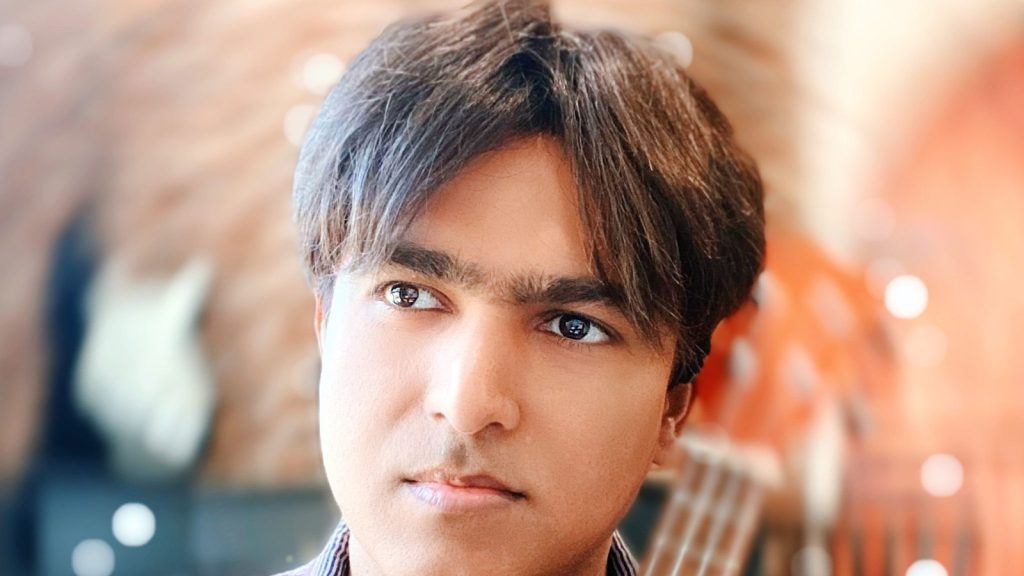
Praveen Koval created “Handprint” as a reflection on the human tendency to search beyond ourselves for fulfillment and purpose. At the heart of the song lies the realization that the answers we seek are often already within us, beautifully captured in the lines, “This handprint is a sign of my own kind, All the joy is still inside my mind.” Accompanied by a cinematic music video filmed in Indonesia, “Handprint” stands as another chapter in Koval’s evolving artistic vision, where music, film, and storytelling come together to create an experience that resonates long after the final note fades.
Having this brief Introduction, I’m sure new and current fans must be excited about our Interview today.
INTERVIEW
Faithfulness: Praveen, you wear many creative hats as a songwriter, filmmaker, and published author. How have these different artistic disciplines shaped the storyteller you are today?
Praveen Koval: For me, storytelling has always been bigger than any single medium. Writing taught me how to explore a person’s inner world and give meaning to emotions that are often difficult to express. Filmmaking taught me how to communicate through visuals, atmosphere, and moments of silence. Music taught me the power of saying something meaningful in just a few lines and a melody.
My professional life in technology has also influenced the way I tell stories. Working in a field driven by logic, systems, and problem-solving has given me a deep appreciation for human behavior and the choices people make. Creativity allows me to explore the emotional side of those same experiences. In many ways, I have spent my life moving between those two worlds, and both have shaped the storyteller I am today.
What I’ve realized over the years is that whether I’m writing a book, directing a film, or composing a song, I’m always trying to understand what makes us human and how we connect with one another. I’ve come to believe that everyone has a story, and every creative project is an opportunity to tell one. The medium is never the destination. The story is.
Faithfulness: Your work often explores identity, reflection, and human connection. What first drew you toward these themes, and why do they continue to resonate with you?
Praveen Koval: What first drew me toward these themes was a fascination with people. I’ve always been curious about the difference between the lives we present to the world and the thoughts, fears, hopes, dreams, and questions we carry within us. Some of the most important journeys happen internally, and I’ve found that those quiet, often unseen experiences can be the most powerful stories to tell.
Over the years, that curiosity has only grown stronger. I’ve spent much of my professional life in technology, working with startups and large tech companies during a time when digital platforms, social media, and now AI have transformed how we communicate and interact. While technology has created incredible opportunities to connect, I’ve also seen how easy it is for genuine human connection to get lost in the noise.
That’s one of the reasons these themes continue to resonate with me today. Beneath the screens, the algorithms, and the constant flow of information, people are still searching for the same things they always have: love, purpose, belonging, hope, and a sense of who they truly are. We still dream about the future, wrestle with our fears and regrets, and look for meaningful connections with others. Technology may change the way we communicate, but it doesn’t change what makes us human.
As a storyteller, I’m drawn to exploring those shared human experiences because they’re the threads that connect all of us. No matter where we come from or what path we’re on, we’re all trying to understand ourselves and find our place in the world. Those are the stories that continue to inspire me, and they’re the stories I find myself returning to as an artist.
Faithfulness: Having studied filmmaking at New York Film Academy and music business at New York University Tisch, how have those experiences influenced the way you approach your creative career?
Praveen Koval: At the center of everything I create is a story. Whether it’s a song, a film, or a book, I don’t begin with a genre or a format. I begin with people.
One of the most valuable lessons I learned at the New York Film Academy was that every story is ultimately about characters. Each character sees the world differently. Their emotions, choices, fears, dreams, and beliefs are shaped by their experiences and the journey that brought them to that moment. Sometimes there isn’t a clear right or wrong. There is simply a person responding to life through the lens of their own story.
Film school taught me how all of these elements connect. Character, emotion, conflict, perspective, and visual storytelling come together to create meaning. It changed the way I look at the world. Shakespeare wrote, “All the world’s a stage, and all the men and women merely players.” Over time, I’ve come to appreciate the truth in that idea. Every person I meet sees the world through a different lens, and I’ve become fascinated by how those perspectives shape their decisions and relationships.
My decision to study music business at NYU Tisch came from a different kind of curiosity. I wanted to understand the business side of creativity and learn how artists build sustainable careers. It was never really about making money. It was about understanding the process. I wanted to learn how creative ideas move from inspiration to execution, how projects find their audience, and how to navigate the industry while staying true to the work itself.
Together, those experiences gave me a more complete perspective as a creator. Film school taught me how stories are crafted. The music business taught me how stories reach people. Both continue to influence the way I approach every creative project today.
Faithfulness: Rather than committing to a single genre, you allow each story to determine its own sound and atmosphere. What have you discovered about yourself through this creative philosophy?
Praveen Koval: One of the biggest things I’ve discovered is that creativity becomes much more honest when you stop forcing it into predefined boundaries.
Early in my journey, I spent a lot of time trying to fit ideas into a particular style or expectation. Over time, I realized that every story has its own emotional identity. The more I listened to what the story needed, the more authentic the final result became.
A good example is my song “Ghutan,” which translates to “suffocation.” Most people naturally associate suffocation with darkness or sadness. But when I explored the idea more deeply, I realized there was another side to it. Sometimes suffocation is the moment before a breakthrough. The moment before you finally breathe. To capture that feeling, I wanted the experience to feel cinematic, emotional, and almost explosive by the end. If I had approached it by saying, “This genre should sound this way,” I would have limited where the story wanted to go.
What I’ve discovered about myself is that I’m most comfortable when I’m exploring rather than following a formula. An open canvas allows me to follow an emotion wherever it leads. Sometimes that process takes unexpected turns, but more often than not, it helps me express the idea in a way that feels true to its core.
I’ve also learned that every creative person works differently. Through conversations with artists, filmmakers, musicians, and writers, I’ve realized there is no universal process. What works beautifully for one person may not work for another. Some people discover their creative voice early. Others spend years searching for it.
For me, finding this approach took more than a decade of experimentation, mistakes, failed ideas, and constant learning. Looking back, I’m grateful for that journey because it taught me that creativity isn’t about finding a formula. It’s about discovering a process that allows you to be honest with yourself and the story you’re trying to tell.
Faithfulness: From releases like “Alone” and “Ghutan” to your work with ARTISAN TALES, your catalog covers a wide emotional landscape. Looking back, what moments have been most defining in your artistic journey so far?
Praveen Koval: Looking back, I think the most defining moments weren’t necessarily the biggest milestones on paper. They were the moments that changed the way I understood creativity and myself.
One of those moments was realizing that I didn’t have to choose a single identity as a creator. For a long time, I felt pressure to fit into a category, but over time I understood that curiosity was a bigger part of who I was than any label. That realization gave me the freedom to explore different ideas, emotions, and perspectives without worrying about where they belonged.
Another defining moment was discovering my own creative process. That didn’t happen overnight. It took years of experimentation, failed ideas, unfinished projects, and constant learning. There were times when I questioned whether I was approaching things the right way. Looking back, those struggles were incredibly valuable because they helped me find a process that feels authentic to me.
Perhaps the most meaningful moments, though, have been when someone connected with a piece of work in a way I never expected. There’s something powerful about hearing someone say, “I felt that,” or “That reminded me of my own life.” Those moments remind me that art isn’t really about the creator. It’s about creating a space where people can see a part of themselves.
If there’s one thing my journey has taught me, it’s that success isn’t always measured by numbers or milestones. Sometimes it’s measured by connection, growth, and having the courage to keep creating, even when the path ahead isn’t entirely clear.
What excites me most is that I still feel like I’m learning. There are so many stories, emotions, and experiences I want to explore and better understand. Beyond the work itself, I’ve fallen in love with the process. The people you meet, the conversations you have, the collaborations that emerge, and the human connections that form along the way are often just as meaningful as the finished piece.
Faithfulness: Your new single “Handprint” centers on the realization that what we spend our lives searching for externally often already exists within us. What inspired you to explore this idea through music?
Praveen Koval: The inspiration came from an idea that fascinated me for a long time, even as a child. I grew up reading poetry and Hindi literature, and one image that always stayed with me was the story of the musk deer. A recurring metaphor in Indian literature, the musk deer spends its life searching for the source of a beautiful fragrance, unaware that the fragrance comes from within itself.
I always found that idea incredibly powerful because it mirrors so much of the human experience. We spend years searching for happiness, validation, purpose, or meaning in the outside world, only to discover that some of the answers we seek may have been within us all along.
The challenge was figuring out how to express that idea in a way that felt emotional and cinematic rather than philosophical. Coming from a filmmaking background, I’ve always been fascinated by motifs. Sometimes a city becomes a character. Sometimes an object carries the emotional weight of a story. Sometimes a recurring image quietly guides the audience through a journey.
For Handprint, the handprint became that motif. It became a symbol of something the central character is searching for without fully understanding why. As the journey unfolds, the character slowly realizes that the thing being pursued was never really outside. It was always connected to who they already were.
I was also drawn to the symbolism of a handprint because, in many cultures, a palm is associated with destiny and the future. People often look at their hands searching for answers about what lies ahead. I liked the idea that the very symbol people associate with their future could also serve as a reminder that their future is, in many ways, already in their own hands.
Handprint was my attempt to explore that realization through music and storytelling, and to invite listeners to reflect on their own journey in the process.
Faithfulness: The image of a mysterious handprint serves as a powerful symbol throughout the song. How did that concept emerge, and what does it personally represent to you?
Praveen Koval: The handprint emerged as a symbol that could carry multiple meanings while remaining simple and universal. I was drawn to it because a handprint is uniquely yours. No two are exactly the same, much like our individual journeys through life.
I was also fascinated by the connection between a palm and the idea of destiny. Across many cultures, people look at their hands searching for clues about their future. I liked the thought that the very symbol people associate with fate could also serve as a reminder that much of what we become is shaped by the choices we make.
Personally, the handprint represents identity, responsibility, and the mark we leave behind. It’s a reminder that while we often look to circumstances, luck, or other people to explain our lives, we still have a role in shaping who we become.
Faithfulness: The lyric, “This handprint is a sign of my own kind, All the joy is still inside my mind,” feels like the emotional heart of the song. What was going through your mind when you wrote those words?
Praveen Koval: When I wrote those lines, I felt like I had finally arrived at the emotional destination of the story. Up until that point, the character is searching, questioning, and looking outward for answers. Those lyrics represent the moment of realization.
The phrase “a sign of my own kind” is really about recognizing something within yourself that was always there but perhaps overlooked. And “all the joy is still inside my mind” reflects the idea that happiness, confidence, and peace are not always things we need to chase externally. Sometimes they’ve been with us all along, waiting to be rediscovered.
As a storyteller, I love moments where a character experiences a shift in perspective. Not because the world around them has changed, but because they have. For me, those lines capture that exact moment. It’s quiet, simple, and personal, but it changes everything that comes after.
Faithfulness: “Handprint” carries a cinematic and reflective atmosphere from beginning to end. How did you approach creating a soundscape that could support such an introspective journey?
Praveen Koval: I approached it almost like scoring a film. I wanted the music to travel with the character and reflect what they were feeling at each stage of the journey.
One element that’s especially important to me is vocal harmony. I love layering harmonies because they add emotion, depth, and texture. In Handprint, those layers almost feel like reflections of the character’s inner thoughts, helping create a sense of introspection and self-discovery.
I was careful not to overcrowd the arrangement. Every sound had a purpose. My goal was to create an atmosphere that felt immersive and cinematic, so the listener wasn’t just hearing the story but experiencing it alongside the character.
Faithfulness: Because your music is often driven by storytelling, did the narrative of “Handprint” come first, or did the music lead you toward the story?
Praveen Koval: For me, it usually starts with a visual image rather than a melody or even a story. That’s a creative process I discovered after years of experimentation, failures, and trying different approaches. I’ve realized that unless I can see a character, a scene, or a moment in my mind, it’s difficult for me to fully explore an idea.
The inspiration for Handprint came from one of those small everyday moments. I was at a grocery store when I saw a child tap a stranger on the back and quickly run away before being noticed. The person kept turning around, trying to figure out who had touched them. It was such a simple moment, but it stayed with me.
Something about that image sparked my imagination. I began thinking about a character who feels a touch, a sign, or a presence and becomes obsessed with understanding what it means. That’s when the handprint started taking shape as the central motif, and the lyrics began to follow.
The ideas of the musk deer and the symbolism of the palm had been living in my mind for some time, but that small moment gave me a way to bring those ideas to life. For me, that’s often how creativity works. A simple moment becomes a doorway into a much larger emotional journey.
Faithfulness: The accompanying music video was shot in Indonesia and released through VEVO. What made Indonesia the right setting for this visual story, and how does the video deepen the message of the song?
Praveen Koval: Indonesia felt like the right setting because I was looking for a landscape that could visually reflect the emotional journey at the heart of the story. I needed vast green valleys, mountains, mist, rain, and moments of solitude. I wanted nature to feel almost like another character, quietly accompanying the protagonist as she moves through her search and self-discovery.
I had previously filmed Ghutan in Indonesia and had a wonderful experience, so I was excited to explore the country again through a different story. What brought me back wasn’t just the beauty of the location, but the cinematic possibilities it offered. We were very intentional about every frame and how it contributed to the emotional atmosphere of the song.
The video deepens the message by turning an internal realization into a visual experience. Rather than simply telling the audience what the song means, it invites them to travel alongside the protagonist and experience the journey for themselves.
Releasing through VEVO was important because it reflects a commitment to quality and presentation. From the cinematography and color palette to the sound design and editing, every creative choice was intentional. The editing, in particular, follows the emotional pulse of the music. As the song builds, shifts, and reaches its peaks, the pace and energy of the visuals evolve with it, helping the audience feel the journey rather than simply watch it.
Faithfulness: Throughout the track, there is a sense of moving from uncertainty toward self-discovery. Was there a particular life experience that helped shape that emotional progression?
Praveen Koval: I don’t think it was one particular experience. It was more the accumulation of life itself.
When we’re younger, it’s easy to see the world in terms of certainty. Things feel right or wrong, success or failure, black or white. But as I’ve grown older, met more people, and experienced different chapters of life, I’ve realized that people can experience the same situation and walk away with completely different perspectives. Their experiences, circumstances, and personal histories shape how they see the world.
That realization changed the way I think about both people and stories. I’m less interested in finding a definitive answer and more interested in understanding the journey that led someone to believe what they believe. I’ve come to realize that life is often less about finding the right answer and more about understanding why different people arrive at different answers.
In many ways, the emotional progression in Handprint mirrors that journey. The movement from uncertainty to self-discovery isn’t about suddenly finding all the answers. It’s about becoming more aware of yourself, questioning your assumptions, and discovering truths that may have been there all along.
For me, that’s a journey that continues every day.
Faithfulness: “Handprint” blends music, visuals, and emotional storytelling into one experience. What do you hope listeners and viewers take away after experiencing the full project?
Praveen Koval: More than anything, I hope the project gives people a moment to pause.
We live in a world that constantly pulls our attention outward. There is always another notification, another opinion, another destination, another thing competing for our focus. Handprint invites us to slow down for a few minutes and reconnect with ourselves.
I don’t expect everyone to walk away with the same interpretation, and I actually hope they don’t. The most meaningful stories are often the ones that reflect something different back to each person experiencing them. If the song, the visuals, or even a single lyric encourages someone to reflect on their own journey, ask a deeper question, or see themselves a little differently, then I feel the project has done its job.
At its heart, Handprint is an invitation to look inward and recognize that some of the things we spend our lives searching for may have been closer than we realized all along.
Faithfulness: Looking beyond the release itself, what conversations or reflections would you love “Handprint” to inspire among your audience?
Praveen Koval: I would love Handprint to inspire conversations about the expectations we place on ourselves and how often we define our lives through comparison, achievement, or external validation.
One of the reasons I’m drawn to stories like this is because they don’t belong to a particular generation or moment in time. These themes appear in ancient literature, mythology, poetry, and philosophy, and they continue to resonate today. While the world changes, human beings continue to search for meaning, direction, and a deeper understanding of themselves.
I also hope it encourages people to reflect on where they place responsibility for their lives. We often look outward for explanations, whether it’s circumstances, luck, fate, or other people. While many things are beyond our control, Handprint gently suggests that we may have more influence over our journey than we sometimes realize. In many ways, the handprint is a reminder that the future we’re searching for is often shaped by the choices we make today.
I don’t expect the song to provide answers. In fact, I think the most meaningful stories leave room for interpretation. But if Handprint encourages someone to pause, reflect, and ask those questions for themselves, then I think it has achieved something meaningful.
In that sense, I hope the conversation continues long after the song ends.
Faithfulness: As you continue exploring stories through music, film, and visual art, what creative directions or dreams are you most excited to pursue next?
Praveen Koval: What excites me most is the opportunity to keep exploring new ways of telling stories. Every time a new tool, medium, or technology emerges, I’m less interested in the technology itself and more interested in the stories it makes possible.
In the near future, I’m looking forward to continuing to build my catalog of songs and visual stories. There are still so many ideas, characters, emotions, and themes I want to explore. Every project teaches me something new, and that sense of discovery is what keeps me motivated.
Longer term, I’m interested in creating experiences that extend beyond a single medium. A song can inspire a film. A film can open the door to a larger world. What excites me is finding ways to tell stories that can live across different formats while remaining emotionally connected at their core.
More than anything, I hope to keep creating work that connects with people. Trends will come and go, technology will evolve, and the tools we use will change, but great stories have a way of enduring.
The more people I meet, the more I’m convinced that everyone is carrying a story worth telling. Exploring those stories continues to inspire me, and I hope it always will.
CHECK OUT THE RELEASE OF ‘Handprint’
HAVING LISTENED TO ‘Handprint’, HERE ARE MY HONEST THOUGHTS
Praveen Koval’s “Handprint” is an introspective, cinematic single that transforms songwriting into emotional storytelling. It explores the universal search for meaning, revealing how external pursuits often lead back to inner truth and self-awareness. Built on a minimalist, atmospheric production, the track uses delicate instrumentation and a heartbeat-like pulse to anchor reflection. Koval’s vocal performance evolves from vulnerability to confidence, mirroring the emotional journey embedded within the lyrics. The metaphor of a handprint symbolizes inner strength, with lyrics gently guiding listeners toward self-realization and acceptance. Its cinematic vision extends through a music video filmed in Indonesia, reinforcing Koval’s multidisciplinary storytelling approach. Rather than relying on excess, the song’s restraint enhances emotional depth and authenticity throughout its runtime. It lingers as a gentle reminder that meaning, joy, and strength are found within ourselves all along always present.
~ Faithfulness (Dulaxi Team)
Finally to our audience, I urge to listen to “Handprint”, add it to your playlist and be Inspired by it and on behalf of Dulaxi I like to appreciate you all by saying thank you everyone, See you on our next interview.
For more information about Praveen Koval, click on the icons below.