
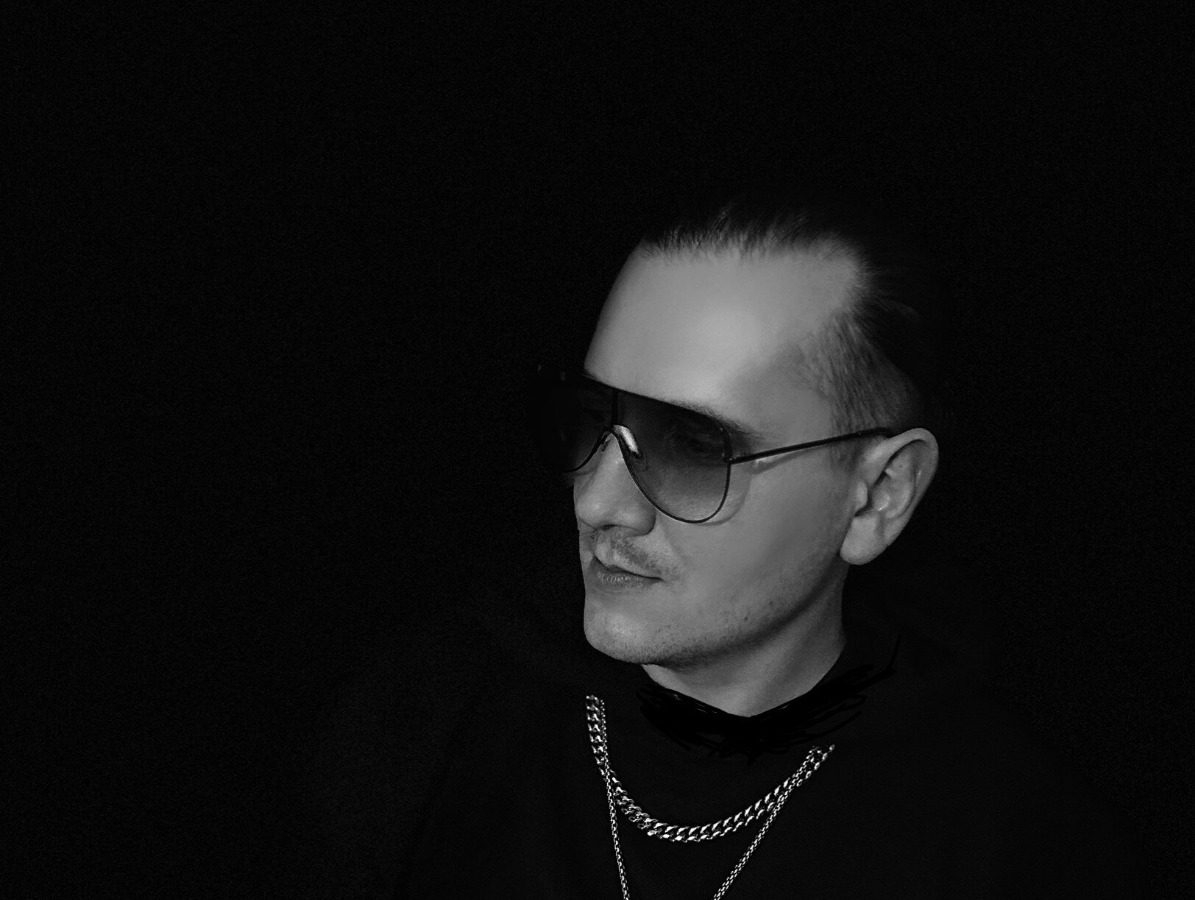
Hello everyone, it’s your host Daniel from Dulaxi, and today I have with me the talented hip-hop artist Osnovatel from Odessa, Ukraine, currently based in Vienna, Austria. And Osnovatel is here to discuss his recent single “Ddaboss” featuring Dmasta and Cepi, which was released on August 17th, 2025. So, welcome, Osnovatel! But before we begin our interview, to our audience; here is what you need to know about this artist.
Alexander Dol popularly knows as Osnovatel is a hip-hop artist originally from Odessa, Ukraine, currently based in Vienna, whose sound is built at the intersection of raw street energy and deeper introspective spirituality. Emerging as an independent artist who began making music at the age of twelve, he has spent years refining a distinctive sonic identity shaped by hard-hitting delivery, atmospheric production, and reflective lyricism. His artistic direction is defined by contrast, merging external expressions of street culture and confidence with internal themes of self-discovery, emotional pressure, and personal growth. This duality gives his music both immediate impact and deeper interpretive weight, positioning him within the modern landscape of UK drill-inspired and melodic street rap movements. His recent single “Ddaboss” featuring Dmasta and Cepi, released on 17th August 2025, exemplifies this balance through a heavy, knocking instrumental and chant-like hook that delivers a bold, boss-driven street presence, while simultaneously introducing a reflective and spiritual layer that expands its emotional depth. The collaboration enhances the track’s intensity and flow diversity, as Dmasta and Cepi contribute additional energy that complements Osnovatel’s commanding performance. Designed for audiences who appreciate attitude-driven hip-hop with substance, “Ddaboss” aligns with the sonic and thematic sensibilities of fans of UK drill, melodic rap, and modern hip-hop artists such as Central Cee, Pop Smoke, and Travis Scott, while reinforcing Osnovatel’s identity as an artist who balances street authenticity with introspective depth.
Having this brief Introduction about Osnovatel, I’m sure new and current fans must be excited about our Interview today.
INTERVIEW SESSION
Daniel: Growing up in Odessa and now living in Vienna, how have those two environments shaped the identity and sound of Основатель as an artist?
Osnovatel: Odesa and Vienna have each shaped me in their own way, both as a person and as an artist. Odesa is a southern city with a unique temperament. The people there are passionate, emotional, and open-hearted. I was born in Bolhrad, in the Odesa region, and later spent about ten years living in the Kotovskyi neighborhood of Odesa. Naturally, the people, the atmosphere, and the energy of the city left their mark on my character and worldview.
In Odesa, you can always feel movement, life, a certain boldness, and a sense of freedom. That energy is still present in my music today. It shows itself in my delivery, my confidence, and in the way I approach both people and my art.
Moving to Vienna gave me a completely different perspective on life. Here I encountered a new culture, a different way of living, and an opportunity to look deeper within myself. It influenced my worldview, my approach to creativity, and my spiritual development.
If I had to describe my sound, it exists somewhere between these two worlds. From Odesa, it carries energy, character, and directness. From Vienna, it carries self-awareness, depth, and a desire for personal growth.
Daniel: You started making music at just 12 years old, what first pulled you into hip-hop, and when did you realize music was becoming more than just a hobby?
Osnovatel: I started making music when I was around 12 years old. At the time, I was heavily inspired by Bad Balance, Decl, and later Tupac Shakur. It felt like an entirely new world that was completely different from anything I had heard before.
My mother bought me a computer, which was a rare thing to have back then. I began making my first beats, recording my first demos, and gradually immersing myself deeper into the culture.
Many of my friends became interested in it as well. We rapped, painted graffiti, followed breakdancing, and practically lived hip-hop culture. Instead of spending our time on destructive activities, we devoted ourselves to creativity. That was probably the moment when I realized music was becoming much more than just a hobby.
Daniel: Your music blends raw street aesthetics with spiritual and introspective themes. Why is that balance important to you as an artist?
Osnovatel: For me, music has always been about much more than rhymes and beats. It is important that it carries meaning and encourages people to think about things that truly matter.
That is why spirituality occupies a special place in my work. Many of my ideas are rooted in the principles of Holy Scripture because I believe those values can build a person up and help guide them in the right direction.
Street aesthetics are part of my journey and my musical foundation. Because of that, my music naturally balances street energy with a deeper inner message.
Daniel: “Ddaboss” carries a powerful boss-level energy from start to finish. What was the core message or mindset you wanted listeners to walk away with after hearing the track?
Osnovatel: “Ddaboss” is a collaboration between three artists, each bringing their own perspective and energy to the record. Dmasta and Cepi speak about what resonates with them personally, while my verse reflects the themes that matter most to me.
I have always believed that it is not the number of words that matters, but what those words contain. In my verse, I wanted to deliver a spiritual message and encourage listeners to reflect on things that are truly important.
If this track manages to plant a positive seed in someone’s heart, then it has fulfilled its purpose.
Daniel: One of the most interesting elements of “Ddaboss” is the contrast between aggression and reflection. Why was it important for you to include a deeper spiritual layer within such a gritty street record?
Osnovatel: Today, many people experience music primarily through its vibe, atmosphere, and energy. Because of that, I found it interesting to introduce a deeper layer of meaning into that kind of format.
Someone may press play because of the beat or the energy, but along the way they may hear words that make them think. For me, this is an opportunity to reach people who might never intentionally seek out music with spiritual content.
Daniel: The chant-style hook is instantly memorable and feels built for crowd energy. What role did that hook play in shaping the personality of the song?
Osnovatel: The hook helps listeners immediately connect with the mood of the track. In the case of “Ddaboss,” it creates a feeling of confidence, strength, and forward momentum.
For me, the hook was never about chasing trends. It was about making the song memorable and complete. It captures attention, and then the verses take over, allowing each artist to deliver their own message.
Daniel: Were there any specific lyrics or moments in your verse on “Ddaboss” that you personally feel capture the heart of the track the most?
Osnovatel: For me, the entire verse matters as a whole rather than any single line. I put exactly the message into it that I wanted listeners to hear. Every bar serves the overall idea, so it is difficult for me to isolate one particular moment.
Daniel: Dmasta and Cepi both brought different energies to the record. How did their contributions help strengthen the overall message and atmosphere of “Ddaboss”?
Osnovatel: Dmasta and Cepi brought a strong street energy to the track. My approach was somewhat different because I focused more on spirituality and deeper themes.
The result was an interesting combination of different perspectives and different energies. That contrast gave the song more dimension and made it more memorable.
Daniel: The production on “Ddaboss” feels heavy, atmospheric, and intense. What was the creative process behind building the sonic direction of the track?
Osnovatel: Even though we worked remotely, we quickly found common ground regarding what we wanted the track to be. We wanted to create something modern, inspired by the energy of the new school, something that would immediately grab the listener’s attention.
At the same time, each of us maintained our individuality and contributed exactly what we wanted to express.
Daniel: Your delivery moves between hard-hitting confidence and reflective emotion. How do you approach structuring your flow and vocal energy when creating a song like this?
Osnovatel: For me, it is important that the delivery matches the message of the lyrics. I take both flow and vocal energy very seriously because meaning is not only about what you write, it is also about how you deliver it.
If you do not genuinely believe in what you are saying, the listener will always feel it.
Daniel: As someone influenced by UK drill, melodic street rap, and modern hip-hop, how do you make sure your sound still feels uniquely Osnovatel?
Osnovatel: To be honest, I have never set out to follow any particular style. One day I might create an underground rap track, the next day something closer to drill, and after that something completely different.
For me, the genre itself is not the most important thing. What matters is the message. Every track I create is connected by one common thread: a spiritual foundation and themes that are genuinely meaningful to me.
I do not try to fit myself into a specific category. I simply make the music that feels right at the moment and allow listeners to decide how they want to define it.
Daniel: Looking back at your journey from making music independently at 12 to releasing tracks internationally, what has been the biggest lesson music has taught you about yourself?
Osnovatel: Music taught me how important people are. Talent and hard work matter tremendously, but support matters too.
Sometimes all it takes is one person sincerely telling you that your music means something to them, and suddenly you have the motivation to keep going. I have also learned that everything comes in its own time. Some things cannot be forced.
At the same time, I learned not to fear criticism. Meaningful criticism can help you grow. If someone points out a weakness with honesty and respect, it gives you an opportunity to become better.
Daniel: Your music often explores pressure, self-discovery, and personal growth. How much of your personal life and experiences are reflected in your songwriting?
Osnovatel: My music is deeply connected to my personal experiences and worldview.
When I think about pressure, I see it primarily in the systems that shape modern life. Many people accept those systems as normal without questioning them. Through my music, I try to encourage people to think independently and look deeper.
As for self-discovery and personal growth, I believe they are inseparable from spiritual growth. In my view, a meaningful understanding of oneself comes through a relationship with God. That belief naturally finds its way into my lyrics.
So yes, my personal life is reflected in my songs. Whether that resonates with everyone is another question, but my goal has never been to entertain everyone. My goal is to communicate something meaningful.
Daniel: Moving from Ukraine to Vienna is a major life transition. How has that experience influenced your perspective creatively and personally?
Osnovatel: My move to Vienna was not originally connected to emigration. I arrived here in 2021, before the war began, because I wanted to explore a new creative environment and experience music beyond the familiar post-Soviet space.
At that time, my activities in Ukraine were developing successfully. I had my own label, ambitious plans to build a professional recording studio, and a clear vision of where I wanted to go next. New opportunities were constantly appearing, and things were moving forward.
Then the war changed everything. Some plans had to be postponed, while others had to be completely reconsidered. It was a difficult period, but it taught me to look at life from a deeper perspective and not tie my purpose to a particular place or set of circumstances.
Today, I continue building new projects from Vienna and developing my work internationally. This experience made me more mature, more patient, and showed me that true purpose remains unchanged even when everything around you changes.
Daniel: Many artists struggle to balance authenticity with trends in modern hip-hop. How do you stay true to your vision while still creating music that connects with today’s audience?
Osnovatel: Honestly, I have never built my music around trends. I create the music that feels true to me and speak about the things I genuinely believe are important.
Perhaps the reason is that hip-hop has become much more than music for me. I do not just record songs, I study the culture itself. That is why I became the director and producer of the documentary films Hip-Hop: The Sixth Element – Spirituality and Hip-Hop: The Seventh Element – Energy.
These projects feature legendary figures from global hip-hop culture, including Xzibit, Africa Bambaataa, Onyx, Bizarre, and many other respected artists. The first film has already received multiple awards at international film festivals and continues its journey around the world.
Because of that, authenticity has never really been a question for me. I am not trying to adapt myself to the culture, I have lived within it for many years and strive to contribute something meaningful to it.
Daniel: What motivates you to continue evolving artistically, especially within a genre that constantly changes so quickly?
Osnovatel: My greatest motivation is the opportunity to share meaningful messages with people through music. As long as God gives me the strength and the opportunity to create, I want to use that gift for a positive purpose.
Support from family and loved ones is important as well, and it certainly adds fuel to the fire. But even when support is absent, I continue moving forward because I have learned not to depend entirely on other people’s approval.
There are times when you find yourself walking against the current and standing alone. But in reality, I do not believe a person is ever truly alone when they walk with God.
Daniel: How have listeners responded to the deeper and more introspective side of “Ddaboss” alongside its street energy?
Osnovatel: The response has been very positive. Many listeners have told me that my verse fits naturally into the atmosphere of the track while bringing something unique to it.
A lot of people have specifically mentioned the flow and the calm confidence in the delivery. They feel it complements the beat and the overall mood of the song.
For me, that is a great outcome because it means people are not only enjoying the music but also hearing the message behind it. If they listen to the verse, there is a chance they will reflect on what I was trying to communicate.
Daniel: When performing or sharing your music online, what kind of connection do you hope fans feel with Osnovatel beyond just the sound itself?
Osnovatel: I think the question is really about the connection listeners feel with me, because Osnovatel is who I am.
More than anything, I want people to connect with the ideas and values behind the music. I want them to understand the message I am trying to share and feel that there is sincerity behind every word.
If someone listens to my music and feels encouraged to reflect on life, faith, purpose, or personal growth, then a genuine connection has already been created. For me, that connection is much more valuable than numbers or statistics.
Daniel: After “Ddaboss,” what direction do you see yourself exploring next creatively, and can fans expect more collaborations in the future?
Osnovatel: As I mentioned before, I do not limit myself to one specific direction. Hip-hop gives me the freedom to express myself in different ways, and I create music based on what feels genuine to me at a particular moment.
I am not interested in following someone else’s rules or chasing trends. I prefer to follow my own creative path and allow the music to develop naturally.
As for collaborations, absolutely, there will be more in the future. Collaboration has always been an important part of hip-hop culture, and I enjoy working with artists who bring their own unique perspectives and energy.
I already have collaborations with artists such as Dunya, Onyx, and RBX, who is Snoop Dogg’s cousin. New projects are planned with SHEFF of Bad Balance, Dmasta, and MC Delovoy from the legendary group Derevo Zhizni (“Tree of Life”), among others.
There are many exciting collaborations both completed and currently in development, and I believe listeners can expect a lot of interesting music in the future.
Daniel: Looking ahead, what are your long-term goals for Основатель, and what kind of legacy do you hope your music leaves behind?
Osnovatel: My long-term goal has always remained the same: to communicate the truths that I find in Holy Scripture through music. I believe words carry tremendous power, and music is one of the strongest ways to deliver those words to people. At the heart of my message is the belief that life without God ultimately lacks purpose and direction. My faith is the foundation of everything I create, and naturally it becomes the foundation of my lyrics as well.
More than anything, I hope to leave behind not just songs, but ideas, ideas that will continue to live beyond the music itself. I want future generations, including my own children, to be able to look back and see that their father stood for something meaningful. I hope they will see that I tried to bring light into a world that often seems spiritually lost, and that I used my voice to encourage people to think about faith, truth, and values that endure. If my music helps even a few people reflect on God, spiritual growth, and the deeper meaning of life, then I will consider my journey in music worthwhile.
Having Had A Close Listen To This Hard-hitting, Introspective Hip-hop Single, Here Are My Thoughts.
Having had a close listen to Osnovatel’s “Ddaboss” featuring Dmasta and Cepi, I find it to be a tightly constructed hip-hop record that balances raw street aggression with subtle emotional depth in a way that feels intentional rather than incidental. The track immediately establishes its presence through a heavy trap foundation built on distorted 808 bass, crisp hi-hats, and dark, industrial synth textures that create a tense and unrelenting atmosphere. Over this backdrop, each artist delivers with rapid, percussive precision, locking their flows directly into the rhythm of the beat, which gives the performance a controlled intensity rather than chaotic energy. Osnovatel stands out most for me because, while he maintains a dominant and assertive tone consistent with the track’s “boss-level” identity, there is also a reflective and slightly spiritual undertone that briefly surfaces within his delivery, adding a layer of depth beneath the street-focused exterior. Lyrically, the song is firmly centered on self-made success, loyalty, resilience, and unshakable confidence in a competitive environment, with each verse reinforcing a unified message of dominance and earned status without external validation. Dmasta and Cepi complement this vision effectively by introducing flow variation and additional energy, preventing monotony while maintaining the track’s confrontational direction. The production plays a crucial role in shaping the experience, with its minimal yet forceful arrangement ensuring that the vocals remain at the forefront while the dense low-end and metallic textures sustain pressure throughout. Overall, “Ddaboss” feels like a cohesive and disciplined piece of modern hip-hop that succeeds in merging aggressive street realism with just enough introspection to give it lasting weight and replay value.
~ Daniel (Dulaxi Team).
Finally to our audience, I urge to listen to “Ddaboss”, add it to your playlist and be inspired by it and on behalf of Dulaxi I like to appreciate you all by saying thank you everyone, See you on our next interview.
For more information about Osnovatel, click on the icons below.