

Hi everyone, it’s your host Faithfulness, and today I have with me Foxy Leopard from Quebec, Canada. Foxy Leopard is here to share more insight into his cinematic alt country project while diving into his latest original single, “Cotton Fields,” released on 10th April 2026. In Foxy Leopard’s words, the track is “not about the Civil War itself it’s about what came before it.” Rather than focusing on conflict, “Cotton Fields” reflects the quiet, repetitive reality of life inside the cotton economy, where everything appears ordinary on the surface while deeper tensions slowly build underneath. The single serves as a significant bridge between the already released War & Peace era and the upcoming prequel album Before, a project centered on how ordinary people gradually drift apart without even realizing it. With its raw resonator guitar, sparse percussion, and intimate vocal delivery, “Cotton Fields” feels less like a polished studio recording and more like a preserved moment in history waiting to speak. What truths are hidden beneath its silence? Let’s find out.
Welcome, Foxy Leopard. Before we begin our interview, here is what you need to know about this fascinating project. Foxy Leopard is a cinematic alt country project from Quebec, Canada, blending human storytelling with AI driven composition to create music that feels both timeless and hauntingly present. More than just a musical act, Foxy Leopard exists as a narrative world where every release contributes to a larger emotional and historical arc. The project explores the slow fracture of human connection, often framed around the emotional atmosphere surrounding the American Civil War, not through battles or politics, but through the subtle shifts in identity, belief, and daily life that quietly lead people toward division. Its sound remains deliberately stripped back, built around resonator guitar, sparse instrumentation, and close, intimate vocals that blur the line between folk tradition and cinematic storytelling.
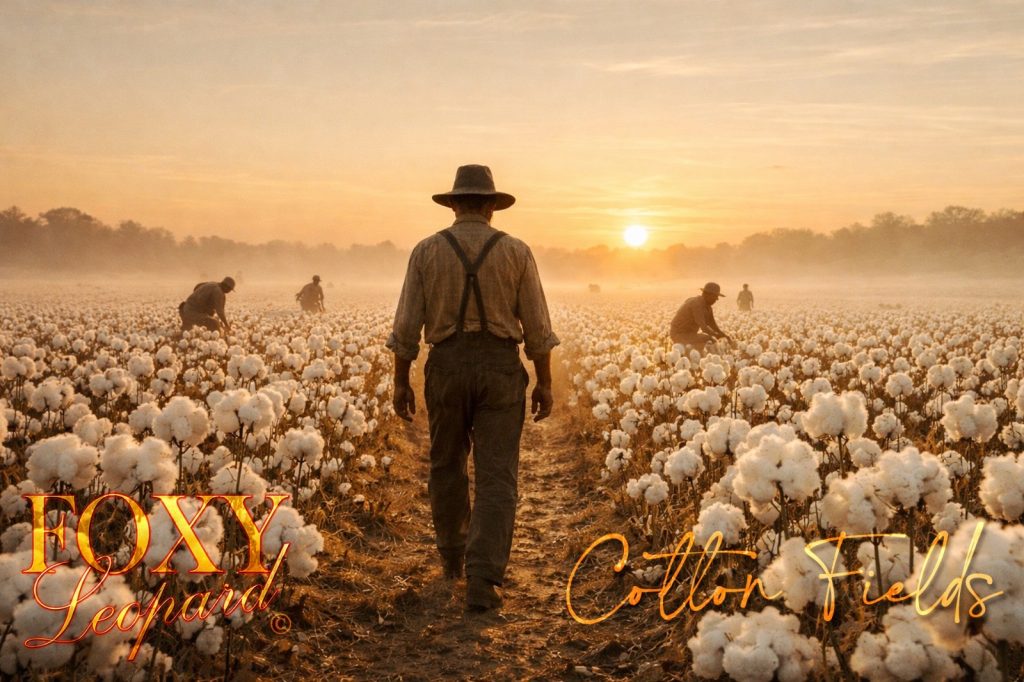
Foxy Leopard’s “Cotton Fields” stands as a pivotal moment within this unfolding narrative. Positioned between War & Peace and the upcoming Before album, the song steps away from conflict entirely to focus on the unnoticed human realities existing alongside history. Rather than relying on dramatic storytelling or explicit commentary, the track leans into atmosphere, repetition, and implication, allowing silence and restraint to carry emotional weight. The cotton field becomes both a physical setting and a symbolic space where beauty and hardship exist side by side beneath the same sky. Foxy Leopard is not chasing trends or instant impact. Instead, the project is carefully building an immersive world, one song at a time, inviting listeners to reflect not only on history itself, but on the quiet moments and invisible tensions that shape it long before the breaking point arrives.
Having this brief Introduction, I’m sure new and current fans must be excited about our Interview today.
INTERVIEW
Faithfulness: You blend cinematic storytelling with AI-driven composition. What first sparked the idea of building a project that feels like a living narrative world rather than just a music project?
Foxy Leopard: I never really wanted to make disconnected songs. I always loved albums that felt like they had a soul moving through them, where tracks speak to each other even years later. At some point I realized the Civil War setting wasn’t just history to me — it became a mirror to human behavior, fear, loyalty, silence, and the way people slowly stop understanding each other. The AI side came later as a tool, but the world itself started from storytelling first.
Faithfulness: Being based in Quebec, Canada, what elements of your environment or cultural background naturally seep into the emotional tone of Foxy Leopard’s sound?
Foxy Leopard: Quebec winters probably shaped more of this project than I realized at first. Long quiet roads, grey skies, frozen rivers, old wood churches, small towns where silence feels heavy — all that naturally found its way into the atmosphere of Foxy Leopard. There’s also a kind of emotional restraint here culturally. People don’t always say things directly. I think the music inherited that.
Faithfulness: The project explores human connection slowly breaking down over time. Was there a personal or observed moment that made you interested in that kind of emotional “drift” as a central theme?
Foxy Leopard: I think most people experience it without noticing. You wake up one day and realize someone you knew for years no longer sees the world the same way you do. No explosion happened. No dramatic moment. Just small shifts over time. That idea fascinated me more than conflict itself. The real fracture usually begins quietly.
Faithfulness: Your sound is intentionally stripped-down and raw. At what point did you decide that restraint would be more powerful than production density in telling these stories?
Foxy Leopard: Pretty early honestly. Every time the production became too big, the humanity disappeared. I wanted songs to feel close, almost uncomfortable sometimes, like hearing somebody play in the next room late at night. Silence became part of the arrangement. The spaces matter as much as the notes.
Faithfulness: Foxy Leopard feels both historical and futuristic at the same time. How do you balance human storytelling with AI-driven composition without losing emotional authenticity?
Foxy Leopard: The AI helps build the sonic and visual world, but the emotional direction still comes from human choices. I spend a lot of time removing things instead of adding them. Imperfections, restraint, asymmetry, awkward phrasing — those things matter because real emotion is rarely polished. The technology is part of the process, but the intention behind it stays deeply human.
Faithfulness: “Cotton Fields” focuses on life inside the cotton economy rather than conflict itself. What made you want to step away from the battlefield and instead examine what came before it?
Foxy Leopard: Because wars don’t appear out of nowhere. Before people fight, entire systems already exist underneath everything. Cotton Fields was really about looking at one of those systems quietly functioning while everybody keeps pretending life is normal. I wanted the song to feel almost routine, because that’s what makes it unsettling.
Faithfulness: The track feels almost hypnotic in its repetition and stillness. How did you approach building that cyclical structure without making it feel static or empty?
Foxy Leopard: I treated it almost like labor movement. Repetition became part of the emotion. The guitar patterns keep walking forward the same way the workers do. Small changes become important because the song leaves space around them. Instead of chasing progression constantly, I wanted listeners to feel trapped inside the rhythm of everyday life.
Faithfulness: You describe the song as something closer to a field recording than a polished studio track. What decisions led you toward that intimate, unprocessed sonic texture?
Foxy Leopard: We intentionally avoided making it sound “beautiful.” The resonator stays dry and close. I personally bought a hand cymbal that sounded exactly the way I imagined so I could perform the percussion myself instead of using standard drum production. Even the vocal delivery avoids dramatic performance. I wanted the listener to feel dust, wood, fatigue, distance — almost like the song was discovered rather than produced.
Faithfulness: The resonator guitar and minimal percussion feel very intentional. What emotional or narrative role does that sparseness play in the story of “Cotton Fields”?
Foxy Leopard: The emptiness is part of the story. A big arrangement would’ve pushed the song toward spectacle, and Cotton Fields needed the opposite. The resonator has this metallic loneliness to it. It almost sounds tired. The sparse percussion feels more like footsteps than drums. Everything was designed to feel restrained.
Faithfulness: The lyrics rely heavily on imagery rather than direct statements. Was that a deliberate choice to shift meaning into atmosphere instead of explanation?
Foxy Leopard: Yes. I think listeners feel more when they’re allowed to enter the song themselves instead of being told exactly what to think. Atmosphere can sometimes carry truth more honestly than explanation. The imagery leaves room for discomfort, and that discomfort matters in this project.
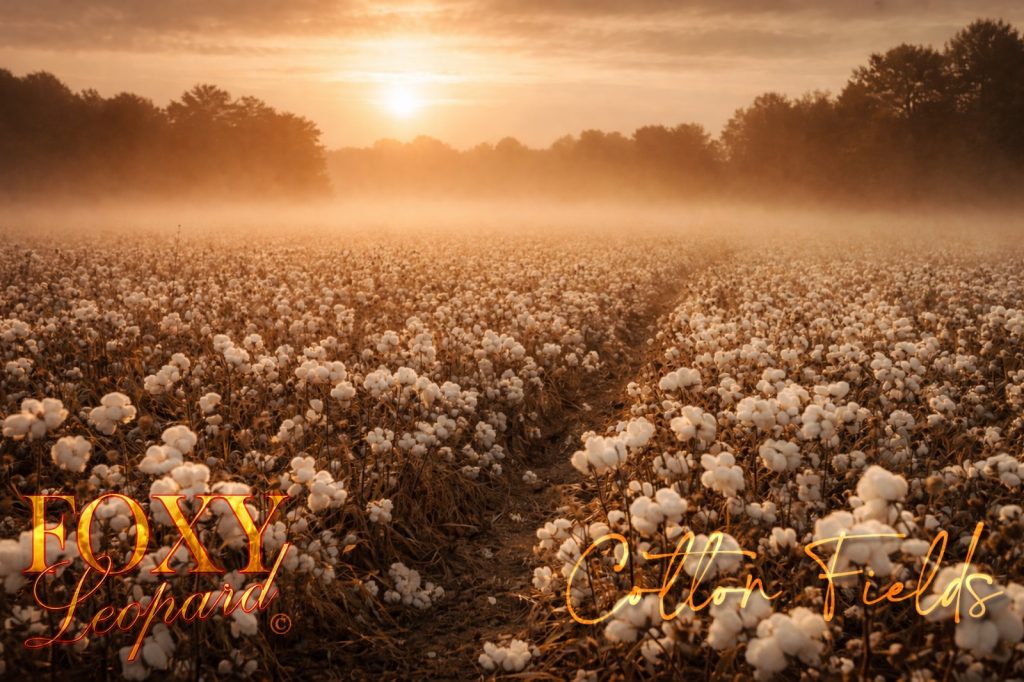
Faithfulness: In the context of your wider arc, where does “Cotton Fields” sit emotionally between War & Peace and Before?
Foxy Leopard: War & Peace deals with consequence. Before deals with slow fracture before anyone fully realizes what’s happening. Cotton Fields sits somewhere in the middle of awareness and denial. It’s one of the moments where the listener starts understanding that something underneath the world is already failing.
Faithfulness: The cotton field is both literal and symbolic in this track. What does that space represent to you personally within the Foxy Leopard universe?
Foxy Leopard: To me the field represents systems people stop questioning because they’ve existed too long. It’s routine becoming invisible. It’s ordinary life carrying something much heavier underneath it. In the Foxy Leopard universe, the field is quiet, but it already contains the weight of what’s coming later.
Faithfulness: You’ve said the song isn’t designed to impress but to make listeners sit with it. What do you hope they notice in those quiet, uncomfortable pauses?
Foxy Leopard: Probably themselves a little bit. The pauses are where the song breathes. They create tension because modern music usually rushes to fill every space. I wanted listeners to sit inside that stillness long enough to feel something unsettled underneath it.
Faithfulness: If a listener only remembers one feeling after hearing “Cotton Fields,” what would you want that feeling to be?
Foxy Leopard: The feeling that something important was already breaking long before anybody admitted it.
Faithfulness: As you continue to expand this narrative world, what part of human experience are you still most interested in uncovering next?
Foxy Leopard: Probably the moment where people still believe they have time. That fragile space before irreversible decisions. I think a lot of Foxy Leopard lives there emotionally — in the quiet moments before history fully reveals itself. – Thank you very much
CHECK OUT THE RELEASE OF ‘Cotton Fields’
HAVING LISTENED TO ‘Cotton Fields’, HERE ARE MY HONEST THOUGHTS
“Cotton Fields” unfolds less like a standalone single and more like a living fragment within a wider historical meditation. Built on resonator guitar and sparse percussion, the song embraces raw minimalism, allowing texture and atmosphere to guide its emotional weight. The restrained production mirrors the repetitive labour at the heart of its narrative, creating a hypnotic stillness that lingers long after the track ends. Vocally, Foxy Leopard delivers with weary intimacy, balancing conversational phrasing with subtle melodic shifts that gradually reveal buried emotion. The communal backing voices deepen the sense of collective memory and shared endurance. Lyrically, the track thrives on implication rather than exposition, with lines like “Major pain, major pain” and “God sees all” carrying haunting spiritual resonance. Positioned between War & Peace and Before, “Cotton Fields” becomes a reflective threshold where silence, labour, and history quietly intertwine.
~ Faithfulness (Dulaxi Team)
Finally to our audience, I urge to listen to “Cotton Fields“, add it to your playlist and be Inspired by it and on behalf of Dulaxi I like to appreciate you all by saying thank you everyone, See you on our next interview.
For more information about Foxy Leopard, click on the icons below.