
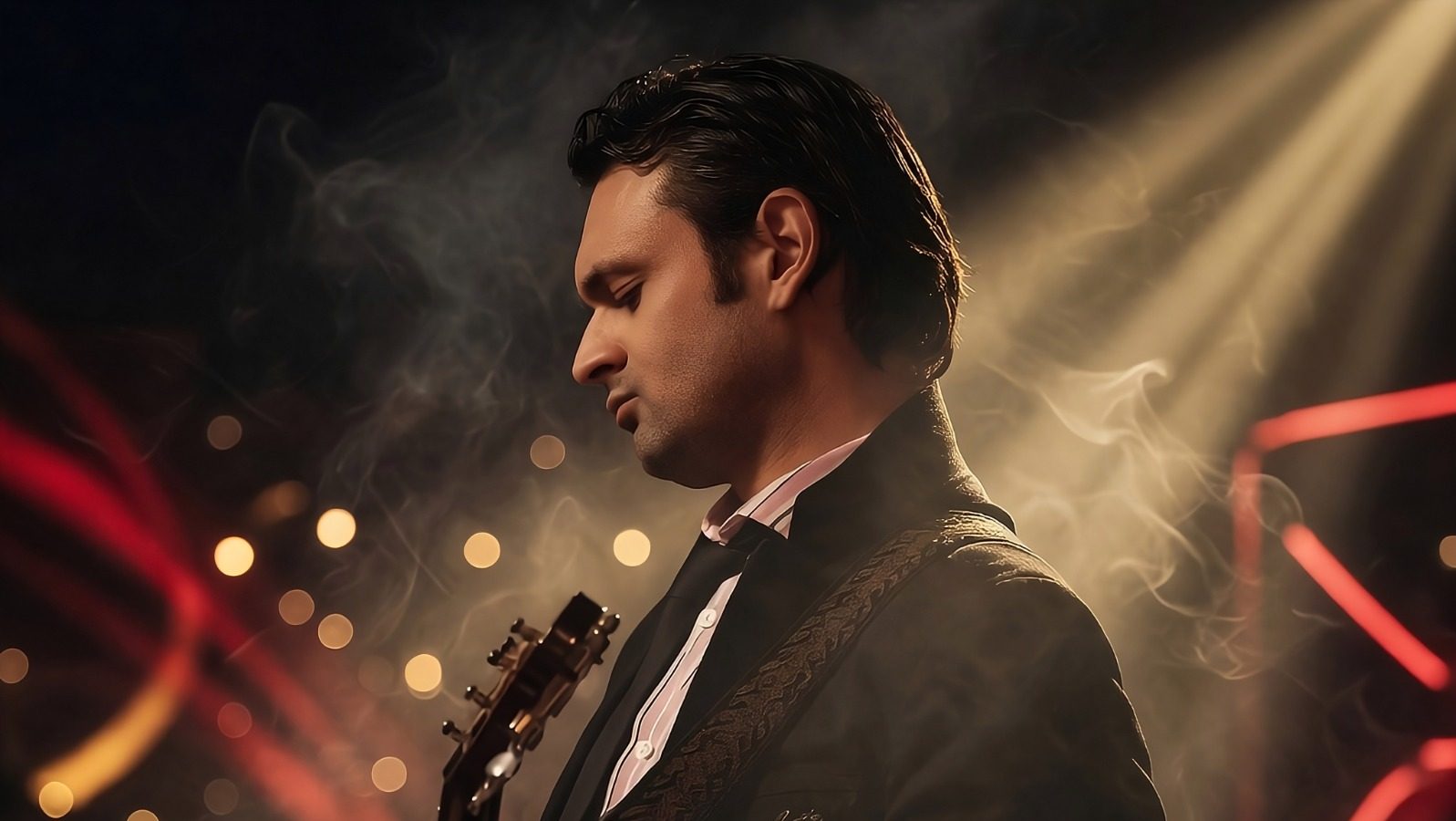
Hello everyone, this is your host Daniel from Dulaxi, and today I am joined by the expressive instrumental rock project Decadent Heroes, a solo-driven musical project led by Italian guitarist Luigi Chiappini and based in Pescara, Italy. They are here to discuss their latest full-length album, “Climax”, which officially arrived on 18th May 2026. Welcome to the platform, Decadent Heroes. Before we begin the interview, here is what you need to know about the artist.
Decadent Heroes is the instrumental rock project of Italian guitarist Luigi Chiappini, based in Pescara, Italy, built around a deeply expressive, guitar-led approach where melody, tone, and phrasing serve as the core storytelling tools rather than vocals. Drawing influence from iconic guitar figures such as Joe Satriani, Andy Timmons, Jeff Beck, Steve Vai, Neil Zaza, and Carlos Santana, the project blends melodic instrumental rock with cinematic depth, moving between technical precision and emotional resonance while exploring styles ranging from hard rock and blues rock to ambient and cinematic soundscapes. Chiappini’s creative process is defined by an intense dedication to guitar tone and sonic detail, often spending extended periods designing intricate Helix HX Stomp presets before recording, while also preserving the raw humanity of early takes to retain spontaneity and emotional honesty, resulting in music that feels both meticulously crafted and organically alive. This artistic vision expresses itself in the 2026 full-length album “Climax”, released on 18th May 2026, a highly personal and cinematic body of work recorded primarily in his home studio in Italy with contributions from international session musicians including Dennis Holt, Fausto Berardo, Pino Saracini, and Rich Gray, among others. The album navigates contrasting sonic territories, from the aggressive, riff-driven intensity of “The Dragon” to the spacious, reflective mood of “Minutes Away,” creating a dynamic and emotionally layered listening experience that emphasizes contrast, narrative flow, and evolving textures. “Climax” ultimately represents the peak of Chiappini’s artistic development, shaped by a long pursuit of tone, identity, and emotional clarity, and stands as a cohesive statement of instrumental rock that balances power, atmosphere, and cinematic depth.
Having this brief Introduction about Decadent Heroes, I’m sure new and current fans must be excited about our Interview today.
INTERVIEW SESSION
Daniel: Decadent Heroes is deeply rooted in expressive instrumental storytelling and emotional authenticity.
How did Luigi Chiappini first develop the vision for the project, and what inspired the decision to make the guitar the central “voice” of the music?
Decadent Heroes: Hi Daniel! I actually started Decadent Heroes back in 2012 and even recorded some early material that year.
However, at the time, I was fully immersed in playing live and working in the studio with various rock bands, so the project had to be put on hold for a long period.
It was only after my journey with my last band came to an end that I decided to fully resume Decadent Heroes with real conviction.
Choosing to make the guitar the central voice wasn’t a matter of ego; it simply felt like the most honest and complete way to express myself.
I’ve always been deeply in love with the timbre of the guitar: when it’s played with genuine emotion, I truly believe it can reach an expressive range that is sometimes even deeper and more powerful than the human voice.
Daniel: Your influences range from Joe Satriani and Andy Timmons to Jeff Beck and Carlos Santana.
How have these legendary players shaped the identity of Decadent Heroes while still allowing you to create a sound that feels uniquely your own?
Decadent Heroes: These legends shaped my entire philosophy. I look to Satriani and Beck for their incredible melodic “singing” ability on the fretboard, while Timmons and Santana inspired my search for a unique, recognizable tone. Instead of copying licks,
I focus on a “singable” approach.
When I play my PRS Custom 24, I think like a vocalist, translating my 25 years of experience into a sound that is uniquely mine.
Daniel: “Climax” features an impressive lineup of international musicians including Dennis Holt, Pino Saracini, Rich Gray, and others.
What did these collaborations bring to the album emotionally and musically?
Decadent Heroes: For the album I wanted the raw energy that only real human musicians can provide.
Dennis Holt brought an incredible, dynamic pocket on drums, while bassists like Fausto Berardo, Pino Saracini, Rich Gray, and Marcin Palider breathed life into the tracks.
Musically, they elevated the songs with their unique instincts. Emotionally, they gave Climax a real, organic heartbeat that technology simply cannot replicate.
Daniel: “Climax” feels like more than just an instrumental rock album, it feels cinematic, immersive, and emotionally layered.
What core message or emotional experience were you hoping listeners would walk away with after hearing the record?
Decadent Heroes: I wanted Climax to feel like a soundtrack to an unwritten movie, where every listener is the main character.
The core message is about resilience and transformation. To push this concept, I intentionally designed the album with a dual interpretation.
You can follow the natural order of the tracklist, or you can start from track 9 and listen backwards to track 1.
This reverse order was carefully planned to offer a completely different emotional journey and perspective on the entire record.
Daniel: “The Dragon” opens the album with explosive energy and massive grooves.
What inspired the intensity and atmosphere of the track, and why did it feel like the perfect introduction to the world of “Climax”?
Decadent Heroes: The track was inspired by a vivid dream I had about a massive, menacing dragon invading the stage during a rock concert.
When making the music video, I decided to keep that original oniric dimension but expanded its scale into a full metropolis apocalypse.
Musically, “The Dragon” serves as the album’s statement of intent: it delivers raw power and heavy grooves without ever sacrificing melodic phrasing.
It’s the perfect introduction to prepare the listener for the sonic weight of Climax.
Daniel: “Minutes Away” reveals a much more introspective and atmospheric side of the album.
What emotions or moments in your life influenced the creation of that track’s dreamy and reflective mood?
Decadent Heroes: “Minutes Away” was the real turning point for this project.
It was born right after my previous band split up, during a phase of deep uncertainty where I felt completely stuck.
Writing this track suddenly broke that emotional block, the music just started flowing naturally again and all the other songs came right after.
The dreamy, reflective mood captures that exact transition: the bittersweet feeling of leaving the past behind while being just moments away from a new artistic rebirth.
Daniel: You described “Climax” as the moment you finally translated “the sound you’ve been hearing in your head for years into reality.”
What did achieving that feeling mean to you personally as both a guitarist and producer?
Decadent Heroes: It felt like a massive weight was lifted off my shoulders.
For years, I had a specific sound in my mind, a blend of heavy rock energy and delicate guitar dynamics, but it always got altered by band compromises or studio limitations. Achieving it on Climax was the ultimate validation.
As a player, it means my fingers can finally express what my soul hears.
As a producer, it proves that you don’t need a huge commercial studio to get a top-tier tone if you have the patience to work hard on your craft.
Daniel: Even without lyrics, tracks on “Climax” communicate vivid emotions and stories.
How do you approach making the guitar “speak” in a way that connects emotionally with listeners?
Decadent Heroes: I try to play like I would sing. Every phrase has to have a reason, a direction, and room to breathe.
I focus a lot on dynamics, vibrato, and the space between the notes.
The goal is for the listener to feel something, even if they don’t know exactly what.
Daniel: You spent months refining your Helix HX Stomp presets before recording.
How important was guitar tone in shaping the emotional identity and cinematic depth of “Climax”?
Decadent Heroes: Extremely important. For me, the tone is the emotion.
I spent months refining my presets because I wanted the guitar to have a rich, three-dimensional voice that could go from aggressive to singing and atmospheric.
My PRS Custom 24 and the right sonic choices were key to achieving that.
Daniel: One of the most fascinating aspects of the album is the balance between technological precision and raw humanity.
How did you maintain that organic, breathing feel while still pursuing such a polished and powerful production?
Decadent Heroes: Technology should always serve the song, never dictate it.
The polished sound comes from meticulous mixing and high-quality arrangements, but the “breathing” feel comes from the actual human hands playing the instruments.
I intentionally avoided over-editing or aligning everything perfectly to a digital grid.
Leaving the natural timing of the drums and bass intact is what preserved the raw humanity within a powerful, modern production.
Daniel: Many of the lead guitar performances were left relatively unedited, including first and second takes with small imperfections intact.
Why was preserving spontaneity and emotional honesty more important than technical perfection?
Decadent Heroes: Because technical perfection often kills the soul of a performance.
In the first and second takes, you play strictly by instinct, you aren’t overthinking, you are just feeling the music.
Those moments contain an urgency and a raw honesty that you can never recreate.
A slight string squeak or a tiny imperfection proves a real person is playing a real guitar in a room. I always prefer substance over form.
Daniel: You mentioned going through a period of intense self-reflection where you stopped chasing external validation and started pursuing truth in your music.
How transformative was that realization during the making of “Climax”?
Decadent Heroes: It was completely transformative.
In the past, the biggest compliment for me was hearing someone say, “You are a great guitarist.” I was looking for that kind of technical validation.
During the making of Climax, my perspective completely shifted.
Today, the greatest compliment I can receive is hearing that my music moves people and transmits real emotions.
Stopping the search for technical approval allowed me to focus entirely on artistic truth, making the whole creative process for this album much more authentic and meaningful.
Daniel: Looking back at your journey as a guitarist, songwriter, and producer, in what ways does “Climax” represent your biggest artistic evolution so far?
Decadent Heroes: Climax represents my ultimate maturity because it brings together over 25 years of rock band experience into total creative freedom.
My songwriting has become much more narrative-driven, focusing on how a track flows from beginning to end rather than just arranging a series of riffs.
As a producer, this album is a major step forward because I managed a global network of session players and achieved a powerful, professional rock sound entirely on my own terms.
Daniel: Spending countless nights refining tones, arrangements, and performances in your home studio clearly became a deeply personal process.
How did that environment influence the emotional character of the album?
Decadent Heroes: The home studio environment acts like an emotional amplifier.
Without the stress of a ticking commercial studio clock, you have the complete freedom to experiment, fail, and try again at 3 AM.
Those quiet, isolated nights gave me the time to carefully balance the album’s dynamics, ensuring the heavy, powerful riffs hit with maximum impact while keeping the melodic moments deeply expressive.
The songs are personal because they were born where the outside world faded away, leaving just me and my guitar.
Daniel: Andy Timmons’ “Resolution” and specifically the track “Deliver Us” had a profound influence on this record.
What specific lessons did you learn from studying those works so intensely, and how did they inspire your own melodic approach?
Decadent Heroes: “Deliver Us” is the perfect example of how a track can be heavy and purely rock while maintaining a flawless melodic direction.
Timmons proved that a guitar can completely replace a singer without losing an ounce of energy.
He showed me that heavy rock riffs and catchy, hummable melodies don’t fight each other, they belong together.
Daniel: Since the album is built around emotional depth, dynamics, and atmosphere, what kind of reactions or emotional responses from listeners have meant the most to you so far?
Decadent Heroes: My greatest satisfaction comes when people take the time to write to me privately just to share how my tracks made them feel.
Hearing that a song managed to deeply touch someone’s emotions is the ultimate victory for me.
It’s the best validation for the energy and passion I put into this project.
Daniel: Instrumental music often allows listeners to create their own personal interpretations of a song.
Have fans shared any surprising or memorable experiences they connected to tracks from “Climax”?
Decadent Heroes: Yes, and that is the true magic of instrumental rock.
Recently, a fellow musician (someone I didn’t know at all) messaged me privately after discovering “Minutes Away” on his Spotify artist radio.
He told me he connected so deeply with the track that it felt almost like it was his own song.
Without lyrics, the music becomes a universal mirror, allowing listeners to project their own lives and emotions onto my melodies
Daniel: With the official music video for “The Dragon” arriving alongside the album release, what can listeners expect visually from that cinematic experience?
Decadent Heroes: They can expect a dark, oniric journey that expands my original dream into a metropolis apocalypse.
What makes it special is that the video contains visual and conceptual references to every single track on the album.
Depending on how you choose to listen to the record (from track 1 to 9 or vice versa) those visual details can be interpreted either as future omens or past memories.
It’s a puzzle designed to enhance the entire listening experience.
Daniel: Now that “Climax” represents the culmination of such an important chapter in your life, where do you see Decadent Heroes heading creatively in the future, and are there plans for live performances or new musical directions after this release?
Decadent Heroes:
Bringing this project to a live dimension is something I would like to explore when the right conditions allow it.
For now, I am entirely focused on the album release and seeing where this new musical direction takes me.
Having Had A Close Listen To This Richly Expressive Instrumental Rock Work, Here Are my Thoughts On The Album.
Having had a close listen to “Climax” by Decadent Heroes, I find it to be a tightly constructed instrumental rock experience that operates on a distinctly cinematic scale while maintaining clear structural discipline and emotional intent throughout; the album is driven primarily by expressive electric guitar work that functions as the central storytelling voice, replacing vocals with melodic phrasing, tonal shifts, and dynamic progression that guide the listener through each movement, while a controlled and well-balanced rhythm section of bass and drums provides both stability and groove without ever overpowering the lead focus. The production is clean, modern, and highly separated, giving each element its own space within a wide and immersive soundstage, which enhances the sense of clarity even during the most layered and intense passages. What stands out most is the deliberate contrast between energy states, as the album shifts fluidly from aggressive, riff-heavy sections such as the explosive drive of “The Dragon,” which delivers commanding grooves and cinematic intensity, into more spacious and reflective compositions like “Minutes Away,” where atmosphere, restraint, and melodic subtlety take precedence, creating a natural ebb and flow that feels narrative rather than fragmented. Across its runtime, the album maintains a strong sense of controlled escalation, with compositions unfolding gradually and building tension through arrangement rather than excess, allowing emotional peaks to feel earned rather than forced. The inclusion of seasoned session musicians adds further depth and organic weight to the rhythm foundation, reinforcing the human element beneath the highly polished guitar-driven framework. Stylistically, the project blends cinematic instrumental rock, modern alternative rock polish, and touches of ambient and blues-inflected expression, resulting in a sound that is both accessible and emotionally layered. Ultimately, “Climax” succeeds as a cohesive, immersive, and intentionally structured body of work that emphasizes momentum, atmosphere, and expressive guitar storytelling, firmly establishing Decadent Heroes as a project focused on depth, control, and cinematic instrumental narrative.
~ Daniel (Dulaxi Team).
Finally to our audience, I urge to listen to “Climax”, add its songs to your playlist and be inspired by them. On behalf of Dulaxi I like to appreciate you all by saying thank you everyone, See you on our next interview.
For more information about Decadent Heroes, click on the icons below.