

Hello everyone, it’s your host Oliver from DULAXI, and today I’m delighted to be joined by Tero Kuusi, the lead vocalist and guitarist of Helsinki-based alternative rock band MonDeGos. Hailing from Finland, MonDeGos brings together alternative rock, progressive rock and cinematic rock, combining heavy guitars, atmospheric textures, northern melancholy and emotionally direct songwriting. The band’s debut full-length album, Trickster, was released on August 12, 2026, marking the beginning of a new chapter for a project that has been steadily taking shape since the isolation of the COVID-19 pandemic.
Before we begin our conversation with Tero Kuusi, here’s what you need to know about today’s featured project.
About MonDeGos
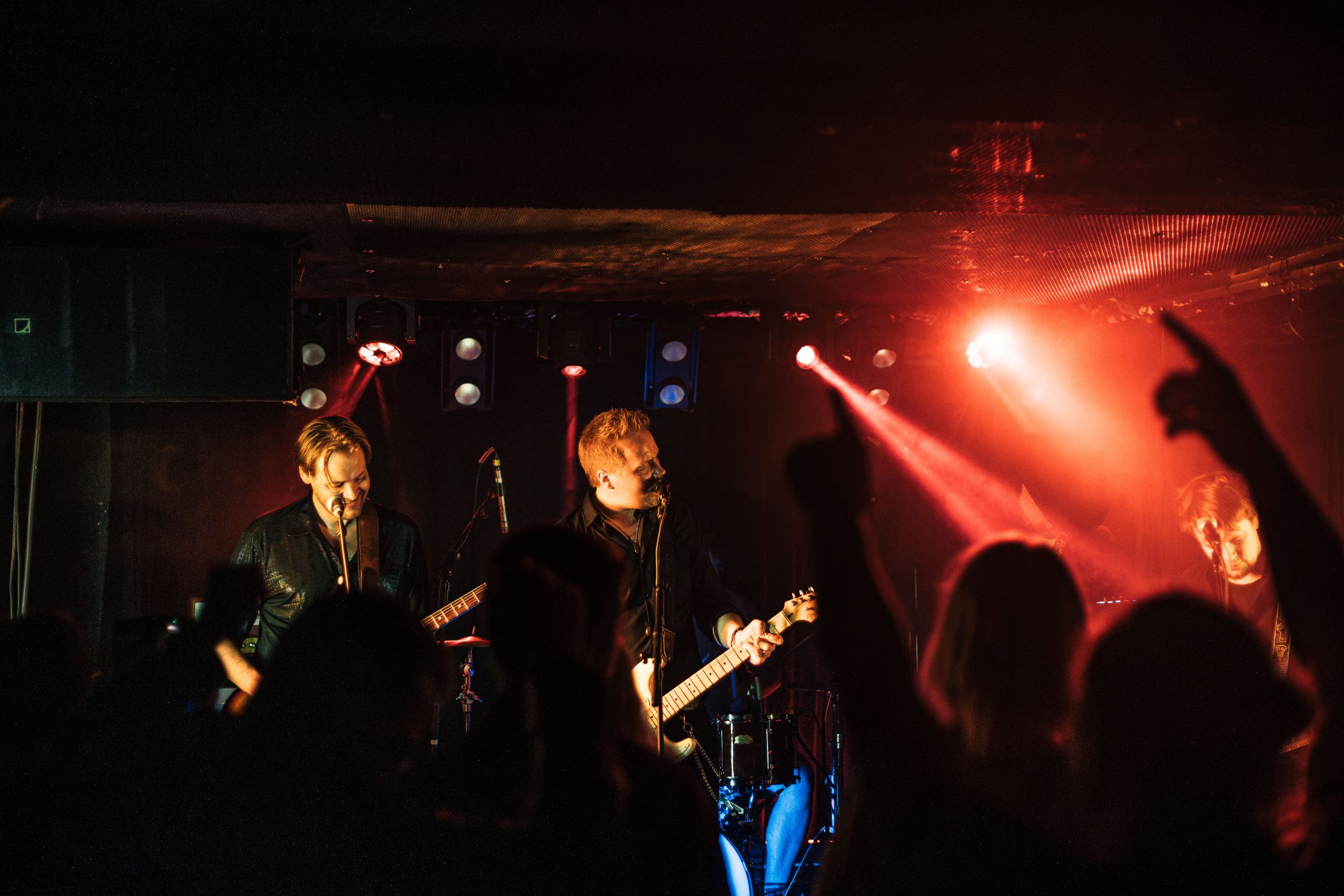
MonDeGos emerged from a period of isolation and uncertainty, beginning to take shape between 2021 and 2023 as its members found one another and discovered a shared enthusiasm for creating music. The Helsinki-based band eventually developed into a live project, releasing the Bridges EP in 2024 and following it with Authority in 2025. Performances at venues including Semifinal, Bar Loose, Playhouse and Boothill helped establish the band’s presence in Helsinki before MonDeGos turned its attention towards its debut full-length.
Released on August 12, 2026, Trickster brings together twelve interconnected songs built around the ancient Trickster archetype. Rather than presenting the figure as a simple character within a linear narrative, MonDeGos uses the Trickster as a shifting presence that can become a guide, shapeshifter, master of ceremonies, inner voice or disruptive force. Across the album, illusion, identity, memory, power and hope are explored through a symbolic world where masks can become identities, stories can become truth, and music can become a doorway between ordinary reality and imagination.
The band’s musical approach reflects that same sense of movement. Alternative rock provides the foundation, while progressive influences, heavy guitars, cinematic soundscapes and melodic songwriting allow the music to shift between intensity, mystery, tenderness and reflection. The songs do not remain confined to a single formula, allowing each composition to find the musical character that best serves its emotional and thematic purpose.
North Karelia is another important part of the album’s identity. Deeply connected to Tero Kuusi’s family background, the region’s forests, lakes and long periods of silence have provided a setting in which many MonDeGos songs were written. North Karelia is also associated with Finland’s ancient rune singing tradition and the landscapes connected to the Kalevala. That cultural and geographical connection becomes particularly visible in the album’s artwork, which reimagines a historical photograph of a North Karelian rune singer from around the beginning of the twentieth century. The image places history, memory and myth in conversation with the band’s contemporary musical world.
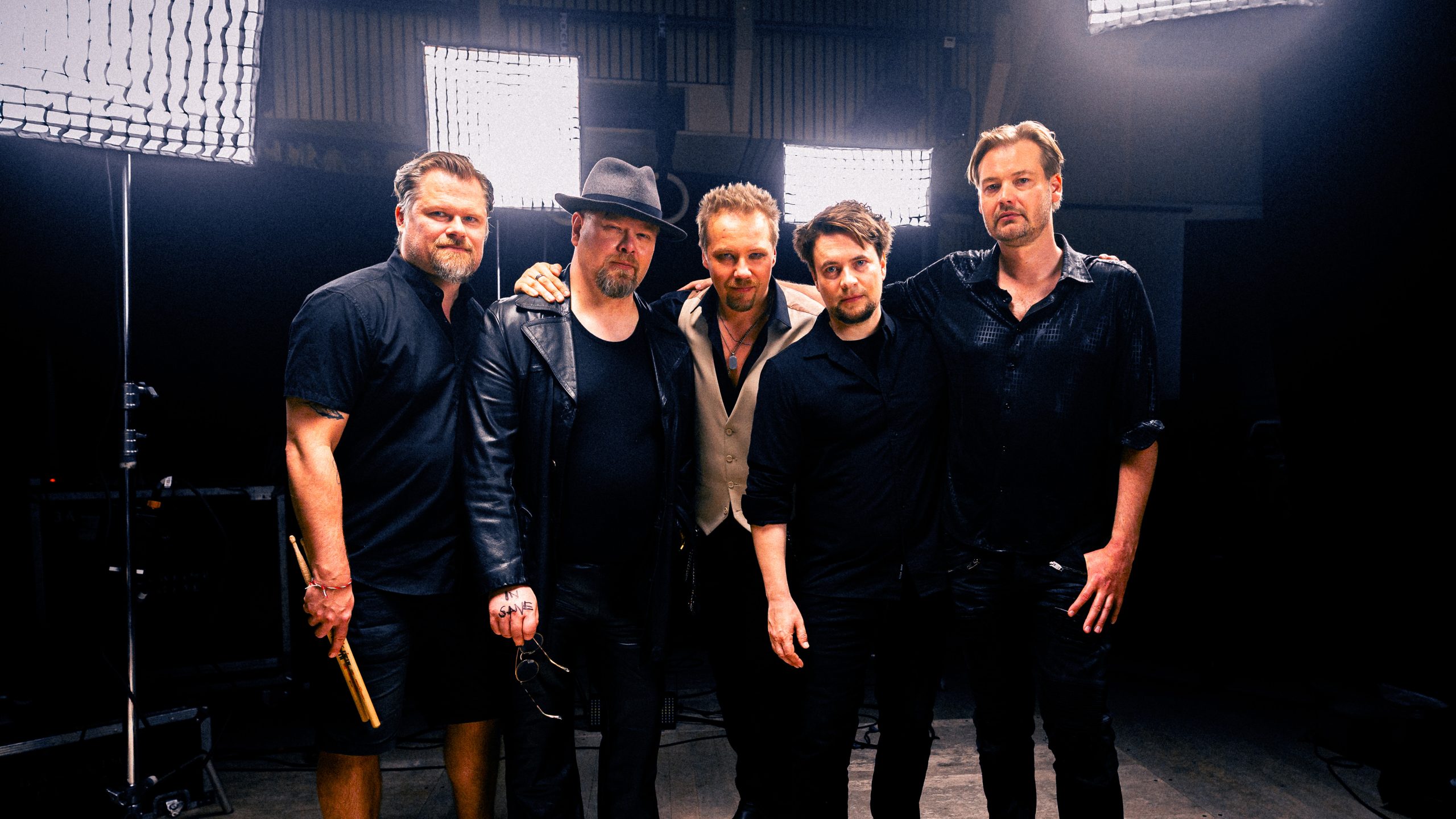
The album was recorded at Sonic Pump Studios in Helsinki, with Eero Kaukomies handling recording, mixing and sound engineering and Jaakko Viitalähde responsible for mastering. The production involved Tero Kuusi, Sami Metelinen, Vesa Nupponen, Mika Taskinen and Martti Viljainen, while the band’s core lineup consists of Kuusi on lead vocals and guitar, Metelinen on grand piano and keyboards, Nupponen on bass and backing vocals, Taskinen on lead guitar and backing vocals, and Viljainen on drums. Most of the songs were written by Kuusi, with “Mindless Pictures” written by Metelinen.
The band’s creative philosophy is rooted in freedom of expression, independent thought and a willingness to question easy answers. Rather than presenting its music as a series of political statements, MonDeGos uses storytelling and music to encourage listeners to consider familiar ideas from unexpected perspectives. Darkness is an important part of the band’s world, but it exists alongside playfulness, resistance, hope and the possibility of transformation.
That approach can be heard throughout Trickster, from the darker energy of “Paradise” and the shifting perspectives of “Joker” to the progressive intimacy of “Astral” and the defiant hope of “Saints”. The album ultimately develops into a journey through uncertainty, conflict, self-examination and acceptance, with “Walk” providing a more intimate closing perspective.
The journey is already continuing beyond the debut. MonDeGos is writing material for a second full-length album planned for 2027, while also looking towards more clubs and festivals across Finland and Europe. For a band that began by finding creative connection during an extraordinary period of isolation, Trickster represents both a culmination of those early years and an invitation to discover where that shared musical curiosity can lead next.
Having this brief introduction to today’s featured project, I’m sure both new listeners and longtime fans are excited to hear directly from Tero. So, without further ado, let’s begin today’s interview.
INTERVIEW SESSION
Oliver:
MonDeGos began taking shape during the isolation of the COVID-19 pandemic before developing into a live band with releases and performances across Helsinki. Looking back to that early period, what was happening in your lives personally and creatively that made you want to begin building this band together, and what did you discover about yourselves during those first years?
Tero Kuusi:
I think the most important thing was meeting the right people at the right time. During the COVID period, I got together with Sami Metelinen and Vesa Nupponen, and separately connected with Mika Taskinen and Martti Viljainen. We quickly discovered that we shared very similar feelings about music and a genuine enthusiasm for making something together. Meeting these guys was essential. Suddenly there were people around the music who shared the same passion and were ready to build something real out of it.
Personally, I sometimes feel that music picked me rather than the other way around. There was this overwhelming stream of musical ideas, almost constantly ringing in my ears, that simply needed to come out. But what made the difference was finding people who understood that feeling and brought their own ideas, musical personalities and energy into the process. We weren’t just assembling a group of musicians; we were discovering that we wanted to do this together.
Then COVID happened, along with all the other crazy things going on in our lives. Music became an incredibly comforting place for us, something meaningful to work on at a time when so much else had come to a standstill. We also felt that if music could give us that kind of comfort and excitement, perhaps we could share some of it with other people.
Those early years were about discovering what we could create together. There was enormous enthusiasm, plenty of experimentation and, perhaps most importantly, a sense that everyone was committed to the same thing. That shared feeling has been the foundation of MonDeGos ever since.
Oliver:
Your connection to North Karelia is particularly interesting because it is closely associated with Finland’s ancient rune singing tradition and the landscapes that inspired the Kalevala. What does that part of Finland mean to you personally, and how have the forests, lakes and long periods of silence there influenced the way you think about music, storytelling and identity?
Tero Kuusi:
North Karelia is deeply rooted in my family background, so it’s a very personal place for me. It’s an enormous landscape of forests, lakes and silence. Yet the strange thing is that the silence never feels empty. Sometimes it feels as though the air is full of electricity, as if something is waiting just beyond what you can see. It’s a place for introspection, where musical ideas can arrive without being forced.
Perhaps it isn’t surprising that the region is so closely connected to Finland’s traditional rune singers, shamanic poets and storytelling. There’s also a vibrant musical culture there; Nightwish, for example, comes from the wider region. Many MonDeGos songs have been written in that wilderness, and we share a fascination with the mystery and space it brings into the music. The forests, the melancholy and that sense of another layer beneath visible reality are part of the musical world we’ve created together.
Oliver:
MonDeGos describes its music as something intended to challenge, comfort and reveal parts of ourselves rather than simply provide entertainment. When you think about that philosophy, what do you believe music can reveal about a person that ordinary conversation sometimes cannot?
Tero Kuusi:
We think music operates on a different level of communication. It creates a direct channel to emotions, including emotions we might not yet understand ourselves. You can explain a situation perfectly well in ordinary language and still miss something absolutely essential about how it feels. Playing together also makes this quite tangible: sometimes the whole band understands exactly where a song is going without anybody needing to explain it.
Several of us work with research, policy and broader societal questions. In my own work, I’ve come to think that if you really want to achieve something good, you need to change not only how people reason, but also how they think and feel about the world. There is an enormous gap between material discussion—facts, arguments, policies—and the kind of experience music or art can create. Our songs give us a way to cross that gap, to share something from the subconscious and perhaps offer comfort without pretending that the difficult things in life aren’t there.
Oliver:
Your sound brings together alternative rock, progressive influences, heavy guitars, cinematic elements and what you describe as northern melancholy. How did you arrive at that combination, and what were you consciously trying to make MonDeGos sound like that you felt was not being expressed through any one genre alone?
Tero Kuusi:
The funny thing is that there really wasn’t a conscious plan to mix all those elements. For me, songwriting is an incredibly intuitive process. At times it almost feels like channelling something that’s already floating in the air somewhere between us. You follow a melody or a small musical idea and gradually discover what kind of song wants to emerge.
Then the others come in, and that’s where all our different musical backgrounds become a real strength. Alternative rock, heavier guitars, progressive rock and strong melodies are things we love, but everyone hears possibilities I might never have considered alone. The cinematic atmosphere and what we call northern melancholy aren’t ingredients we measure out; they emerge from that combination of people, instincts and the landscapes we’ve lived in.
We don’t want to become prisoners of our influences or of one genre. The next song might take us somewhere completely different. Keeping that collective curiosity—and being willing to change direction—is crucial if we want the music to stay alive.
Oliver:
Trickster is built around an ancient archetype that can appear as a guide, shapeshifter, master of ceremonies, inner voice and disruptive force. What first drew you personally to the Trickster figure, and when did you realise that this character could become the centre of an entire album rather than simply an idea for one song?
Tero Kuusi:
I think the trickster brings together something we’ve always found fascinating about music: its elusive nature. Music is extraordinarily powerful, but it’s often hard to grasp exactly where that power comes from. It can create chaos, open new possibilities and take you straight into the subconscious. The trickster felt like a wonderful character for exploring that ambiguity.
As we developed the songs and listened to what they were becoming as a band, we realised the character was appearing in all sorts of forms. There’s the mythical, masked presence in Joker and the strange guide you meet in In the Woods. But there are also very real, sometimes frightening figures in public life: power-hungry people who manipulate stories, stir up disorder and test how far they can push things. Those tensions were already finding their way into the lyrics and our musical choices.
Eventually the album title almost chose itself. Rather than imposing one storyline on everything we had written, The Trickster gave us a way to recognise the connections that were already emerging across our different songs and musical ideas.

Oliver:
The album explores illusion, identity, memory, power and hope, while also playing with the idea that masks can become identities and stories can become truth. Which of those themes became the most personal for you while making Trickster, and did working through them change the way you understand any part of your own identity?
Tero Kuusi:
I think the most personal question is how to navigate the craziness of the world without losing yourself. There are power struggles, manipulation and people trying to impose their own versions of reality on everyone else. How do we come through all that while keeping our humanity—and the goodness in our hearts—without becoming cynical? That’s something we explore particularly in songs like Reason and Paradise.
At the same time, the album is an exploration of identity. Many of the stories and characters began in my own emotions and experiences, but making the songs together gave them lives beyond my original ideas. A fictional character or a mask can help you approach something personal that’s almost impossible to say directly. And once the band has turned that fleeting feeling into a real piece of music, listeners can find something in it that belongs to their own lives.
Perhaps that is also where hope comes in. We can confront frightening or difficult things without surrendering to them. The world doesn’t necessarily become simpler, but through music we can turn confusion into something beautiful, shareable and human.
Oliver:
“Joker” introduces the central figure through masks, colour and a distorted sense of reality, while functioning as a doorway into the album’s world. What did you want listeners to understand or feel when they first encounter the Trickster through that song, and why was “Joker” the right place to begin this story?
Tero Kuusi:
Joker goes right to the heart of the album. A major personal inspiration was the first Joker film with Joaquin Phoenix. I was mesmerised by the character and by that extraordinary visual world—the vivid colours, the beauty of its imagery and the deeply unsettling experience at its centre. It explores a borderline where reality seems to bend, and where the disturbing and the aesthetically beautiful coexist. That really stayed with me.
For us, music occupies a similar space between imagination and reality. You can’t necessarily point to a physical thing that explains why a passage of music moves you, yet the emotional experience can be incredibly strong. The masks, colours and changing perceptions in Joker are ways of approaching that unseen world. When we brought the song together, it became a kind of metaphor for what we were doing across the record: changing the listener’s experience of reality and bringing feelings to the surface that might otherwise remain hidden.
Joker isn’t literally the first song on the album, but it’s one of its central doorways and a turning point in the listening experience. Sami’s piano introduction is just an extraordinary piece of work. It changes the atmosphere immediately, and together we take the song from there into the more elusive side of The Trickster.
Oliver:
“Astral” moves into a more progressive space, with male and female vocals rising from a fragile intimacy toward something much larger. What was happening compositionally and emotionally when you created that contrast, and how did the combination of the two vocal perspectives help you express the idea of doubt turning into motion?
Tero Kuusi:
Astral is one of my personal favourites, and I think it’s a song where our different musical personalities really came together. I remember drawing quite a lot of inspiration from Mastodon, while some progressive elements connect back to classic Finnish bands like Wigwam. But it certainly didn’t start as a neatly planned progressive-rock composition. I was just playing with melodies, following one idea into another, and for a while it felt almost too unstructured.
I remember discussing it with Sami Metelinen, our keyboardist, who was worried that it was becoming a little too ambiguous. I think the name Astral emerged around that conversation. But as we developed it together, the lyrics and vocals gradually made everything click. It’s a love song—no one can really doubt that!—and I realised quite early it had to be a duet. Oona Noir was the perfect voice for the other perspective, and the exchange between the voices gave the song much of its emotional power.
We absolutely love the raw force of the chorus, especially against the more intimate passages. It captures how the song was made: something uncertain and instinctive becoming a huge shared release. For me, Astral is one of the highlights of the album, and it wouldn’t be the same song without what Sami, Oona and the rest of the band brought to it.
Oliver:
“Saints” carries a darker sense of hope and defiance, combining a driving synth pulse, large guitar parts and soaring vocals while addressing buried innocence, resilience and the decision to remain human when circumstances become difficult. What personal or emotional truth sits behind that song, and what does choosing hope mean to MonDeGos when hope is not necessarily easy to find?
Tero Kuusi:
The original inspiration for Saints came from images and reports emerging from Syrian prisons after the fall of Assad’s regime. I was deeply affected by the sight of people searching through prison buildings, trying to reach places behind concrete and hoping to find loved ones who had disappeared years earlier. That desperate determination to search for another human being was such a powerful image that it almost carried the song into existence by itself.
When we brought it into the band, that feeling became an incredibly intense piece of music. For us, the song is about buried innocence, but also about refusing to give up on people. The driving synth groove, massive guitars and relentless forward motion carry some of the darkness of the subject. Then the chorus becomes something very simple and human: dance with me, just breathe. We loved the contrast between that direct emotional appeal and the force of the arrangement.
Choosing hope doesn’t mean pretending everything will turn out well. It means holding on to your humanity when doing so is difficult. And seeing listeners find their own emotional connection with Saints has been especially meaningful to all of us, given where the song began.
Oliver:
With twelve interconnected songs, the album clearly depends on a carefully constructed sequence rather than simply functioning as a collection of individual tracks. How did you decide the order and relationships between the songs, and what did you want listeners to understand by reaching the end of Trickster?
Tero Kuusi:
We were guided quite a lot by the progression of musical intensity. We wanted a really strong opening that takes you straight into the MonDeGos world. Those first songs have a lot of energy and establish the atmosphere quickly. Then Joker becomes a major turning point. Sami Metelinen’s piano introduction is just amazing; it changes the temperature of the record and takes us into a completely different musical landscape.
From there, the album moves through different atmospheres, including some of our earlier songs with a rawer and more instinctive energy. The sequence also reflects different phases of the band’s development. These songs didn’t all emerge at the same moment, but we found that they belonged together because of the emotions, musical tensions and ideas running through them.
We particularly like the way the final two songs connect. To me, Author is an introspection into the artist’s mind—the struggle for identity and perhaps a moment of desperation, when you become entangled in the stories you’re trying to tell. Then Walk brings things together. It’s a kind of acceptance: after the chaos and searching, you find a way to live with the contradictions and, well, get your shit together! That’s a fitting place for us to leave the listener—not with a grand solution to everything, but with a sense of humanity and perhaps more strength to act in the world.
Oliver:
All of the songs were written by Tero Kuusi except “Mindless Pictures,” which was written by Sami Metelinen, while the production involved Tero Kuusi, Sami Metelinen, Vesa Nupponen, Mika Taskinen and Martti Viljainen. How did songwriting responsibilities and the different musical roles within the band shape the final arrangements, and where did collaboration most significantly change an idea from its original form?
Tero Kuusi:
Most of our songs already have their basic structure and principal musical ideas when we bring them to the band. We’re not really a group that starts from nothing and composes everything at rehearsal. At least for me, the initial idea is often incredibly delicate. An entire song might begin with a single note, a rhythm or a small melodic hook, and it can take a long time to find exactly the right surrounding notes. I like to give that process space before the song meets the full band.
But once the core is clear enough, our collective work is absolutely essential. Then we’re arranging, testing, fine-tuning and figuring out how to turn a personal idea into a genuine rock song that works when we play it together. Everyone brings variations and interesting tensions into the songs. Mindless Pictures is a great example of another songwriting voice on the album, with Sami bringing in the original composition, and then all of us building the final arrangement around it.
I think we’re fortunate to have such imaginative and careful musicians in this band. Those different musical instincts are not just decoration around a finished composition; they help determine the song’s rhythm, dynamics and emotional impact. An idea may begin privately, but the band gives it its physical energy and much of its final character.
Oliver:
The album was recorded at Sonic Pump Studios in Helsinki, with Eero Kaukomies handling recording, mixing and sound engineering and Jaakko Viitalähde mastering it. What were the most important decisions you made during the recording and mixing process to preserve the cinematic scale of Trickster without losing the directness and physical energy that comes from alternative rock?
Tero Kuusi:
Our most important decision was probably to go into Sonic Pump and play together when we recorded the drums. In most cases we had a proper collective session, working through the arrangements as a band and letting the drummer respond to the actual energy of everyone else. That gave us a strong initial version of each song, rooted in the feeling of playing together rather than assembled from separate parts from the outset.
Afterwards, we recorded the individual parts separately. That gave everyone room to develop details and allowed us to build the larger cinematic layers. But those initial group sessions were essential: they gave us the raw energy and natural dynamics of alternative rock, which we could then build around without losing them.
Eero Kaukomies was crucial in helping us bring all those elements together. We wanted scale, atmosphere and carefully worked arrangements, but still to sound like people playing rock music together. I think the whole band felt that the collective sessions were what kept the recording grounded.
Oliver:
Your visual identity for Trickster reimagines a photograph of a North Karelian rune singer from around the beginning of the twentieth century, placing a real historical image somewhere between memory, myth and imagination. What does that photograph represent to you, and how did the visual idea influence the way you approached the music itself?
Tero Kuusi:
A friend of mine, Duncan, first brought the photograph to my attention, and I was immediately captivated by it. In the original image, before we added the diamond-shaped eyes for the cover, the eyes were mesmerisingly dark. There’s also this strange movement and the suggestion of two faces in the same photograph. What’s remarkable is that the effect comes from the original photographic technique, not modern manipulation. To have all that in a real historical image was extraordinary.
We felt it fitted The Trickster almost uncannily: two faces, shifting identity, something familiar that suddenly becomes mysterious. The rune singers and shamanic poets of Finnish folklore seem to grasp something close to what we felt making this music—the possibility that songs connect people to something beneath everyday reality, perhaps even across time. It also resonates with the North Karelian wilderness where so much of our music has been written.
This wasn’t our first historical connection either. Our first EP used imagery associated with Anubis, the ancient Egyptian soul escort. We all love drawing these long arcs through history. The photograph didn’t dictate the songs, but once we’d found it, we agreed it captured the spirit of the album incredibly well.
Oliver:
MonDeGos has described its beliefs around freedom of expression, independent thought and questioning easy answers, while deliberately avoiding turning the music into political manifestos. How do you balance those principles with the responsibility of leaving enough space for listeners to interpret the songs through their own experiences?
Tero Kuusi:
Freedom of expression and independent thought come quite naturally to us. Several of us work close to research, policy or broader societal questions, so questioning assumptions and considering different points of view are part of our everyday lives. There is certainly social criticism in some of our songs, often hidden between the lines.
But freedom also has a very personal side. We’re middle-aged guys with established careers, some of us in quite public roles. Starting a rock band and stepping into a completely different identity isn’t necessarily the most obvious thing to do! Yet I think that’s exactly the point: we should be able to explore other sides of ourselves without being trapped in whatever roles society expects us to play.
And the same freedom applies to the listeners. We’re telling stories, not delivering manifestos. Sometimes even the person who wrote the song doesn’t know exactly what its central message is when it first takes shape. When we play the music together, the words, melody, rhythm and atmosphere make it into something bigger than any one explanation. Listeners bring their own memories and experiences into it and may arrive somewhere completely different. We can care deeply about the things that inspired a song while leaving people entirely free to find their own meaning.
Oliver:
Since the band began, you have moved from forming during the pandemic to releasing Bridges, performing live, releasing Authority, playing venues such as Semifinal, Bar Loose, Playhouse and Boothill, and eventually reaching the debut album. Which moment along that path changed your confidence in MonDeGos the most, and what did that moment teach you about the band you were becoming?
Tero Kuusi:
For me, it was definitely our first EP recording sessions at Sonic Pump Studios. We’d just started working with Eero, and we recorded most of the instrumental parts in two days—basically one weekend. Those sessions were incredibly emotionally charged, particularly Bridges, and we could all feel that something special was happening.
That was the moment I thought: okay, this actually works. Everyone is committed, everyone is putting something of themselves into the music, and we’re sharing the same feeling. We’d already found each other as musicians, but in the studio we discovered what that commitment could sound like when it all came together. It gave us confidence not just in the songs but in ourselves as a band.
It’s interesting to compare the EP version of Bridges with the later album recording. Personally, I prefer the album version now; it’s a bit more controlled. But the original EP has a special emotional charge. You can hear the excitement of a band discovering what it can do together. We still want to carry that feeling into everything that comes next.
Oliver:
“Saints” has already surpassed 13,000 Spotify streams, while Trickster now represents the beginning of a larger chapter for the band. When you see listeners connecting with particular songs or responding to the album in unexpected ways, what kind of reaction means the most to you, especially when the music deals with ideas as personal and open to interpretation as identity, memory and hope?
Tero Kuusi:
Of course it’s wonderful to see so many people connecting with Saints. The song clearly has a strong emotional hook, and we’re thrilled that it’s reaching listeners. But the reactions that mean the most to us are the personal ones: when someone tells us about their own experience with a song and what it brought up for them.
That’s when we really feel that the music has made a connection. A listener may find something in a song that none of us consciously put there, yet it is completely genuine to that person. That’s what fascinates us about music as a subconscious form of communication. We begin with our own experiences and give them a musical form together; then the song travels to someone else, who discovers a meaning of their own.
The numbers are encouraging, of course, and help us bring the music to more people. But hearing that a song has stayed with someone, helped them through something or simply made them feel understood—that means a huge amount to us. In the end, that connection is why we’re doing this.
Oliver:
One of the strongest ideas surrounding Trickster is that music can become a doorway into another world rather than simply functioning as background sound. When someone finishes the album for the first time, what do you hope they carry away from that world, whether that is a question they did not have before, a feeling they recognise, or a different way of looking at something familiar?
Tero Kuusi:
We hope people come away from The Trickster looking at the world—and perhaps at themselves—a little differently. There’s plenty of darkness and confusion on the record, but at its heart I think it’s actually quite comforting. In a strange way, the essential message is: it’s going to be okay. Not because all the craziness around us will disappear, but because there’s so much more inside us than we sometimes realise.
We’re fascinated by those different layers of consciousness and identity: feelings and possibilities that can make us stronger once we recognise them. Music lets us reach those layers together. And the album’s larger arc ends there. By the time we reach Walk, there’s a sense of acceptance of the world and of yourself—not passive acceptance, but something that can empower you to act, to care and to find your humanity in the middle of all that confusion.
If someone finishes the album feeling a little more connected to themselves, a little more courageous or simply comforted by the experience, that would mean a great deal to us. And, of course, we hope they want to put it on again—preferably a bit louder!
Oliver:
You are already writing material for a second full-length album planned for 2027, while also aiming to bring MonDeGos to more clubs and festivals across Finland and Europe. After everything you have learned through creating and releasing Trickster, what do you want to carry forward into the next chapter, and what would you like to challenge yourselves to do differently?
Tero Kuusi:
First of all, we want to bring The Trickster to a much larger audience. We’re discussing different forms of cooperation and looking for opportunities to play more clubs and festivals, both in Finland and across Europe. We already have new songs taking shape, and we’re excited about what we can create together next.
Creatively, what we most want to preserve is the raw inspiration and almost childlike enthusiasm that made the first album possible. There is such joy in discovering a musical idea, sharing it with the others and hearing it become a real song. We don’t want to get so professional about this that we lose the sheer love of doing it. That shared excitement is what brought the band together in the first place.
But we also want to keep renewing ourselves. We have enormous respect for the alternative and progressive rock that shaped us, but we’re not interested in making a retrospective version of it. Modern tools and technologies open up possibilities for bigger cinematic—and perhaps completely unexpected—musical worlds. We want to explore those directions together while preserving the emotional connection and musical roots that made people connect with us in the first place. Ideally, our next album should surprise even us.
“MonDeGos turns Trickster into more than a collection of songs, creating a space where mythology, personal uncertainty, human resilience and the freedom to question reality can exist inside the same musical world.”
~ Oliver (DULAXI Team)
EDITORIAL PERSPECTIVE
What stayed with me most about Trickster is the way MonDeGos allows its ideas to move through different musical forms rather than forcing every song into the same shape. The album’s cinematic scale, heavier rock passages, quieter moments and shifting arrangements give its themes room to breathe. Speaking with Tero also makes the record’s central ideas feel more personal, particularly its interest in identity, uncertainty and the possibility of remaining human through difficult circumstances. There is curiosity at the centre of MonDeGos, and that curiosity gives the album its character.
~ Oliver (DULAXI Team)
CLOSING
Our conversation with Tero Kuusi offers a closer look at the ideas, experiences and collaborative spirit behind MonDeGos and Trickster. From the band’s beginnings during the isolation of the pandemic to its connection with North Karelia, its approach to songwriting and its desire to create music that can reach beyond ordinary communication, there is a clear sense that this debut album represents much more than a first full-length release. It is the result of several years of finding a shared musical language and discovering what that language could become.
Thank you to Tero for taking the time to speak with DULAXI and for sharing such thoughtful insight into the making of Trickster, the band’s creative philosophy and what lies ahead for MonDeGos. We encourage readers to spend time with the album and experience its world for themselves, allowing its songs, atmosphere and ideas to take on their own meaning.
And to everyone reading, listening and continuing to discover new music with us, thank you for spending time with DULAXI. We look forward to bringing you more conversations with artists, bands and creators from around the world.