
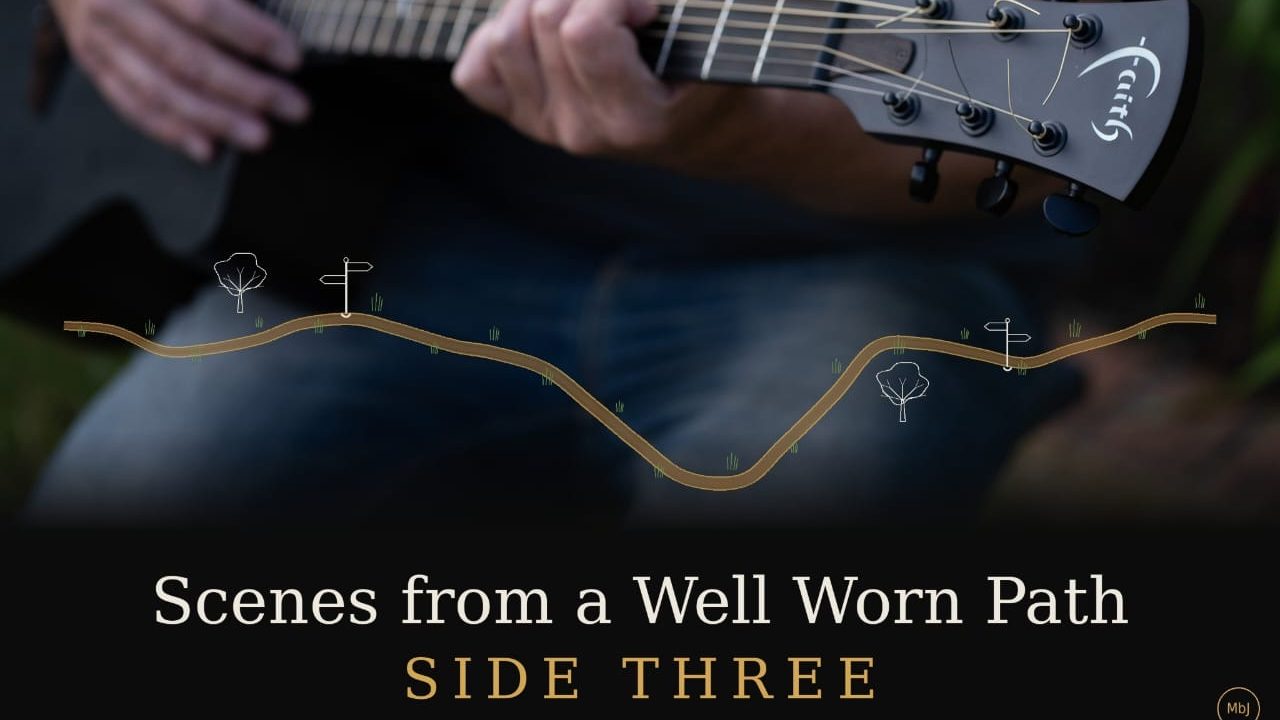
Hello everyone, it’s your host Oliver from DULAXI, and today I’m delighted to be joined by Music by Jeremy, an independent singer-songwriter and multi-instrumentalist from Banbury, England. Working across rock, folk, indie, soul and alternative influences, Jeremy has developed a distinctive songwriting identity built around personal experiences, thoughtful observations and an appreciation for the complexities of human life. We are here to discuss his latest release, Scenes from a Well Worn Path (Side Three), released on 25th October 2026, the third instalment of an ambitious 24-track, four-part musical autobiography.
Before we begin our conversation with Music by Jeremy, here’s what you need to know about today’s featured project.
About Music by Jeremy
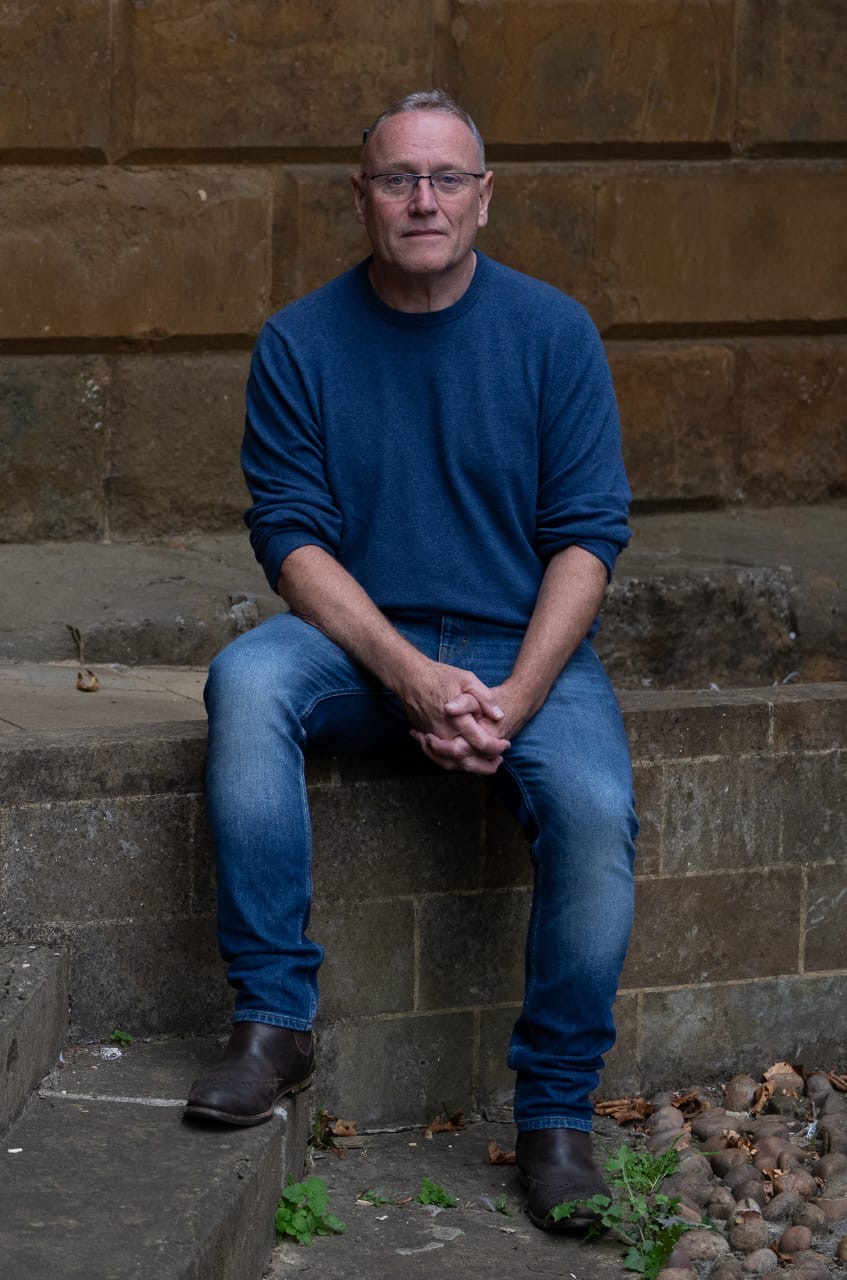
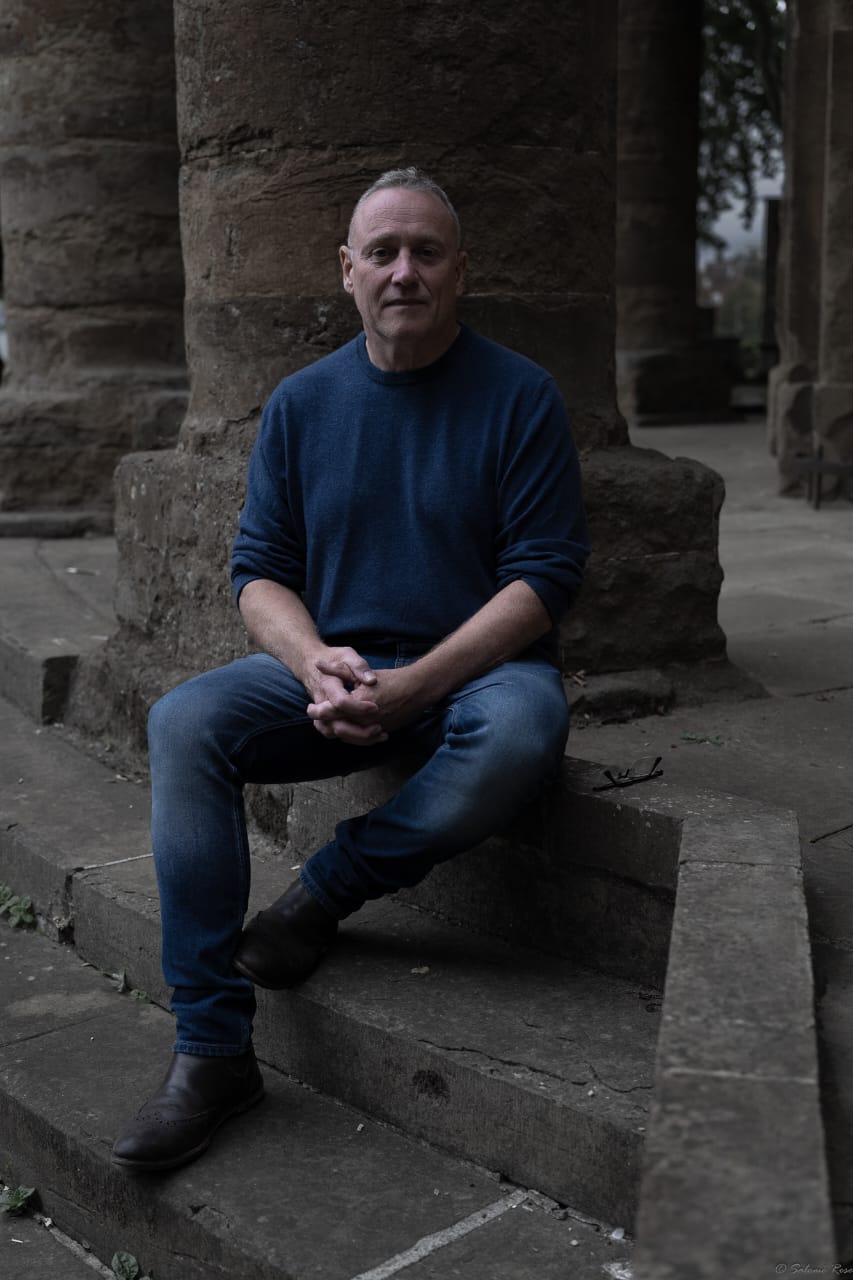
Music by Jeremy is an independent singer-songwriter and multi-instrumentalist from Banbury, England, whose music draws on the storytelling traditions of classic songwriters while maintaining a deeply personal perspective. Influenced by the emotional honesty of John Lennon, the narrative songwriting of Bob Dylan and Randy Newman, and the artistic reinvention of David Bowie, Jeremy approaches music as a way of documenting the people, experiences and contradictions that have shaped his life. Rather than presenting definitive opinions, his songwriting focuses on observation, curiosity and the freedom to explore difficult questions without necessarily providing answers.
Scenes from a Well Worn Path (Side Three) continues an ambitious 24-track, four-part double album conceived as a musical autobiography. While the first two instalments explored nostalgia and personal history, Side Three shifts towards broader social, economic and philosophical subjects, examining the world through the perspective of someone who has spent a lifetime observing it. From the quiet reflections of “No Price on Earth” to the economic questions explored in “Economic Possibilities for our Grandchildren” and the unconventional romantic perspective of “I Don’t Know,” the collection brings together personal storytelling and wider human concerns. Its underlying themes include acceptance, the search for contentment and finding beauty in a world that is often confusing and conflicted.
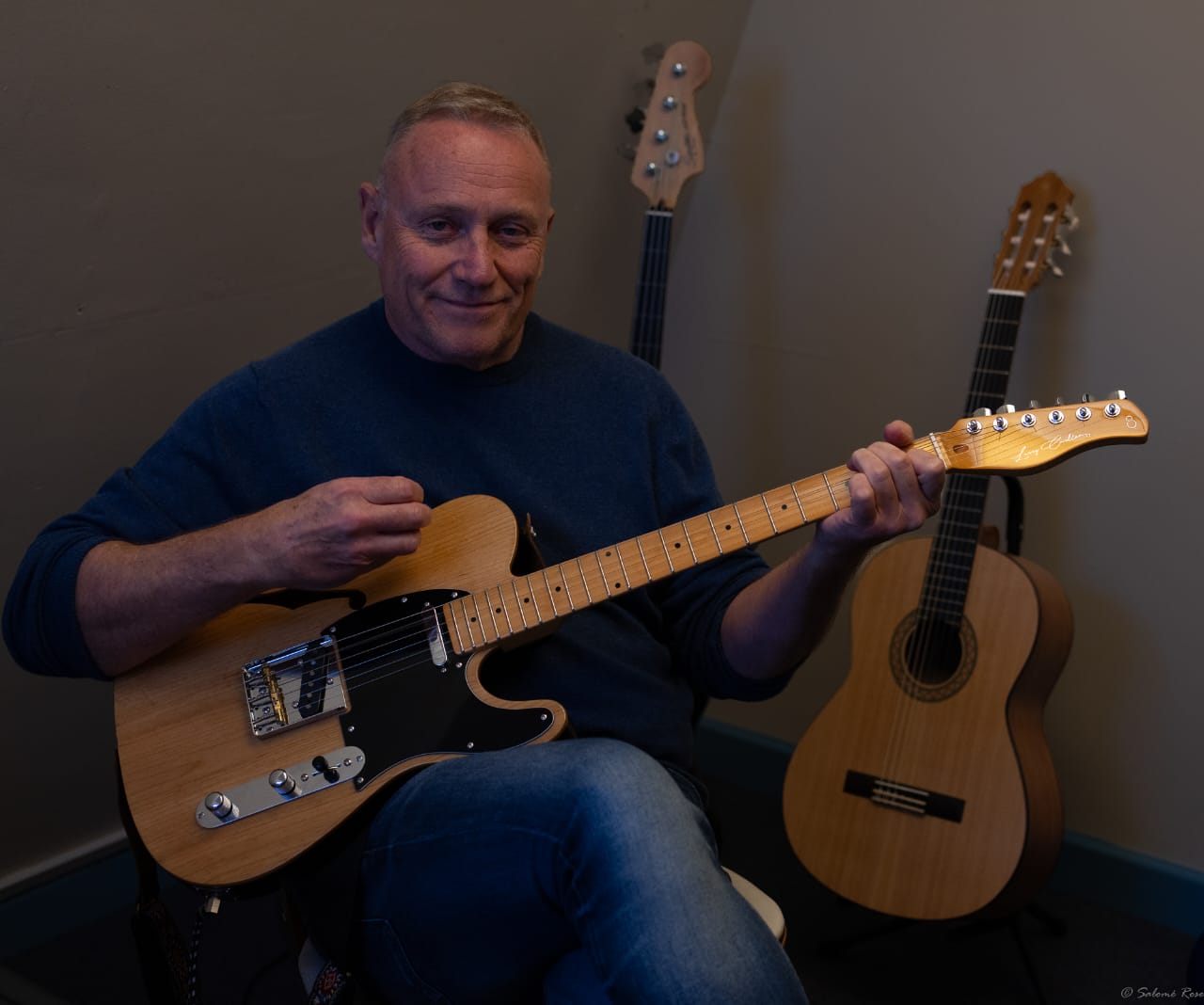
The project also reflects Jeremy’s unconventional approach to independent music production. Working from his home studio, he begins each composition with words, acoustic guitar and melody before recording his guitar, fretless bass and initial vocals in Ableton. He then uses generative AI tools trained on his own voice to explore arrangements, develop drum parts and experiment with different musical possibilities. Rather than allowing the technology to determine his creative direction, he treats it as a virtual session band, evaluating the results before bringing selected stems into his own production process. This approach has allowed him to develop fuller arrangements independently while retaining the original character of his songwriting.
An interesting part of Jeremy’s creative story is how many of his compositions emerge from ordinary moments. His partner has become part of a running joke about the album’s creation, as some songs were written during weekend moments when he picked up his guitar while waiting for her to finish getting ready. Beyond these everyday beginnings, the project contains literary, mathematical, historical and philosophical references that reveal additional layers through repeated listening. With Side Three marking a shift from personal recollection towards wider observations about society, relationships and human behaviour, Jeremy continues building a body of work that values authenticity and intellectual honesty.
Having this brief introduction to today’s featured project, I’m sure both new listeners and longtime fans are interested in hearing directly from Jeremy about the experiences, ideas and creative decisions behind this ambitious release. So, without further ado, let’s begin today’s interview.
INTERVIEW SESSION
Oliver:
You describe your music as being shaped by a lifetime of listening, but you also make an interesting distinction between the classic songwriters who influenced you and the people you have actually loved and observed throughout your life. Looking back at your upbringing and the experiences that shaped your outlook, when did you first realise that observing ordinary people and their experiences could become such an important part of your songwriting?
Music by Jeremy:
I grew up as the youngest child in a large family and some challenging dynamics so quickly learned the value of observation before participation; a lesson that tends to stay with you through your life. I also happen to find observing people fascinating – most particularly through their continued ability to surprise! All of this is palette and paint to a songwriter. Spotting some characteristic or connection that’s excited or intrigued me has me lunging for my notepad.
Oliver:
You have built this project around personal experiences, relationships and observations rather than simply following conventional songwriting themes. Your partner also features quite humorously in the story of how some of these songs came into existence, particularly those weekend moments when you pick up your guitar while waiting for her to get ready. How much of your everyday life finds its way into your music, and has songwriting changed the way you notice and understand the people and situations around you?
Music by Jeremy:
My everyday life forms a huge part of my songs and my people are enshrined across the tracks. The noticing is baked into my character. I spent many years trying to understand but the revelation of my later life – and I think people’s attraction to these songs – is that I don’t need to understand. Just participating is enough.
Oliver:
You have chosen to work independently, taking responsibility for writing, performing and developing an ambitious 24-track project rather than assembling a traditional band or pursuing a conventional route into the music industry. What has this independence allowed you to discover about yourself, and were there moments when working alone made you question whether you could bring such a large creative vision to life?
Music by Jeremy:
Most people working on creative projects are riven with self-doubt and insecurity and I’m most certainly one of them (my current obsession is that this whole album was ‘luck’ and I won’t be able to write another song – despite the fact I have a bucket of new work ready for the follow-up…). The staggered release really helped in that I had positive feedback from real people throughout, which kept pushing me to keep up and improve the standard. But I’m no stranger to challenging solo projects so I have plenty of strategies in my pocket to keep myself motivated.
Oliver:
John Lennon, Bob Dylan, Randy Newman and David Bowie represent very different approaches to songwriting and artistic expression. Lennon brought emotional honesty, Dylan developed a remarkable storytelling language, Newman explored characters and social observation, while Bowie continually challenged artistic expectations. When you consider your own identity as a songwriter, which aspects of these artists have stayed with you most strongly, and how have you managed to absorb those influences without allowing them to overshadow your own voice?
Music by Jeremy:
If I look at those artists, the common thread is authenticity and bravery. This is the thing I most aspire to and intrinsically a path that puts my own character in the centre of my work.
Oliver:
Something particularly interesting about your artistic philosophy is your preference for presenting problems rather than announcing opinions or telling listeners what they should think. You have even described yourself as someone aware of his own frailties and contradictions, adding that this is why you write songs rather than stand for parliament. Where does this reluctance to offer definitive answers come from, and how important is intellectual honesty to the way you approach music?
Music by Jeremy:
Finding my own path is the work of a lifetime so I couldn’t conceive of telling other people what they should think. Writing songs is a wonderful medium. Done well, the combination of the words and music is a direct emotional connection so honesty is non-negotiable.
Oliver:
Scenes from a Well Worn Path is a four-part, 24-track musical autobiography, which is an unusually ambitious concept for a debut project. Rather than approaching it as a collection of unrelated songs, you have given the entire body of work a broader narrative purpose centred on acceptance, personal experiences and finding beauty in a confusing and conflicted world. When did the idea of documenting your life through music first take shape, and how did you decide which moments deserved to become part of that larger story?
Music by Jeremy:
The project started in quite a low-key way, but I found quite quickly that the songs were literally pouring out of me. It was only when I started sorting through them that they were telling a very personal story and the idea of a musical autobiography stuck. The format gave me guide rails for the content and moments to include, acting a bit like a periodic table where the spaces are clearly defined.
Oliver:
With the first two sides looking largely inward, Side Three represents a noticeable shift towards the wider world and the tensions within it. You describe this instalment as the point where the argument begins rather than simply establishing a mood. What happened during the development of the larger project that made you feel it was time to move beyond personal reflection and begin examining broader social, economic and philosophical questions?
Music by Jeremy:
That’s my ‘periodic table’ in action. I felt that I needed to build out my character for the audience if I wanted them to take my thoughts and ideas seriously.

Oliver:
The title Scenes from a Well Worn Path suggests a life shaped by accumulated experiences, familiar places and the passage of time. However, dividing the project into four distinct sides also gives the listener a sense of different chapters within that journey. What does the well-worn path represent to you personally, and how do the four instalments connect to the different stages of your life and understanding of the world?
Music by Jeremy:
The messages are deeply woven into the songs but essentially, Side One was very nostalgic, Side Two went into more personal history of how I got to be the person I am, Three is centred around my thoughts and ideas. Side Four moves back to the intimate but focuses on me today and mortality. And the final (Saudade) track does offer a conclusion and a reason for the journey. One that still makes me tear up every time I hear it.
Oliver:
The opening track, “No Price on Earth”, establishes an interesting foundation for Side Three. Rather than beginning with a dramatic statement or an attempt to persuade the listener, it finds value in an ordinary day of calm, where neither triumph nor disaster takes centre stage. Its central idea suggests that certain experiences cannot be measured by money or material achievement. Why did you feel this was the right song to introduce this particular instalment, and what does the idea of something having no price on Earth mean to you beyond its literal interpretation?
Music by Jeremy:
It was one of those songs that just happens. I have a chord structure and melody, but when I sat down to write the lyrics staring at an empty page there was literally nothing in my head. No anger, no passion or excitement, just… nothing. So, I just wrote that down exactly as I was feeling it as a ‘guide vocal’. Later, reading it through I realised what a huge privilege that is.
Oliver:
One of the most intellectually ambitious songs on the album is “Economic Possibilities for our Grandchildren”, which takes its title from John Maynard Keynes’s 1930 essay. Keynes imagined a future in which technological and economic progress would allow people to work considerably less and enjoy greater freedom, yet your song examines how that promised abundance arrived without necessarily delivering the freedom it was supposed to create. What drew you to this historical idea, and how did you translate such a complex economic and social argument into a song that remains accessible to listeners?
Music by Jeremy:
The quick answer is blind fury! The acceleration of financial inequality is a source of deep concern to me but to come across the Keynes essay and discover that we had been warned about exactly this almost a hundred years ago and still let it happen was devastating. And to push back on your question, I think the idea that this is a ‘complex social and economic argument’ is the distortion that’s made it possible. People should not be going hungry while tiny numbers of people hoard money.
Oliver:
There is another fascinating literary connection in “Economic Possibilities for our Grandchildren”, where you open with the famous line “Fair is foul and foul is fair” from Shakespeare’s Macbeth. The reference to the witches introduces the idea of something being distorted or presented as inevitable, even when the reality may be very different. What made you choose this particular Shakespearean reference, and how important are literary and historical connections in adding deeper meaning to your songwriting?
Music by Jeremy:
Not sure if I’m oversharing here, but those words were just ‘there’ when I wrote down the song. I haven’t read Macbeth since school so, in proper witchcraft style, I think they were just waiting for their moment. But history and literature are hugely important to me in making sense of my world so my brain is like a particularly eclectic museum waiting for the connections to happen.
Oliver:
“I Don’t Know” approaches love from a very different direction, constructing a romantic song around the language of mathematics, including Fermat’s margin, prime numbers and irrational constants. Rather than relying on familiar declarations of affection, the narrator attempts to prove something that ultimately cannot be established through mathematical reasoning. What inspired you to explore love through this unusual intellectual framework, and what does the song reveal about the relationship between logic, emotion and the things we simply have to accept?
Music by Jeremy:
I’ve been married for a long time to a fabulous woman and I wanted to find a way to convey the emotion behind that; and there was a lot riding on getting it right! I know I can make her laugh and smile, I also know I can make her cry but – even after all these years – I’m not sure how. So, the lyric started with that and then the idea of Fermat’s explanation being too big to fit into the margin came to mind and made me laugh so the rest happened from there. An important postscript to the story is that I took the first demo home to play to her and she burst into tears. Which, I think, proves my point…
Oliver:
You also explore uncertainty and human perception in “The Letter”, drawing on ideas such as Schrödinger’s cat and the falling-tree problem to examine the meaning of an unopened envelope. Meanwhile, “Market Square” takes inspiration from an ordinary English market on a working morning. These are very different subjects, yet both demonstrate your interest in finding philosophical meaning within everyday situations. How do you decide when an ordinary observation has enough depth to become a song, and how do you balance intellectual references with the emotional experience you want listeners to take away?
Music by Jeremy:
The Letter was very personal, and very literal. I had a letter which I knew contained something important but left it on the table for a few days because I was too worried to open it. Before realising that not opening it was causing me more anguish than opening it could ever do. It was a short hop from here to seeing the analogy to hiding from important things rather than dealing with them. I was particularly proud of the line ‘My heart feels the pain, but I keep it out from my brain’. As to Market Square, I was in a coffee shop in Banbury looking out at the Thursday Market and just struck by the joy that ordinary people enjoy just doing ordinary things. And I thought it sat well on the album after the grand misery of “How Much is Enough”. I’m flattered you see intellectual references but really I just use whatever feels like the best words to get an emotion across.
Oliver:
Your recording process is particularly unconventional. You begin with acoustic guitar, bass and vocals in Ableton, then use generative AI tools trained on your own voice to explore drum arrangements and develop fuller versions of your songs. You subsequently bring the resulting stems back into your studio, perform your own guitar and bass parts, and add MIDI where necessary. What initially led you towards this approach, and how has using AI as a creative instrument changed what you can achieve independently?
Music by Jeremy:
They were simply the only tools realistically available to get my vision into music. There is some real kick back around using AI to create music and I fully understand the concerns, but for me it allowed me to create something that wouldn’t have happened otherwise. And to end the AI conversation on a positive note, Scenes From a Well Worn Path have given me the exposure and credibility so that I am now working with some established singers on future projects. All things that never would have happened without it.
Oliver:
There is an interesting creative distinction in the way you use AI. Rather than allowing technology to determine the identity of your music, you appear to use it as a way of exploring arrangements, testing musical possibilities and identifying improvements before completing the recordings yourself. You have described the process as using technology to stop performing and start being honest. Could you explain what that means in practical and emotional terms, particularly when it comes to the relationship between your original songwriting intentions and the finished recordings?
Music by Jeremy:
My starting point is always a ‘handmade’ demo in Ableton, using guitar, bass and my (pretty awful!) vocals. This is important as it means the AI tools are a silicon session band not a writing partner. Using this means I can get from a scrubby demo to a ‘radio mix’ standard very quickly so I can then develop it iteratively. It’s a bit like having Abbey Road filled with an uncomplaining and limitless session band (e.g. “Can you redo that with a cello. No, make that a brass band”) immediately to hand. So, I can get exactly the sound I want. The limitation is that the instrumentation is a bit sterile and AI, but I can take the parts I want from the mix (usually the drums and vocals) and then mix my guitar and bass back into it. It’s very liberating. Ultimately, I’d prefer to have access to Abbey Road studio and a limitless session band, but I think I’m a few hundred million streams away from that at the moment.
Oliver:
You have mentioned that your songs usually begin with chords, melodies and guide lyrics, and that you often prefer to preserve the original words because you believe the best lyrics emerge when the active brain is not too engaged. This suggests that your songwriting process relies heavily on instinct and allowing ideas to develop naturally rather than constantly trying to perfect them intellectually. Have you ever found yourself tempted to overwork a song, and what has experience taught you about recognising the moment when a piece of writing is finished?
Music by Jeremy:
Absolutely! A good example was Ideonella Sakaiensis from Side Two. I would have given up entirely, but I had a real affection for the lyric so just kept on going. After spending far too many hours (days!) on it, my wife very gently told me that it needed to go. I had one last try with the acoustic and the finished song came out in a single session. As to what experience has taught me, if it isn’t right just bin it… or maybe have just one more go. And maybe just one more…
Oliver:
Releasing a 24-track, four-part autobiographical project as your debut is a significant undertaking, particularly when you are working independently and introducing your music to an audience that may be discovering you for the first time. Looking back at the process of bringing this body of work together, what has been the greatest personal challenge, and has completing these songs changed the way you view your own experiences or the person you were when some of those moments originally took place?
Music by Jeremy:
It has been a lot of work, but an absolute joy from start to finish. The challenge has been the self-doubt and insecurity which has at times been terrifying – but also exhilarating. And it’s been a project that’s given a lot back to me personally. It helped me to reconcile with my younger self and has given me the confidence to absolutely ‘Be Me’. And, most importantly, I found a way to communicate to my wife how I actually feel about her.
Oliver:
Your approach to songwriting leaves considerable room for listeners to discover their own interpretations. You have also highlighted that some of the references within Side Three may not become apparent until the third or fourth listen, allowing the songs to reveal additional layers over time. As this instalment reaches listeners, what do you hope people take away from it, particularly those who might connect with the emotional themes without immediately recognising every literary, mathematical or philosophical reference? And as you look towards the fourth and final side of this autobiographical project, what can listeners expect from the next chapter of your musical story?
Music by Jeremy:
I have been surprised but delighted that the messaging has found such a positive reaction. Our current media is very binary and confrontational so my hope is that people might listen to this and see that things are a bit more complicated than that. And that it’s OK not to be like everybody else. And that it’s good to challenge the things that you ‘know’ to be true. The final side does not reach for a grand monument. It asks what a monument is worth in the first place. Across a set that moves from dry humour to private sensuality and open-hearted gratitude, the answers become smaller, closer and more human: a conversation, a warm field, a body beside another body, a moment that will not come again. A proper ending.
“Some of the most meaningful songs do not attempt to explain the world or provide comfortable answers. They simply invite us to look more closely at the lives we are living, the people around us and the contradictions we carry. Music by Jeremy’s Side Three finds its strength in that willingness to observe without pretending to have everything figured out.”
~ Oliver (DULAXI Team)
EDITORIAL PERSPECTIVE
What stands out about Side Three is the way Jeremy brings intellectual curiosity into everyday songwriting without losing its personal character. The contrast between the social observations of “Economic Possibilities for our Grandchildren” and the intimate perspective of “I Don’t Know” demonstrates the breadth of his writing. His independent production process also raises interesting questions about how emerging technology can support individual creativity. Ultimately, this is a project that encourages listeners to think, question and appreciate the experiences that make up ordinary life.
~ Oliver (DULAXI Team)
CLOSING
A special thank you to Music by Jeremy for taking the time to share the stories, experiences and creative thinking behind Scenes from a Well Worn Path (Side Three). This conversation has offered a closer look at the person behind the music, from the everyday observations that inspire his songwriting to the unconventional recording methods that have helped him bring such an ambitious project to life.
For listeners who have not yet experienced the release, Side Three offers plenty to discover, whether through its personal reflections, wider social observations or the literary and philosophical ideas woven into its songwriting. It is also an invitation to revisit the songs and discover details that might not be immediately apparent on the first listen.
We look forward to seeing where Jeremy’s musical journey leads as he approaches the fourth and final instalment of this autobiographical project and explores new creative opportunities along the way.
Thank you for joining us for another DULAXI interview. We appreciate you taking the time to read and discover the artists and stories we bring to you. Stay connected with DULAXI for more conversations with independent musicians and creative voices from around the world.
Until next time, this is Oliver from DULAXI. Thank you for reading!